
In the world of professional sports, few acronyms—or rather, Roman numerals—have sparked as much financial debate and market volatility as “LIV.” To the casual observer, the emergence of LIV Golf seemed like a sudden disruption of a century-old pastime. However, for those looking through the lens of business finance and global investment, LIV represents a paradigm shift in how sports are valued, funded, and monetized.
While the name itself has a specific literal meaning, its significance in the financial sector goes far deeper. It represents the entry of unprecedented sovereign wealth into a previously closed market, the transition of athletes into high-value equity assets, and a challenge to the traditional monopolistic structures of professional sports.

The Etymology of LIV: Translating Roman Numerals into a New Business Model
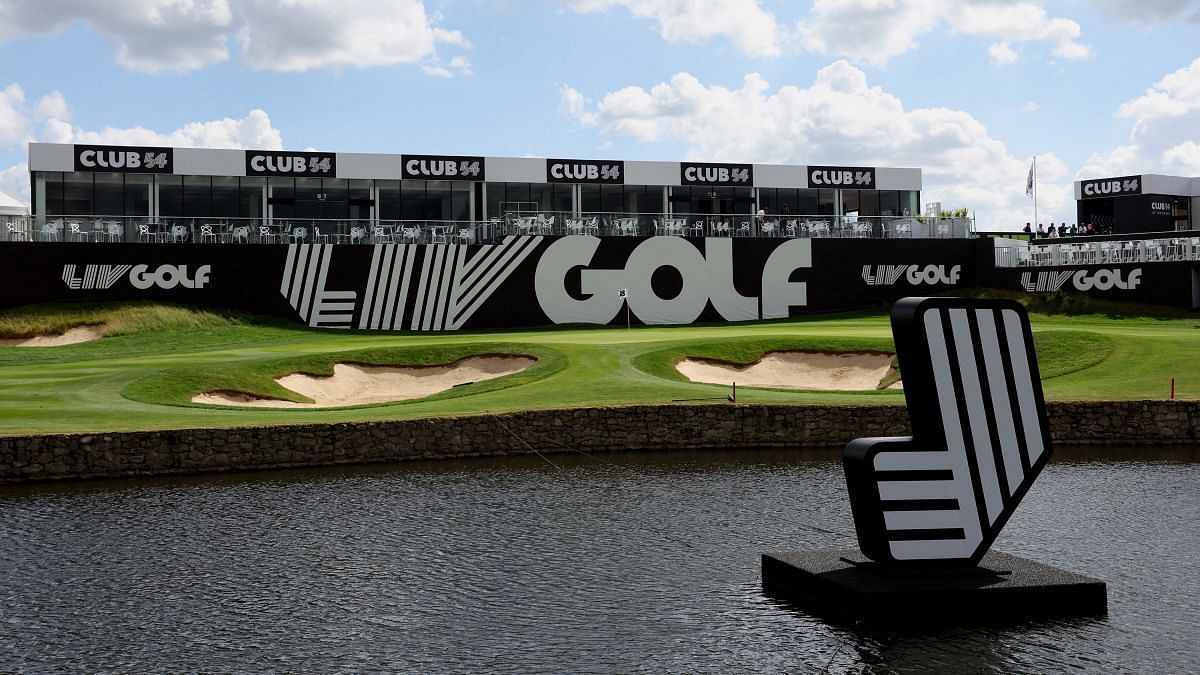
To understand what LIV stands for, one must first look at the scoreboard. “LIV” is the Roman numeral for 54. In the context of golf, this number is significant for two reasons: it is the score a golfer would achieve if they birdied every hole on a par-72 course, and it represents the number of holes played in a LIV tournament (54 holes over three days) compared to the traditional 72 holes over four days.
The Financial Utility of a Shorter Format
From an investment perspective, the move from 72 holes to 54 is not just a stylistic choice; it is a strategic attempt to optimize the “product” for modern media consumption. In the world of sports finance, attention is the primary currency. By shortening the event, LIV Golf aims to increase the density of high-leverage moments, thereby increasing the value of broadcasting rights. A three-day, no-cut format ensures that star players—the primary drivers of ticket sales and sponsorship revenue—are present for the entirety of the event, maximizing the Return on Investment (ROI) for advertisers and hospitality partners.
Redefining the “Perfect” Outcome
The number 54 also symbolizes a pursuit of perfection that mirrors the “blitzscale” approach seen in venture capital. Just as a score of 54 represents an unattainable ideal in golf, the LIV model represents an aggressive pursuit of market dominance through massive upfront capital. This is a departure from the conservative, incremental growth traditionally seen in the golf industry. In this niche, “LIV” stands for a departure from the “meritocracy-only” financial model to a “guaranteed-value” model, where the financial floor for participants is raised significantly.
The Economic Disruption: Challenging the PGA’s Market Monopoly
For decades, the PGA Tour operated as a de facto monopoly in the world of professional golf. In economic terms, it was a “monopsony” for elite labor—if you were a top-tier golfer, there was only one place to earn a premier living. LIV Golf disrupted this equilibrium by introducing a massive infusion of liquidity into the market.
The Introduction of Guaranteed Contracts
Historically, professional golfers were independent contractors who only earned “prize money” if they performed well enough to “make the cut.” There were no guaranteed salaries. LIV Golf completely inverted this financial structure. By offering massive signing bonuses—reportedly ranging from $100 million to over $500 million for top-tier talent—LIV introduced the concept of “guaranteed contracts” to golf, similar to those found in the NFL or NBA. This shifted the financial risk from the player to the league, fundamentally changing the labor economics of the sport.
Prize Purse Inflation and Market Competition
The entry of a well-funded competitor forced the incumbent (the PGA Tour) to respond. This is a classic example of market competition driving up the value of “labor.” In response to the threat of LIV, the PGA Tour was forced to significantly increase its prize purses and create “Elevated Events” with $20 million payouts. For the players, the competition between the two entities resulted in a historic windfall. For investors, it highlighted how a secondary entrant with sufficient capital can force a legacy institution to restructure its entire financial framework.
The Role of the Public Investment Fund (PIF) and Sovereign Wealth
One cannot discuss what LIV stands for without discussing the source of its capital: the Public Investment Fund (PIF) of Saudi Arabia. With estimated assets exceeding $700 billion, the PIF is one of the largest sovereign wealth funds in the world. Its involvement in golf is a textbook case study in “Portfolio Diversification” and “Soft Power Investment.”
Sports as an Emerging Asset Class
The PIF’s investment in LIV Golf is part of a broader strategy to diversify the Saudi economy away from oil, as outlined in their “Vision 2030” plan. From a business finance perspective, sports are increasingly being viewed as an “alternative asset class” that is relatively uncorrelated with traditional stock markets. Unlike manufacturing or tech, sports brands possess “emotional equity” and loyal fanbases that provide a resilient stream of revenue through media rights, even during economic downturns.
The Mechanics of “Sportswashing” vs. Strategic Investment
Critics often use the term “sportswashing” to describe this investment, suggesting it is a move to improve a national brand’s reputation. However, from a strictly financial viewpoint, it is also a “loss-leader” strategy. In business, a loss-leader is a product sold at a loss to attract customers or break into a new market. The billions spent on LIV are not expected to yield an immediate profit. Instead, they are designed to buy a “seat at the table” in the global sports industry, eventually leading to a merger or a dominant market share that can be monetized over decades.
The Franchise Model: Creating Long-Term Equity Value
Perhaps the most innovative financial aspect of LIV Golf is its move toward a “Team” or “Franchise” model. In traditional golf, players are individual brands. LIV, however, established 12 permanent teams (such as the 4Aces GC or Crushers GC).
Building Resaleable Assets
In the traditional PGA model, when a player retires, their value to the tour effectively hits zero. In the LIV model, the team is an asset that can be bought, sold, or valued independently of the individual players. This mirrors the structure of the Formula 1 or IPL (Indian Premier League) cricket models. By creating teams, LIV is building franchises that can eventually be sold to private equity firms or corporate sponsors. This creates a secondary layer of “Equity Value” that never existed in golf before.
Sponsorship and Revenue Sharing
The team model allows for localized sponsorship deals. While a global brand might not want to sponsor an entire tour, they might be interested in sponsoring a specific team that resonates with a certain demographic. This creates multiple “revenue silos” within the organization. For the players who own a percentage of these teams, the “LIV” acronym stands for “Legacy and Individual Valuation,” allowing them to build wealth that lasts beyond their playing years through capital gains rather than just tournament winnings.
The Future of Sports Finance: A Merger of Interests
The ongoing negotiations between the PIF, the PGA Tour, and the DP World Tour suggest that the “LIV” experiment has reached its ultimate goal: forced integration. The announcement of a potential “Framework Agreement” in June 2023 marked a turning point where the disruptor and the incumbent began discussing a unified commercial entity.
Consolidation and Market Stability
In the world of finance, extreme competition often leads to consolidation. When two entities spend billions fighting for the same market share, it eventually becomes more profitable to merge and operate as a monopoly once again. A unified golf entity backed by the PIF and private equity firms like Strategic Sports Group (SSG) would create a global powerhouse with a valuation likely exceeding $10 billion.
The New Gold Standard for Professional Athletes
LIV has permanently altered the “Personal Finance” trajectory for professional athletes. It has proven that in a globalized economy, the value of a high-profile “influencer” (the athlete) can be leveraged against legacy institutions to demand better terms. For future generations of golfers, “LIV” will be remembered as the catalyst that transitioned the sport from a conservative, sponsorship-dependent model to a high-stakes, equity-driven business.
Conclusion: The Financial Legacy of 54
So, what does LIV stand for in golf? Literally, it is a reference to a score of 54 and a shorter format of play. But in the grander scheme of business and finance, it stands for the Liquid Investment and Valuation of a sport undergoing a radical transformation.
LIV Golf serves as a powerful case study in how massive capital can be used to bypass traditional “barriers to entry” in a monopolized industry. It highlights the shifting power dynamics in global finance, where sovereign wealth funds are increasingly taking active roles in Western cultural institutions. Whether LIV survives as a standalone brand or is eventually absorbed into a new global golf conglomerate, its financial impact is undeniable. It has recalculated the “fair market value” of an athlete, introduced the concept of franchise equity to a solo sport, and proved that in the modern economy, even the most storied traditions have a price tag.
aViewFromTheCave is a participant in the Amazon Services LLC Associates Program, an affiliate advertising program designed to provide a means for sites to earn advertising fees by advertising and linking to Amazon.com. Amazon, the Amazon logo, AmazonSupply, and the AmazonSupply logo are trademarks of Amazon.com, Inc. or its affiliates. As an Amazon Associate we earn affiliate commissions from qualifying purchases.