
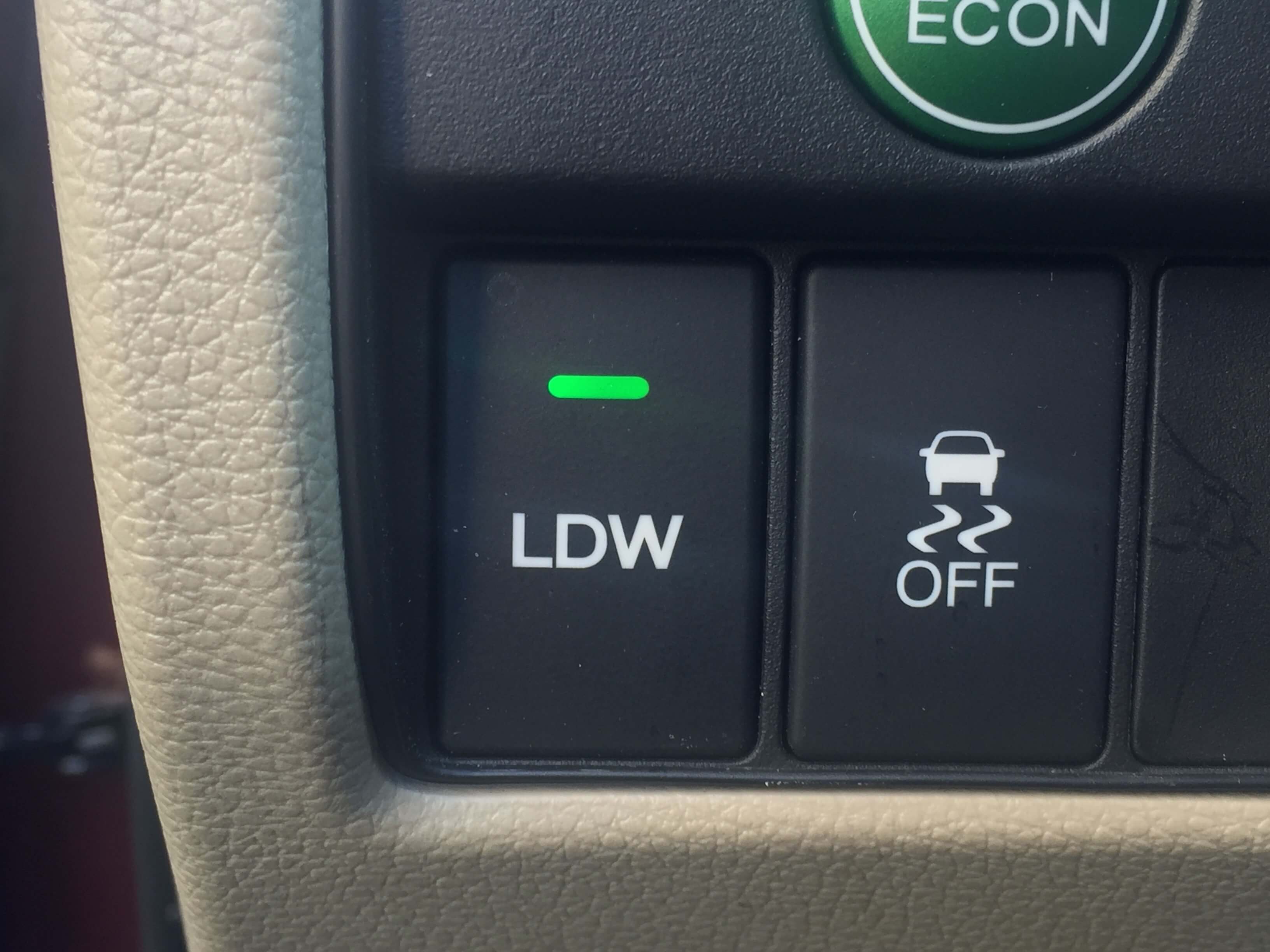
The landscape of the automotive industry has undergone a radical transformation over the last decade, shifting from mechanical engineering toward a software-defined future. At the heart of this evolution is the Advanced Driver Assistance System (ADAS), a suite of technologies designed to increase road safety and pave the way for fully autonomous vehicles. One of the most fundamental components of this suite is LDW, or Lane Departure Warning.
In the context of modern vehicle technology, LDW is more than just a beep or a vibration; it is a sophisticated integration of computer vision, real-time data processing, and sensor fusion. This article explores the technical intricacies of LDW, how it fits into the broader ecosystem of vehicle automation, and the technological innovations driving its future.

The Mechanics of Lane Departure Warning (LDW) Systems
To understand what LDW means in a car, one must first look at the hardware and software architecture that makes it possible. Unlike traditional safety features like seatbelts or crumple zones, LDW is a proactive digital layer that monitors the environment in real-time.
Computer Vision and Optical Sensors
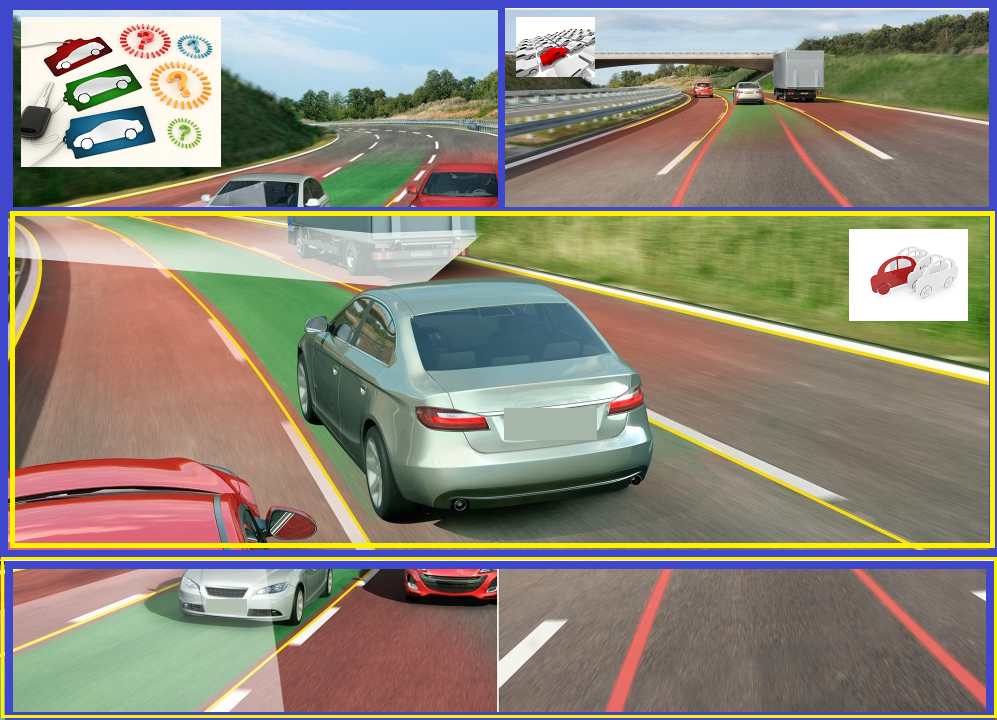
The primary “eye” of the LDW system is typically a high-resolution, forward-facing camera mounted behind the rearview mirror. This camera is calibrated to identify specific contrast patterns on the road surface, primarily lane markings—whether they are solid lines, dashed lines, or even Botts’ dots.
Sophisticated image processing software analyzes the video feed at high frame rates. By utilizing edge-detection algorithms, the system can distinguish between the pavement and the painted markers. In higher-end tech configurations, infrared sensors are also used to improve visibility during night driving or in inclement weather, such as heavy rain or fog, where standard optical cameras might struggle.
The Role of Algorithms and Real-Time Data Processing
Once the camera identifies the lane boundaries, the vehicle’s onboard computer (the Electronic Control Unit, or ECU) calculates the car’s position within those boundaries. This calculation is not static; it involves complex trigonometry to determine the “time to lane crossing.”
The system monitors telemetry data, including vehicle speed, steering angle, and—most importantly—the activation of turn signals. The LDW software is programmed with “suppression logic.” If the driver activates a turn signal, the system recognizes the lane change as intentional and suppresses the warning. If the vehicle begins to drift toward a boundary without a signal, the algorithm triggers a haptic, visual, or audible alert. This requires millisecond-level latency to ensure the driver has enough time to react.
ADAS Integration: Beyond Simple Warnings
LDW serves as the entry-level tier of lateral vehicle control. However, in the tech world, it is rarely a standalone feature. It is usually integrated into a larger hierarchy of ADAS functionalities that move the vehicle from passive monitoring to active intervention.
From LDW to LKA (Lane Keep Assist)
While LDW is a passive system (it only warns), Lane Keep Assist (LKA) is its active successor. LKA uses the same sensor data as LDW but adds a layer of control over the vehicle’s steering or braking systems.
When the software detects an unintentional departure, the LKA system issues a command to the Electric Power Steering (EPS) motor to apply “corrective torque.” This gently nudges the vehicle back into the center of the lane. From a software architecture perspective, this represents a significant leap in complexity, as the system must safely override or supplement human input without causing instability.
Sensor Fusion: Combining Cameras, Radar, and LiDAR
Modern automotive technology is moving toward “sensor fusion,” where data from multiple sources is combined to create a 360-degree digital map of the vehicle’s surroundings. While LDW primarily relies on cameras, it often shares data with Short-Range Radar (SRR) and, in some experimental or high-end models, LiDAR (Light Detection and Ranging).
By fusing camera data (which is good at seeing color and lines) with radar data (which is excellent at judging distance and speed), the vehicle’s tech stack can distinguish a lane marking from a curb or a concrete barrier. This multi-modal approach reduces “false positives,” a common technical hurdle where shadows or road tar patches are incorrectly identified as lane lines.
The Impact of AI and Machine Learning on Lane Sensing
The earliest LDW systems were “rule-based,” meaning they followed a strict set of “if-then” parameters. However, the unpredictability of the real world—faded paint, construction zones, and snow-covered roads—requires a more flexible technological approach. This is where Artificial Intelligence (AI) and Machine Learning (ML) come into play.
Improving Edge Case Detection
Machine learning models are trained on millions of miles of driving data to recognize “edge cases.” For instance, a rule-based system might get confused by a construction zone with overlapping yellow and white lines. An AI-enhanced LDW system, however, uses deep learning neural networks to understand context. It can prioritize the newer, temporary markings over the old ones by recognizing the patterns typical of roadwork.
These models are constantly refined. When a driver ignores a warning or overrides a system, that data can be anonymized and sent back to the manufacturer’s servers to retrain the model, which is then deployed back to the fleet via software updates.
Neural Networks in Autonomous Navigation
LDW is essentially a foundational module for Level 2 and Level 3 autonomous driving. By using convolutional neural networks (CNNs), car manufacturers are teaching vehicles to “predict” where a lane is, even when the lines are completely missing. By analyzing the flow of traffic ahead and the position of the road shoulder, the AI can infer the lane’s trajectory. This level of predictive tech is a prerequisite for removing the human driver from the loop entirely.
Cybersecurity and Software Reliability in Safety Tech
As vehicles become increasingly reliant on software like LDW, the tech community has raised vital questions regarding cybersecurity and system reliability. When a car’s steering or warning systems are managed by code, the integrity of that code becomes a matter of life and death.
Protecting Vehicle Networks from External Intrusion
Modern cars are essentially mobile IoT (Internet of Things) devices. The Controller Area Network (CAN bus), which allows the LDW camera to talk to the steering system, must be hardened against hacking. A “man-in-the-middle” attack on a vehicle’s ADAS could, in theory, trigger false lane departure warnings or suppress real ones. Tech developers are now implementing encrypted gateways and hardware security modules (HSMs) to ensure that only authenticated commands reach the vehicle’s actuators.
The Importance of OTA (Over-the-Air) Software Updates
Just like a smartphone, the tech running a car’s LDW system requires regular patches. Over-the-Air (OTA) update capability is now a critical metric for automotive tech. It allows manufacturers to deploy better algorithms, fix bugs in the image processing software, and enhance safety features without the user visiting a service center. This shift toward a continuous deployment model is a hallmark of the modern tech-centric approach to automotive manufacturing.
Future Horizons: The Path Toward Fully Autonomous Driving
LDW is a stepping stone. As we look toward the future of transportation technology, the principles established by Lane Departure Warning systems are being expanded into more ambitious territories.
Level 3 and Level 4 Automation
The Society of Automotive Engineers (SAE) defines different levels of automation. LDW and LKA are typically found in Level 2 systems, where the driver must remain engaged. However, the next technological frontier is Level 3 (Conditional Automation) and Level 4 (High Automation).
In these stages, the “Lane Departure” concept evolves into “Path Planning.” The vehicle doesn’t just stay in a lane; it negotiates complex intersections, executes overtakes, and manages merges autonomously. The sensors that once only looked for white lines are now identifying pedestrians, cyclists, and traffic signals, integrating them all into a unified environmental model.
V2X (Vehicle-to-Everything) Communication
The ultimate evolution of LDW tech lies in V2X communication. In this scenario, the car doesn’t just rely on its internal sensors to stay in a lane. It receives data from the road infrastructure itself (Vehicle-to-Infrastructure, or V2I) and from other nearby cars (Vehicle-to-Vehicle, or V2V).
Imagine a “digital lane” transmitted by the road to the car’s computer. This would make lane keeping 100% accurate, even in a total whiteout blizzard where no camera could possibly see the pavement. This interconnected ecosystem represents the pinnacle of current automotive tech trends, turning individual cars into nodes in a massive, coordinated transportation network.
Conclusion
When we ask “what does LDW mean in a car,” we are looking at the tip of the iceberg of a massive technological revolution. LDW is the physical manifestation of computer vision, machine learning, and sensor fusion working in harmony to protect human life.
From its humble beginnings as a simple warning chime, it has evolved into a sophisticated suite of AI-driven tools that serve as the backbone of the autonomous future. As hardware becomes more powerful and software becomes more intelligent, LDW will continue to transition from a helpful assistant to an invisible, omnipresent guardian, redefining our relationship with technology and the open road.
aViewFromTheCave is a participant in the Amazon Services LLC Associates Program, an affiliate advertising program designed to provide a means for sites to earn advertising fees by advertising and linking to Amazon.com. Amazon, the Amazon logo, AmazonSupply, and the AmazonSupply logo are trademarks of Amazon.com, Inc. or its affiliates. As an Amazon Associate we earn affiliate commissions from qualifying purchases.