
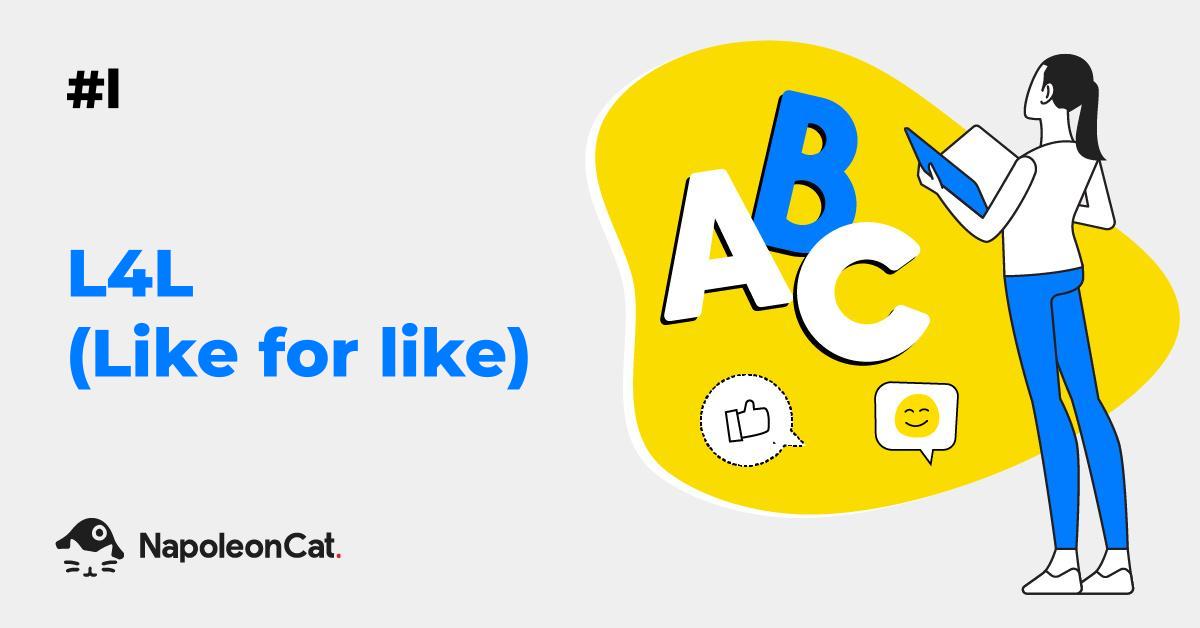
The phrase “L4L” often surfaces in online discussions, particularly within communities focused on growth, engagement, and brand visibility. While its literal meaning is straightforward – “Like for Like” – its implications and applications extend far beyond a simple reciprocal action. In the current digital ecosystem, where attention is a valuable commodity and algorithmic visibility is paramount, L4L has evolved into a strategic tool, impacting everything from personal branding to influencer marketing and even broader digital marketing efforts. This article delves into the multifaceted meaning of L4L, exploring its origins, its strategic utility, the ethical considerations surrounding its use, and its evolving role in the ever-changing digital landscape.
The Genesis and Mechanics of “Like for Like”
At its core, L4L is a reciprocal engagement strategy. It stems from the fundamental understanding that social media platforms, particularly those with content-driven feeds, often prioritize content that demonstrates high engagement. Likes, comments, shares, and saves are all signals to algorithms that a piece of content is resonating with an audience. In this context, L4L emerged as a direct, albeit often blunt, method to artificially inflate these engagement metrics.
Understanding the Underlying Principle
The principle behind L4L is simple: if I like your content, you are incentivized or obligated to like mine in return. This creates a closed loop of mutual appreciation, theoretically boosting the visibility of both parties’ posts. This concept can be observed in various forms across different platforms:
- Instagram: This is perhaps where L4L is most prevalent. Users might directly message each other with “L4L?” or join specific “like exchange” groups or communities. The intent is to gain more likes on their photos, reels, or stories, hoping to climb the explore page or simply appear more popular.
- Twitter/X: While less common as a direct “L4L” request, the spirit of reciprocal liking exists. Users might engage with tweets from others in their niche, anticipating a similar engagement in return. This can be part of a broader strategy to build connections and foster a community.
- Facebook: In groups or on personal pages, L4L can be used to boost the reach of posts, especially for small businesses or creators trying to gain initial traction.
- TikTok: The fast-paced nature of TikTok lends itself to quick engagement. L4L tactics might involve liking videos to encourage creators to check out and like the user’s own content.
The Algorithmic Connection
Social media algorithms are designed to serve users content they are likely to engage with. When a post receives a high number of likes in a short period, algorithms interpret this as a sign of popularity and relevance. Consequently, they are more likely to show that post to a wider audience, including users who do not currently follow the creator. L4L, therefore, can be seen as a shortcut to signaling this initial popularity, potentially triggering the algorithm’s amplification effect.
Beyond Simple Likes: The Evolution of Reciprocal Engagement
While “like for like” is the most basic form, the concept has evolved. It now encompasses a broader spectrum of reciprocal engagement:
- Follow for Follow (F4F): Similar to L4L, this involves exchanging follows to increase follower counts.
- Comment for Comment (C4C): This is a more involved form of engagement, as comments require more thought and effort than a simple like.
- Share for Share (S4S): This is a powerful engagement metric, as shares extend a post’s reach significantly.
- Engage for Engage (E4E): A more generalized term encompassing any form of mutual engagement.
These variations acknowledge that different types of engagement hold different values in the eyes of both users and algorithms. A comment often carries more weight than a like, and a share can be far more impactful than either.
Strategic Applications of L4L in Digital Growth
While often criticized for its perceived inauthenticity, L4L, when used strategically and ethically, can be a valuable tool in a digital growth arsenal. Its primary benefit lies in its ability to provide an initial boost, breaking through the initial barrier of low visibility that many new accounts or content creators face.
Breaking the “Cold Start” Problem
For any new account or emerging creator, the “cold start” problem is a significant hurdle. Without an existing audience or established engagement, it’s difficult to gain the initial traction needed to attract organic growth. L4L can act as a catalyst:
- Increased Visibility: A small surge in likes and comments can push a post slightly further into the algorithmic radar, exposing it to a few more users than it might have reached otherwise.
- Social Proof: Even a modest increase in engagement can create a perception of popularity. This “social proof” can encourage organic users who stumble upon the content to engage with it themselves, as it appears to be already validated by others.
- Momentum Building: The initial boost from L4L can create a positive feedback loop. More engagement leads to more visibility, which can lead to more organic engagement, and so on.
Targeted L4L for Niche Audiences
The effectiveness of L4L is significantly enhanced when it’s targeted. Engaging in L4L with users within the same niche or industry can be more beneficial than random exchanges:
- Reaching Relevant Audiences: When you exchange likes with someone in your niche, their followers are more likely to be interested in your content. This makes the engagement more meaningful and potentially leads to genuine followers and deeper engagement.
- Networking Opportunities: L4L can be a stepping stone to genuine networking. By engaging with other creators, you can identify potential collaborators, learn from their strategies, and build relationships that extend beyond reciprocal liking.
- Algorithm Familiarization: Engaging with users in your niche helps algorithms understand the type of content and audience you are associated with, potentially improving your content’s discoverability within that niche.
L4L as a Complement to Other Strategies
It’s crucial to view L4L not as a standalone solution, but as a component of a larger digital marketing strategy. When combined with high-quality content, consistent posting, relevant hashtags, and genuine community interaction, L4L can amplify these efforts:
- Content Amplification: Excellent content deserves to be seen. L4L can provide the initial push to ensure that well-crafted posts get the exposure they deserve.
- Community Building: While L4L itself isn’t inherently community-building, it can be a gateway. By initiating contact through L4L, creators can then engage further with meaningful comments, DMs, and collaborations, fostering genuine connections.
- Testing and Analysis: L4L can be used to test the performance of different types of content or posting times. By observing which posts gain more traction through L4L efforts, creators can gain insights into what resonates with their target audience.
Ethical Considerations and the Pitfalls of L4L
Despite its potential benefits, the practice of L4L is fraught with ethical considerations and potential pitfalls that can undermine genuine growth and brand integrity. The pursuit of vanity metrics without a foundation of authentic engagement can be detrimental in the long run.
The Illusion of Popularity vs. Real Engagement
The most significant critique of L4L is that it creates an illusion of popularity. While a high number of likes might look impressive, it doesn’t necessarily translate to meaningful audience connection, brand loyalty, or conversion.
- Low-Quality Engagement: Likes gained through L4L are often superficial. The users participating may not be genuinely interested in the content, the brand, or its products/services. They are simply fulfilling a reciprocal obligation.
- Devalued Metrics: When likes are predominantly acquired through L4L, the actual engagement rate becomes less indicative of true audience interest. This can mislead creators about their content’s performance and their audience’s reception.
- Lack of Genuine Connection: True influence and brand loyalty are built on authentic interactions, shared values, and meaningful relationships. L4L bypasses these crucial elements.
Algorithm Penalties and Account Risks
Social media platforms are increasingly sophisticated in detecting and penalizing artificial engagement tactics. While L4L might not be as severely penalized as outright bot activity, it can still lead to negative consequences:
- Shadowbanning: Platforms may reduce the visibility of accounts that consistently engage in inauthentic engagement practices. This means your posts will be shown to fewer people, even those who genuinely follow you.
- Reduced Reach: Algorithms are designed to promote authentic interactions. If a significant portion of your engagement comes from L4L, algorithms may deem your content less valuable, leading to a decrease in organic reach over time.
- Account Suspension: In severe cases, persistent use of engagement pods or manipulative tactics can lead to temporary or permanent account suspension.
The Impact on Brand Authenticity and Trust
For businesses and personal brands, relying heavily on L4L can erode trust and damage authenticity.
- Perception of Desperation: Audiences are often savvy enough to spot inauthentic engagement. A feed filled with likes from seemingly unrelated accounts can signal desperation rather than genuine appeal.
- Misleading Brand Image: If a brand’s social media presence appears inflated with fake engagement, it can create a disconnect between the perceived success and the actual customer base, leading to a loss of credibility.
- Missed Opportunities for Real Connection: By focusing on quantity over quality, brands miss opportunities to connect with genuine potential customers, industry peers, and valuable brand advocates who could offer more substantial support and feedback.
The Future of L4L: Evolution and Alternatives
As social media platforms evolve and users become more discerning, the effectiveness and ethical standing of traditional L4L tactics are increasingly being questioned. The future likely involves a more nuanced approach to engagement, prioritizing authenticity and value.
The Shift Towards Meaningful Engagement
The trend is moving away from superficial metrics towards deeper forms of engagement. This includes:
- Quality Comments: Thoughtful comments that spark conversation are more valuable than a hundred likes.
- Saves and Shares: These actions indicate a user finds content valuable enough to revisit or share with their own network, a strong signal of relevance.
- Direct Messages (DMs): Personal interactions via DMs can lead to stronger relationships and potential conversions.
- User-Generated Content (UGC): Content created by actual users about a brand or product is the ultimate form of authentic engagement and social proof.
Alternative Strategies for Organic Growth
Instead of relying on L4L, creators and brands should focus on building sustainable, organic growth through:
- High-Quality Content Creation: Focus on creating valuable, entertaining, or informative content that resonates with your target audience.
- Consistent Posting Schedule: Regular content keeps your audience engaged and signals to algorithms that your account is active.
- Strategic Hashtag Usage: Research and use relevant hashtags to increase discoverability by users interested in your niche.
- Community Interaction: Actively engage with your followers, respond to comments and DMs, and participate in relevant conversations.
- Collaborations with Complementary Brands/Creators: Partnering with others in your space can expose your brand to new, relevant audiences.
- Paid Promotion: Targeted advertising can be a highly effective way to reach a specific demographic and drive genuine engagement.
- Understanding Your Audience: Use analytics to understand what content performs best and tailor your strategy accordingly.

The Evolving Meaning of “Like”
The concept of “liking” itself is also evolving. On platforms like Instagram, the ability to hide like counts suggests a growing awareness that the pursuit of these numbers can be detrimental to mental well-being and authentic expression. The focus is slowly shifting towards the intrinsic value of content and genuine human connection, rather than a simple, often hollow, digital acknowledgment.
In conclusion, while “L4L” or “Like for Like” originated as a rudimentary tactic to boost engagement, its true meaning in today’s digital landscape is complex. It represents a shortcut that can offer initial visibility but often comes at the cost of authenticity and long-term growth. As the digital realm matures, the emphasis is increasingly on building genuine connections and providing real value, rendering superficial “like for like” exchanges increasingly obsolete. The future of digital engagement lies in fostering authentic relationships, creating compelling content, and understanding the subtle nuances of what truly resonates with an audience, moving beyond the simplistic promise of reciprocal clicks.
aViewFromTheCave is a participant in the Amazon Services LLC Associates Program, an affiliate advertising program designed to provide a means for sites to earn advertising fees by advertising and linking to Amazon.com. Amazon, the Amazon logo, AmazonSupply, and the AmazonSupply logo are trademarks of Amazon.com, Inc. or its affiliates. As an Amazon Associate we earn affiliate commissions from qualifying purchases.