
For decades, Johnson & Johnson (J&J) was the quintessential “widow and orphan” stock—a term used by financial analysts to describe a company so stable, diversified, and reliable that it was considered a safe haven for the most conservative investors. However, the J&J of today looks significantly different from the J&J of five years ago. Following one of the most significant corporate restructurings in recent history, the question of “what does Johnson & Johnson own” requires a deep look at its balance sheet, its strategic acquisitions, and its pivot toward high-margin medical innovation.
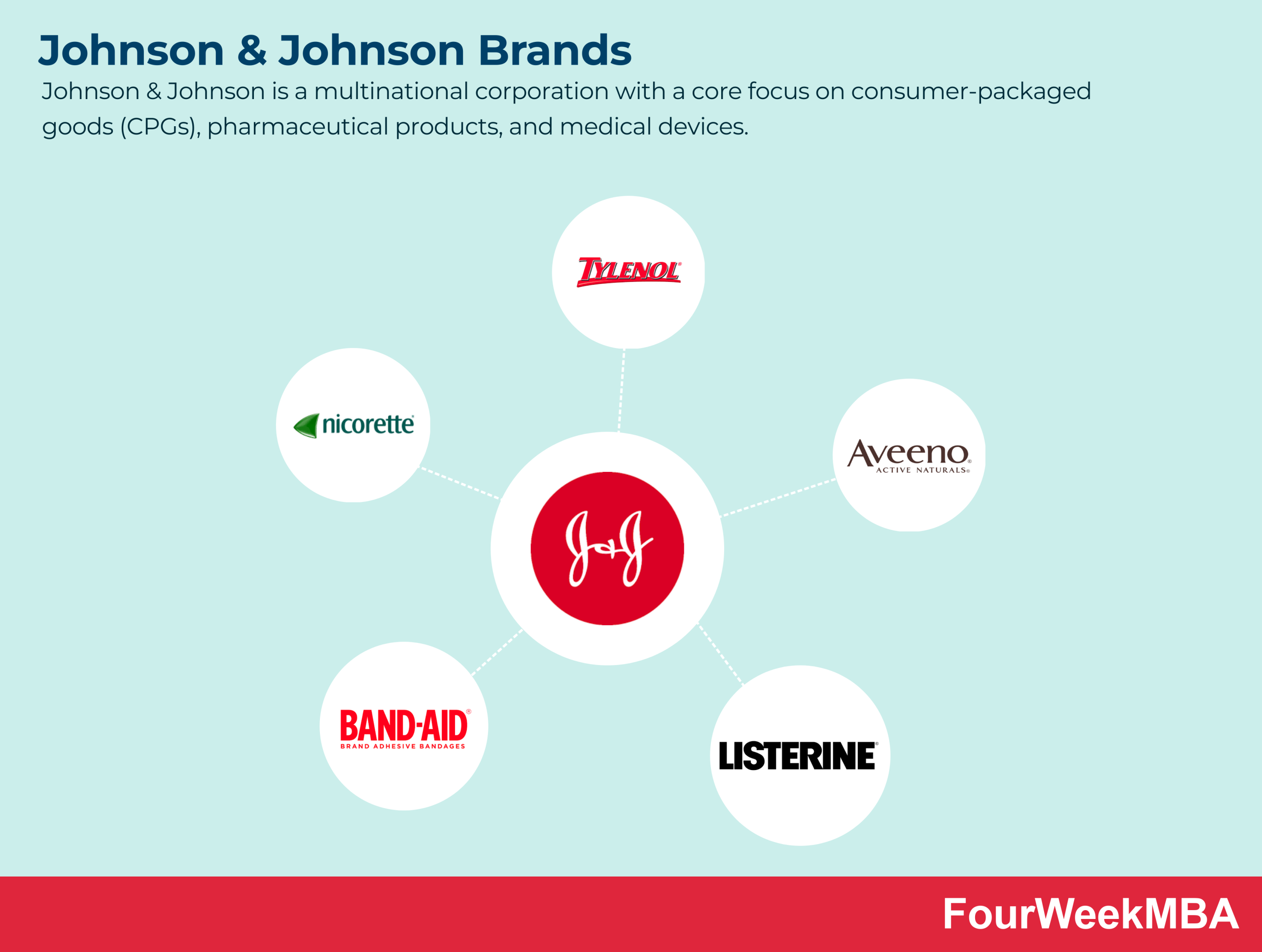
As of 2024, Johnson & Johnson has streamlined its massive empire to focus on two primary pillars: Innovative Medicine (formerly Janssen Pharmaceuticals) and MedTech. By divesting its well-known consumer health brands into a separate entity, the company has signaled a clear shift in its financial strategy: prioritizing high-growth, high-tech healthcare over the steady but slow-moving world of consumer staples.
The Strategic Pivot: The Kenvue Spin-off and its Financial Implications
To understand what J&J owns today, one must first understand what it no longer owns. For over a century, the company was synonymous with household names like Band-Aid, Tylenol, Neutrogena, and Listerine. In 2023, J&J completed the spin-off of its Consumer Health division into a new, independent, publicly-traded company called Kenvue.
The Separation of Assets
The Kenvue spin-off was a masterclass in financial engineering. J&J shareholders were given the option to exchange their J&J shares for Kenvue stock, a move that allowed J&J to reduce its outstanding share count while simultaneously offloading a segment that, while profitable, carried lower margins and significant legal liabilities related to talc litigation. This move effectively “de-risked” the parent company’s portfolio in the eyes of many institutional investors.
Focus on High-Margin Returns
From a “Money” perspective, the divestiture allowed J&J to reallocate capital toward areas with higher Returns on Invested Capital (ROIC). While baby shampoo and bandages offer stable cash flow, they do not offer the 20% to 30% growth potential found in oncology drugs or robotic surgical systems. By shedding Kenvue, J&J has transformed into a pure-play healthcare giant, focusing its massive cash reserves on the “Innovative Medicine” and “MedTech” sectors.
The Innovative Medicine Portfolio: A Pharmaceutical Juggernaut
The crown jewel of the Johnson & Johnson empire is its Innovative Medicine segment. This division accounts for the lion’s share of the company’s revenue and is the primary driver of its valuation on Wall Street. J&J does not just “own” drugs; it owns intellectual property (IP) protected by a complex web of patents that generate billions in annual cash flow.
Oncology and Immunology Dominance
J&J’s pharmaceutical portfolio is anchored by “blockbuster” drugs—products that generate over $1 billion in annual sales. Key assets include:
- Stelara: A titan in the immunology space used to treat Crohn’s disease and plaque psoriasis. Despite facing upcoming patent cliffs, it has been a cornerstone of J&J’s revenue for years.
- Darzalex: A leading treatment for multiple myeloma that continues to see double-digit growth, showcasing J&J’s ability to dominate specific therapeutic niches.
- Tremfya: Another heavy hitter in the immunology sector, further diversifying their income streams away from a single “miracle drug.”
The R&D Pipeline as an Asset
In the world of business finance, a pharmaceutical company’s “ownership” extends to its pipeline. J&J invests upwards of $15 billion annually into Research and Development (R&D). This investment represents “future ownership”—the right to be the sole provider of next-generation therapies for rare diseases, neuroscience, and cardiovascular health. For an investor, J&J owns a pipeline of over 100 candidates in various stages of clinical trials, each representing a potential multi-billion dollar revenue stream.
MedTech: Owning the Future of the Operating Room
While many investors focus on the “pills” (pharmaceuticals), the “tools” (MedTech) represent a significant and growing portion of J&J’s enterprise value. J&J’s MedTech division is one of the largest medical device businesses in the world, owning brands that are essential to modern surgery.

Orthopaedics and DePuy Synthes
J&J owns DePuy Synthes, a global leader in orthopedic solutions. Whether it is a total hip replacement, spinal surgery equipment, or trauma-related implants, DePuy Synthes is a dominant player. This is a “sticky” business; once a hospital system adopts a specific surgical platform, the switching costs are high, providing J&J with an economic moat that protects its market share.
The Expansion into Cardiovascular and Robotics
In recent years, J&J has used its massive “war chest” of cash to acquire companies that position it at the forefront of medical technology:
- Abiomed: Acquired for approximately $16.60 billion, this gave J&J ownership of the Impella heart pump, the world’s smallest heart pump. This was a strategic financial move to enter the high-growth heart recovery market.
- Shockwave Medical: A more recent multi-billion dollar acquisition, Shockwave utilizes intravascular lithotripsy (IVL) technology to treat calcified plaque in arteries.
- Ottava and Monarch: These represent J&J’s ownership in the robotic surgery space. By competing with companies like Intuitive Surgical, J&J is betting that the future of surgery is digital and robotic, allowing them to sell not just the devices, but the software and service contracts that go with them.
Financial Strength: The Dividend King and Capital Allocation
What J&J truly “owns” in the eyes of the financial community is one of the strongest balance sheets in corporate history. It is one of only two U.S. corporations (alongside Microsoft) to maintain a AAA credit rating from Standard & Poor’s—a rating higher than that of the U.S. federal government at various points in history.
The “Dividend King” Status
For income-focused investors, J&J owns a prestigious record: over 60 consecutive years of annual dividend increases. This “Dividend King” status is a testament to its disciplined capital management. The company generates massive Free Cash Flow (FCF), which it uses to fund its dividend, buy back shares to increase Earnings Per Share (EPS), and fund the aforementioned R&D and acquisitions.
Capital Allocation Strategy
J&J’s management follows a strict three-pronged approach to what they do with the money they earn:
- Organic Growth: Reinvesting in their own labs.
- Dividends: Returning value to shareholders.
- Strategic M&A: Buying smaller, innovative companies before they become competitors.
This cycle of “earn, reinvest, and acquire” ensures that J&J remains at the top of the healthcare food chain.
The Risks and Rewards of the “New” Johnson & Johnson
While the list of what J&J owns is impressive, the financial landscape is not without risks. Ownership of high-stakes pharmaceutical assets comes with the “patent cliff”—the moment a drug’s patent expires and generic competitors enter the market, often leading to a 70-90% drop in revenue for that specific product.
Navigating the Patent Cliff
Investors closely monitor J&J’s ability to replace revenue from older drugs like Stelara with new launches. The company’s financial health depends on its ability to successfully navigate the transition from old IP to new IP. This is why their M&A strategy is so aggressive; they are essentially buying future revenue to offset the inevitable loss of current revenue.
Legal Liabilities and the “Texas Two-Step”
No discussion of J&J’s financial state is complete without mentioning its legal “ownership” of liabilities. The company has faced thousands of lawsuits regarding its talc-based powders. Its financial strategy to manage this—utilizing a controversial legal maneuver known as the “Texas Two-Step” bankruptcy—has been a major focus for analysts. How the company ultimately settles these claims will have a significant impact on its cash reserves and long-term valuation.
Conclusion: A Portfolio Built for Long-Term Wealth
In summary, Johnson & Johnson has moved away from being a “consumer goods” company to become a specialized “healthcare technology and medicine” powerhouse. When you look at what Johnson & Johnson owns today, you see a diversified portfolio of high-growth pharmaceutical assets, market-leading medical devices, and a formidable pipeline of future innovations.
For the investor, J&J represents a bet on the aging global population and the increasing spend on healthcare worldwide. By shedding its lower-margin consumer brands, J&J has sharpened its focus on the areas of the economy where it has the most pricing power and the highest barriers to entry. While the company faces the standard risks of the pharmaceutical industry—regulation, patent litigation, and R&D failures—its AAA-rated balance sheet and disciplined capital allocation make it a cornerstone of the global financial markets. Whether through the heart pumps of Abiomed or the oncology breakthroughs of the Innovative Medicine division, J&J continues to own a significant and indispensable slice of the global healthcare economy.
aViewFromTheCave is a participant in the Amazon Services LLC Associates Program, an affiliate advertising program designed to provide a means for sites to earn advertising fees by advertising and linking to Amazon.com. Amazon, the Amazon logo, AmazonSupply, and the AmazonSupply logo are trademarks of Amazon.com, Inc. or its affiliates. As an Amazon Associate we earn affiliate commissions from qualifying purchases.