
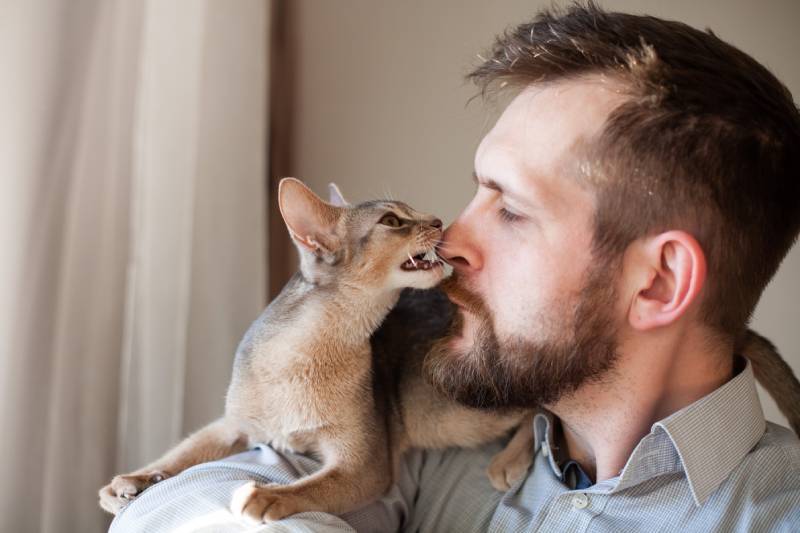
The phenomenon of a kitten licking your nose is more than just a fleeting moment of feline curiosity; it is a sophisticated interaction rooted in evolutionary biology, social bonding, and the establishment of trust. While many pet owners view these gentle, sandpaper-like rasps as mere expressions of affection, there is a layered reality to this behavior that speaks volumes about your kitten’s psychological development and their perception of you as a central figure in their social hierarchy. To decode this interaction, one must look beyond the surface level of “petting” and explore the biological and behavioral imperatives that drive feline social cohesion.
The Evolutionary Roots of Allogrooming
At the core of the nose-licking behavior is a concept ethologists call “allogrooming.” In the wild, cats are social animals that rely on group cohesion for safety, hunting efficiency, and thermoregulation. Allogrooming—the act of mutual grooming—serves as a primary mechanism for building and maintaining these social bonds.
Establishing the Scent Profile
When a kitten licks your nose, they are actively participating in the “scent-mingling” process. Cats have scent glands located around their cheeks, lips, and forehead. By licking your face, the kitten is not only cleaning you—which is an act of care—but is also effectively marking you with their pheromones while picking up your scent. This creates a “group scent,” a shared olfactory signature that signals to other animals that you and the kitten belong to the same colony. In a domestic setting, this signifies that your kitten has accepted you as a core member of their inner circle.
Social Hierarchies and Maternal Bonds
This behavior is strongly linked to the kitten’s early life experiences with their mother. A mother cat spends a significant portion of her day grooming her kittens to keep them clean, stimulate circulation, and regulate their body temperature. This process is deeply calming and reinforces the maternal bond. When a kitten licks your nose, they are often regressing to this infantile stage of comfort, signaling that they view you as a safe, parental figure. It is an act of deference and a request for the same sense of security and intimacy they felt in the nest.
Psychological Implications of Facial Licking
While we might find the sensation of a rough tongue on our nose to be a quirky behavioral tic, for the kitten, it is a high-level form of communication. The face is a focal point of interaction, and by targeting the nose, the kitten is engaging with the most sensitive and “human” part of your biology.
Trust and Vulnerability
Allowing a kitten to get close enough to lick your nose requires an immense amount of trust on their part. The face is the sensory center of the human; we are large, moving, and often unpredictable. By initiating this contact, the kitten is demonstrating that they are comfortable within your “personal space,” which for a feline is a boundary that usually only dissolves in extreme states of relaxation or deep affection. When they lick your nose, they are essentially saying, “I feel safe enough to be vulnerable with you.”
Sensory Exploration and Curiosity
We must not discount the role of sensory input. Kittens explore the world primarily through their mouths. Their sense of taste and touch in the oral cavity is highly developed. Your skin carries a variety of salt, oils, and subtle environmental scents that are incredibly stimulating to a young cat. By licking your nose, the kitten is conducting a sensory audit of their environment. They are curious about what you have been doing, what you have eaten, and where you have been. It is, in a sense, a feline way of “checking in” on your activities throughout the day.
Interpreting Behavioral Context
Not all licks are created equal. To truly understand what your kitten is trying to convey, you must look at the environmental context and the accompanying body language. The intent behind the lick can shift based on whether the kitten is seeking comfort, attention, or a play-based interaction.
The Comfort-Seeking Lick
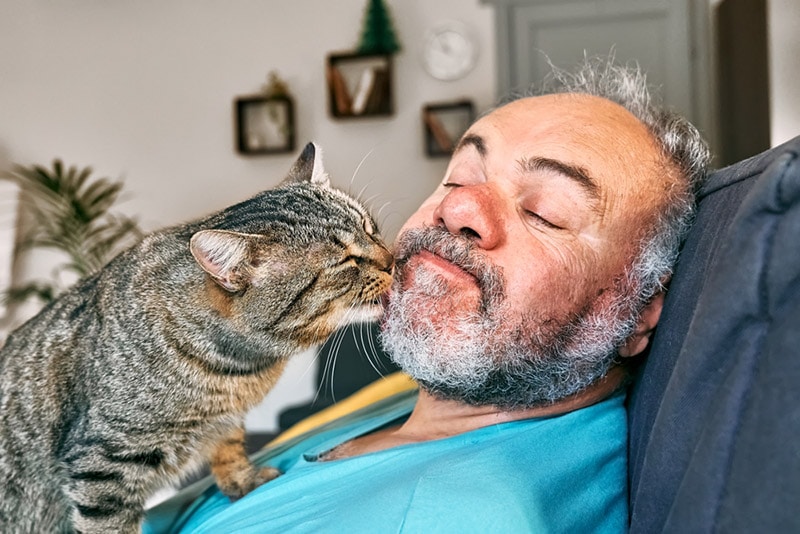
If your kitten approaches you while purring, with half-closed eyes and a relaxed posture, the lick is almost certainly an expression of contentment. This is “bonding time.” If you are sitting on the couch and the kitten climbs up to your shoulder to offer a few slow, deliberate licks to your nose, they are engaging in a ritual of social reinforcement. This is the feline equivalent of a warm hug or a quiet moment of companionship.
The Attention-Seeking Lick
Sometimes, the lick is more utilitarian. If your kitten is hungry, bored, or wants to engage in play, they may resort to licking your nose as a tactile “nudge.” Because they have learned that facial contact usually triggers a reaction—such as laughter, speaking, or petting—they use the lick as a sophisticated tool for social manipulation. If you find the kitten licking your nose repeatedly while staring intently at you, they are likely attempting to wake you up or signal a desire for interaction.
The Boundary of Over-Stimulation
It is important to note that sometimes, a licking session can lead to biting. This is often misunderstood as aggression, but it is frequently a result of over-stimulation. The intense sensory input of the grooming process can trigger the kitten’s hunting instincts. If you notice the ears flattening or the tail beginning to twitch during a grooming session, it is a sign that the kitten is becoming over-excited. At this point, the nose-licking might transition into “love bites,” which are a natural part of feline play and affection, though they may require redirection toward a toy.
Cultivating the Relationship Through Interaction
Understanding the meaning behind the nose lick allows you to better nurture your relationship with your cat. Responding to these cues appropriately reinforces the bond and encourages a healthy emotional development in the kitten.
Positive Reinforcement
When your kitten licks your nose, acknowledge the behavior with a gentle, soft-spoken tone or a slow blink. The “slow blink” is a universal feline sign of affection and lack of aggression. By reciprocating this gesture, you communicate back to the kitten that the social bond is mutual. Avoid scolding or pushing the kitten away abruptly, as this can be confusing and may dampen their desire to engage in this intimate social behavior.
Respecting Personal Boundaries
Conversely, recognize that cats, like humans, have moods. If a kitten is not currently in a “social” frame of mind, they may not initiate this contact. Respecting their space when they move away is just as important as welcoming their affection when they choose to initiate it. By allowing the kitten to dictate the terms of engagement, you build a foundation of mutual respect. This consistency is key to raising a confident, well-adjusted adult cat who views their human companion as a trusted ally.

The Long-Term Impact of Early Bonds
The habits formed during these early developmental months will influence the cat’s personality for years to come. A kitten that feels secure enough to express affection through allogrooming is a kitten that is likely to grow into a socially well-integrated adult. By decoding these small, seemingly insignificant acts—like a lick on the nose—you are actively participating in the cultivation of a lifelong companionship built on the ancient, intuitive language of the feline world. Through this lens, a simple nose lick becomes the cornerstone of a deeper, more profound connection between species.
aViewFromTheCave is a participant in the Amazon Services LLC Associates Program, an affiliate advertising program designed to provide a means for sites to earn advertising fees by advertising and linking to Amazon.com. Amazon, the Amazon logo, AmazonSupply, and the AmazonSupply logo are trademarks of Amazon.com, Inc. or its affiliates. As an Amazon Associate we earn affiliate commissions from qualifying purchases.