
The term “per diem,” a Latin phrase translating to “by the day,” signifies a flexible and often lucrative way to earn income, particularly prevalent in industries requiring specialized skills or fluctuating demand. Working per diem means you are engaged on an as-needed basis, typically for specific projects, shifts, or a defined period, rather than being a permanent, full-time employee. This model offers a unique blend of autonomy and opportunity, allowing individuals to control their work schedules, choose assignments that align with their expertise, and potentially command higher hourly or daily rates.
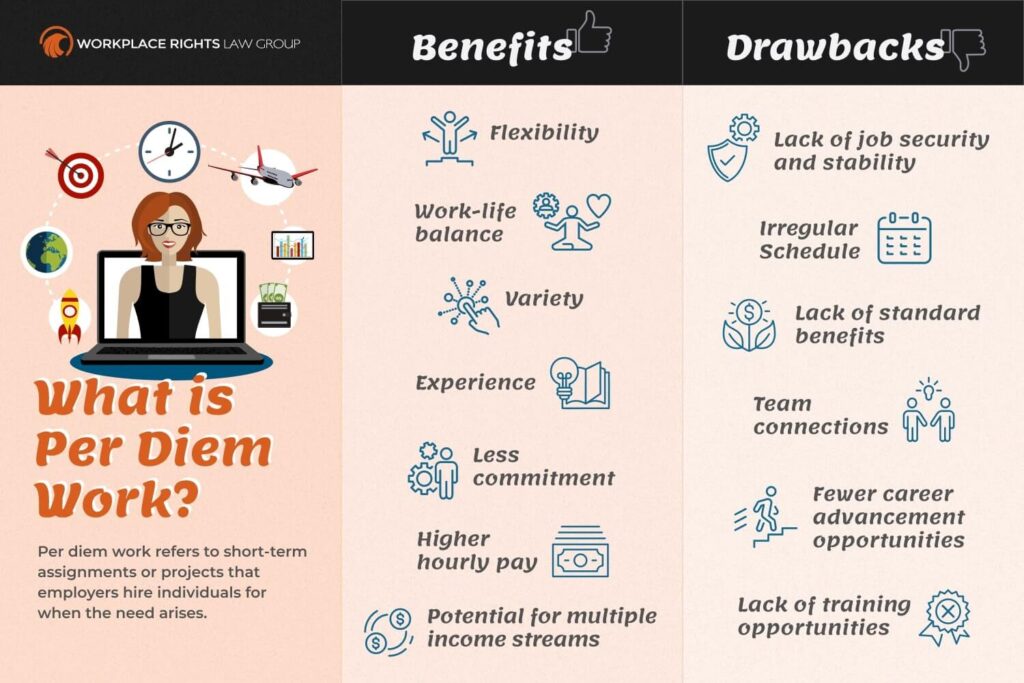
While the concept of temporary work has existed for centuries, the modern per diem landscape has been significantly shaped by technological advancements and evolving workforce dynamics. Industries like healthcare, education, and specialized consulting have long utilized per diem arrangements to meet immediate needs, cover absences, or handle peak workloads. However, the rise of online platforms and the gig economy has broadened the accessibility and appeal of per diem work across a wider spectrum of professions. Understanding the nuances of per diem employment is crucial for both individuals seeking this work style and the organizations that leverage it. This exploration will delve into the financial implications, operational aspects, and strategic advantages of working per diem, focusing squarely on the financial benefits and opportunities it presents.
The Financial Landscape of Per Diem Work
Working per diem fundamentally alters the traditional employment income model, shifting the focus from a consistent salary to a variable, project-based or daily earning potential. This can lead to significant financial advantages for the individual, but also necessitates a more proactive approach to income management and financial planning.
Maximizing Daily Earnings and Rate Negotiation
One of the primary financial draws of per diem work is the potential for higher daily or hourly rates compared to equivalent full-time positions. This premium often reflects the employer’s need for immediate, specialized talent and the flexibility required from the worker. Per diem professionals are essentially selling their immediate availability and expertise, and this scarcity and demand can translate directly into increased earning potential.
- Understanding Market Value: To maximize daily earnings, a thorough understanding of one’s market value is essential. This involves researching typical per diem rates for specific roles and industries, considering factors such as experience level, specialized skills, certifications, and the geographic location of the work. Platforms that list per diem opportunities often provide salary ranges or advertised rates, offering a valuable benchmark.
- Negotiation Strategies: Effective negotiation is key. Per diem workers should be prepared to discuss their rates confidently, justifying their figures based on their qualifications and the value they bring. This might involve highlighting past successes, unique skill sets, or the efficiency they can deliver. Being open to negotiation, but also knowing one’s bottom line, is a critical financial skill for per diem professionals.
- The Impact of Specialization: Highly specialized skills or certifications can significantly boost per diem rates. In fields like healthcare (e.g., specialized nurses, locum tenens physicians), IT (e.g., cybersecurity consultants, cloud architects), or niche engineering roles, individuals with in-demand expertise can command premium per diem compensation. This specialization acts as a financial differentiator.
Managing Variable Income and Cash Flow
The inherent variability of per diem income requires a robust approach to personal finance and cash flow management. Unlike salaried employees who receive a predictable paycheck, per diem workers experience fluctuations in their earnings based on the availability of assignments and the duration of contracts.
- Budgeting for Fluctuations: A core principle is to establish a flexible budget that accounts for lean periods as well as busy ones. This involves understanding essential monthly expenses and ensuring that even during slower months, these costs can be met. Building a financial buffer or emergency fund becomes paramount. This fund acts as a safety net, providing peace of mind and financial stability when income dips.
- Strategic Income Allocation: Per diem earnings can be strategically allocated. During periods of high income, it’s advisable to prioritize saving, investing, and paying down high-interest debt. This proactive financial management can accelerate wealth-building and reduce long-term financial stress.
- Utilizing Financial Tools: A range of financial tools can assist per diem workers. Budgeting apps, expense trackers, and investment platforms designed for freelancers and independent contractors can help monitor income and expenses, identify spending patterns, and optimize savings and investments. Many accounting software solutions also offer features tailored for self-employed individuals, simplifying tax preparation and financial oversight.
Tax Implications and Deductions for Per Diem Workers
Working per diem often classifies individuals as independent contractors or self-employed. This classification carries specific tax implications that can be both a challenge and an opportunity for financial optimization.
- Understanding Self-Employment Taxes: Per diem workers are typically responsible for paying self-employment taxes, which cover Social Security and Medicare contributions. This is generally a higher percentage than what an employee would pay, as employers usually cover half of these taxes. However, it’s important to understand that these contributions are building towards your future Social Security and Medicare benefits.
- Maximizing Deductible Business Expenses: A significant financial advantage of working per diem as an independent contractor is the ability to deduct a wide range of business expenses. These deductions can significantly reduce taxable income, thereby lowering the overall tax burden. Common deductible expenses include:
- Home Office Deduction: If a portion of your home is used exclusively and regularly for your work, you may be able to deduct a percentage of your housing expenses (rent or mortgage interest, property taxes, utilities).
- Supplies and Equipment: Any materials, tools, or equipment purchased for your work (e.g., computers, software, office supplies) are often deductible.
- Professional Development: Costs associated with courses, workshops, conferences, and professional dues that are necessary to maintain or improve your skills are typically deductible.
- Travel Expenses: Mileage for business-related travel, public transportation costs, and even certain lodging and meal expenses incurred while working away from home can be deducted.
- Insurance Premiums: Premiums for health insurance and a portion of self-employment taxes can often be deducted.
- Quarterly Estimated Tax Payments: To avoid penalties, per diem workers are generally required to make quarterly estimated tax payments to the IRS. This involves calculating your projected annual income and tax liability and paying it in four installments throughout the year. Proactive tax planning and setting aside funds for these payments are essential to avoid surprises.
- Consulting a Tax Professional: Given the complexities of self-employment taxes and deductions, consulting with a qualified tax advisor or accountant specializing in independent contractors and small businesses is highly recommended. They can provide personalized guidance, ensure compliance, and help identify all eligible deductions to maximize your financial benefit.
Operational Advantages and Financial Efficiency

Beyond direct earnings, working per diem offers operational advantages that can contribute to overall financial efficiency and strategic growth, particularly for individuals seeking to build a sustainable and profitable career.
Building a Diverse Income Portfolio
The nature of per diem work inherently encourages diversification of income streams. Instead of relying on a single employer and a singular job description, per diem professionals can engage with multiple clients, projects, and even industries. This diversification acts as a powerful risk mitigation strategy, ensuring that a downturn in one area doesn’t cripple one’s entire income.
- Reducing Dependence on a Single Source: A single per diem assignment might end, or a client’s needs might change. By working with various clients, a per diem professional can quickly pivot and fill any income gaps, maintaining a more consistent revenue flow. This is a stark contrast to traditional employment, where losing a job can mean a complete loss of income for an extended period.
- Exploring New Opportunities and Skill Development: Each per diem engagement offers a chance to learn new skills, gain exposure to different work environments, and build a broader professional network. This continuous learning and adaptation can lead to higher earning potential over time, as the individual becomes more versatile and in-demand. It also allows for exploration of different career paths without the commitment of a permanent role.
- Leveraging Online Platforms for Reach: The digital age has revolutionized how per diem professionals find work. Numerous online platforms and job boards are dedicated to connecting businesses with freelance and per diem talent. These platforms expand reach exponentially, allowing individuals to access opportunities far beyond their local geographic area and to find assignments that precisely match their evolving skill set and financial goals.
Investing in Professional Development and Tools
The increased earning potential often associated with per diem work can be reinvested in personal and professional growth. This strategic investment can further enhance financial prospects and long-term career sustainability.
- Skill Enhancement and Specialization: Per diem professionals have the flexibility to invest in courses, certifications, or advanced training that can elevate their expertise and justify higher per diem rates. This could involve learning new software, acquiring specialized industry knowledge, or obtaining professional accreditations. The direct correlation between enhanced skills and increased earning potential makes this a financially sound investment.
- Acquiring Essential Tools and Technology: To remain competitive and efficient, per diem workers may need to invest in up-to-date technology, software, or equipment. This could range from powerful computing hardware and specialized software licenses to high-quality communication tools and ergonomic office setups. By investing in the right tools, professionals can improve their productivity, deliver higher quality work, and thus secure better-paying assignments.
- Building a Strong Professional Brand: While not explicitly a “brand” category, a strong personal brand is crucial for per diem success and has significant financial implications. This involves cultivating a professional online presence, gathering testimonials, and networking effectively. A well-defined personal brand can attract higher-paying clients and create a reputation that precedes the professional, leading to a more consistent flow of lucrative opportunities. This indirectly but powerfully impacts one’s financial trajectory.
Strategic Considerations for Long-Term Financial Success
While the immediate financial benefits of per diem work are apparent, a strategic approach is essential for ensuring long-term financial security and wealth accumulation. This involves looking beyond individual assignments and focusing on building a sustainable and thriving per diem career.
Planning for Retirement and Long-Term Investments
The absence of employer-sponsored retirement plans, such as 401(k)s, in traditional per diem arrangements necessitates proactive personal retirement planning. This is a critical aspect of managing one’s finances for the future.
- Self-Directed Retirement Accounts: Per diem workers have access to a variety of self-directed retirement savings options. These include Traditional IRAs, Roth IRAs, and Solo 401(k)s (also known as individual 401(k)s or uni-k). Each has its own tax advantages and contribution limits, and understanding these differences is key to maximizing retirement savings.
- Traditional IRA: Contributions may be tax-deductible in the year they are made, lowering current taxable income. Withdrawals in retirement are taxed as ordinary income.
- Roth IRA: Contributions are made with after-tax dollars, but qualified withdrawals in retirement are tax-free. This can be particularly advantageous if you anticipate being in a higher tax bracket in retirement.
- Solo 401(k): This plan is designed for self-employed individuals and allows for both “employee” and “employer” contributions, significantly increasing potential savings amounts compared to IRAs. It also offers options for Roth contributions and loans against the balance.
- Choosing Appropriate Investment Vehicles: Beyond retirement accounts, per diem professionals should consider other investment avenues to grow their wealth. This might include taxable brokerage accounts, real estate investments, or diversifying into other asset classes. The choice of investment vehicles will depend on individual risk tolerance, financial goals, and time horizon.
- The Importance of Consistency: The key to successful long-term investing, regardless of income stream, is consistency. Even with variable income, setting aside a regular percentage of earnings for retirement and other investments is crucial. Automating these contributions can help ensure discipline and prevent lifestyle creep from consuming all available funds.

Building Financial Resilience and Future Opportunities
The flexibility and autonomy of per diem work can be leveraged to build a robust financial foundation that supports both immediate needs and future aspirations.
- Creating a Diversified Income Strategy: While focusing on per diem, consider how to further diversify income to enhance financial resilience. This might involve developing passive income streams, such as rental properties, dividend-paying stocks, or even creating digital products related to your expertise. A multi-faceted income strategy provides greater stability and security.
- Leveraging Financial Expertise for Future Ventures: The experience gained from managing finances as a per diem professional—budgeting, tax planning, investment—is invaluable. This expertise can be a stepping stone to future entrepreneurial ventures or consulting roles, further expanding earning potential and financial independence. The discipline and financial acumen developed are transferable assets.
- Maintaining Professional Networks: Beyond their immediate financial benefits, professional networks are a vital asset for per diem workers. These connections can lead to future per diem opportunities, collaborations, and even insights into emerging trends that can shape future financial strategies. Nurturing these relationships is an ongoing investment in one’s financial future.
In conclusion, working per diem presents a dynamic and financially rewarding pathway for individuals seeking flexibility and control over their careers. By understanding and strategically managing the financial implications—from maximizing daily earnings and navigating variable income to optimizing tax deductions and planning for long-term investments—per diem professionals can build a secure and prosperous financial future. The key lies in proactive financial management, continuous skill development, and a strategic approach to income diversification.
aViewFromTheCave is a participant in the Amazon Services LLC Associates Program, an affiliate advertising program designed to provide a means for sites to earn advertising fees by advertising and linking to Amazon.com. Amazon, the Amazon logo, AmazonSupply, and the AmazonSupply logo are trademarks of Amazon.com, Inc. or its affiliates. As an Amazon Associate we earn affiliate commissions from qualifying purchases.