
Purchasing a home is arguably the most significant financial commitment the average individual will make in their lifetime. While much of the excitement surrounding homeownership centers on property tours and interior design, the most critical decisions happen behind the scenes within the realm of personal finance. Choosing a mortgage lender is not merely a box to check in the home-buying process; it is a strategic financial move that dictates your monthly cash flow, your long-term wealth accumulation, and your overall financial stability for decades.
In a marketplace crowded with traditional banks, digital-first lenders, and specialized credit unions, the “best” lender is rarely the one with the loudest marketing. Instead, it is the institution that aligns most closely with your specific financial profile and long-term goals. This guide explores the sophisticated landscape of mortgage lending to help you navigate the complexities of interest rates, fee structures, and lender archetypes.
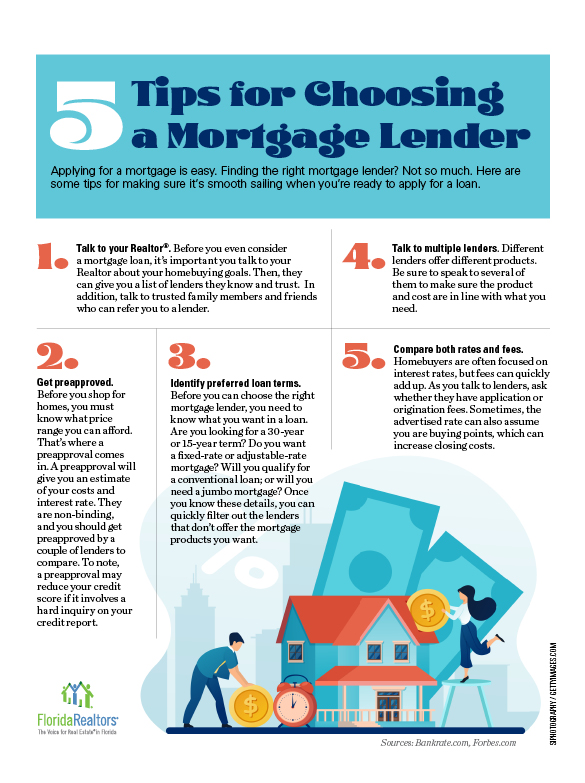
Understanding the Landscape: The Different Types of Mortgage Lenders
Before you can compare rates, you must understand who is providing the capital. The mortgage market is diverse, and each type of lender operates under different regulatory frameworks and profit models, which can impact the terms they offer.
Retail Banks and Credit Unions
Traditional retail banks are often the first stop for prospective homeowners. These institutions use their existing deposits to fund loans. The primary advantage of using a major bank is the potential for “relationship pricing”—discounts on interest rates or closing costs if you already hold significant assets with them.
Credit unions, on the other hand, are member-owned, non-profit entities. Because they are not beholden to shareholders, they frequently offer lower interest rates and more personalized service. However, they may have stricter membership requirements and less sophisticated digital interfaces than national banks.
Mortgage Brokers: The Intermediaries
A mortgage broker does not lend money directly. Instead, they act as a liaison between you and a multitude of wholesale lenders. For a borrower with a complex financial situation—such as being self-employed or having a non-traditional income stream—a broker is invaluable. They have the tools to shop your profile across dozens of lenders simultaneously, finding a niche product that a standard bank might not offer. It is important to note that brokers earn a commission, which is either paid by the lender or the borrower, so transparency regarding their fee structure is essential.
Non-Bank and Direct Online Lenders
In the last decade, non-bank lenders and online-only platforms have captured a massive share of the mortgage market. These companies specialize exclusively in mortgages and often utilize high-end technology to streamline the underwriting process. Because they do not maintain physical branch networks, their overhead is lower, which can sometimes translate into more competitive pricing and faster closing times.
Beyond the Interest Rate: Analyzing the Total Cost of the Loan
Many borrowers make the mistake of choosing a lender based solely on the advertised interest rate. While the “headline rate” is important, it is only one component of the total cost of credit. To make an informed financial decision, you must look deeper into the nuances of the loan structure.
Interest Rates vs. Annual Percentage Rate (APR)
The interest rate is the cost of borrowing the principal amount. However, the Annual Percentage Rate (APR) is a more accurate reflection of the true cost of the loan. The APR includes the interest rate plus other costs, such as mortgage insurance, most closing costs, and loan origination fees. When comparing lenders, the APR is the ultimate “apples-to-apples” metric. If Lender A offers a 6.5% rate with high fees and Lender B offers a 6.7% rate with zero fees, Lender B might actually have a lower APR and be the better financial choice.
Mortgage Points: Paying Upfront to Save Later
Lenders often give you the option to “buy down” your interest rate by paying discount points at closing. One point typically costs 1% of the total loan amount and reduces your interest rate by a predetermined margin (usually 0.25%).
Deciding whether to pay points is a calculation of your “break-even point.” If paying $4,000 in points saves you $100 a month, it will take you 40 months to recoup that initial investment. If you plan to stay in the home for thirty years, points are a wise investment. If you plan to sell or refinance in three years, paying points is a financial loss.

Identifying Hidden Fees and Closing Costs
Closing costs typically range from 2% to 5% of the home’s purchase price. These include origination fees, appraisal fees, title insurance, and credit report charges. Some lenders offer “no-closing-cost” mortgages, but these are a bit of a misnomer; the lender simply wraps those costs into a higher interest rate. Careful scrutiny of the “Loan Estimate” form—a standardized document lenders are legally required to provide—will reveal exactly where your money is going.
The Crucial Role of Prequalification and Pre-approval
In a competitive real estate market, your ability to prove your financial backing is your strongest leverage. However, there is a distinct difference between being “prequalified” and being “pre-approved,” and understanding this distinction is vital for your strategy.
Prequalification: The Initial Pulse Check
Prequalification is a preliminary assessment based on unverified information you provide to the lender. It gives you a ballpark figure of what you might be able to afford. While helpful for your internal budgeting, a prequalification letter carries little weight with sellers because the lender hasn’t yet verified your income, assets, or credit history.
Formal Pre-approval: Strengthening Your Buying Power
A formal pre-approval is a much more rigorous process. The lender will pull your “tri-merge” credit report and require documentation such as W-2s, tax returns, and bank statements. Once you are pre-approved, the lender issues a conditional commitment for a specific loan amount. In the eyes of a seller, a pre-approved buyer is almost as good as a cash buyer because the financial uncertainty has been largely removed. From a personal finance perspective, this process also alerts you to any potential red flags in your credit profile that need to be addressed before you sign a purchase agreement.
Evaluating Service Quality and Technical Integration
While the numbers are the primary driver of the decision, the “human” and “technical” elements of a lender cannot be ignored. A mortgage is a time-sensitive transaction; a delay of even a few days can result in a breached contract or the loss of a locked-in interest rate.
Speed of Execution and Closing Timelines
The average mortgage takes 30 to 45 days to close. Some tech-forward lenders have optimized their workflows to close in as little as 21 days. When interviewing lenders, ask about their average “turn times” for underwriting and appraisal. In a hot market, a lender known for moving quickly can make your offer more attractive to sellers who want a fast, certain exit.
Digital Accessibility and Document Management
Modern mortgage lending involves a mountain of paperwork. Lenders who offer robust digital portals allow you to upload documents securely, track the progress of your application in real-time, and e-sign disclosures. This not only saves time but also reduces the risk of sensitive financial data being compromised via unencrypted email attachments.
Making the Final Decision: A Step-by-Step Comparison Strategy
To choose the right lender, you must act as your own financial auditor. The goal is to collect competing offers and leverage them against one another to secure the most favorable terms.
Leveraging the Loan Estimate Form
The Consumer Financial Protection Bureau (CFPB) mandates that lenders provide a three-page Loan Estimate (LE) within three business days of receiving your application. This form is your most powerful tool. It breaks down the loan into:
- Loan Terms: Interest rate, monthly principal and interest, and whether there is a prepayment penalty.
- Projected Payments: Estimates for property taxes and homeowners insurance.
- Costs at Closing: An itemized list of every fee the lender is charging.
By placing three Loan Estimates side-by-side, the “cheapest” loan becomes immediately apparent, stripping away the marketing jargon.

Negotiating Terms and Finalizing Your Choice
Many borrowers do not realize that mortgage terms are often negotiable. If you have a quote from Lender A that has a lower interest rate, but Lender B has lower closing costs, you can present Lender A’s quote to Lender B and ask them to match the rate. Lenders are often willing to waive or reduce certain “junk fees” (like application or processing fees) to win your business, especially if you have a high credit score and a significant down payment.
Ultimately, choosing a mortgage lender is a balance of cost, speed, and reliability. By treating the process as a rigorous financial evaluation rather than a simple shopping trip, you ensure that your home remains a primary asset in your wealth-building journey rather than a drain on your financial future.
aViewFromTheCave is a participant in the Amazon Services LLC Associates Program, an affiliate advertising program designed to provide a means for sites to earn advertising fees by advertising and linking to Amazon.com. Amazon, the Amazon logo, AmazonSupply, and the AmazonSupply logo are trademarks of Amazon.com, Inc. or its affiliates. As an Amazon Associate we earn affiliate commissions from qualifying purchases.