
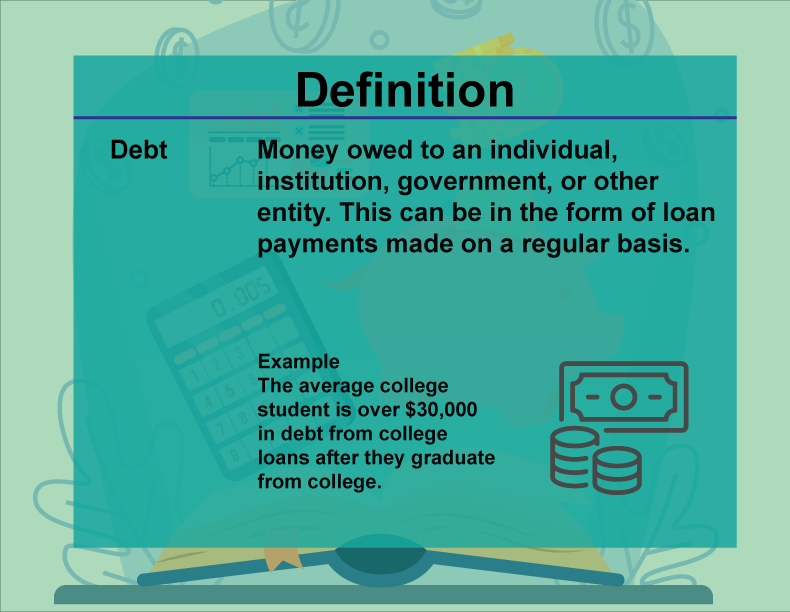
To be in debt is to owe money to another party. While the definition itself is straightforward, the implications, nuances, and impacts of being in debt are far-reaching, affecting personal finances, business operations, and even national economies. Understanding debt goes beyond merely acknowledging an outstanding balance; it involves grasping the dynamics of borrowing, the cost of money, and the strategic decisions that lead to and resolve financial obligations.
The Core Concept of Debt: An Obligation to Repay
At its most fundamental level, debt represents a financial obligation, a promise made by one party (the borrower) to repay money or other agreed-upon assets to another party (the lender) at a future date, usually with interest. This agreement is typically formalized through a contract or loan agreement, outlining the terms of repayment.
Defining Debt: Principal, Interest, and Terms
Every debt involves several key components:
- Principal: This is the original amount of money borrowed. If you take out a $10,000 loan, $10,000 is the principal.
- Interest: This is the cost of borrowing money, expressed as a percentage of the principal. Lenders charge interest as compensation for the risk and the opportunity cost of lending their capital. Interest can be fixed (stays the same over the loan term) or variable (fluctuates with market rates).
- Loan Term: This is the agreed-upon period over which the debt must be repaid. Terms can range from a few weeks for payday loans to 30 years or more for mortgages.
- Repayment Schedule: This details the frequency and amount of payments, specifying how much goes towards principal and how much towards interest in each installment.
Understanding these components is crucial because they collectively determine the true cost of borrowing. A lower interest rate or a longer loan term can reduce monthly payments but may increase the total interest paid over the life of the loan.
The Spectrum of Debt: Good vs. Bad Debt
Not all debt is created equal. Financial professionals often categorize debt as “good” or “bad” based on its potential to generate future value or income.
- Good Debt: This type of debt is typically incurred for investments that have the potential to grow in value, produce income, or enhance one’s earning capacity. Examples include:
- Mortgages: Debt used to purchase real estate, which often appreciates over time and can build equity.
- Student Loans: An investment in education and skills that can lead to higher-paying jobs and increased lifetime earnings.
- Business Loans: Capital used to start or expand a business, aiming to generate profits and create wealth.
- Investment Loans: In some cases, borrowing to invest in assets that are expected to yield higher returns than the cost of the loan.
- Bad Debt: This refers to debt incurred for rapidly depreciating assets or consumption, especially if it carries a high interest rate. This type of debt often does not provide a future financial return and can become a significant drain on resources. Examples include:
- High-Interest Credit Card Debt: Often used for everyday expenses or non-essential purchases, with interest rates that can quickly make balances unmanageable.
- Payday Loans: Extremely high-interest, short-term loans designed to bridge a gap until the next paycheck, frequently trapping borrowers in a cycle of debt.
- Loans for Depreciating Assets: Such as luxury cars that lose value quickly, purchased with loans that may have unfavorable terms.
The distinction isn’t always black and white, and individual circumstances play a significant role. A mortgage could become “bad” if the property value plummets, or a business loan could be detrimental if the business fails. The key is the intent behind the borrowing and the potential for a positive return on investment.
Common Forms and Sources of Debt
Debt manifests in various forms, each with its own characteristics, terms, and implications.
Consumer Debt
This category primarily covers debt incurred by individuals for personal, family, or household purposes.
- Credit Cards: A revolving line of credit that allows borrowers to make purchases up to a certain limit. Payments are flexible, requiring only a minimum amount each month, but interest rates are typically high.
- Personal Loans: Unsecured loans (meaning no collateral is required) taken out for a variety of purposes, such as consolidating other debts, covering unexpected expenses, or funding a large purchase. They usually have fixed interest rates and repayment terms.
- Auto Loans: Secured loans used to finance the purchase of a vehicle. The car itself serves as collateral, meaning the lender can repossess it if payments are not made.
- Home Equity Loans/Lines of Credit (HELOCs): Loans secured by the equity in one’s home. These often have lower interest rates due to the collateral but put the home at risk if repayment fails.
Secured vs. Unsecured Debt
A crucial distinction in understanding debt is whether it is secured or unsecured.
- Secured Debt: Backed by collateral, an asset the lender can seize if the borrower defaults. Mortgages (home as collateral) and auto loans (car as collateral) are prime examples. Secured debt typically carries lower interest rates because the lender’s risk is reduced.
- Unsecured Debt: Not backed by collateral. Credit cards, personal loans, and student loans are often unsecured. Lenders rely solely on the borrower’s creditworthiness and promise to repay, making these types of debt generally higher risk for lenders and thus often carrying higher interest rates for borrowers.
Business Debt
Companies, from startups to multinational corporations, also rely on debt to fund operations, expand, and manage cash flow.
- Startup Loans: Used by new businesses to cover initial costs like equipment, inventory, and operational expenses.
- Lines of Credit: Flexible borrowing options that allow businesses to draw funds as needed, up to a certain limit, often used for working capital or short-term needs.
- Equipment Financing: Loans specifically for purchasing machinery, vehicles, or other business equipment, often with the equipment itself serving as collateral.
- Corporate Bonds: Larger corporations may issue bonds to raise capital from investors, essentially borrowing money directly from the public or institutions.
Student Loans
A significant form of debt for many individuals, student loans finance higher education. They can be federal (offered by the government, often with more flexible repayment options) or private (offered by banks, typically with fewer protections). These loans are often deferred until after graduation, but interest may accrue during the study period.
The Financial and Psychological Impact of Debt
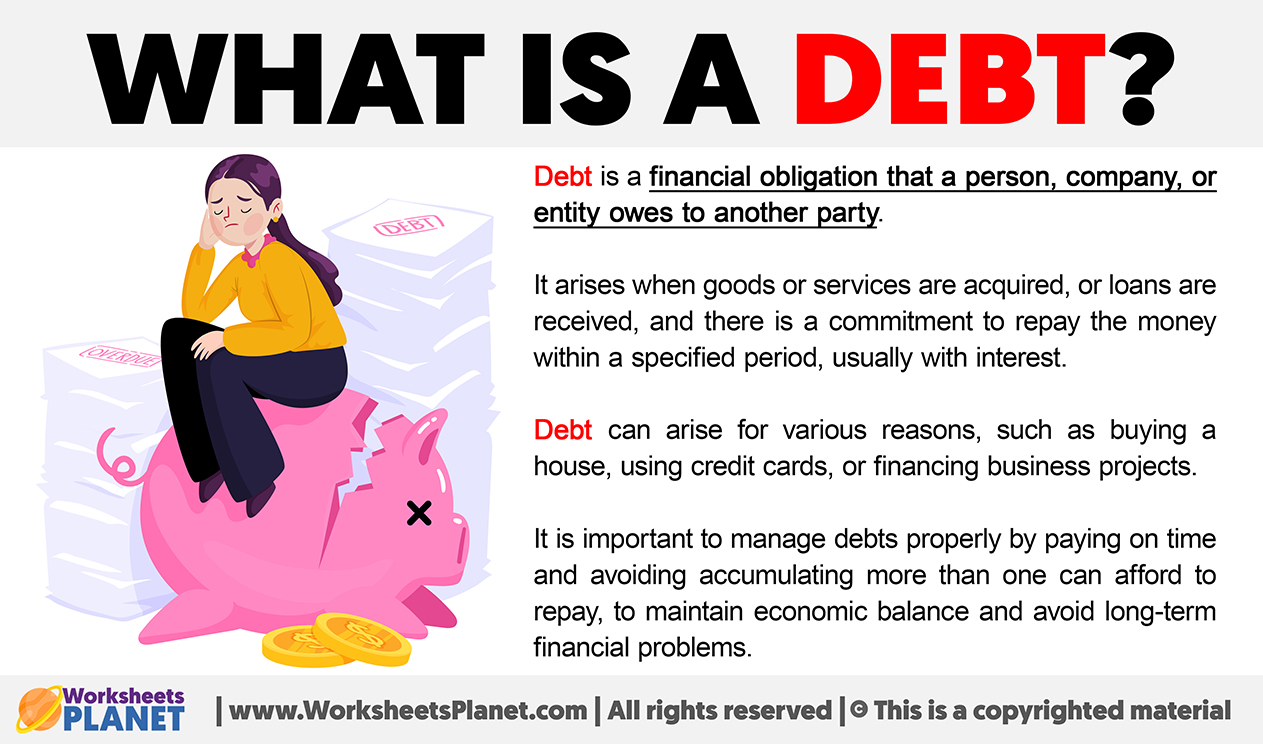
Being in debt, particularly “bad” debt, carries significant financial and psychological weight.
Financial Ramifications
- Interest Accumulation: Compound interest, while beneficial for investments, can work against debtors. Even small balances can grow substantially over time if only minimum payments are made, as interest is charged on the outstanding principal and accumulated interest.
- Credit Score Impact: Responsible debt management (on-time payments, low credit utilization) can build a positive credit history, essential for future borrowing, housing, and even employment. Conversely, missed payments, high balances, and defaults severely damage credit scores, making future credit difficult and expensive.
- Opportunity Cost: Every dollar spent on debt repayment is a dollar that cannot be saved, invested, or used for other financial goals. High debt burdens can delay major life milestones like homeownership, retirement savings, or starting a family.
- Bankruptcy and Foreclosure: In extreme cases, overwhelming debt can lead to bankruptcy, a legal process that liquidates assets or restructures debt, severely impacting credit for years. For secured debt like mortgages, failure to pay can result in foreclosure, where the lender takes possession of the asset.
Psychological Burden
Beyond the tangible financial costs, debt can exact a heavy psychological toll.
- Stress and Anxiety: The constant worry about making payments, avoiding calls from creditors, and the feeling of being trapped can lead to chronic stress and anxiety.
- Impact on Relationships: Financial strain is a leading cause of marital conflict and can strain relationships with family and friends if borrowing from them or if financial disagreements arise.
- Limited Freedom: Debt can feel like a cage, limiting career choices (needing a high-paying job to service debt), geographical mobility, and the ability to pursue passions or take risks.
- Health Implications: Chronic stress from debt can manifest in physical health problems, including sleep disturbances, high blood pressure, and mental health issues like depression.
Strategies for Managing and Overcoming Debt
Fortunately, strategies exist to manage and ultimately overcome debt. The path to financial freedom often requires discipline, planning, and sometimes, professional guidance.
Assessment and Budgeting
The first step is always to understand the full scope of your debt.
- List All Debts: Compile a comprehensive list including the creditor, current balance, interest rate, minimum payment, and due date for each debt.
- Create a Detailed Budget: Track all income and expenses to identify where money is going and where cuts can be made to free up funds for debt repayment. The goal is to maximize the amount available to pay down high-interest debts.
Debt Reduction Methods
Once you have a clear picture, choose a repayment strategy:
- Debt Snowball Method: Pay off the smallest balance first while making minimum payments on all other debts. Once the smallest is paid, take the money you were paying on it and apply it to the next smallest debt. This method provides psychological wins, helping maintain motivation.
- Debt Avalanche Method: Prioritize paying off debts with the highest interest rates first, while making minimum payments on others. This method is mathematically more efficient, saving the most money on interest over time.
- Debt Consolidation: Combine multiple debts into a single, new loan, often with a lower interest rate and a single monthly payment. This can be done through a personal loan, a balance transfer credit card, or a home equity loan. It simplifies repayment and can reduce interest costs, but care must be taken not to incur new debt.
- Refinancing: For larger debts like mortgages or student loans, refinancing involves replacing an existing loan with a new one, typically with a lower interest rate or different terms. This can significantly reduce monthly payments or the total interest paid.
Building an Emergency Fund
Before or alongside aggressive debt repayment, building a small emergency fund (e.g., $1,000) is crucial. This fund prevents unexpected expenses (car repair, medical bill) from forcing you to incur new debt, thereby derailing your repayment efforts.
Seeking Professional Help
For those overwhelmed by debt, professional assistance can be invaluable.
- Credit Counseling Agencies: Non-profit organizations that can help create debt management plans, negotiate with creditors, and provide financial education.
- Financial Advisors: Can offer comprehensive financial planning, including debt management strategies, investment advice, and long-term financial goal setting.
- Bankruptcy Attorneys: If debt is insurmountable, an attorney can guide individuals through the complex process of bankruptcy.
Prevention and Prudent Borrowing
The best strategy is often prevention.
- Live Within Your Means: Spend less than you earn to avoid needing to borrow for everyday expenses.
- Understand Loan Terms: Always read and comprehend the fine print before signing any loan agreement.
- Avoid Impulsive Borrowing: Consider the true cost and necessity of any new debt.
- Build Good Credit Responsibly: Use credit cards for small, manageable purchases that you pay off in full each month to build a positive credit history without accruing interest.
The Role of Debt in a Healthy Financial Life
While often viewed negatively, debt is an integral part of modern finance and can be a powerful tool when used strategically.
Strategic Leverage
Debt, particularly “good” debt, can serve as a form of leverage, enabling individuals and businesses to acquire assets or pursue opportunities that would otherwise be out of reach. A mortgage allows homeownership; a business loan funds growth. When the return on investment from the asset acquired with debt exceeds the cost of borrowing, debt becomes a wealth-building tool.
Credit Building
Responsible debt management is fundamental to building a strong credit history. A good credit score opens doors to lower interest rates on future loans, better insurance premiums, and easier approval for housing and other financial services. It demonstrates financial responsibility and reliability.

Maintaining Perspective
Ultimately, debt is a financial instrument. It is neither inherently good nor bad, but rather its utility is determined by how it is acquired, managed, and utilized. Understanding “what it means to be in debt” involves recognizing its dual nature: a potential trap when misused, but also a potent enabler of financial progress when approached with knowledge, discipline, and foresight.
aViewFromTheCave is a participant in the Amazon Services LLC Associates Program, an affiliate advertising program designed to provide a means for sites to earn advertising fees by advertising and linking to Amazon.com. Amazon, the Amazon logo, AmazonSupply, and the AmazonSupply logo are trademarks of Amazon.com, Inc. or its affiliates. As an Amazon Associate we earn affiliate commissions from qualifying purchases.