
The term “legally blind” is often misunderstood by the general public. Many assume it signifies a total lack of vision—a world of complete darkness. However, in the realms of medicine and law, legal blindness is a specific technical threshold that triggers access to various services, rights, and, increasingly, a sophisticated suite of assistive technologies. In the modern era, being legally blind does not mean being disconnected; rather, it marks the point where technology steps in to bridge the gap between biological limitation and functional capability.
As we move deeper into an age defined by Artificial Intelligence (AI) and wearable tech, the definition of legal blindness is evolving from a restrictive label into a baseline for technological innovation. For tech developers and users alike, understanding this definition is the first step in exploring how software and hardware are rewriting the rules of accessibility.
Decoding the Technical Definition of Legal Blindness
To understand the intersection of vision and technology, one must first understand the clinical metrics that define legal blindness. These metrics are not arbitrary; they are the benchmarks used by governments and tech companies to determine who requires specialized accessibility interfaces.
The Quantitative Metrics: Visual Acuity and Field of Vision
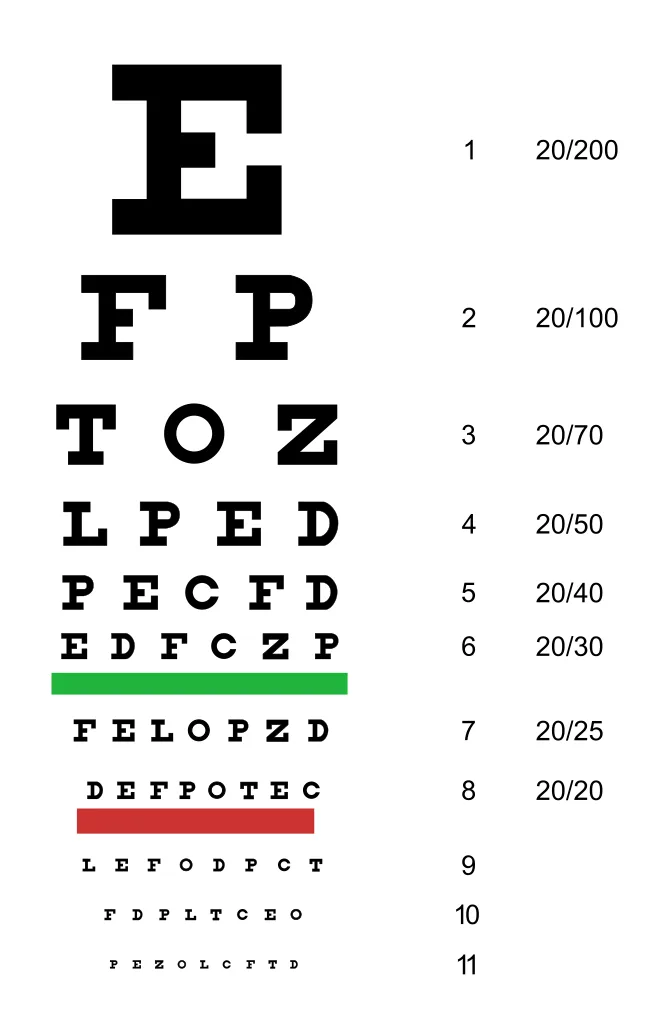
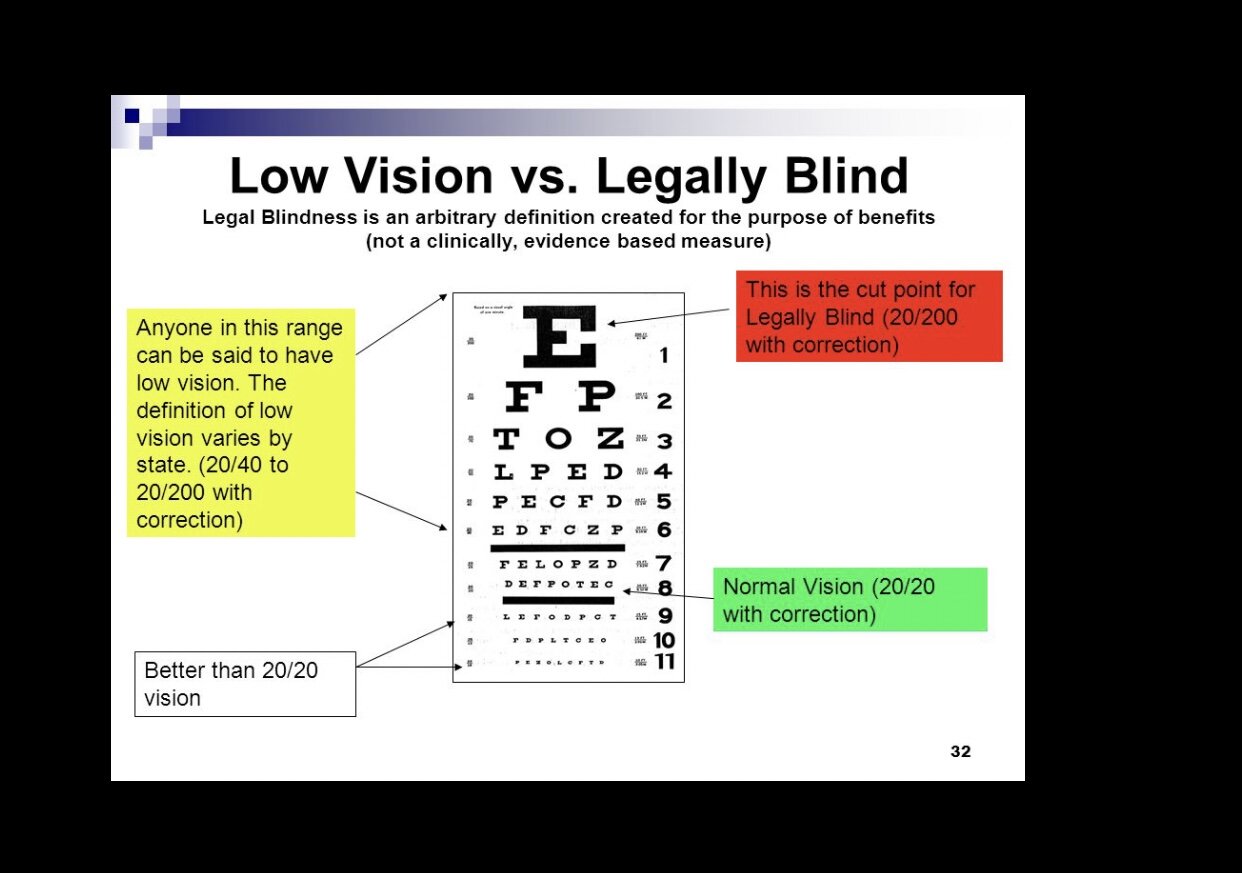
In the United States and many other jurisdictions, a person is considered legally blind if their central visual acuity is 20/200 or worse in their better eye with the use of a corrective lens. This means that a person would have to stand 20 feet away from an object to see it as clearly as a person with “normal” vision could see it from 200 feet.
The second component involves the visual field. If a person’s peripheral vision is restricted to an angle of 20 degrees or less (sometimes called “tunnel vision”), they meet the criteria for legal blindness, even if their central vision is 20/20. From a tech perspective, these numbers are critical because they dictate the “viewport” through which a user interacts with a digital interface.
Why the Distinction Matters for Tech Developers
For developers in the software and hardware sectors, these definitions provide the parameters for User Experience (UX) design. A user who is legally blind may still have some usable vision, which means high-contrast modes, scalable vector graphics, and screen magnification are essential. Conversely, if the user falls toward the more severe end of the spectrum, the tech must shift entirely from visual output to auditory or haptic (touch-based) feedback.
Understanding the nuances of “low vision” versus “total blindness” allows tech companies to build modular accessibility features. By catering to the specific legal definition, developers ensure that their products are compliant with international standards like the Web Content Accessibility Guidelines (WCAG), which are the backbone of digital inclusivity.
The Digital Revolution in Assistive Vision Software
The smartphone is perhaps the most significant tool ever invented for the legally blind community. What was once a simple communication device has been transformed by software into a pocket-sized visual interpreter.
Screen Readers and the Evolution of Navigational Feedback
The cornerstone of software accessibility is the screen reader. Programs like JAWS (Job Access With Speech) for Windows, or VoiceOver for Apple devices, translate on-screen text and image metadata into synthesized speech. In recent years, these tools have moved beyond mere text-to-speech. Modern screen readers use spatial audio to give users a sense of where a button is located on a screen, allowing for a more intuitive “map” of the digital environment.
AI-Driven Object Recognition: Putting Sight into a Smartphone
AI has drastically expanded the capabilities of mobile apps for the visually impaired. Apps like Microsoft’s Seeing AI or Be My Eyes utilize the phone’s camera and machine learning algorithms to identify objects in real-time. A user can point their phone at a countertop, and the software will announce, “A bottle of water next to a set of keys.”
This technology relies on deep learning models trained on millions of images. For someone who is legally blind, this software provides a level of independence that was previously impossible, allowing them to identify currency, read product barcodes, and even detect the presence of light or people in a room.
OCR and the Real-Time Translation of the Physical World
Optical Character Recognition (OCR) is another pillar of assistive tech. While OCR has existed for decades, its integration into mobile hardware allows for the instantaneous reading of “short text”—such as a menu, a street sign, or a medication label. The tech has become so refined that it can now handle handwritten notes and complex layouts, converting the physical world into a digital format that the legally blind can “read” through audio.

Cutting-Edge Hardware and Wearables for the Visually Impaired
While software provides the intelligence, new hardware formats are providing the “eyes.” The transition from handheld devices to wearables is a major trend in the tech industry, offering hands-free navigation and enhanced environmental awareness.
Smart Glasses and Augmented Reality (AR) Overlays
For many who are legally blind, the issue is not a total lack of sight, but an inability to process visual information clearly. Companies like eSight and Envision have developed smart glasses that use high-speed cameras to capture live video, which is then processed and projected onto high-resolution screens right in front of the user’s eyes.
These devices can magnify the image, enhance contrast, and adjust brightness to compensate for the user’s specific visual deficits. In this context, AR tech isn’t just for gaming; it is a clinical tool that can effectively “upgrade” a user’s remaining vision to a functional level.
Haptic Feedback Devices: Navigating the World Through Touch
Innovation isn’t limited to audio and visual enhancements. Haptic technology uses vibrations and tactile sensations to convey information. Wearable bands or “smart shoes” can connect via Bluetooth to GPS apps on a smartphone. When a user needs to turn left, the left shoe or wristband vibrates. This “haptic language” allows legally blind individuals to navigate busy city streets without having to rely solely on audio cues, which can be drowned out by traffic noise.
Electronic Travel Aids (ETAs) and Smart Canes
The traditional white cane has received a high-tech makeover. “Smart canes,” such as the WeWALK, are equipped with ultrasonic sensors that detect obstacles above chest level—objects that a traditional cane might miss, such as low-hanging branches or signposts. These devices often integrate with voice assistants, providing turn-by-turn navigation and public transport information directly through the handle of the cane.
Web Accessibility and the Future of Inclusive UX
As our lives migrate into the cloud, digital environments must be as accessible as physical ones. For a legally blind user, a poorly designed website is an impenetrable wall. Tech companies are now viewing accessibility not just as a legal requirement, but as a hallmark of superior brand engineering.
WCAG Standards: Beyond a Compliance Checklist
The Web Content Accessibility Guidelines (WCAG) provide the technical framework for making web content accessible to those who are legally blind. This includes “Alt-text” for images (which screen readers can describe), keyboard-only navigation (for those who cannot see a mouse cursor), and color contrast ratios that meet the needs of those with low visual acuity.
In the tech sector, companies like Google and Apple have made accessibility a core part of their developer ecosystems. By providing APIs that automatically handle these functions, they are ensuring that the next generation of apps is born “accessible-ready.”
Designing for “Blind-First” User Experiences
A burgeoning trend in UX design is the “Blind-First” or “Voice-First” approach. Rather than designing a visual interface and then trying to make it accessible, developers are starting with the audio and haptic experience. This leads to cleaner, more logical site architectures that benefit all users, not just those with visual impairments. When tech is designed for the most extreme use cases—such as legal blindness—it often results in a more streamlined and efficient product for the general market.
The Horizon: Neural Implants and AI Pre-emption
The final frontier for technology in this space is the direct interface between silicon and the human brain. We are moving toward a future where “legal blindness” might be a temporary state rather than a permanent condition.
Brain-Computer Interfaces (BCI) and Restoring Visual Input
Companies like Neuralink and various academic research labs are exploring Brain-Computer Interfaces (BCI) that aim to bypass the eyes entirely. By implanting electrode arrays into the visual cortex, researchers have been able to “write” visual information directly into the brain. While still in the early stages of human trials, this tech holds the potential to provide a rudimentary form of sight—often described as “phosphenes” or points of light—to those who are totally blind.
Ethical Tech: Bridging the Gap Between Definition and Ability
As technology continues to advance, the legal definition of blindness may eventually need to be re-evaluated. If a person is “legally blind” but uses a pair of AR glasses that grants them 20/20 functional vision, how does that change their status in the eyes of the law?
The tech industry is at the forefront of this ethical and functional shift. The goal is no longer just to “assist” those with vision loss, but to provide “restorative” technology that levels the playing field. In this high-tech future, the term “legally blind” will remain a vital clinical designation, but it will no longer define the limits of what an individual can achieve in a digital and physical world. Through AI, wearables, and inclusive design, technology is proving that the way we see the world is limited only by the tools we use to perceive it.
aViewFromTheCave is a participant in the Amazon Services LLC Associates Program, an affiliate advertising program designed to provide a means for sites to earn advertising fees by advertising and linking to Amazon.com. Amazon, the Amazon logo, AmazonSupply, and the AmazonSupply logo are trademarks of Amazon.com, Inc. or its affiliates. As an Amazon Associate we earn affiliate commissions from qualifying purchases.