
In an age saturated with digital tools, complex software, and advanced artificial intelligence, a single quality has emerged as the holy grail of technological design: intuitiveness. More than just a buzzword, intuitiveness represents the seamless, almost subconscious connection between a human user and a technological system. It’s the feeling of “just knowing” how to interact with a new app, the immediate understanding of a gadget’s function without needing a manual, or the natural flow of conversation with an AI assistant.
But what precisely does “intuitiveness” mean in the context of technology, and why has it become such a critical metric for success? At its heart, intuitiveness is the measure of how little cognitive effort is required for a user to accomplish their goals within a system. It’s the design philosophy that prioritizes natural human understanding and interaction patterns over forced learning or complex instructions. It transforms technology from a barrier into an invisible assistant, allowing users to focus on their tasks and intentions rather than wrestling with the interface itself.

For tech companies, developers, and product designers, striving for intuitiveness isn’t just about good aesthetics; it’s about reducing friction, enhancing user satisfaction, driving adoption, and ultimately, building enduring products that resonate deeply with their audience. This article delves into the multifaceted meaning of intuitiveness, exploring its foundational principles, its critical importance across the tech landscape, and the ongoing challenges in achieving it.
The Pillars of Intuitive Design: More Than Just “Easy to Use”
While often conflated with “ease of use,” intuitiveness encompasses a broader and deeper set of design principles. Ease of use is a result of intuitiveness, but the latter is built on specific cognitive and interaction design foundations. True intuitive design anticipates user needs, leverages existing mental models, and provides clear, unambiguous pathways to desired outcomes.
Predictability and Consistency
One of the cornerstones of intuitiveness is predictability. Users learn quickly, and they form expectations based on past interactions, both within the same system and across different technologies. An intuitive interface respects these learned behaviors by providing consistent elements, actions, and responses. If a button looks like a button, it should behave like one. If a gesture performs a certain action in one part of an app, it should perform the same action elsewhere. This consistency reduces cognitive load, as users don’t have to relearn patterns or guess outcomes. When an interface is predictable, users build confidence and trust, feeling empowered rather than frustrated. This applies to visual design, interaction patterns, navigation structures, and even the language used within an application. Deviations from established norms or internal inconsistencies force users to expend mental energy trying to understand why things are different, breaking the intuitive flow.
Learnability and Discoverability
An intuitive system isn’t necessarily one where everything is immediately obvious, but one where understanding comes naturally through exploration or minimal guidance. Learnability refers to how easily new users can grasp the system and become proficient. An intuitive system minimizes the learning curve by employing familiar metaphors, providing clear visual cues, and offering progressive disclosure of information – revealing complexity only when needed. Discoverability, on the other hand, is about how easily users can find and utilize all the features and functionalities of a system. Intuitive design makes critical functions prominent and accessible, while less frequently used options are still locatable through logical navigation or contextual menus, without overwhelming the user upfront. It’s a delicate balance: providing enough information to guide, without flooding the user with unnecessary details. Excellent onboarding experiences, subtle prompts, and clear hierarchical structures are hallmarks of high discoverability.
Forgiveness and Feedback
Humans make mistakes, and an intuitive system acknowledges this reality rather than punishing it. Forgiveness in design means providing mechanisms for users to recover from errors easily. This includes “undo” options, clear error messages that explain what went wrong and how to fix it, and reversible actions. Knowing that a mistake won’t lead to irreversible damage or a dead end empowers users to explore and experiment without fear, fostering a more intuitive learning process. Complementing forgiveness is feedback. An intuitive system constantly communicates its status and the results of user actions. Clicking a button should provide visual or auditory confirmation; data entry should validate input in real-time; and processes should indicate their progress. This immediate feedback loop helps users understand if their actions were successful, if the system is responding, or if further input is required, creating a clear dialogue between user and technology. Without clear feedback, users are left guessing, leading to uncertainty and a breakdown in the intuitive experience.
Why Intuitiveness is Crucial in Modern Technology
In today’s hyper-competitive tech landscape, intuitiveness is no longer a luxury but a fundamental necessity. It directly impacts user adoption, engagement, and ultimately, the commercial success of any technological product or service.
Enhancing User Adoption and Engagement
The initial moments a user spends with a new app or gadget are critical. If the experience is confusing, frustrating, or requires extensive training, most users will abandon it. Intuitive design reduces this barrier to entry significantly. When users can immediately grasp how to use a product, they are more likely to adopt it. Furthermore, an intuitive experience fosters a sense of accomplishment and satisfaction, encouraging repeated use and deeper engagement. Users are more likely to integrate intuitive tools into their daily routines because they feel natural and effortless, rather than feeling like another chore to learn. This leads to higher retention rates and greater loyalty, essential metrics for any software or hardware product.
Reducing Cognitive Load and Frustration
Our brains have a limited capacity for processing new information and making decisions. Every unnecessary click, every ambiguous icon, and every confusing navigation path adds to the user’s cognitive load. An intuitive design minimizes this load, freeing up mental resources for the actual task at hand. When a system is intuitive, users don’t have to think about how to use it; they can focus on what they want to achieve. This reduction in mental effort directly translates to less frustration and a more pleasant user experience. In a world where digital fatigue is a real concern, products that respect and preserve a user’s mental energy stand out. This is particularly important for complex professional tools, where reducing friction allows experts to perform their jobs more efficiently and accurately.
Driving Business Success and Innovation
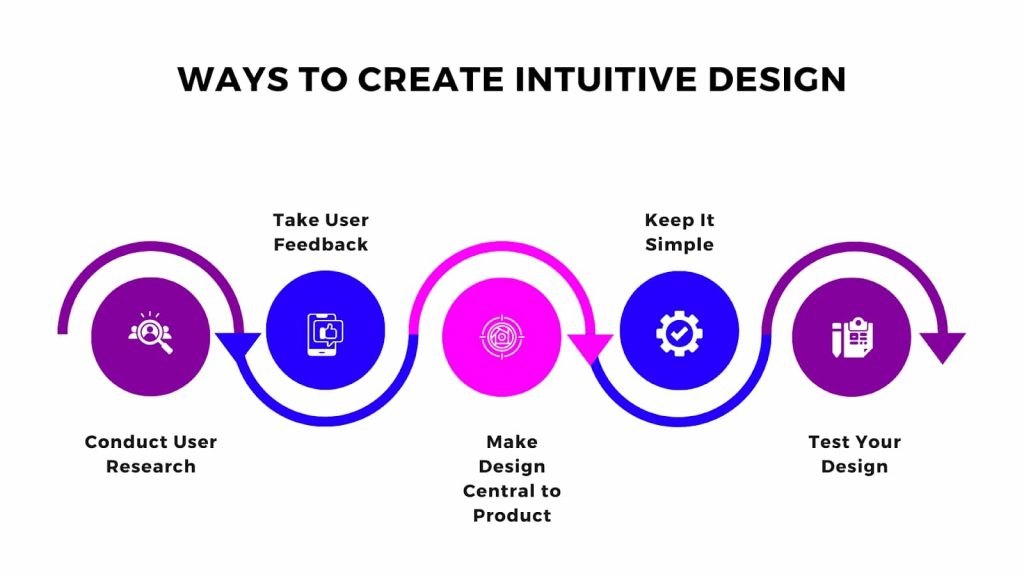
Beyond user satisfaction, intuitiveness has tangible business benefits. Products that are easy and enjoyable to use generate positive word-of-mouth, reduce the need for extensive customer support (as users can self-serve), and command higher market share. Companies like Apple have built empires largely on the back of intuitively designed products that seamlessly integrate into users’ lives. For startups, an intuitive MVP (Minimum Viable Product) can quickly attract early adopters and prove market fit. Moreover, an intuitive foundation enables future innovation. When the core interaction model is sound, designers and developers can build more advanced features on top of it without overwhelming users, ensuring that innovation remains accessible and valuable.
Intuitiveness Across the Tech Spectrum
The quest for intuitiveness is universal across the technology sector, though its manifestation varies depending on the specific domain.
Software & Applications: The UI/UX Frontier
Perhaps nowhere is intuitiveness more discussed and critical than in User Interface (UI) and User Experience (UX) design for software and applications. From mobile apps to enterprise software, designers strive to create interfaces that feel natural. This involves careful consideration of layout, typography, color schemes, icon design, navigation hierarchies, and interaction patterns. A well-designed UI/UX makes complex tasks feel simple, guides users through workflows, and anticipates their next move. Tools like Figma, Sketch, and Adobe XD are central to this process, allowing designers to prototype and test intuitive designs before a single line of code is written. The challenge here often lies in balancing a rich feature set with a minimalist, easy-to-understand interface, ensuring powerful tools don’t overwhelm the average user.
AI & Machine Learning: Humanizing Advanced Tech
As AI and machine learning become increasingly pervasive, the meaning of intuitiveness expands to include how users interact with intelligent systems. An intuitive AI doesn’t just perform tasks; it understands context, anticipates needs, and communicates results in a way that feels natural and human-like. Think of voice assistants like Siri or Google Assistant: their intuitiveness lies in their ability to understand natural language commands and provide relevant, timely information. For complex AI tools in fields like data analysis or medical diagnostics, intuitiveness means presenting complex algorithms and their outputs in digestible, actionable ways. It’s about demystifying AI, making its capabilities accessible and trustworthy, rather than opaque and intimidating. Explainable AI (XAI) is a burgeoning field focused on making AI decisions transparent and therefore, more intuitive for human operators.
Gadgets & Hardware: Seamless Physical Interaction
In the realm of physical technology, intuitiveness relates to how easily users can operate devices, from smartwatches and smart home devices to complex machinery. An intuitive gadget is one whose physical form factor, button placement, and sensory feedback immediately suggest its function. Consider the simplicity of a smartphone: pressing the power button turns it on, swiping unlocks it, and physical volume buttons adjust sound. These are intuitive because they leverage our innate understanding of cause and effect and common physical interactions. The “Internet of Things” (IoT) magnifies this challenge, requiring a seamless, intuitive experience across a myriad of interconnected devices, each with its own physical and digital interface. Designers must consider ergonomic factors, haptic feedback, and the overall sensory experience to ensure physical interactions feel natural and effortless.
The Challenges and Future of Intuitiveness
While the pursuit of intuitiveness is paramount, it is far from an easy endeavor. It presents ongoing challenges that demand continuous innovation and user-centric thinking.
Balancing Simplicity with Feature Richness
One of the perpetual tightropes designers walk is the balance between simplicity and functionality. A product can be incredibly intuitive if it does only one thing, but modern users often demand rich feature sets. The challenge is to hide complexity effectively, making advanced features discoverable without cluttering the basic experience. This often involves progressive disclosure, smart defaults, and modular design that allows users to customize their experience as their proficiency grows. Striking this balance requires deep understanding of user workflows and priorities.
Personalization vs. Universal Design
What is intuitive for one user might not be for another, especially given diverse cultural backgrounds, technological literacy levels, and physical abilities. The rise of personalization promises to tailor experiences to individual users, making interfaces more intuitive for them specifically. However, this must be balanced against the principles of universal design, which aims to make products usable by as many people as possible, regardless of ability. The future lies in systems that can intelligently adapt to individual preferences and needs without creating fragmented or exclusionary experiences.
The Role of Emerging Technologies (AR/VR, Brain-Computer Interfaces)
Emerging technologies like Augmented Reality (AR), Virtual Reality (VR), and nascent Brain-Computer Interfaces (BCIs) are redefining the very concept of human-computer interaction. In AR/VR, intuitiveness moves beyond 2D screens to spatial computing, requiring natural gestures, voice commands, and immersive feedback. For BCIs, the ultimate intuition is direct thought control, which promises unparalleled seamlessness but also presents immense challenges in interpretation, feedback, and ethical considerations. These frontiers will push the boundaries of what intuitiveness means, demanding designers to think beyond traditional interfaces and into direct human-computer symbiosis.
Conclusion
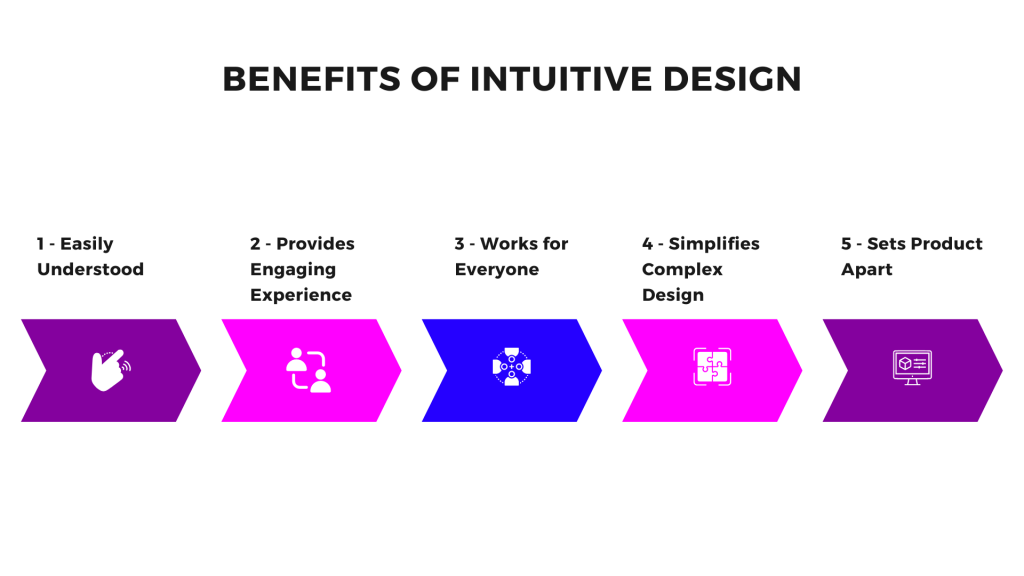
Intuitiveness, in the technological realm, is more than just a desirable trait; it is the bridge that connects human intent with technological capability. It represents the successful sublimation of complex engineering into effortless interaction, transforming what could be a frustrating obstacle into an invisible assistant. By adhering to principles of predictability, learnability, forgiveness, and feedback, designers strive to create products that feel natural, reduce cognitive load, and empower users. As technology continues its relentless march forward, permeating every aspect of our lives, the pursuit of intuitiveness will remain central. It is the quality that ensures technology serves humanity, rather than demanding humanity serve technology, making the digital world not just functional, but genuinely user-centric and profoundly human.
aViewFromTheCave is a participant in the Amazon Services LLC Associates Program, an affiliate advertising program designed to provide a means for sites to earn advertising fees by advertising and linking to Amazon.com. Amazon, the Amazon logo, AmazonSupply, and the AmazonSupply logo are trademarks of Amazon.com, Inc. or its affiliates. As an Amazon Associate we earn affiliate commissions from qualifying purchases.