
In the realm of linguistics, the term “homograph” refers to a word that shares the same written form as another word but possesses a different meaning, and occasionally a different pronunciation. While this might seem like a simple concept found in elementary school grammar books, it represents one of the most significant hurdles in modern technology—specifically within the fields of Artificial Intelligence (AI) and Natural Language Processing (NLP).
For software engineers, data scientists, and digital architects, understanding what a homograph means is not merely a vocabulary exercise; it is a fundamental challenge in teaching machines how to interpret human thought. As we transition from a world of simple keyword searches to a world of semantic understanding, the ability of technology to distinguish between “lead” (to guide) and “lead” (the metallic element) determines the success of everything from voice assistants to autonomous translation software.

Understanding Homographs in the Digital Landscape
To grasp the technical implications of homographs, we must first look at their structural role in data processing. At its core, a homograph creates a collision in data. When a system encounters a string of text, it must decide which “version” of that string is being used based on surrounding context.
Defining the Term: Beyond the Dictionary
In a tech-centric context, a homograph is a “collision” in the lexicon. If you are building a database or a search algorithm, a homograph is a single input that points to multiple semantic nodes. For example, the word “content” can mean the information within a file (pronounced CON-tent) or a state of peaceful satisfaction (pronounced con-TENT).
In traditional computing, machines were literal. They saw a string of characters—C-O-N-T-E-N-T—and treated it as a singular entity. This lack of nuance is why early search engines and translation tools often provided nonsensical results. Today’s tech stack requires a more sophisticated approach to identify whether a user is looking for “digital content” or discussing a “content” mindset.
The Linguistic Architecture of Machine Learning
Modern technology uses “vectors” to understand words. In machine learning, words are converted into numerical representations called word embeddings. A homograph presents a unique problem for these embeddings: should one word have one vector, or should it have multiple vectors depending on its use?
Early models like Word2Vec struggled with this. They assigned a single vector to each word, effectively “averaging” the different meanings of a homograph. This resulted in a mathematical representation that was neither here nor there. Modern models, such as BERT (Bidirectional Encoder Representations from Transformers) and the GPT series, solve this by using contextualized word embeddings, which allow the “vector” of a word to shift based on the words surrounding it.
The Computational Challenge: Why Homographs Matter for AI
The challenge of the homograph is at the heart of the “Disambiguation” problem in computer science. Disambiguation is the process of determining which sense of a word is used in a specific context. For AI to be truly useful, it must move beyond recognizing words to understanding intent.
Disambiguation in Natural Language Processing (NLP)
NLP is the technology that allows software to process human language. When an NLP model encounters a sentence like, “The bow of the ship was damaged,” it must distinguish “bow” (the front of a ship) from “bow” (a weapon for arrows) or “bow” (to bend at the waist).
Technologists use Word Sense Disambiguation (WSD) algorithms to solve this. These algorithms look for “clues” in the sentence. If the word “water,” “hull,” or “navigation” is present, the probability that “bow” refers to a ship increases significantly. This probabilistic approach is the backbone of how Large Language Models (LLMs) operate today. By training on trillions of parameters, these models have developed an “intuition” for homographs that rivals human capability.
Contextual Embeddings and Neural Networks
The breakthrough in handling homographs came with the development of the “Attention Mechanism” in neural networks. This technology allows a model to “pay attention” to specific parts of a sentence to determine the meaning of a specific word.
When a neural network processes a homograph, it doesn’t just look at the word in isolation. It creates a dynamic representation. For instance, in the sentence “The record was broken,” the network analyzes “record.” If the surrounding context involves “music” or “vinyl,” the vector leans toward an audio meaning. If the context involves “athletics” or “history,” the vector shifts toward a superlative achievement. This fluidity is what makes current AI feel “smarter” than the software of a decade ago.
Homographs and Search Engine Optimization (SEO)
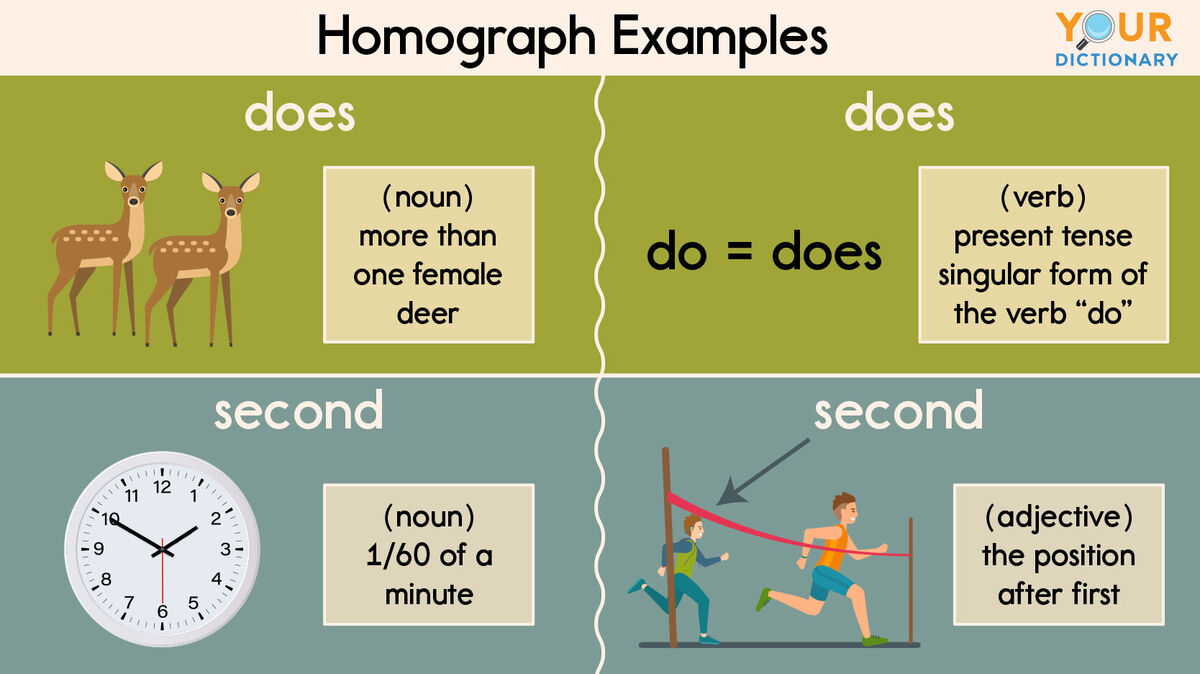
In the world of search technology, homographs represent both a challenge and an opportunity. Search engines like Google have evolved from simple “matching” engines into “understanding” engines. This shift has massive implications for how digital platforms organize and serve information.
Semantic Search and User Intent
Semantic search is the technology that attempts to understand the user’s intent rather than just the keywords they type. If a user searches for “crane,” are they looking for information on the bird or the construction equipment?
Google’s use of the BERT algorithm specifically addresses this. By understanding the homographic nature of language, search engines can filter results more effectively. If the user’s previous search history involves “construction sites,” the engine will prioritize the machinery. This technological refinement ensures that homographs don’t lead to “dead ends” in the user experience.
Avoiding Keyword Cannibalization in Tech Content
For developers and content strategists building tech platforms, understanding homographs is vital for site architecture. If a tech blog writes about “Python,” they need to ensure the metadata and surrounding context clarify that they are discussing the programming language, not the reptile.
From a technical SEO perspective, using “Schema Markup” (a form of structured data) allows developers to explicitly tell search engines what a word means. By tagging a page with “ProgrammingLanguage” schema, you remove the ambiguity of the homograph, ensuring that the technology delivers the right content to the right user.
Practical Applications: Voice Assistants and Translation Tools
The most visible (and audible) area where homographs impact technology is in user interfaces, specifically Voice UI and Machine Translation.
Improving Voice UI Accuracy
Voice assistants like Alexa, Siri, and Google Assistant face a double challenge: they must handle homographs and “homophones” (words that sound the same but are spelled differently). However, homographs that are also heteronyms—words spelled the same but pronounced differently—are particularly tricky.
Consider the word “tear.” It could be a “tear” in a piece of paper (rhymes with bear) or a “tear” from the eye (rhymes with fear). A voice assistant must use advanced NLP to decide how to synthesize the text-to-speech engine. If the assistant reads a news article aloud, it must understand the context to ensure the correct pronunciation. Failure to do so breaks the user’s immersion and reveals the underlying “robotic” nature of the tool.
The Complexity of Real-Time Machine Translation
In translation technology, homographs are a notorious source of error. A word that is a homograph in English might be two completely different, unrelated words in Spanish or Mandarin.
For example, the English word “fine” can mean “excellent” or “a financial penalty.” In many other languages, these are distinct words with no linguistic connection. High-quality translation software must perform an internal disambiguation of the English homograph before it can even begin the process of translation. The “Transformer” architecture used by tools like DeepL or Google Translate handles this by looking at the entire sentence simultaneously, rather than translating word-by-word, allowing the homograph’s meaning to be locked in by the surrounding syntax.
The Future of Semantic Understanding
As we look toward the future of technology, the way we handle homographs will continue to evolve, moving from simple recognition to deep cognitive understanding.
Toward “True” Artificial General Intelligence (AGI)
One of the benchmarks for AGI is the ability to understand puns, sarcasm, and wordplay—all of which rely heavily on the clever use of homographs. For a machine to “get” a joke that relies on the dual meaning of a word, it must possess a level of cultural and contextual awareness that goes beyond statistical probability.
The next generation of AI tools will likely integrate “World Models”—simulations of reality that provide the AI with a sense of “common sense.” If an AI knows that a “bass” (the fish) lives in water and a “bass” (the instrument) is found in a studio, it won’t need to rely solely on text-based probability; it will understand the physical reality behind the words.

Conclusion: The Tech-Driven Evolution of Language
What does “homograph” mean in a world dominated by software? It means a bridge between human complexity and digital logic. By solving the puzzle of the homograph, we are doing more than just improving search results or translation accuracy; we are teaching machines to navigate the inherent messiness of human communication.
As developers and tech enthusiasts, we must appreciate that every time a voice assistant correctly pronounces a heteronym or a search engine finds exactly what we need despite an ambiguous query, we are witnessing a triumph of modern engineering. The humble homograph, once a simple linguistic curiosity, has become a catalyst for some of the most sophisticated technological advancements of our time. Through the lens of Tech, the study of homographs is the study of how we translate the soul of human language into the precision of code.
aViewFromTheCave is a participant in the Amazon Services LLC Associates Program, an affiliate advertising program designed to provide a means for sites to earn advertising fees by advertising and linking to Amazon.com. Amazon, the Amazon logo, AmazonSupply, and the AmazonSupply logo are trademarks of Amazon.com, Inc. or its affiliates. As an Amazon Associate we earn affiliate commissions from qualifying purchases.