
In the vast and intricate landscape of modern technology, certain fundamental concepts serve as the bedrock upon which innovation is built. Among these, “Hertz” stands out as a ubiquitous yet often misunderstood measure. Far from being a mere technical term, Hertz (Hz) is the standard international unit of frequency, quantifying how often a periodic phenomenon occurs per second. From the hum of your computer’s processor to the vibrant refresh rate of your monitor, the invisible waves carrying your Wi-Fi signal, and even the nuances of sound, Hertz is the silent orchestrator behind countless technological marvels. Understanding what Hertz measures is not just about knowing a definition; it’s about grasping the very pulse and rhythm of the digital world that surrounds us.
The Fundamental Concept of Hertz: Cycles Per Second
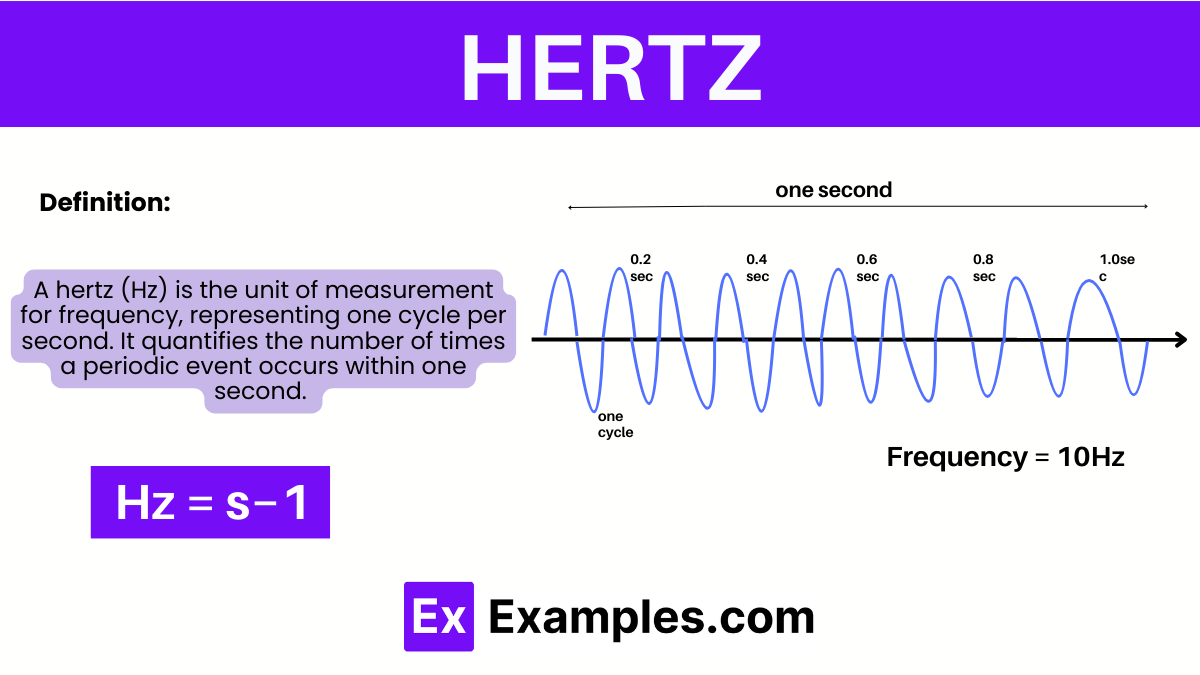
At its core, Hertz simplifies the complex by measuring the rate at which an event repeats itself. Whether it’s a wave completing a cycle, an oscillation swinging back and forth, or a digital signal switching states, Hertz provides a standardized way to quantify this repetition over time.
Defining Frequency and Period
Frequency, measured in Hertz, is precisely defined as the number of cycles or events that occur in one second. For example, if something completes 60 cycles in one second, its frequency is 60 Hz. The concept of frequency is intrinsically linked to its inverse, period. The period (T) is the time it takes for one complete cycle to occur. Thus, if a wave has a frequency of 10 Hz, its period is 1/10th of a second (0.1s) – meaning it takes 0.1 seconds for one full cycle to complete. This reciprocal relationship is crucial for understanding how various systems operate, from the rhythmic oscillations of an alternating current (AC) power supply to the timing of digital circuits.
A Legacy of Heinrich Hertz
The unit “Hertz” is not an arbitrary designation but a tribute to the pioneering German physicist Heinrich Rudolf Hertz. Born in 1857, Hertz’s groundbreaking experiments in the late 19th century conclusively proved the existence of electromagnetic waves, which had been theoretically predicted by James Clerk Maxwell. His work demonstrated that electricity and magnetism could propagate through space as waves, traveling at the speed of light. This monumental discovery not only validated Maxwell’s equations but also laid the foundational scientific groundwork for all future wireless communication technologies, including radio, television, radar, and eventually, Wi-Fi and cellular networks. Without Hertz’s contributions, our understanding and utilization of the electromagnetic spectrum would be fundamentally different.
From Simple Waves to Complex Systems
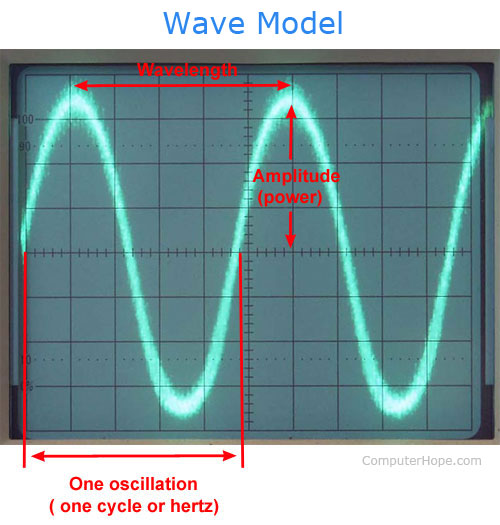
While often visualized in terms of simple sine waves, the application of Hertz extends far beyond basic wave mechanics. It quantifies the vibrational rate of sound, the oscillation of electromagnetic fields, the clock speed of microprocessors, and the refresh rate of digital displays. In any system where a repetitive event or pattern is critical, Hertz provides the essential metric for its temporal behavior. Its versatility makes it an indispensable unit in diverse fields, from physics and engineering to computer science and telecommunications, reflecting its fundamental role in describing the dynamic nature of our physical and digital realities.
Hertz in Computing: The Pulse of Digital Operations
In the realm of computing, Hertz is arguably most prominent when discussing the performance metrics of hardware. It dictates the fundamental speed at which digital components operate, influencing everything from processing power to data transfer rates.
Processor Clock Speed (CPU & GPU)
The most commonly cited application of Hertz in computing is the clock speed of a processor, whether it’s a Central Processing Unit (CPU) or a Graphics Processing Unit (GPU). Measured typically in gigahertz (GHz), the clock speed indicates the number of cycles per second the processor’s internal clock completes. Each clock cycle allows the processor to perform a basic operation, fetch an instruction, or move data. A CPU with a clock speed of 3.5 GHz, for instance, executes approximately 3.5 billion cycles per second. While higher clock speeds generally imply faster processing capabilities, it’s crucial to understand that modern processor performance is also heavily influenced by other architectural factors such as the number of cores, cache size, instruction set architecture, and efficiency of instruction pipelining. Therefore, while clock speed remains a vital metric, it’s one piece of a much larger performance puzzle.
Memory Speed (RAM)
Hertz also plays a significant role in defining the speed of Random Access Memory (RAM). While RAM is often advertised with terms like “DDR4-3200,” which refers to its effective data rate, the underlying frequency of the memory module’s clock determines how quickly data can be accessed and transferred. DDR (Double Data Rate) memory technologies, for example, perform two data transfers per clock cycle, effectively doubling the data rate for a given clock frequency. Higher memory frequencies allow for faster data throughput between the CPU and RAM, reducing bottlenecks and enhancing overall system responsiveness, particularly in demanding applications like gaming, video editing, and complex simulations.
Bus Speeds and Data Transfer Rates
Beyond the CPU and RAM, various internal and external buses within a computer system operate at specific frequencies, measured in Hertz. Buses are communication pathways that connect different components of a computer, enabling them to exchange data. The speed of these buses – such as the Front Side Bus (FSB) in older architectures, or the PCIe (Peripheral Component Interconnect Express) bus used for graphics cards and SSDs today – directly impacts how quickly data can travel between components. A higher bus frequency allows more data to be transferred in a given amount of time, thereby influencing the overall efficiency and performance of the system. For instance, the latest PCIe 5.0 standard operates at significantly higher frequencies than its predecessors, enabling blazing-fast NVMe SSDs and high-performance graphics cards to fully realize their potential.
Visual and Auditory Experiences: Hertz in Multimedia
Hertz is not just about raw computational power; it’s also fundamental to how we perceive and interact with digital content, shaping our visual and auditory experiences.
Display Refresh Rates (Monitors & TVs)
In displays, Hertz quantifies the refresh rate, which is the number of times per second a screen updates its image. A monitor with a 60 Hz refresh rate updates its image 60 times per second, while a 144 Hz gaming monitor updates 144 times per second. A higher refresh rate translates to smoother motion and reduced motion blur, significantly improving the user experience, especially in fast-paced video games and fluid animations. Technologies like Variable Refresh Rate (VRR), including AMD FreeSync and NVIDIA G-Sync, synchronize the display’s refresh rate with the GPU’s frame output, eliminating screen tearing and stuttering for an even more seamless visual experience. The human eye can perceive differences up to certain refresh rates, with higher values providing a noticeable advantage for responsiveness and comfort.

Audio Frequencies and Sound Reproduction
In audio, Hertz represents the frequency of sound waves, which directly correlates to the pitch we hear. Low frequencies (e.g., 20 Hz to 200 Hz) correspond to deep bass sounds, while high frequencies (e.g., 2 kHz to 20 kHz) correspond to treble. The typical range of human hearing is approximately 20 Hz to 20,000 Hz (20 kHz), though this range tends to narrow with age. Audio equipment, such as speakers, headphones, and microphones, is designed to reproduce or capture sounds across specific frequency ranges. Understanding frequency response curves (how well a device reproduces different frequencies) is crucial for audiophiles and audio engineers aiming for accurate sound reproduction. Hertz helps define the richness and detail of an auditory experience, from the rumble of an explosion to the delicate shimmer of a cymbal.
Sampling Rates in Digital Audio/Video
When analog audio or video signals are converted into digital formats, a process called sampling occurs. The sampling rate, measured in Hertz (or kilohertz, kHz), dictates how many times per second the analog waveform is measured and converted into digital data points. According to the Nyquist-Shannon sampling theorem, the sampling rate must be at least twice the highest frequency present in the original signal to accurately reconstruct it. For CD-quality audio, a sampling rate of 44.1 kHz is used, meaning the analog signal is sampled 44,100 times per second, allowing for the accurate reproduction of frequencies up to 22.05 kHz (which covers the full range of human hearing). Higher sampling rates capture more detail, potentially leading to a more faithful digital representation of the original analog signal, though diminishing returns are often observed beyond a certain point for typical human perception.
Communication and Connectivity: The Electromagnetic Spectrum
Hertz is absolutely critical in the realm of communication, serving as the primary metric for differentiating between various forms of electromagnetic radiation used to transmit information wirelessly.
Radio Frequencies (RF) and Wireless Communication
All forms of wireless communication, from AM/FM radio to television broadcasts, cellular networks, and satellite communication, rely on the transmission and reception of electromagnetic waves at specific radio frequencies (RF). These frequencies are measured in kilohertz (kHz), megahertz (MHz), or gigahertz (GHz). Different frequency bands are allocated by regulatory bodies for various purposes to prevent interference. For instance, AM radio operates in the kHz range, FM radio and older television broadcasts are in the MHz range, while Wi-Fi and modern cellular (4G/5G) networks utilize GHz frequencies. The choice of frequency band impacts characteristics like signal range, penetration through obstacles, and potential data bandwidth. Lower frequencies generally travel further and penetrate obstacles better, while higher frequencies allow for greater bandwidth but have shorter ranges and are more susceptible to obstruction.
Network Technologies (Wi-Fi, 5G)
Modern wireless network technologies are prime examples of Hertz in action. Wi-Fi standards (e.g., Wi-Fi 4, 5, 6, 6E, 7) operate primarily in the 2.4 GHz and 5 GHz frequency bands, with Wi-Fi 6E and 7 expanding into the 6 GHz band. These bands are divided into specific channels, each occupying a distinct frequency range. Similarly, 5G cellular networks utilize a wide array of frequency bands, categorized as “sub-6 GHz” (lower frequencies for broader coverage) and “mmWave” (millimeter wave) frequencies, which are much higher (e.g., 24-47 GHz). Millimeter wave 5G offers extremely high bandwidth and low latency but has a very limited range and struggles to penetrate walls, making it suitable for dense urban areas or specific fixed wireless applications. Understanding these frequency distinctions is crucial for designing and optimizing wireless networks for specific performance requirements.
Light Frequencies and Fiber Optics
While often associated with radio waves, the electromagnetic spectrum extends far beyond, encompassing infrared, visible light, ultraviolet, X-rays, and gamma rays, all of which are also characterized by their frequencies (and corresponding wavelengths). In the context of technology, light frequencies are harnessed in fiber optics. Optical fibers transmit data as pulses of light, typically using infrared frequencies. The incredibly high frequencies of light waves (hundreds of terahertz – THz) enable fiber optic cables to carry immense amounts of data at extremely high speeds over long distances, forming the backbone of the internet and global communication networks. Here, Hertz, albeit at a much higher magnitude, fundamentally defines the capacity and performance of these critical infrastructure components.
Beyond the Basics: Advanced Applications and Future Trends
The relevance of Hertz extends into cutting-edge research and specialized industrial applications, continually shaping the frontier of technological advancement.
Quantum Computing and Qubit Frequencies
In the nascent field of quantum computing, frequency plays a pivotal role in manipulating qubits. Many quantum computing architectures, particularly those based on superconducting circuits, rely on microwave frequencies to control and read the quantum states of qubits. Each qubit might be tuned to resonate at a specific microwave frequency, allowing researchers to individually address and entangle them. Precise control over these frequencies is paramount to maintaining the delicate quantum coherence necessary for quantum calculations. As quantum computing progresses, the sophisticated manipulation of frequencies will be a cornerstone of unlocking its transformative potential.
Industrial Automation and Control Systems
Hertz is also fundamental in industrial settings. In power systems, alternating current (AC) electricity is delivered at a specific frequency (e.g., 50 Hz or 60 Hz, depending on the region), which is critical for the operation of motors, transformers, and other electrical equipment. Variable frequency drives (VFDs) are used to control the speed of AC motors by precisely adjusting the output frequency, enabling energy efficiency and precise process control in manufacturing, HVAC, and robotics. Sensors and control systems often rely on frequency-based measurements for parameters like vibration, rotation speed, and fluid flow, providing crucial data for monitoring and automating industrial processes.
The Role of Oscillators and Timers
Virtually every electronic device, from a simple digital watch to a complex supercomputer, relies on highly stable and accurate frequency sources, known as oscillators. Crystal oscillators, for example, use the piezoelectric properties of quartz crystals to generate precise, stable clock signals at specific frequencies (e.g., 32.768 kHz for real-time clocks, or much higher frequencies for microcontrollers and processors). These oscillators act as the heartbeat of digital circuits, synchronizing all operations and ensuring that components communicate and execute instructions in perfect timing. The reliability and precision of these frequency generators are foundational to the stable operation of all modern electronics.
Conclusion
From the rapid cycles of a microprocessor to the smooth motion on a high-refresh-rate display, the unseen waves carrying our wireless data, and the very essence of sound, Hertz is an omnipresent and indispensable unit of measurement in technology. It encapsulates the rhythm and speed at which our digital world operates, providing a universal language for quantifying repetition and oscillation. Understanding what Hertz measures is not merely an academic exercise; it is key to comprehending the performance specifications of our devices, the intricacies of our communication networks, and the fundamental principles driving technological innovation. As technology continues its relentless march forward, the concept of frequency, measured in Hertz, will undoubtedly remain at the very core of how we design, build, and interact with the increasingly complex and dynamic systems that define our future.
aViewFromTheCave is a participant in the Amazon Services LLC Associates Program, an affiliate advertising program designed to provide a means for sites to earn advertising fees by advertising and linking to Amazon.com. Amazon, the Amazon logo, AmazonSupply, and the AmazonSupply logo are trademarks of Amazon.com, Inc. or its affiliates. As an Amazon Associate we earn affiliate commissions from qualifying purchases.