
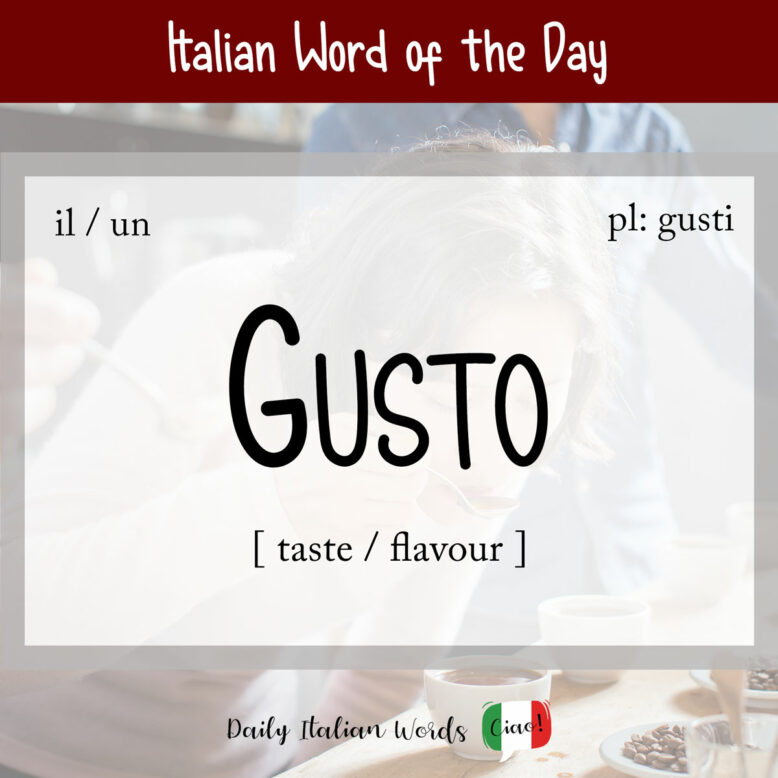
In the traditional sense, the word “gusto” evokes a sense of excellence, zest, and vigorous enjoyment. However, in the contemporary landscape of business finance and entrepreneurship, the question “what does Gusto mean?” has taken on a significantly more tactical and transformative definition. For millions of small to medium-sized business (SMB) owners, Gusto is not just a vocabulary word; it is the definitive platform that has redefined the financial infrastructure of the modern workplace.
As a central pillar in the “FinTech” (Financial Technology) revolution, Gusto represents a shift away from the opaque, manual, and error-prone payroll systems of the past toward an integrated, automated financial ecosystem. Understanding what Gusto means in a business context requires a deep dive into how it manages the most significant financial outflows of a company: payroll, taxes, employee benefits, and compliance.

The Core Pillars of Gusto’s Financial Ecosystem
To understand what Gusto means for a business’s balance sheet, one must look at its functional architecture. At its heart, Gusto is a cloud-based financial tool designed to handle the complex calculations and legal requirements associated with employing a workforce. It serves as the bridge between a company’s bank account and its employees’ pockets, ensuring that every dollar moved is accounted for and taxed correctly.
Automated Payroll and Tax Compliance
The most immediate answer to “what does Gusto mean?” is automated payroll. In the legacy world of business finance, payroll was a grueling monthly or bi-weekly chore involving spreadsheets, manual tax calculations, and physical check-writing. Gusto transformed this into a “set it and forget it” financial process.
The platform calculates gross-to-net pay, considering federal, state, and local taxes. More importantly, it automates the filing of payroll taxes with the appropriate government agencies. For a business owner, this means the mitigation of “compliance risk”—the financial danger of being fined by the IRS or state agencies for incorrect filings. In this niche, Gusto means peace of mind through algorithmic accuracy.
Benefits Administration and Employee Wealth
Beyond the simple exchange of time for money, Gusto serves as a portal for managing “indirect compensation.” This includes health insurance, 401(k) retirement plans, and Health Savings Accounts (HSAs). By integrating these financial products directly into the payroll flow, Gusto allows businesses to offer “big-company” benefits without the administrative overhead usually required to manage them.
From a financial strategy perspective, this means a business can more effectively compete for talent. When a business owner asks what Gusto means for their growth, the answer often lies in the platform’s ability to streamline the financial burden of employee retention and long-term wealth building.
Compensation Analysis and Budgeting
In the realm of business finance, data is as valuable as cash. Gusto provides sophisticated reporting tools that allow CFOs and business owners to visualize their labor costs in real-time. By categorizing spending across departments or projects, the platform offers insights into the “burn rate” and “revenue per employee.” This financial transparency is vital for making informed decisions about hiring, scaling, or cost-cutting.
Financial Strategy: How Gusto Impacts Your Bottom Line
Choosing a financial tool like Gusto is more than an administrative decision; it is a strategic one. The “meaning” of Gusto is often found in the “Total Cost of Ownership” (TCO) of a company’s human resources. When a firm moves its financial operations to an integrated platform, the ripple effects are felt across the entire profit and loss statement.
Reducing Costly Human Error and Penalty Mitigation
The hidden cost of manual financial management is error. According to various financial audits, a significant percentage of small businesses face IRS penalties each year due to payroll mistakes. These are not just administrative hiccups; they are direct hits to the company’s bottom line.
Gusto’s value proposition is centered on the elimination of these “leakages.” By automating the synchronization between hours worked, tax rates, and filing deadlines, the platform ensures that capital stays within the business rather than being diverted to unnecessary fines. In this sense, Gusto means “financial protection.”
R&D Tax Credits and Hidden Savings
One of the most overlooked aspects of Gusto’s financial utility is its ability to help businesses claim Research and Development (R&D) tax credits. Many startups and tech-forward companies do not realize that a portion of their payroll can be recovered through government incentives.

Gusto integrates with specialized tax services to identify these opportunities and pull the necessary financial data automatically. This can result in tens of thousands of dollars in tax savings—money that can be reinvested into the company’s core mission. For the savvy entrepreneur, Gusto means a proactive partner in tax optimization, not just a passive payment processor.
Streamlining the Cost of Remote Work
The modern financial landscape is increasingly decentralized. A company based in New York may have employees in Texas, Florida, and California. Each of these jurisdictions has its own unique financial regulations, tax brackets, and unemployment insurance requirements.
Managing this manually is a financial nightmare that often requires hiring expensive consultants. Gusto simplifies this “multi-state nexus” problem. It automatically registers businesses in new states and handles the specific financial nuances of each locality. For a scaling business, Gusto means the ability to expand geographically without a linear increase in financial complexity.
Choosing the Right Financial Tools for Scalability
As a business grows, its financial needs evolve from simple bookkeeping to complex fiscal management. Understanding what Gusto means in the context of a “tech stack” is crucial for long-term scalability. A financial tool should never exist in a vacuum; it must communicate with the rest of the company’s infrastructure.
Integration with Accounting Software
Gusto is most powerful when it is synced with professional accounting platforms like QuickBooks, Xero, or FreshBooks. This integration ensures that every payroll run is automatically reflected in the company’s general ledger.
This synchronization eliminates the need for “double-entry” bookkeeping, which is a major source of financial discrepancy. When the payroll software and the accounting software speak the same language, the end-of-month “close” becomes a matter of minutes rather than days. For the modern accountant, Gusto means a “clean” set of books and a verifiable audit trail.
Navigating the Gig Economy and Contractor Payments
The “Money” niche today is not just about W-2 employees; it is increasingly about the “Gig Economy.” Many businesses rely on a hybrid workforce of full-time staff and 1099 contractors. Gusto’s platform allows for the seamless transition between these two financial categories.
It handles the filing of 1099-NEC forms and ensures that contractor payments are handled with the same security and speed as traditional payroll. As businesses shift toward more flexible labor models, Gusto provides the financial framework to manage those diverse relationships without increasing the burden on the internal finance team.
Data Security and Financial Integrity
Finally, the “meaning” of Gusto is deeply tied to the security of a company’s most sensitive financial data. Bank account numbers, Social Security numbers, and tax IDs are the lifeblood of a company’s identity. Gusto utilizes bank-level encryption and rigorous compliance protocols to protect this information.
In an era of increasing digital fraud and financial cyber-attacks, using a trusted, centralized platform for fund transfers is a critical component of risk management. Gusto provides a secure “financial vault” for the business, ensuring that money and data move safely from point A to point B.
Conclusion: The Definition of Success in Modern Business Finance
What does Gusto mean? If we look at it through the lens of business finance, it is clear that Gusto represents the democratization of sophisticated financial tools. In the past, the level of automation, tax optimization, and benefits integration offered by Gusto was only available to Fortune 500 companies with massive HR and finance departments.
Today, Gusto means that a three-person startup or a local coffee shop can operate with the same financial precision and compliance as a global corporation. It means that the “zest” and “enjoyment” of the word’s literal definition can finally be applied to the business world—because when the stress of payroll, the fear of tax penalties, and the clutter of manual spreadsheets are removed, business owners are free to focus on what truly matters: growth, innovation, and profitability.
Gusto is more than a software platform; it is a financial strategy for the modern era. It is the realization that in the world of business, time is the most valuable currency, and any tool that saves time while protecting capital is the ultimate asset on any balance sheet.
aViewFromTheCave is a participant in the Amazon Services LLC Associates Program, an affiliate advertising program designed to provide a means for sites to earn advertising fees by advertising and linking to Amazon.com. Amazon, the Amazon logo, AmazonSupply, and the AmazonSupply logo are trademarks of Amazon.com, Inc. or its affiliates. As an Amazon Associate we earn affiliate commissions from qualifying purchases.