
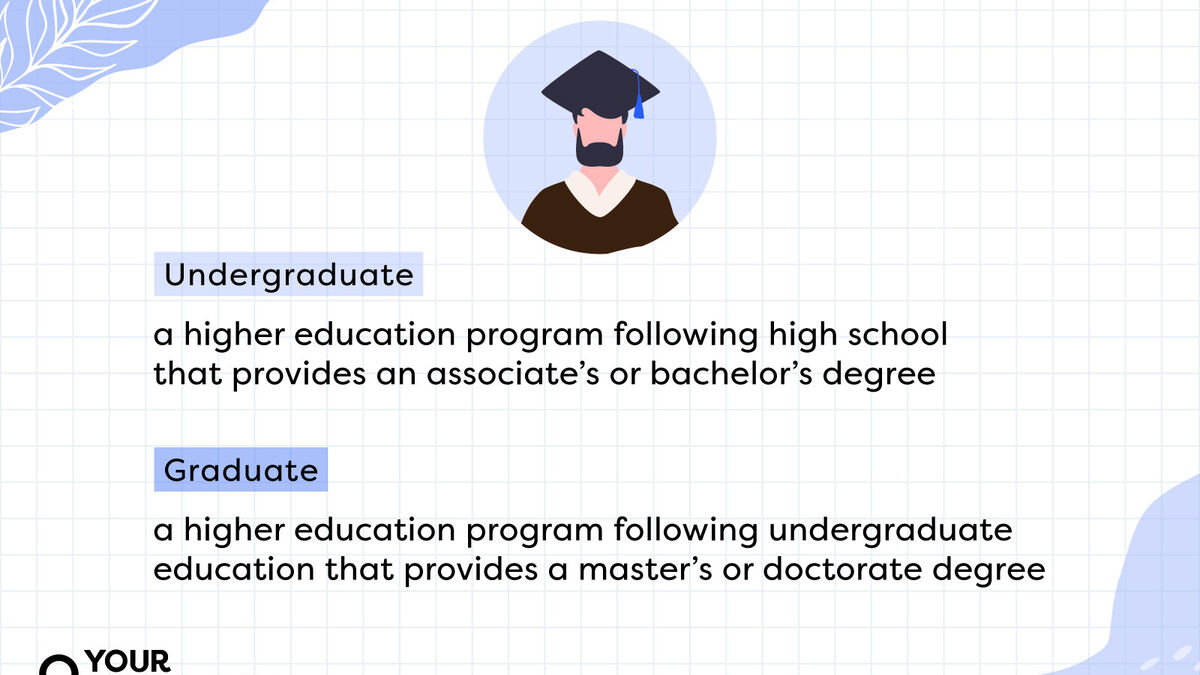
In the traditional academic sense, a graduate student is an individual who has earned a bachelor’s degree and is pursuing further study in a specific field, leading to a master’s, doctorate, or professional degree. However, from a financial and strategic standpoint, the term “graduate student” represents a far more complex identity. It is a period of intensive human capital investment, a calculated risk involving significant capital outlay, and a pivot point that can fundamentally alter an individual’s lifetime earnings trajectory.
To understand what being a graduate student means in today’s economy, one must look beyond the library stacks and lecture halls. It is a transition from generalist knowledge to specialist value—a move designed to increase one’s “market price” in a competitive global economy. This article explores the definition of a graduate student through the lens of personal finance, investment strategy, and long-term wealth building.

Defining the Graduate Student: A Strategic Allocation of Human Capital
At its core, being a graduate student means electing to defer immediate income in exchange for higher future cash flows. In economic terms, this is the essence of human capital investment. While an undergraduate degree is increasingly viewed as the “entry-level” requirement for the modern workforce, a graduate degree is a tool for differentiation.
The Shift from Consumer to Specialist
For many, the undergraduate years are about exploration and general competency. In contrast, the graduate student status signals a transition into professional specialization. Whether it is an MBA, a Juris Doctor (JD), or a Master of Science in Data Analytics, the student is essentially purchasing a specific set of skills that the market deems “scarce.” In the world of finance, scarcity drives price. By becoming a graduate student, an individual is betting that the scarcity of their future expertise will command a premium salary that justifies the cost of the education.
The Intellectual Asset Class
Economists often view education as an intangible asset. Unlike a stock or a piece of real estate, you cannot sell your degree, but you can “rent” the knowledge it represents to employers. Being a graduate student means you are in the “production phase” of this asset. You are spending years refining a product—yourself—to meet the demands of high-paying sectors such as healthcare, technology, law, or corporate management.
The Economic Reality: Costs, Liabilities, and Opportunity Loss
To truly define what it means to be a graduate student, one must account for the balance sheet. Graduate school is rarely a low-cost endeavor; it is often one of the largest financial commitments an individual will ever make, sometimes rivaling the purchase of a primary residence.
Direct Costs vs. Indirect Costs
The most visible aspect of being a graduate student is tuition. At elite institutions, professional degrees can cost upwards of $100,000 to $200,000. However, the more insidious financial factor is the “opportunity cost.” This is the income the student would have earned had they remained in the workforce instead of returning to school. For a professional earning $60,000 a year, a two-year full-time master’s program doesn’t just cost the price of tuition; it costs an additional $120,000 in lost wages.
The Debt Narrative
For a significant portion of graduate students, the experience is synonymous with the accumulation of debt. Unlike undergraduate loans, which often have subsidized interest and lower limits, graduate student loans (such as Grad PLUS loans in the U.S.) often carry higher interest rates and allow students to borrow up to the full cost of attendance. Therefore, being a graduate student often means managing a complex portfolio of liabilities. The success of the venture depends entirely on whether the post-graduation salary increase can service this debt while still allowing for personal wealth accumulation.
Tax Implications and Credits
On a more granular level, the status of “graduate student” carries specific fiscal nuances. Depending on the jurisdiction, students may be eligible for tax credits, deductions for tuition, or the ability to draw from retirement accounts (like a 401k or IRA) without certain penalties for educational purposes. Understanding these financial levers is a crucial part of the graduate student experience for the fiscally minded.
Measuring ROI: When Does an Advanced Degree Make Financial Sense?
What it means to be a graduate student varies wildly depending on the Return on Investment (ROI). Not all degrees are created equal in the eyes of the market. A graduate student in a high-demand STEM field is making a very different financial play than one in a niche humanities field.

The “Wage Premium”
The primary metric for the success of a graduate student is the “wage premium”—the percentage increase in earnings compared to those with only a bachelor’s degree. For example, data consistently shows that individuals with a Master’s in Physician Assistant Studies or an MBA from a top-tier program see a dramatic and immediate jump in their net worth. For these students, the “graduate” label is a golden ticket to upper-middle-class or high-net-worth status.
The “Credential Inflation” Trap
Conversely, in some industries, being a graduate student is no longer an “extra” but a defensive requirement. As more people obtain degrees, the value of those degrees can stagnate—a phenomenon known as credential inflation. In these cases, becoming a graduate student is a necessary expense to avoid a decrease in earning potential rather than a way to increase it. This shift in meaning—from “advancement” to “maintenance”—is a critical distinction for anyone considering a return to academia.
Calculating the Break-Even Point
A savvy graduate student views their education through the lens of a “break-even” analysis. This is the point in time where the cumulative extra earnings from the advanced degree surpass the total cost of the degree (tuition plus interest plus opportunity cost). If the break-even point occurs 20 years into a career, the investment may be questionable. If it occurs within 3 to 5 years, it is a financial masterstroke.
Financing the Future: Navigating Loans, Grants, and Tax Implications
The financial journey of a graduate student is not just about spending; it is about sophisticated capital management. How one funds their degree is often as important as the degree itself.
Assistantships and Fellowships: The “Free” Path
For many PhD students and some master’s candidates, being a “graduate student” means being an employee of the university. Research Assistantships (RAs) and Teaching Assistantships (TAs) often provide a tuition waiver and a living stipend. In this scenario, the student is essentially trading their labor for an education. This is the most financially sound way to pursue a graduate degree, as it eliminates the debt burden and allows the “wage premium” to be pure profit upon graduation.
Employer-Sponsored Education
In the corporate world, being a graduate student often involves a partnership with one’s employer. Many firms offer tuition reimbursement programs. In this context, the student is an “intrapreneur,” using company resources to upgrade their skills for the benefit of the firm. This removes the financial risk from the individual and places it on the corporation, making the “graduate student” label a badge of corporate fast-tracking.
The Role of Private vs. Federal Lending
For those who must borrow, the graduate student experience is defined by the credit market. Navigating the choice between federal loans with income-driven repayment options and private loans with potentially lower fixed rates is a high-stakes financial exercise. The modern graduate student must be part-student, part-financial-analyst to ensure they don’t emerge from their program with a debt-to-income ratio that cripples their ability to buy a home or invest in the stock market.
The Graduate Degree as a Wealth-Building Tool
Ultimately, the definition of a graduate student is rooted in long-term wealth strategy. It is about moving from a linear income path to an exponential one.
Networking and Social Capital
While the classroom provides the “hard skills,” the graduate student status provides access to a “network.” In business and law particularly, the financial value of the degree is often found in the people you meet. These connections lead to job offers, partnerships, and investment opportunities that are not available to the general public. Thus, the graduate student is an investor in social capital, which frequently pays higher dividends than the curriculum itself.
Specialization as a Hedge Against Automation
In an era of Artificial Intelligence and automation, being a graduate student means future-proofing your income. High-level strategic thinking, complex legal analysis, and specialized medical knowledge are more difficult to automate than general administrative or entry-level tasks. By pursuing graduate studies, an individual is moving their income source further “up the value chain,” creating a moat around their personal economy.
The Lifetime Earnings Ceiling
Finally, what does graduate student mean for your retirement? Statistically, those with advanced degrees contribute more to retirement accounts, have higher rates of homeownership, and possess greater overall financial literacy. The “graduate student” phase is the “acceleration phase” of a financial lifecycle. It is the moment where an individual decides to raise their lifetime earnings ceiling, ensuring that their later years are characterized by financial independence rather than scarcity.
In conclusion, a graduate student is not merely someone staying in school. They are a strategic actor in the economy, making a high-stakes investment in their own professional valuation. By understanding the costs, calculating the ROI, and managing the financing of their education, a graduate student transforms academic pursuit into a powerful engine for lifelong financial success.
aViewFromTheCave is a participant in the Amazon Services LLC Associates Program, an affiliate advertising program designed to provide a means for sites to earn advertising fees by advertising and linking to Amazon.com. Amazon, the Amazon logo, AmazonSupply, and the AmazonSupply logo are trademarks of Amazon.com, Inc. or its affiliates. As an Amazon Associate we earn affiliate commissions from qualifying purchases.