
In the vast and ever-evolving lexicon of internet slang, “get mogged” has emerged as a particularly potent phrase, encapsulating a specific type of competitive dominance. At its core, to “get mogged” means to be overwhelmingly outclassed, outperformed, or overshadowed by something or someone to such a significant degree that the comparison is almost embarrassing or undeniably stark. It’s not just about being “better”; it’s about being so much better that the other party appears inferior by comparison, often without direct effort from the “mogging” entity. While its origins might be rooted in niche online communities, the concept it describes is universally applicable, especially in today’s fast-paced worlds of technology, branding, and finance, where superiority often dictates success.
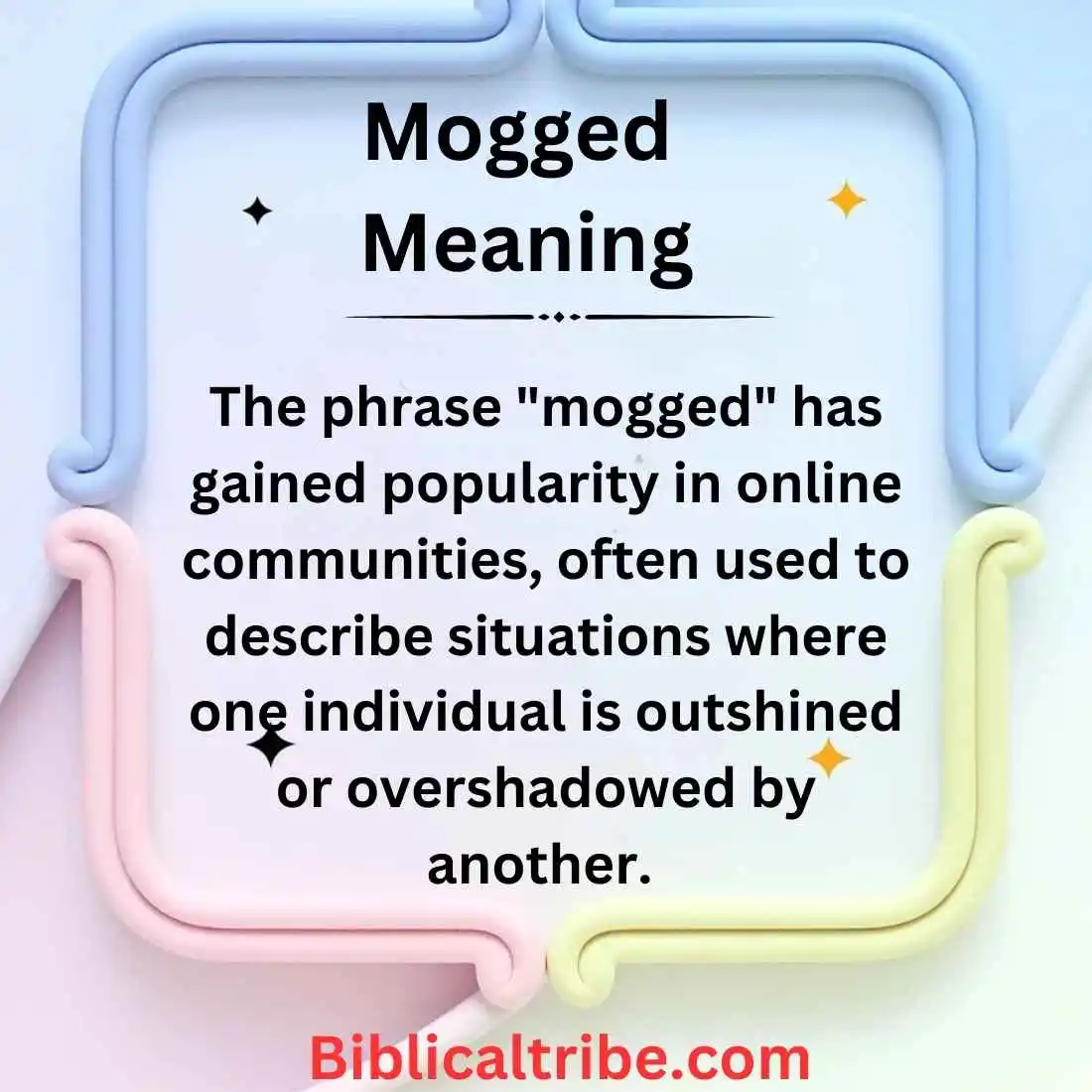
This article will delve into the meaning of “get mogged,” tracing its internet origins and then exploring its profound implications and manifestations across the core pillars of our modern digital and economic landscape: technology, brand, and money. Understanding this term goes beyond mere slang; it offers a lens through which to view relentless innovation, fierce market competition, and the constant pursuit of excellence.
Decoding “Mogged”: Origins and Core Concept
The term “mogged” likely stems from various online communities, particularly those focused on aesthetics, fitness, or competitive gaming. In these spaces, it referred to one individual undeniably surpassing another in terms of physical attractiveness, strength, or skill, making the comparison overtly unfavorable for the “mogged” party. The sensation is one of being utterly dwarfed, not just incrementally improved upon.
The Internet Lexicon: From Niche to Mainstream
Initially, “mogged” might have been confined to forums or specific subcultures where direct comparison and hierarchy were prevalent. For instance, in gaming, a player with vastly superior skills or equipment might “mog” an opponent, making the match feel profoundly uneven. In discussions about physical appearance, one person might be described as “mogging” another if their features, physique, or overall presence were strikingly more impressive.
The power of the internet, however, lies in its ability to take niche terms and rapidly disseminate them into broader cultural consciousness. As people began applying the concept of overwhelming superiority to more diverse situations, “mogged” transcended its original, sometimes superficial, contexts. It became a descriptor for any scenario where one entity or idea so comprehensively eclipses another that the latter’s relevance or effectiveness is significantly diminished. This transition highlights a fundamental human tendency to categorize and evaluate, and to appreciate clear, undeniable superiority.
Beyond Appearance: The Essence of Superiority
What makes “mogged” such a compelling term is its emphasis on the degree of difference. It’s not a subtle advantage; it’s a gap so wide it often renders the comparison almost moot. The essence of being “mogged” is to face an opponent, a product, a strategy, or a concept that is operating on an entirely different level, leaving little room for a fair contest.
This shift in understanding allows us to apply the term meaningfully to complex domains. For instance, if a new technology offers a tenfold improvement in efficiency, it doesn’t just improve on the old one; it “mogs” it. If a brand campaign is so impactful it captures the entire public conversation, it “mogs” its competitors’ efforts. If an investment strategy consistently delivers significantly higher returns, it “mogs” less effective approaches. The term therefore speaks to an ultimate form of competitive triumph, a clear and decisive win that redefines the standards of performance.
The “Mogged” Phenomenon in Technology and Innovation
In the relentless march of technological progress, the concept of “getting mogged” is a daily reality. The very nature of innovation is to create something new and better, often rendering its predecessors obsolete. From groundbreaking software to revolutionary hardware, the tech world is a constant cycle of one advancement “mogging” the next.
Tech Advancements: Mogging the Status Quo
The pace at which technology evolves means that today’s cutting-edge solution can easily become tomorrow’s outdated relic. This rapid obsolescence is a clear example of the “mogging” phenomenon.
- AI & Software: Consider the recent explosion of generative AI models. Tools like ChatGPT-4 have significantly “mogged” their predecessors, including earlier versions of GPT, by demonstrating vastly superior capabilities in understanding context, generating coherent text, and performing complex tasks. Similarly, advanced image generation software like DALL-E 3 or Midjourney V6 have “mogged” earlier iterations with their stunning realism and creative control. Software updates regularly introduce features or performance enhancements that “mog” previous versions, making older builds less efficient or feature-rich.
- Hardware & Gadgets: In the realm of hardware, the narrative is similar. A new smartphone chip can dramatically “mog” its predecessor in processing speed, battery efficiency, and AI capabilities, making even a year-old device feel sluggish. Next-generation gaming consoles consistently “mog” older models with superior graphics, faster load times, and more immersive experiences. Every year, new gadgets push the boundaries, providing functionalities or user experiences that make older devices seem rudimentary by comparison. The drive for higher specifications, better integration, and seamless user experience ensures that the “mogging” cycle in hardware is perpetual.
- Disruptive Technologies: Beyond incremental improvements, truly disruptive technologies can “mog” entire industries. Blockchain technology, for example, has the potential to “mog” traditional financial intermediaries by offering decentralized, transparent, and secure alternatives. Electric vehicles, with their instant torque, lower emissions, and potential for autonomous driving, are increasingly “mogging” internal combustion engine cars in performance, sustainability, and smart features, fundamentally altering the automotive landscape.
Productivity and Digital Security: Outclassing Inefficiency and Vulnerability
The demand for efficiency and robustness means that new tools and methods are constantly emerging to “mog” less effective ones.
- Productivity Tools: In the quest for optimal productivity, businesses and individuals are always seeking tools that can streamline workflows and maximize output. AI-powered project management platforms that automate task assignments, predict timelines, and identify bottlenecks effectively “mog” traditional, manual project tracking methods. Advanced automation tools that connect disparate applications and handle repetitive tasks are “mogging” the need for human intervention in many administrative processes, freeing up time for more strategic work. The goal is to eliminate friction and elevate output to a degree where older systems simply can’t compete.
- Cybersecurity: Digital security is a constant arms race. New sophisticated malware and cyber threats regularly emerge, attempting to “mog” existing defenses. In response, cybersecurity firms develop advanced AI-driven threat detection systems, quantum-resistant encryption, and biometric authentication methods that “mog” older, more vulnerable security protocols. A superior firewall or a robust identity management system that prevents breaches effectively “mogs” less secure solutions, safeguarding invaluable digital assets and reputations. The survival of businesses often hinges on their ability to adopt and maintain security measures that “mog” the latest threats.
Branding and Marketing: The Art of Mogging the Competition
In the crowded marketplace, brands constantly vie for attention, loyalty, and market share. To “mog” the competition in branding and marketing means to establish such a strong, compelling, and pervasive presence that rival brands struggle to keep up, becoming almost invisible by comparison.
Strategic Branding: Standing Head and Shoulders Above
A truly successful brand doesn’t just differentiate itself; it often sets a new standard that others aspire to or fail to meet.

- Market Dominance: Companies like Apple have consistently “mogged” competitors through superior design, user experience, and a powerful brand narrative. Their integrated ecosystem and premium positioning often make direct comparisons with other brands feel unfair, as they operate on a different perceived value plane. Similarly, a disruptive startup might “mog” established incumbents by identifying an unmet need, innovating rapidly, and capturing consumer imagination, quickly gaining market share and mind share. This involves not just a great product, but a compelling story, consistent messaging, and a deep understanding of the target audience.
- Personal Branding: In the age of digital influence, personal branding is paramount. Professionals who meticulously cultivate a strong personal brand — through thought leadership, consistent online presence, networking, and demonstrating expertise — effectively “mog” those with less defined or professional personas. A compelling personal brand can open doors to career opportunities, speaking engagements, and collaborative ventures that remain inaccessible to others, creating a significant competitive advantage in the job market and entrepreneurial sphere.
- Marketing & Design: An iconic marketing campaign can “mog” all other advertising efforts during its run, capturing the zeitgeist and becoming cultural touchstones. Think of Nike’s “Just Do It” or Apple’s “Think Different” campaigns. These don’t just sell products; they create movements. Similarly, a revolutionary product design — be it the original iPhone, a Tesla Cybertruck, or a meticulously crafted user interface — can “mog” its rivals, making their designs appear clunky, outdated, or uninspired, dictating new aesthetic and functional standards for an entire category.
Reputation and Influence: Unchallenged Authority
Beyond product and marketing, a brand’s reputation and its influence can also be so strong that it “mogs” anything that tries to challenge it.
- Corporate Identity: A company with a long-standing reputation for integrity, quality, and customer service can often “mog” newer entrants or those plagued by scandals. Trust is an invaluable asset that, once established, is difficult to erode and even harder for competitors to replicate quickly. This consistent positive corporate identity builds a moat around the brand, making it resilient to minor setbacks and more trusted in times of crisis.
- Thought Leadership: Individuals or organizations that consistently produce insightful content, innovate pioneering solutions, or articulate a compelling vision for the future effectively “mog” those with less developed expertise or original thought. Becoming a recognized thought leader in a specific domain, whether in AI ethics, sustainable finance, or digital marketing strategy, means your voice carries more weight, influences trends, and shapes the discourse, making others seem less authoritative by comparison.
Money and Finance: When Performance Mogs the Rest
In the world of money, performance is king. Whether it’s investment returns, business profitability, or personal wealth accumulation, the concept of “getting mogged” describes situations where one financial entity, strategy, or asset undeniably outperforms others, often by a wide margin.
Investment Strategies: High Performers Mogg Underperformers
The pursuit of superior financial returns is central to investing, and performance disparity is a constant feature.
- Market Returns: During bull markets, certain asset classes or sectors can “mog” the broader market, delivering significantly higher returns. For example, technology stocks might “mog” traditional industrial sectors for years, or emerging markets might “mog” developed economies under specific conditions. A well-diversified, high-growth investment portfolio that consistently beats benchmarks and provides substantial returns effectively “mogs” portfolios that are stagnant, underperforming, or too conservative to generate meaningful wealth.
- Financial Tools & AI: The advent of sophisticated financial tools and AI has revolutionized investing. Algorithmic trading platforms, powered by machine learning, can analyze market data, execute trades, and identify opportunities with a speed and precision that human traders often cannot match, thereby “mogging” traditional, manual trading methods in terms of efficiency and potential returns. Robo-advisors offering optimized portfolio allocation based on risk profiles can “mog” more expensive, less data-driven human advisors for many retail investors, providing superior value and accessibility.
Building Wealth: Mogging Your Financial Goals
Personal finance and entrepreneurial ventures are also rife with opportunities to “mog” less effective approaches.
- Online Income & Side Hustles: In the landscape of online income and side hustles, some ventures prove to be exponentially more lucrative than others. A highly scalable e-commerce business, a successful content creation channel, or a specialized digital consulting service, for example, can “mog” traditional low-yield side gigs like simple data entry or ride-sharing, offering pathways to significant wealth accumulation. Leveraging technology, automation, and global reach allows individuals to create income streams that vastly outperform location-bound, hourly-wage efforts.
- Personal Finance Management: Employing advanced budgeting apps, AI-powered financial planning software, and sophisticated investment platforms can provide individuals with unprecedented control and insight into their finances. These tools, which offer detailed analytics, spending categorization, personalized advice, and automated savings, effectively “mog” basic spreadsheets or mental accounting. By providing a clear, optimized path to financial independence and wealth creation, they enable users to “mog” their financial goals much faster and more efficiently than those relying on less sophisticated methods.
The Broader Implications of Being “Mogged”
The concept of “getting mogged” isn’t merely a descriptive term; it reflects a fundamental aspect of competition and evolution in all fields. It carries both inspiring and intimidating implications for individuals and organizations alike.
The Double-Edged Sword: Inspiration vs. Intimidation
On one hand, witnessing something “mog” its predecessors or competitors can be a powerful catalyst for innovation. It sets new benchmarks, challenges the status quo, and pushes others to strive for greater excellence. The knowledge that someone or something can achieve such a high level of performance inspires others to innovate, adapt, and improve. It fosters a culture of continuous learning and betterment, driving progress across industries.
On the other hand, the sensation of being “mogged” can be intimidating. For individuals, it might lead to feelings of inadequacy or obsolescence. For businesses, it can mean a sudden loss of market share, relevance, or even threaten their very existence. The rapid pace of “mogging” in tech, for instance, means that companies must constantly be on guard against disruptive innovations that could render their core offerings irrelevant overnight. This creates immense pressure to continuously innovate, adapt, and stay ahead of the curve.
Navigating a World of Constant Outperformance
In a world where “mogging” is an ever-present force, individuals and businesses must adopt strategies to thrive.
- Continuous Learning and Adaptation: The most crucial strategy is to embrace continuous learning and be adaptable. Staying abreast of the latest technologies, market trends, and branding strategies is essential. What worked yesterday may be “mogged” today, so flexibility and a willingness to pivot are paramount.
- Niche Specialization and Unique Value Propositions: Rather than trying to compete head-on in every aspect with a “mogging” entity, sometimes the answer lies in specialization. Focusing on a unique niche, developing a distinctive value proposition, or building an unparalleled customer experience can create a space where one cannot be easily “mogged.” This involves understanding one’s core strengths and doubling down on them.
- Strategic Collaboration: Sometimes, rather than competing, collaborating with or integrating “mogging” technologies or trends can be a path forward. For example, businesses might integrate AI tools that “mog” manual processes, rather than trying to invent their own. This involves identifying opportunities for synergy and leveraging external advancements.

Conclusion
The term “get mogged” might have humble internet origins, but its expansion into mainstream discussions about technology, branding, and money underscores its powerful descriptive quality. It perfectly captures the essence of overwhelming competitive advantage, where one entity so definitively outperforms another that the comparison is almost undeniable.
From AI breakthroughs “mogging” older software, to innovative brands “mogging” their market rivals, and sophisticated financial strategies “mogging” traditional approaches, the concept of being “mogged” is a pervasive force in our modern world. It highlights the relentless drive for innovation, the unforgiving nature of competition, and the constant quest for superior performance. Understanding “what does get mogged mean” is not just about comprehending a piece of internet slang; it’s about recognizing the dynamics of progress and the undeniable impact of excellence in shaping our digital and financial landscapes.
aViewFromTheCave is a participant in the Amazon Services LLC Associates Program, an affiliate advertising program designed to provide a means for sites to earn advertising fees by advertising and linking to Amazon.com. Amazon, the Amazon logo, AmazonSupply, and the AmazonSupply logo are trademarks of Amazon.com, Inc. or its affiliates. As an Amazon Associate we earn affiliate commissions from qualifying purchases.