
In the rapidly evolving landscape of digital communication, the way we interact has transcended traditional linguistic boundaries. As smartphones and social media platforms become the primary conduits for human connection, a new lexicon has emerged—one defined by brevity, speed, and emotional shorthand. Among the myriad of acronyms that populate our direct messages, comment sections, and Slack channels, “FR” has risen to prominence as a staple of modern vernacular.
To the uninitiated, these two letters might seem like a typo or a cryptic code. However, within the context of technology-driven communication, “FR” is a powerful tool for establishing authenticity and consensus. Understanding what “FR” stands for and how it functions within the broader tech ecosystem is essential for anyone looking to navigate the digital world with fluency.

The Evolution of Internet Slang in the Age of Instant Messaging
The emergence of “FR” is not an isolated event; it is part of a decades-long evolution of language shaped by the limitations and capabilities of hardware and software. To understand why we use shorthand today, we must look at the technological constraints that first incentivized brevity.
The Linguistic Shift: From Formal SMS to Dynamic Social Chat
In the early days of mobile technology, Short Message Service (SMS) protocols limited users to 160 characters per message. Furthermore, the T9 predictive text systems on “feature phones” made typing long words a laborious task. This technological bottleneck gave birth to the first wave of internet slang—terms like LOL (Laugh Out Loud), BRB (Be Right Back), and TTYL (Talk To You Later).
As we transitioned into the era of high-speed 5G networks and unlimited data plans, the character limit became less of a constraint. However, the speed of communication increased exponentially. In a world of instant gratification, the time cost of typing out full sentences became a new kind of “bandwidth” issue. Slang evolved from being a necessity for saving space to a tool for maintaining the “flow” of digital conversation.
How Algorithms and Character Limits Shape Modern Texting
While modern smartphones have eradicated the 160-character limit, social media algorithms and user interfaces continue to influence our language. Platforms like X (formerly Twitter) maintained a character cap for years, forcing users to condense complex emotions into bite-sized acronyms. On TikTok and Instagram, the “comment culture” rewards quick, punchy reactions that can be read in a fraction of a second as a user scrolls. “FR” fits perfectly into this high-velocity environment, offering a maximum impact for minimum input.
Decoding “FR”: Origins, Meaning, and Contextual Usage
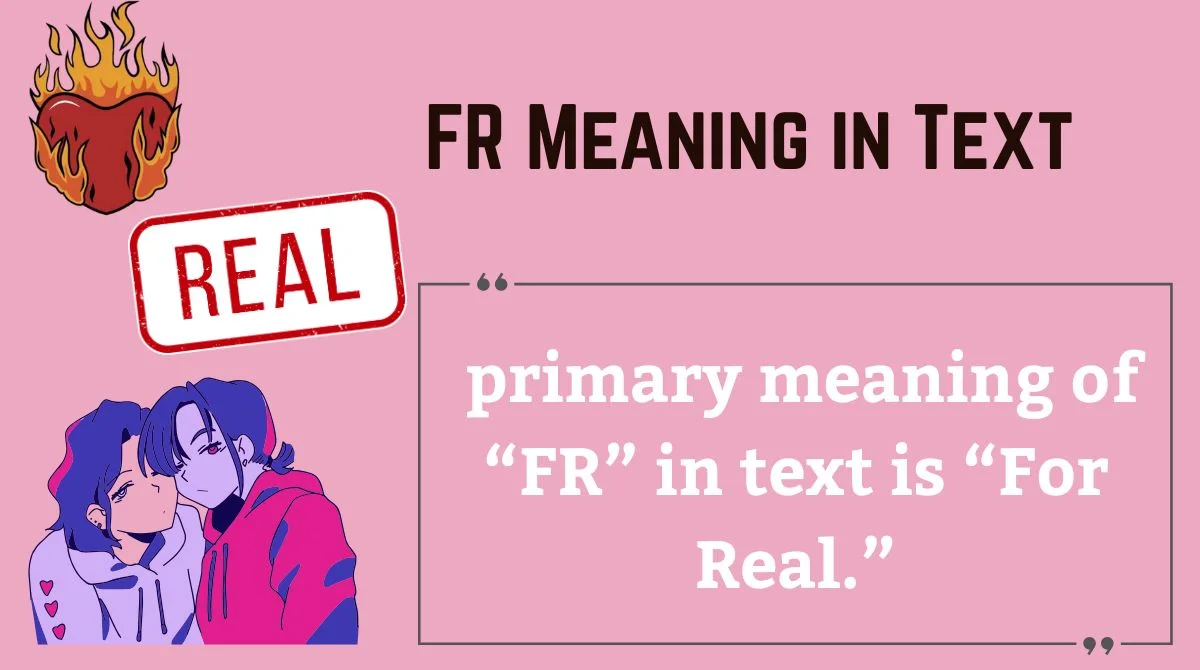
At its core, “FR” is an abbreviation for the phrase “For Real.” While the phrase itself has existed in spoken English for decades—particularly within African American Vernacular English (AAVE)—its transformation into a digital acronym has expanded its utility and global reach.
The Literal Definition: “For Real”
In its most basic form, “FR” is used to emphasize the truthfulness or sincerity of a statement. It serves as a digital nod of agreement or a way to vouch for the validity of one’s own words. When someone texts “I’m so tired fr,” they are adding a layer of emphasis that suggests their exhaustion is genuine and not hyperbole.
Nuances in Syntax: Using FR to Affirm, Question, or Emphasize
The versatility of “FR” lies in its ability to change meaning based on punctuation and placement.
- As an Affirmation: When used as a response to a statement (e.g., “That movie was incredible.” / “FR.”), it acts as a synonym for “I agree” or “Exactly.”
- As a Question: When followed by a question mark (“FR?”), it translates to “Are you serious?” or “Is that true?” It functions as a request for verification in a digital space often filled with misinformation or sarcasm.
- As Emphasis: When placed at the end of a sentence, it acts as an intensifier, similar to how one might use “honestly” or “seriously.”
FR vs. FFR: Understanding Frequency and Intensity
As with all digital trends, slang undergoes further iterations. You may occasionally see “FFR,” which stands for “For Freaking Real” (or a more profane alternative). This serves as a superlative, used when a standard “FR” isn’t enough to convey the depth of the user’s conviction. The evolution from “For Real” to “FR” to “FFR” mirrors the way software undergoes version updates—each iteration is designed to be more efficient or more expressive than the last.
The Impact of Social Media Platforms on Digital Vernacular
Language no longer evolves in a vacuum; it is shaped by the platforms where we spend our time. The “Tech” behind these platforms—specifically their notification systems and engagement metrics—plays a massive role in how “FR” became a global phenomenon.
The TikTok and X (Twitter) Effect
TikTok’s “duet” and “stitch” features allow users to react to content in real-time. Often, a creator will post a controversial or relatable take, and the comment section will be flooded with “FR.” This creates a “consensus loop.” The algorithm recognizes this high engagement and pushes the content to more users, further cementing the acronym in the collective consciousness. Similarly, on X, the “quote tweet” function often utilizes “FR” as a quick way to endorse a political or social sentiment without needing to write a paragraph.
Group Chats and the Democratization of Language
Apps like WhatsApp, iMessage, and Discord have created private digital hubs where subcultures develop their own linguistic styles. Because these platforms support rapid-fire, synchronous communication, “FR” has become a “low-friction” response. In a group chat of ten people, typing “I am in complete agreement with your assessment” would stall the conversation. Typing “fr” keeps the momentum going. This democratization of language ensures that slang is no longer dictated by style guides, but by the users of the technology itself.
Professionalism and Boundaries: When to Use FR in the Workplace
As digital natives enter the workforce, the line between personal and professional communication has blurred. This is largely due to the “consumerization” of enterprise software. Tools like Slack and Microsoft Teams are designed to look and feel like social media platforms, complete with emojis, GIFs, and reactions.
Slack, Teams, and the Casualization of Corporate Tech
The architecture of Slack encourages “channels” and “threads,” which mimic the informal structure of a group text. In these environments, using “FR” is becoming increasingly common, especially in creative or tech-centric industries. It signals a “flat” corporate hierarchy where team members communicate with authenticity rather than rigid formality. However, this raises questions about digital etiquette and the potential for misinterpretation across different age demographics within a company.
Navigating Generational Gaps in Digital Communication
For a Gen Z software engineer, “FR” is a standard part of their toolkit. For a Baby Boomer executive, it might appear unprofessional or confusing. This “digital divide” is a significant challenge in modern management. Understanding these nuances is a form of “Digital Intelligence” (DQ). Professionals must learn to “code-switch,” using “FR” in a casual internal dev-channel while sticking to “I agree” in a formal email to a client or stakeholder.
Future Trends: The Integration of AI and Slang in Digital Interfaces
As we look toward the future of technology, the way we use slang like “FR” will likely be influenced by Artificial Intelligence and Large Language Models (LLMs).
Predictive Text and the Machine Learning of Modern Slang
If you type “f” on a modern smartphone, the predictive text bar will likely suggest “fr” or “for.” This is because machine learning models are trained on massive datasets of human conversation. As “FR” becomes more common, AI will prioritize it, creating a feedback loop where the technology encourages the use of the slang, which in turn makes the slang more prevalent.
Will Slang Outpace Formal Language in Tech-Driven Communication?
We are approaching a point where AI-driven “Auto-Summarization” tools can condense long meetings or documents into bullet points. If the goal of communication is the efficient transfer of information, slang like “FR” is the ultimate “compressed file.” In the future, we may see “FR” integrated into user interfaces as a standard “reaction” button, sitting alongside the “Like” or “Heart” icon. This would represent the final stage of linguistic evolution: where a phrase becomes a UI/UX element.
In conclusion, “FR” is more than just a two-letter shortcut; it is a reflection of how technology has reshaped the human experience. It represents our desire for authenticity in an increasingly digital world and our ability to adapt our language to the tools we use. Whether you are a developer, a marketer, or a casual user, understanding the “tech” behind our talk is the key to staying connected in the 21st century. FR.
aViewFromTheCave is a participant in the Amazon Services LLC Associates Program, an affiliate advertising program designed to provide a means for sites to earn advertising fees by advertising and linking to Amazon.com. Amazon, the Amazon logo, AmazonSupply, and the AmazonSupply logo are trademarks of Amazon.com, Inc. or its affiliates. As an Amazon Associate we earn affiliate commissions from qualifying purchases.