
In the landscape of modern hardware and digital security, few devices are as ubiquitous yet misunderstood as the key fob. We use them to access our vehicles, secure our office buildings, and manage gated communities. However, a common question persists among tech enthusiasts and casual users alike: what does the acronym “F.O.B.” actually stand for?
The answer is surprising to many: it is not an acronym at all. While contemporary backronyms like “Frequency Operated Button” or “Free On Board” (a shipping term) are frequently cited, the word “fob” has deep historical roots that predate the invention of the microchip by centuries. In the context of modern technology, the key fob represents a sophisticated intersection of radio frequency engineering, cryptographic security, and ergonomic design.
The Etymology and Evolution of the Fob
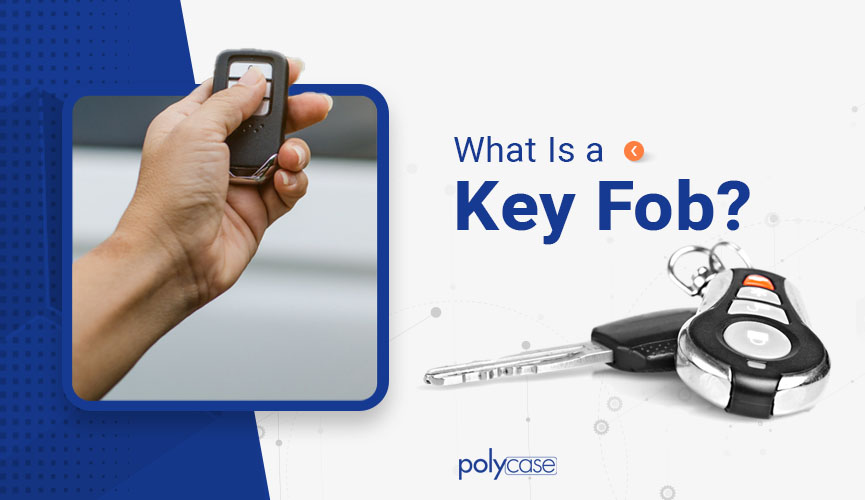
To understand the modern electronic fob, one must look back to the watch chains of the 18th and 19th centuries. The word “fob” is believed to be derived from the Low German word fuppe, meaning “pocket.” Historically, a fob referred to a small pocket in a waistcoat or trousers designed to hold a pocket watch. By extension, the ornaments or decorative tabs attached to the watch chain—which hung outside the pocket to allow the watch to be easily retrieved—became known as fobs.
As pocket watches gave way to wristwatches and physical keys became more complex, the term “fob” transitioned to describe any decorative or functional attachment to a key ring. When the automotive and security industries began integrating electronic remote keyless entry (RKE) systems in the 1980s, the hardware was naturally called a “key fob” because it occupied the same physical space and served the same organizational purpose as its mechanical predecessors.
From Mechanical Tabs to Electronic Transmitters
The transition from a simple leather or metal tab to a high-tech transmitter occurred rapidly. The first widespread use of electronic fobs appeared in the mid-1980s, most notably with the 1983 Renault Fuego. These early devices used infrared (IR) technology, requiring a line-of-sight connection similar to a television remote. However, IR was limited by range and environmental interference, leading the industry to pivot toward Radio Frequency (RF) technology, which remains the standard today.
The Myth of the “Frequency Operated Button”
The rise of the “Frequency Operated Button” backronym is a testament to our desire for technical labels. While it describes what the device does—uses radio frequencies via a button press—it is a linguistic fabrication. In the tech industry, precision is paramount, and understanding that “fob” is a legacy term helps clarify the distinction between the physical housing (the fob) and the internal technology (the transponder or transmitter).
How Key Fob Technology Functions
Underneath the plastic casing of a modern key fob lies a complex assembly of hardware designed to communicate securely with a specific receiver. This communication typically occurs over unlicensed industrial, scientific, and medical (ISM) radio bands, most commonly 315 MHz in North America and 433.92 MHz in Europe and Asia.
The Internal Components
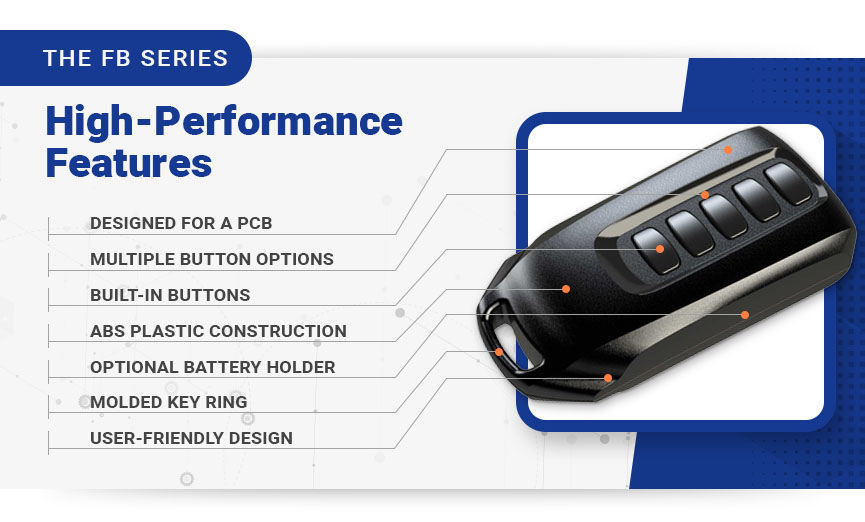
A standard electronic key fob consists of several critical components:
- The Microcontroller: The “brain” of the device, which processes button presses and generates the necessary security codes.
- The Transmitter/Transceiver: An integrated circuit that converts digital data from the microcontroller into radio signals.
- The Antenna: Usually a copper trace on the printed circuit board (PCB) or a small coil, designed to broadcast the signal at a specific frequency.
- The Battery: Typically a lithium coin cell (like the CR2032) that provides the power necessary for signal transmission.
- The Tactile Switches: Physical buttons that close a circuit to initiate a command.
Passive vs. Active Fobs
In the realm of digital access, there is a significant distinction between active and passive fobs.
- Active Fobs: These require a battery and a physical action (pressing a button) to transmit a signal. They have a longer range, often up to 100 meters, allowing users to unlock doors or start engines from a distance.
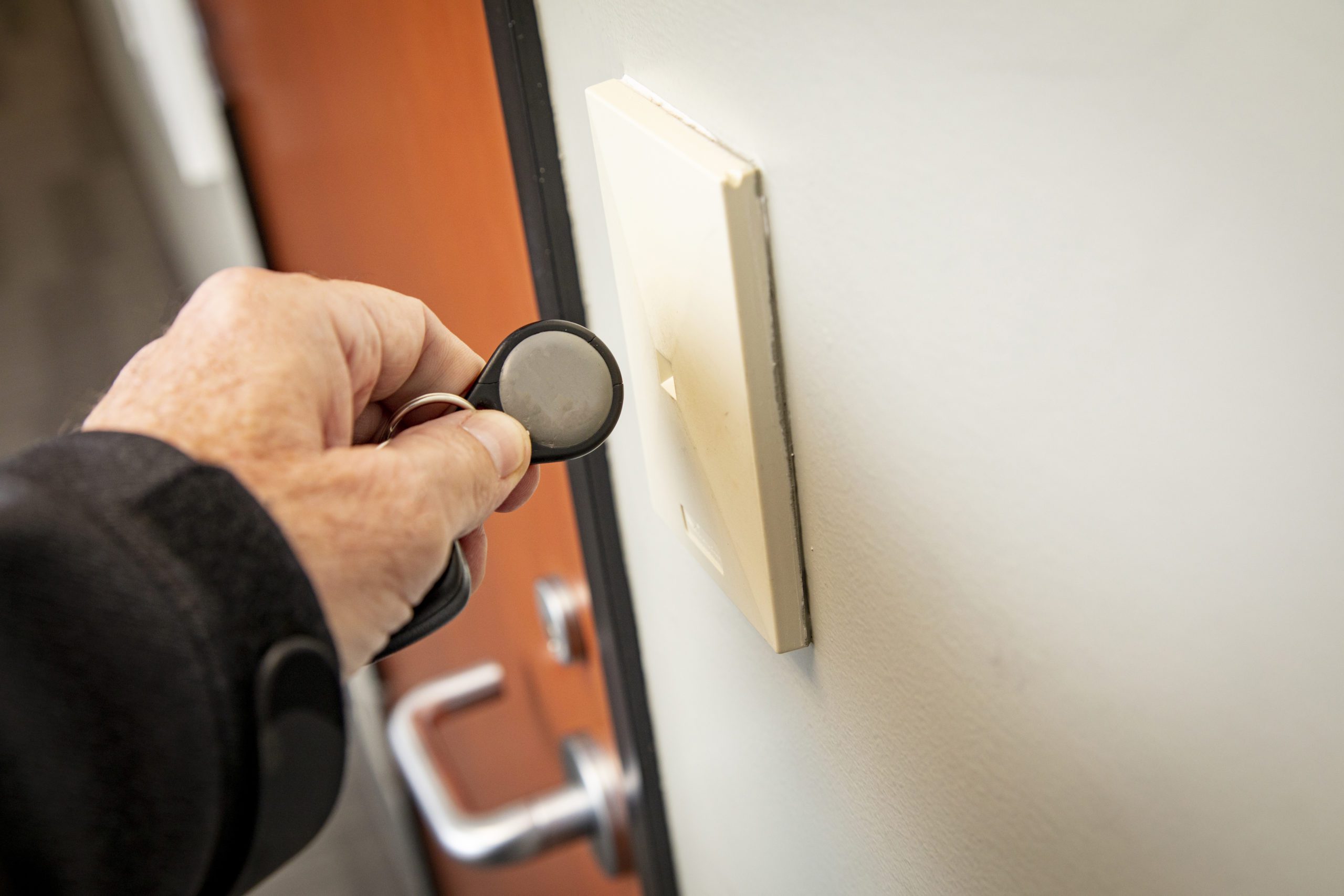
- Passive Fobs: Often used in RFID (Radio Frequency Identification) badges for office entry, these frequently do not have an internal power source. Instead, they are powered by the electromagnetic field generated by the reader. When the fob is held near the reader, the induction coil inside the fob gains enough power to transmit its unique ID string.
Digital Security: Rolling Codes and Encryption
If a key fob simply sent the same digital “unlock” signal every time, it would be trivial for a bad actor to intercept the signal using a basic radio receiver and replay it later to steal the vehicle or enter the building. This is known as a “replay attack.” To prevent this, the tech industry developed “Rolling Codes,” also known as hopping codes.
The Logic of Rolling Codes
Rolling code technology utilizes a pseudo-random number generator (PRNG) and a shared cryptographic key between the fob and the receiver. Each time the button is pressed, the fob generates a new code that is drastically different from the last.
The receiver maintains a synchronized list of the “next” possible valid codes. If it receives a code that matches one of the expected values in its sequence, it executes the command. Once a code is used, it is discarded and will never be accepted again. This synchronization is why a fob might occasionally need to be “re-synced” if the buttons are pressed many times out of range of the receiver.
Advanced Encryption Standard (AES)
Modern “Smart Keys”—the fobs that allow for push-button start and proximity unlocking—use even more advanced protocols. These devices engage in a two-way “challenge-response” dialogue with the vehicle’s computer. The vehicle sends a random encrypted challenge, and the fob must use its internal private key to calculate the correct response. Many high-end manufacturers now utilize 128-bit AES encryption, making the mathematical probability of “guessing” the code virtually zero.
Cybersecurity Vulnerabilities in Fob Systems
Despite the sophistication of rolling codes and AES encryption, key fobs are not immune to technological exploits. As security has evolved, so have the methods used by tech-savvy thieves to bypass them.
Relay Attacks
The most common modern exploit is the “Relay Attack,” which targets proximity-based fobs. In this scenario, two thieves use signal boosters. One stands near the victim’s house (where the fob might be sitting on a kitchen counter) and the other stands by the car. The devices “relay” the proximity signal from the fob to the car, tricking the vehicle into thinking the owner is standing right next to it with the key. This allows the thief to open the door and drive away without ever possessing the physical fob.
Signal Jamming
Another technique involves “Signal Jamming.” A thief uses a device to flood the local frequency (315 or 433 MHz) with noise at the exact moment the owner presses the “lock” button. The owner, hearing the mechanical click of the button but not noticing the lack of a confirmation beep or light flash, walks away, leaving the vehicle unlocked and vulnerable.
Hardware Hacking and “RollBack”
More recent research has uncovered vulnerabilities like “RollBack,” which exploits the way some receivers handle the synchronization of rolling codes. By capturing a series of sequential signals, an attacker can essentially force the receiver to “roll back” to a previous state, rendering the current security sequence void and allowing unauthorized access.
The Future of the Fob: Biometrics and Smartphones
As we look toward the future of technology, the physical key fob is undergoing a transformation. The industry is moving toward a “Phone-as-a-Key” (PaaK) model, leveraging the hardware already present in our pockets.
Ultra-Wideband (UWB) Technology
The latest evolution in fob tech is the integration of Ultra-Wideband (UWB) chips. Unlike standard Bluetooth or RF, UWB measures the “Time of Flight” (ToF) of the signal with incredible precision. This allows the car or building to know exactly how far away the fob is—down to a few centimeters. Because UWB measures the actual distance based on the speed of light, it is immune to relay attacks, as the system can detect that the signal is being delayed by a relay device.
Biometric Integration and Digital Wallets
We are seeing a convergence where digital wallets (like Apple Wallet or Google Pay) store encrypted “Digital Keys.” These keys use the smartphone’s Secure Enclave to manage authentication. This shifts the security burden from a standalone plastic fob to a multi-factor authentication (MFA) system. To unlock a car, a user might need to provide a FaceID or fingerprint scan on their phone, adding a layer of biometric security that a traditional fob lacks.
The Sustainable Fob
Finally, there is a push within the tech sector for more sustainable fobs. This includes the development of “energy harvesting” fobs that do not require batteries, instead drawing power from kinetic movement or ambient radio waves. This reduces electronic waste and eliminates the “dead battery” failure point that has plagued users for decades.
In conclusion, while the term “fob” may have originated in the pockets of 18th-century tailors, its modern iteration is a marvel of electrical engineering. It is a device that balances convenience with complex cryptography, constantly evolving to meet the demands of a connected, security-conscious world. Whether it remains a physical object on our keychains or migrates entirely into the silicon of our smartphones, the technology behind the fob continues to define how we interact with the physical world.
aViewFromTheCave is a participant in the Amazon Services LLC Associates Program, an affiliate advertising program designed to provide a means for sites to earn advertising fees by advertising and linking to Amazon.com. Amazon, the Amazon logo, AmazonSupply, and the AmazonSupply logo are trademarks of Amazon.com, Inc. or its affiliates. As an Amazon Associate we earn affiliate commissions from qualifying purchases.