
In the landscape of alternative investments, few assets have demonstrated the resilience and explosive growth of the Pokémon Trading Card Game (TCG). At the heart of this billion-dollar ecosystem lies a specific designation that has redefined card value for over two decades: the “EX” (and “ex”) label. For the casual observer, these letters signify a more powerful creature within the game’s mechanics. However, for the serious investor, collector, and market analyst, “EX” represents a pivotal shift in scarcity, manufacturing complexity, and long-term capital appreciation.

The term “EX” stands for “Extra,” denoting cards that possess extraordinary power, higher Hit Points (HP), and more devastating attacks than their standard counterparts. But beyond the gameplay, these cards function as the blue-chip stocks of the Pokémon TCG world. Understanding what “EX” means is not just a lesson in game lore; it is a fundamental requirement for anyone looking to navigate the high-stakes secondary market of collectible assets.
The Economics of Rarity: Defining the EX Mechanic in Financial Terms
To understand the financial weight of an EX card, one must first distinguish between the two distinct eras of this nomenclature. The history of “EX” is divided into the classic “ex” (lowercase) era of the mid-2000s and the modern “EX” (uppercase) era that began in 2011. Each carries a different risk profile and historical price floor.
The Origin of ex: Scarcity as a Market Driver
The “ex” series debuted in 2003 with the EX Ruby & Sapphire expansion. During this period, the Pokémon franchise was experiencing a stabilization phase following the initial “Pokémania” bubble of the late 90s. The introduction of “ex” cards was a strategic move to re-engage the player base with higher-stakes cards. From an investment perspective, these original “ex” cards are incredibly scarce. Print runs were significantly lower than they are today, and the “pull rates”—the statistical probability of finding a specific card in a pack—were punishingly low.
These cards are characterized by their silver-bordered, holographic edges and the “ex” suffix. Because they were released during a time when many children had moved on to other hobbies, the surviving population of Mint-condition (PSA 10) classic “ex” cards is remarkably small. This low supply, coupled with the nostalgic demand from the now-adult “millennial” demographic with disposable income, has led to a consistent upward trajectory in their market value.
Identifying Authentic EX Cards for Investment
In the modern era, starting with the Black & White series and continuing through XY, the “EX” (uppercase) cards shifted the aesthetic. These became Full Art cards, often featuring sprawling illustrations that cover the entire surface of the card. In terms of business finance, this was a masterstroke in product differentiation. By creating “Ultra Rare” and “Secret Rare” tiers within the EX category, The Pokémon Company created a tiered pricing structure in the secondary market.
For an investor, identifying the specific “EX” type is crucial. A standard “EX” might be worth $5 to $10, whereas a “Full Art” or “Golden Secret Rare” version of the same card can command hundreds or even thousands of dollars. The designation “EX” serves as a baseline for value, but the specific printing technique—such as texture, etching, and foil patterns—determines the asset’s ceiling.
The Impact of EX Variants on Secondary Market Valuations
The value of an EX card is not derived solely from the letters on the card but from the production quality and the specific “variant” it represents. In the world of high-end collectibles, the minute details of a card’s manufacturing are what separate a $50 asset from a $5,000 asset.
Holofoil Patterns and Texture: The Aesthetics of Value
One of the primary reasons EX cards hold such high premiums is the “Texture” introduced in the later EX eras. Unlike standard holographic cards, textured EX cards feature intricate, embossed patterns that are difficult to counterfeit. For the personal finance enthusiast looking to hedge against inflation through collectibles, these textured cards offer a layer of security. The complexity of the printing process acts as a barrier to entry for high-quality fakes, preserving the integrity of the investment.
Furthermore, the “Full Art” EX cards removed the traditional frame of the artwork, allowing the character to dominate the card’s real estate. This aesthetic appeal drives demand among “completionist” collectors who seek to own every variant of a specific Pokémon, such as Charizard or Mewtwo. When demand is driven by aesthetic preference rather than just game utility, the asset becomes less susceptible to “power creep”—the phenomenon where new, stronger cards make old ones obsolete in competitive play.
Historical Performance: From Ruby & Sapphire to Scarlet & Violet
The return of the lowercase “ex” in the 2023 Scarlet & Violet series marked a significant moment for market analysts. By reviving a classic brand name, The Pokémon Company signaled a move toward “nostalgia marketing.” However, the modern “ex” cards have much higher pull rates than their 2003 ancestors.
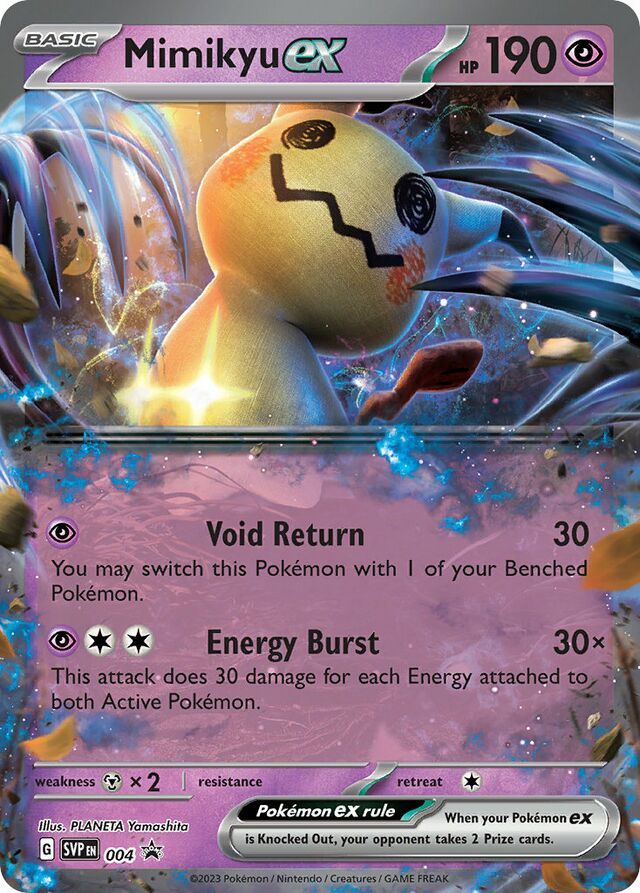
From a portfolio management perspective, this means that modern “ex” cards should be viewed as high-volume, lower-margin assets, whereas the vintage “ex” cards are the equivalent of “Value” stocks—harder to find, but with much deeper historical support levels. Investors must be wary of “junk wax” eras where overproduction can lead to a saturation of “EX” cards, potentially diluting the brand’s exclusivity and the card’s long-term ROI.
Investing in Pokémon EX: A Guide to Asset Diversification
Adding Pokémon EX cards to a financial portfolio requires the same rigor as investing in equities or real estate. It is not enough to simply buy “EX” cards; one must understand the infrastructure of the hobby, specifically regarding authentication and liquidity.
Grading and Liquidity: PSA, BGS, and CGC
In the collectibles market, the condition is the ultimate arbiter of price. A “Raw” (ungraded) EX card might sell for $100, but the same card in a “Gem Mint 10” holder from Professional Sports Authenticator (PSA) could fetch $2,000. This 20x multiplier is the result of “grading.”
Professional grading services provide a third-party, objective assessment of a card’s centering, corners, edges, and surface. For an investor, a graded EX card is a “liquid” asset. It is much easier to sell a PSA-certified card on a global platform like eBay or Heritage Auctions than it is to sell a raw card, as the buyer has a guarantee of the card’s condition and authenticity. When calculating the potential return on an EX card, one must always factor in the “grading fee” and the “turnaround time” as part of the initial capital outlay.
Portfolio Management: Sealed Product vs. Raw Singles
There are two primary ways to invest in the EX phenomenon. The first is purchasing “Singles”—individual EX cards. This allows for targeted investing in specific characters or high-grade specimens. The second strategy is “Sealed Product”—keeping booster boxes and elite trainer boxes unopened.
Historically, sealed booster boxes from “EX-heavy” eras have seen some of the highest CAGRs (Compound Annual Growth Rates) in the hobby. This is because the “EX” cards are hidden inside. As collectors open boxes to find these rare cards, the supply of unopened boxes decreases, creating a supply-demand imbalance that favors the long-term holder. For those seeking a “set and forget” investment, sealed products containing EX cards are often safer than individual cards, which are more sensitive to fluctuations in the “population report” (the total number of graded copies in existence).
Market Volatility and the Future of Specialty Card Mechanics
Like any asset class, the market for EX cards is subject to volatility. The “Pokémon Boom” of 2020-2021 saw prices skyrocket to unsustainable levels, followed by a correction in 2022. Understanding the “Why” behind these shifts is essential for financial stability within the hobby.
Power Creep and Its Influence on Collectibility
In the gaming world, “Power Creep” refers to the tendency of developers to release increasingly powerful cards to keep the meta-game fresh. When “GX” or “VMAX” cards were released, they were technically stronger than the older “EX” cards. In a purely utility-based market, the EX cards would have crashed in value.
However, the Pokémon market functions more like the fine art market. The value of a 2004 Rayquaza ex is not tied to how well it performs in a tournament today; it is tied to its historical significance and its place in the “EX” lineage. This decoupling of “playability” from “value” is what makes the EX category a viable long-term investment. It survives the rotating cycles of the game’s competitive rules.

The Role of Brand Longevity in Sustaining EX Prices
The ultimate question for any investor is: Will this be worth more in ten years? The “EX” moniker has become a cornerstone of the Pokémon brand identity. By periodically reviving the “EX” mechanic, The Pokémon Company ensures that the term remains relevant to new generations of consumers.
This corporate strategy sustains the secondary market. As long as “EX” remains the gold standard for “Extra” power in the minds of children, the vintage “EX” cards will continue to be viewed as the “Genesis” assets of that lineage. For the savvy investor, “EX” isn’t just a label on a piece of cardboard; it is a symbol of a market-leading brand’s ability to manufacture desire, manage scarcity, and maintain a multi-billion dollar economy of scale.
In conclusion, “EX” in Pokémon represents the intersection of game design and high-finance. It is a mechanic that transformed a simple card game into a sophisticated asset class. Whether you are looking at a $5 modern “ex” or a $50,000 vintage “ex,” the principles remain the same: rarity, condition, and historical significance drive the bottom line. For those who understand these financial nuances, the “EX” suffix is a clear indicator of value in the ever-evolving world of digital and physical collectibles.
aViewFromTheCave is a participant in the Amazon Services LLC Associates Program, an affiliate advertising program designed to provide a means for sites to earn advertising fees by advertising and linking to Amazon.com. Amazon, the Amazon logo, AmazonSupply, and the AmazonSupply logo are trademarks of Amazon.com, Inc. or its affiliates. As an Amazon Associate we earn affiliate commissions from qualifying purchases.