
In the landscape of modern competitive gaming and professional sports, the ability to quantify human skill with surgical precision is a cornerstone of digital infrastructure. While the term “Elo” is often used colloquially as a synonym for “ranking” or “score,” its origin and function represent one of the most significant achievements in the field of predictive statistics and data science. Developed originally to stabilize the competitive world of chess, the Elo rating system has evolved into a foundational technology that powers everything from grandmaster tournaments to the matchmaking algorithms of multi-billion dollar video game franchises.

Understanding what Elo means in chess requires more than a simple definition; it requires an exploration of how software and mathematics intersect to predict human behavior and performance. In an era dominated by Big Data and Artificial Intelligence, the Elo system remains a masterclass in elegant, efficient algorithmic design.
The Mechanics of the Elo Algorithm: How Probability Shapes Rankings
At its core, the Elo rating system is not a cumulative point system like those found in professional golf or tennis. Instead, it is a “zero-sum” probability model. When a player’s rating is calculated, the system isn’t just looking at their past wins; it is calculating the probability of their future success against a specific opponent.
Arpad Elo’s Mathematical Innovation
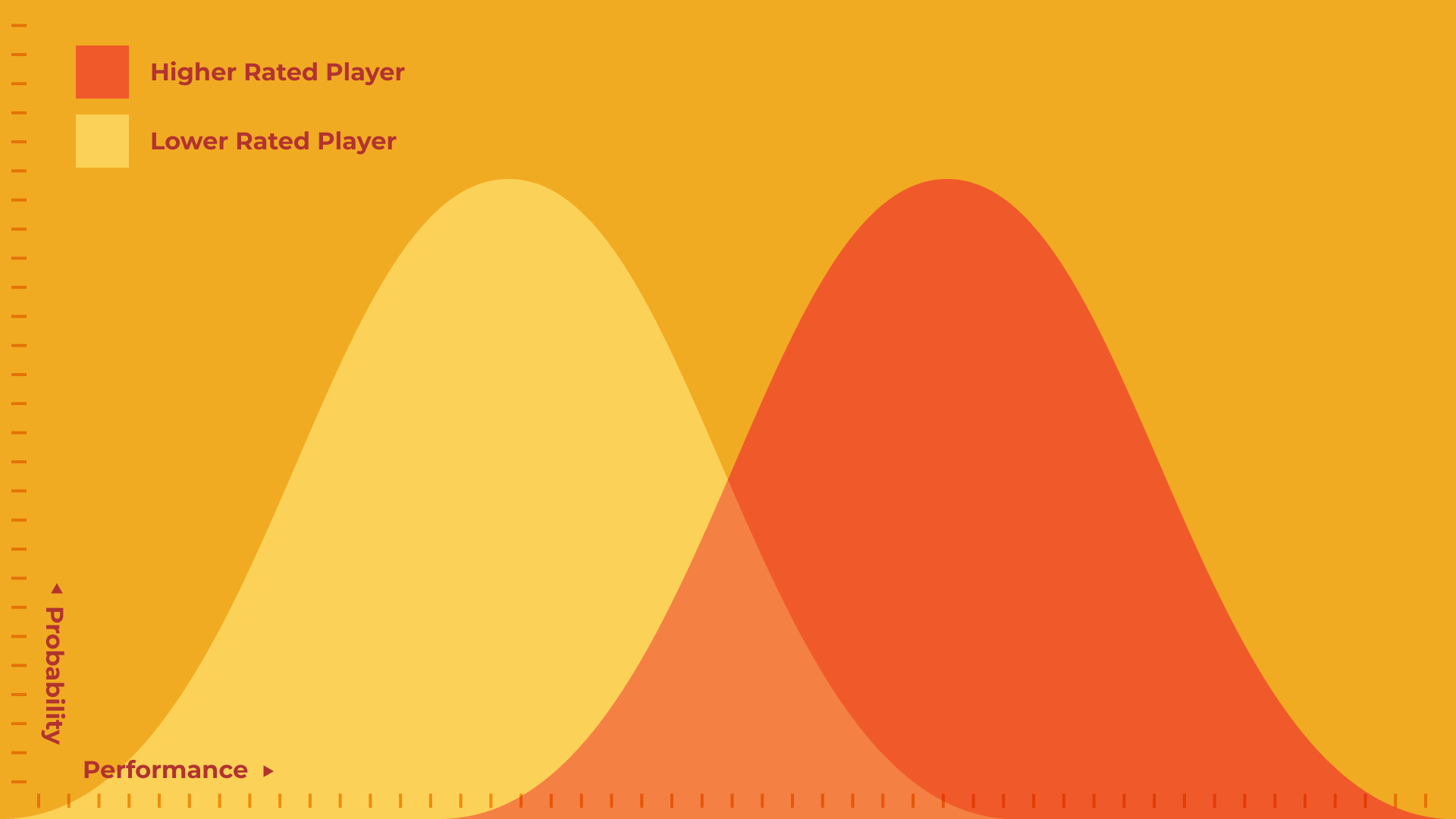
Before the 1960s, chess rankings were often subjective or relied on the Harkness System, which was frequently inaccurate and prone to inflation. Arpad Elo, a physics professor and chess master, recognized that chess performance is a “random variable” that follows a bell-curve distribution. He proposed that a player’s performance in any given game fluctuates, but the mean value of those performances remains stable over time.
His breakthrough was the transition from a linear scale to a statistical one. In the Elo system, the difference in ratings between two players serves as a predictor of the outcome of a match. If a player rated 2800 plays someone rated 2400, the algorithm predicts a near-certain victory for the higher-rated player. This predictive power is what makes Elo a robust piece of “statistical technology” rather than a mere leaderboard.
The Logistic Distribution and Expected Scores
Modern implementations of Elo use a logistic distribution function to determine the “Expected Score” ($E$). Before a game begins, the software calculates $E$ for both players. This value ranges from 0 to 1.
The formula for calculating the rating update after a match is:
$R’ = R + K cdot (S – E)$
- $R’$ is the new rating.
- $R$ is the current rating.
- $K$ is the “K-factor” (a scaling constant that determines how much a single game affects the rating).
- $S$ is the actual score (1 for a win, 0.5 for a draw, 0 for a loss).
- $E$ is the expected score.
This technical framework ensures that the system is self-correcting. If a high-rated player defeats a low-rated player, their $S$ (1) is very close to their $E$ (perhaps 0.95), resulting in a negligible rating gain. However, if an underdog wins, the gap between $S$ and $E$ is massive, causing a significant rating “correction.” This sensitivity is what allows the algorithm to accurately place players in their appropriate skill tier with remarkable speed.
Digital Evolution: Elo in the Age of Software and Online Platforms
While the FIDE (International Chess Federation) still maintains traditional Elo ratings for over-the-board play, the digital revolution has forced the algorithm to evolve. With millions of games played daily on platforms like Chess.com and Lichess, the traditional Elo system faced challenges regarding speed, “rating inflation,” and player inactivity.
Scaling for the Masses: Chess.com and Lichess Implementations
Online platforms require a tech stack capable of processing millions of rating updates per second. Unlike a physical tournament where ratings might be updated once a month, digital Elo is updated in real-time. This necessitates highly optimized database management and efficient algorithmic execution.
Online platforms have also introduced “Rating Gaps” and “Pool Segregation.” Because the player pool on an online platform is so vast (ranging from beginners to Grandmasters), the software must ensure that the “entry-level” rating is calibrated to prevent the entire system from drifting toward infinite inflation or deflation. This is achieved through sophisticated server-side scripts that monitor the average rating of the entire ecosystem.
Glicko-2 and Beyond: Solving the Volatility Problem
One of the primary technical criticisms of the original Elo system was its inability to account for “reliability.” If a player hasn’t played in three years, should their rating be treated as a certainty?
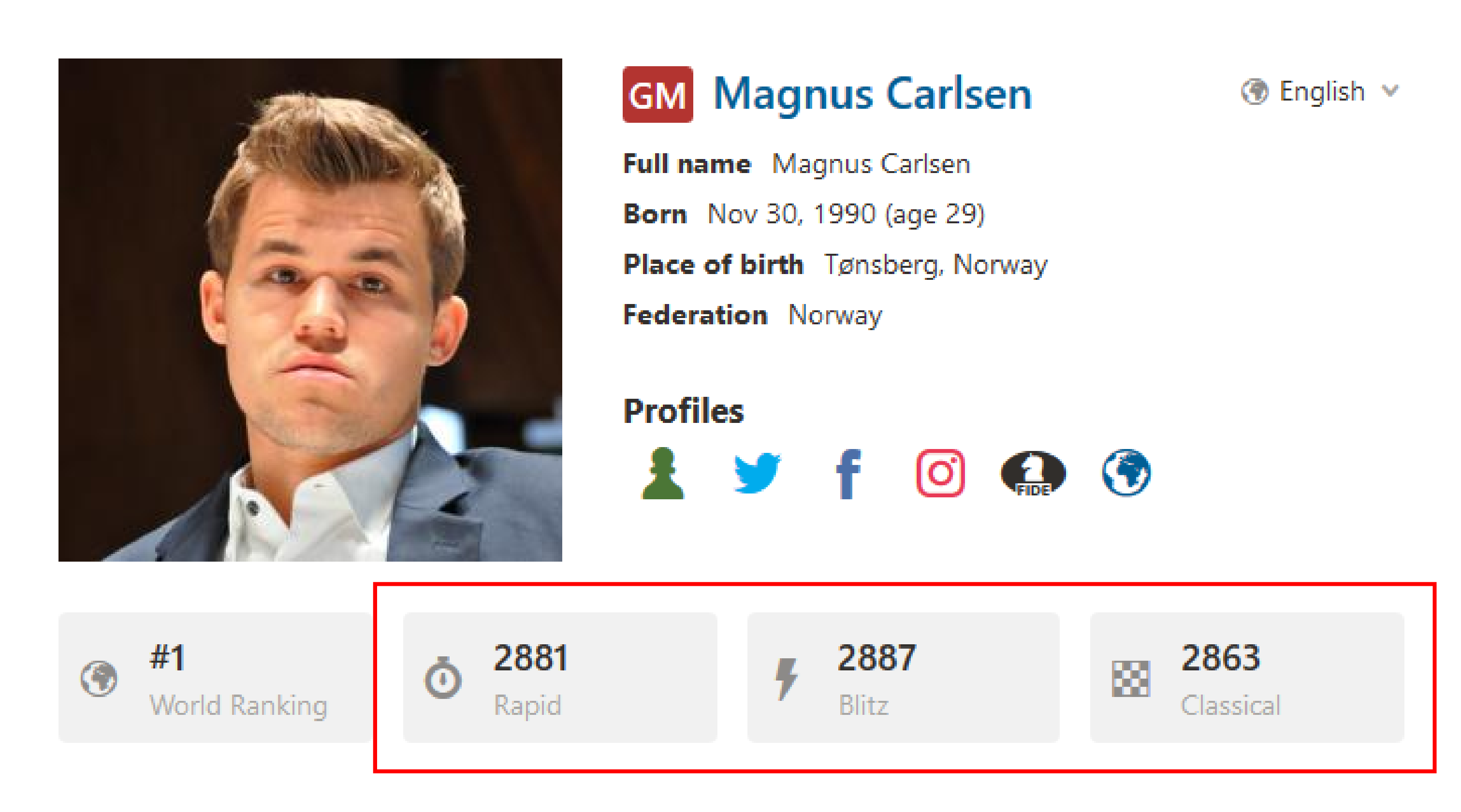
To solve this, modern chess software often utilizes the Glicko-2 system, a sophisticated evolution of Elo developed by Mark Glickman. Glicko-2 introduces a “Rating Deviation” (RD) and a “Volatility” (V) parameter. In technical terms, this means the algorithm tracks not just the rating, but the confidence the system has in that rating. If you play frequently, your RD is low, and your rating is stable. If you take a break, your RD increases, making your next few games high-stakes “placement” matches. This is a crucial piece of software logic that ensures the integrity of competitive matchmaking.
The Intersection of Elo and Artificial Intelligence
The relationship between Elo and AI is a symbiotic one. Elo is the metric used to judge AI, and AI is increasingly used to protect the integrity of the Elo system.
How Engines Like Stockfish Measure Strength
In the realm of software engineering, chess engines like Stockfish or Leela Chess Zero are benchmarked using Elo. However, since these engines do not play in human tournaments, developers use “Engine Elo.” This involves running thousands of automated games between different versions of the code to determine the “strength gain” of a specific update.
When a developer optimizes an engine’s search tree or neural network weights, they look for a “plus-Elo” result. In this context, Elo acts as a unit of measurement for software efficiency. A 50-Elo increase in an engine version represents a measurable improvement in the software’s ability to find the optimal move under time constraints.
Anti-Cheating Algorithms: Data Analysis in Fair Play
One of the most complex tech challenges in online chess is the detection of “Engine Assistance.” Platforms use Elo as a baseline for behavioral analysis. If a player rated 1200 Elo suddenly plays a string of games with an accuracy of 99.8% (matching the top choices of a 3500-rated engine), the system flags the anomaly.
The backend technology involves comparing a player’s “Actual Performance” against their “Elo-Expected Performance.” Advanced data science models analyze the “centipawn loss” (the fractional disadvantage of a move compared to the engine’s best move) across thousands of positions. By using Elo as a statistical anchor, developers can build machine learning models that identify cheaters with a high degree of statistical certainty.
Beyond the Board: Elo’s Influence on Modern Tech Ecosystems
The technical legacy of the Elo rating system extends far beyond the 64 squares of a chessboard. It has become the blueprint for “Skill-Based Matchmaking” (SBMM) in the broader technology and gaming sectors.
Matchmaking in Video Games (MMR)
In titles like League of Legends, Counter-Strike, and Overwatch, the system known as MMR (Matchmaking Rating) is a direct descendant of Elo. The technical goal of an SBMM algorithm is to minimize the time a user spends in a queue while maximizing the probability that the resulting match will be a “coin flip” (a 50/50 win probability).
This requires immense computational power. The matchmaking server must query a database of millions of active users, filter them by latency (ping), and then run a recursive search to find 10 players whose aggregate Elo ratings are nearly identical. The success of modern eSports is built entirely on the mathematical foundations laid by Arpad Elo.
Recommendation Engines and Ranking Systems
Perhaps most surprisingly, Elo-style algorithms are used in non-gaming tech sectors. Recommendation engines for streaming services or even dating apps have experimented with “relative ranking” systems. If a user chooses “Movie A” over “Movie B,” the system treats it as a “win” for Movie A, increasing its internal “Elo” within that user’s profile.
This demonstrates the versatility of the Elo concept as a tool for “Sorting Logic.” Whether it is ranking the difficulty of a coding challenge on a platform like LeetCode or determining the most relevant result in a search query, the logic of “comparative strength” remains one of the most efficient ways to organize data.
Conclusion: The Persistence of Algorithmic Precision
What does Elo mean in chess? It is more than a number; it is a sophisticated, self-correcting algorithmic framework that has stood the test of time. From its origins as a pencil-and-paper probability model to its current status as a high-frequency digital rating system, Elo represents the pinnacle of skill measurement technology.
For the tech-savvy observer, Elo is a reminder that the most powerful algorithms are often those that are simple, elegant, and rooted in sound statistical principles. As we move deeper into the age of AI and hyper-competitive digital environments, the Elo system—and its various technological iterations—will continue to serve as the gold standard for quantifying the intangible element of human (and machine) skill. Whether you are a software developer building a matchmaking engine or a grandmaster defending your title, the Elo algorithm is the silent arbiter of your success.
aViewFromTheCave is a participant in the Amazon Services LLC Associates Program, an affiliate advertising program designed to provide a means for sites to earn advertising fees by advertising and linking to Amazon.com. Amazon, the Amazon logo, AmazonSupply, and the AmazonSupply logo are trademarks of Amazon.com, Inc. or its affiliates. As an Amazon Associate we earn affiliate commissions from qualifying purchases.