
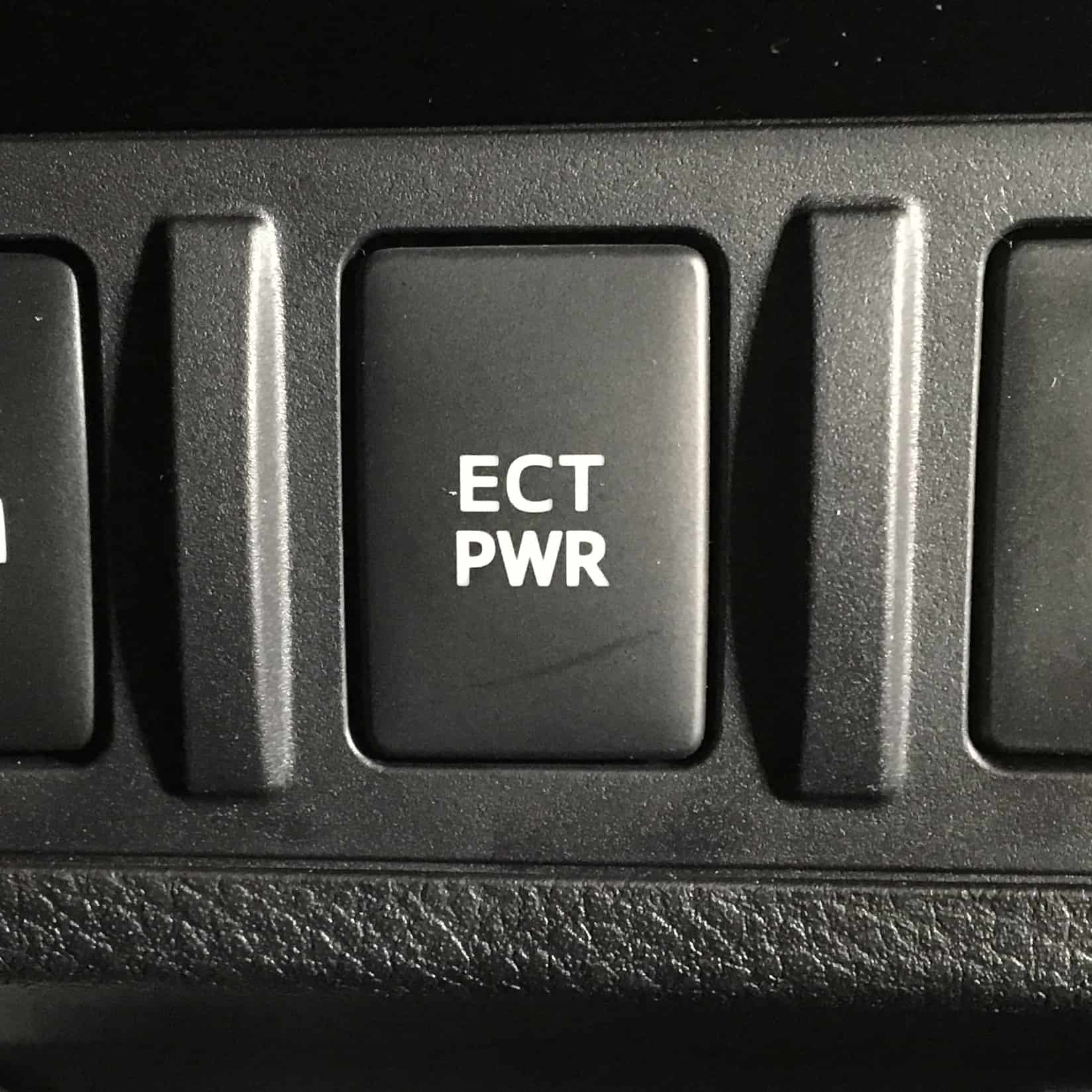
In the modern automotive landscape, vehicles are no longer merely mechanical assemblies of gears and pistons; they are sophisticated, mobile computing platforms. The Toyota Tacoma, a stalwart of the mid-size truck segment, exemplifies this integration of hardware and software. Among the various interfaces and buttons available to the driver, the “ECT Power” button often sparks curiosity.
To the uninitiated, it might seem like a simple performance boost, but from a technological perspective, ECT—which stands for Electronically Controlled Transmission—represents a critical bridge between software logic and mechanical execution. Understanding what ECT Power does requires a deep dive into the firmware calibrations, sensor integrations, and algorithmic shift logic that define the contemporary driving experience.
Decoding the Technology: The Science of Electronically Controlled Transmissions
To understand ECT Power, one must first understand the Electronic Control Unit (ECU). In older vehicles, transmissions shifted based on hydraulic pressure and mechanical governors. Modern Toyotas, however, utilize a sophisticated suite of sensors and microprocessors to manage gear changes.
The Role of the ECU and Transmission Control Module (TCM)
The Toyota Tacoma’s drivetrain is governed by a Transmission Control Module (TCM) that communicates constantly with the Engine Control Unit (ECU). These computers monitor a variety of data points in real-time, including throttle position, vehicle speed, engine RPM, and even the angle of the incline the truck is climbing. The “ECT” in ECT Power refers to the software-driven nature of this system. When you press the ECT Power button, you are essentially selecting an alternative “map” or firmware profile for the TCM to follow.
Solenoids and Electronic Actuation
Inside the transmission, the physical act of shifting is performed by solenoids—electronic valves that route hydraulic fluid to engage different gear sets. In standard mode, the TCM is programmed to prioritize fuel efficiency and smoothness, triggering these solenoids at lower RPMs. When ECT Power is engaged, the software overrides these economy-focused instructions, delaying the signal to the solenoids and allowing the mechanical components to operate at a different frequency.
User Experience and Performance Optimization: How the Logic Changes
When a user toggles the ECT Power mode, they are modifying the “behavioral psychology” of the truck’s computer. This isn’t a modification of the engine’s raw horsepower—the engine remains physically the same—but it is a significant optimization of how that power is delivered to the wheels.
Shift Point Modification and RPM Management
The most immediate technical change occurs in the shift points. In the Tacoma’s default mode, the computer is programmed to upshift as early as possible to keep the engine in a low-RPM, high-efficiency range. However, this can sometimes lead to “gear hunting,” where the computer struggles to decide between two gears during acceleration.
ECT Power moves these shift points higher up the power band. By allowing the engine to reach higher RPMs before the TCM initiates an upshift, the truck stays within its peak torque curve for longer. This technical adjustment provides a more responsive feel, as the software is no longer “rushing” to get into a higher gear for the sake of fuel economy.
Enhanced Throttle Response and Sensitivity
Beyond just gear changes, the ECT Power mode often influences the electronic throttle control (Drive-by-Wire) logic. In a modern Tacoma, there is no physical cable connecting your foot to the engine. Instead, a sensor sends a digital signal to the ECU. In standard mode, the software might “smooth out” your input to prevent jerky movements and save fuel. When ECT Power is active, the software becomes more sensitive to input, reducing the digital lag between the driver pressing the pedal and the engine responding.
Practical Use Cases: When Software Meets Hardware
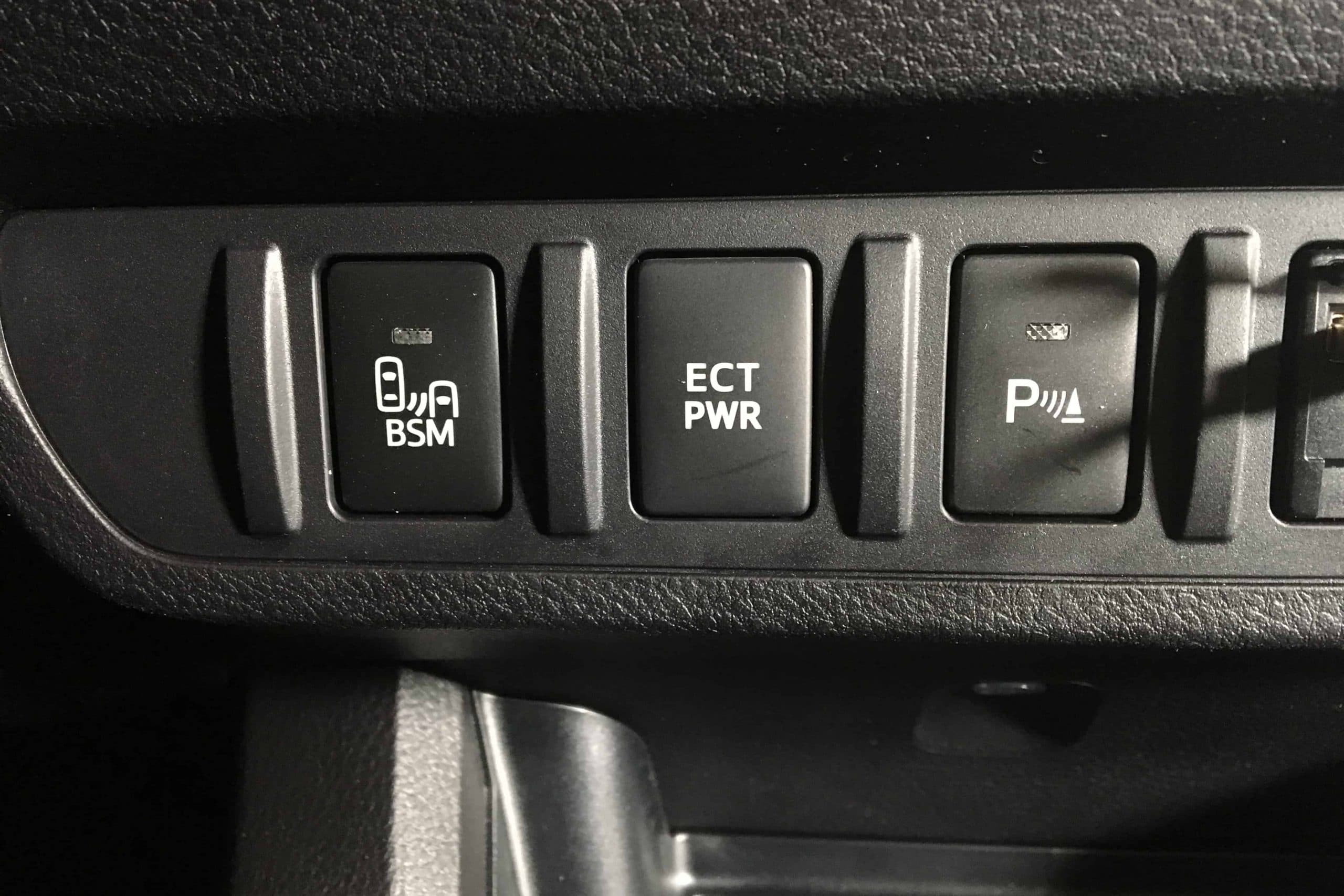
The inclusion of ECT Power is not merely for enthusiasts who want a “sportier” drive; it is a functional tool designed to solve specific engineering challenges encountered during heavy-duty tasks.
Towing, Hauling, and Load Calibration
The primary technical reason for the ECT Power button is to manage increased mass. When a Tacoma is towing a trailer or carrying a heavy payload in the bed, the standard shift logic may become inefficient. A truck carrying an extra 3,000 pounds requires more torque to maintain momentum, especially on inclines.
By engaging ECT Power, the driver ensures the transmission holds onto gears longer, preventing the “bogging down” effect that occurs when a computer shifts too early under load. It also assists in downhill scenarios; by staying in a lower gear longer, the vehicle can utilize engine braking more effectively, reducing the thermal load on the physical brake pads and rotors.
Off-Road Calibration and Technical Terrain
For the off-road community, the ECT Power button serves as a rudimentary performance tuner. When navigating deep sand, mud, or steep technical trails, maintaining high RPMs is vital to preventing the vehicle from losing momentum. The electronic logic of ECT Power prevents the transmission from shifting into a higher gear at an inopportune moment, which could cause the wheels to lose the torque necessary to clear an obstacle. It transforms the vehicle’s “brain” to prioritize momentum over all other variables.
The Impact on Efficiency and Mechanical Longevity
Every technological trade-off has a consequence. While ECT Power provides a significant boost in performance and utility through software optimization, it changes the operational parameters of the hardware in ways that the user should understand.
Fuel Consumption vs. Power Delivery
From a data perspective, ECT Power is the antithesis of “Eco Mode.” By holding gears longer and operating at higher RPMs, the engine consumes more fuel per mile. The fuel injectors stay open longer, and the engine completes more cycles to cover the same distance. For users tracking their vehicle metrics through apps or onboard diagnostics, the engagement of ECT Power will show a clear increase in “Gallons Per Hour” (GPH) and a decrease in overall MPG. This is the “cost” of the increased computational performance.
Heat Management and Transmission Health
Operating at higher RPMs and delaying shifts increases the internal temperature of both the engine and the transmission fluid. Toyota’s engineers have accounted for this, but from a maintenance standpoint, frequent use of ECT Power—especially when towing—means the transmission fluid is working harder to shear heat away from the gears. The tech-savvy owner understands that the “Power” mode is a high-performance setting that, while safe, utilizes the hardware’s overhead more aggressively than the standard “Economy” setting.
The Future of Driving Modes in the Age of Smart Vehicles
The ECT Power button is a precursor to the more advanced, AI-driven drivetrain management systems we see emerging in the latest generation of vehicles. As automotive technology continues to evolve, the distinction between “Power” and “Normal” modes is becoming even more granular.
From Static Maps to Adaptive Learning
While the Tacoma’s ECT Power button uses a static alternative map, newer iterations of Toyota’s software are moving toward “Adaptive Transmission Control.” This technology uses machine learning algorithms to analyze a driver’s specific habits over time. If the computer detects consistent aggressive throttle input or frequent hill climbing, it may begin to adjust shift points automatically without the driver needing to press a button.

Moving Toward AI-Driven Drivetrains
We are entering an era where the “ECT” logic will likely be integrated with GPS data and cloud computing. Imagine a Tacoma that knows a steep mountain pass is three miles away based on its navigation software and pre-emptively switches its transmission logic to “Power” mode to optimize cooling and torque delivery before the climb even begins.
The ECT Power button on the Toyota Tacoma remains a vital manual override in an increasingly automated world. It is a testament to the importance of software in modern engineering—a simple toggle that reconfigures millions of lines of code to transform a fuel-efficient commuter into a high-torque workhorse. Whether you are merging onto a fast-moving highway or pulling a boat up a ramp, ECT Power is a prime example of how digital logic can maximize the potential of physical machinery.
aViewFromTheCave is a participant in the Amazon Services LLC Associates Program, an affiliate advertising program designed to provide a means for sites to earn advertising fees by advertising and linking to Amazon.com. Amazon, the Amazon logo, AmazonSupply, and the AmazonSupply logo are trademarks of Amazon.com, Inc. or its affiliates. As an Amazon Associate we earn affiliate commissions from qualifying purchases.