
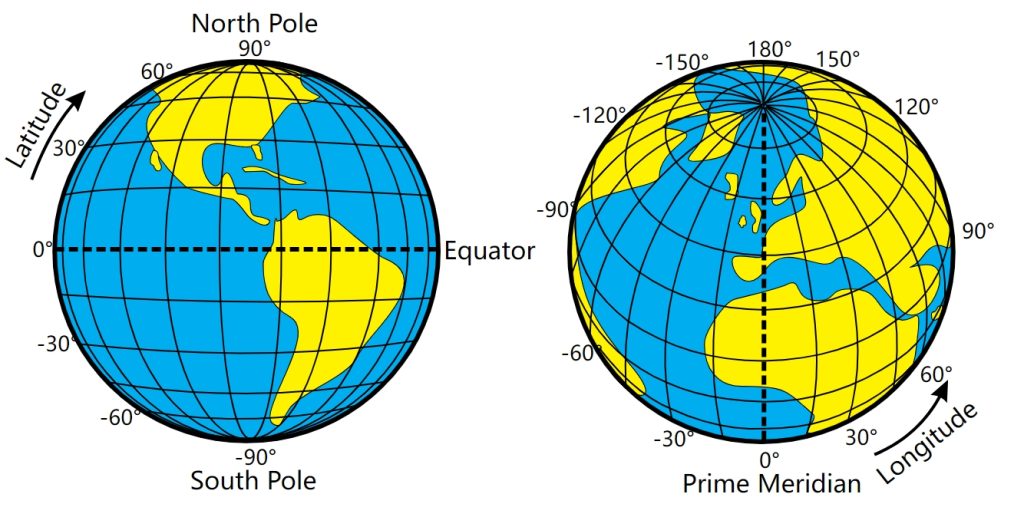
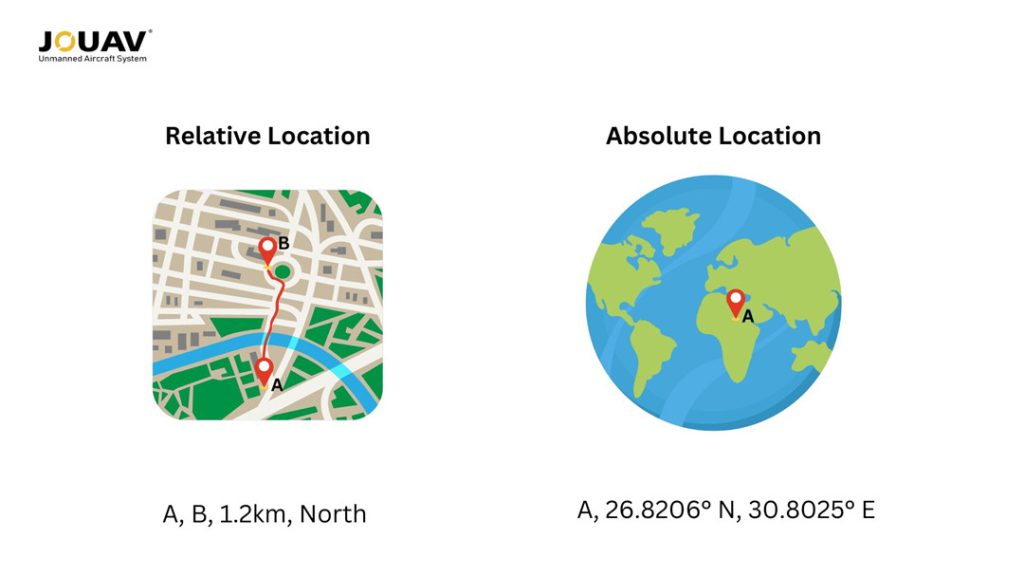
In the traditional sense, location has always been defined by coordinates—latitude and longitude points that pin a person or object to a specific spot on the globe. However, as our digital ecosystem becomes more sophisticated, the concept of “absolute location” is frequently taking a backseat to “relative location.” In the realm of technology, relative location refers to the position of a device or entity in relation to other objects, signals, or landmarks within a specific environment, rather than its fixed point on a map.
As we move toward a world defined by the Internet of Things (IoT), augmented reality (AR), and autonomous systems, understanding relative location is no longer just a geographical exercise; it is a fundamental requirement for hardware and software synergy. Whether it is a smartphone unlocking because it is “near” a smartwatch or a warehouse robot navigating “three meters away” from a loading dock, relative location provides the context that makes modern tech “smart.”

Understanding the Core: Relative vs. Absolute Location
To appreciate the importance of relative location in technology, one must first understand how it differs from absolute location. Absolute location is rigid; it relies on the Global Positioning System (GPS) to provide a fixed set of coordinates. While highly effective for cross-country navigation, GPS has significant limitations in precision and indoor environments.
The Limitations of Global Positioning Systems (GPS)
GPS relies on line-of-sight communication with satellites. In dense urban environments—often called “urban canyons”—or inside reinforced concrete buildings, GPS signals degrade or disappear entirely. Furthermore, GPS typically offers an accuracy range of 3 to 10 meters. While this is sufficient for finding a restaurant in a city, it is entirely inadequate for a self-driving car trying to maintain a safe distance from a curb or a drone attempting to land on a moving platform.
How Relative Data Fills the Gap
Relative location solves the “last meter” problem. Instead of asking “Where am I on Earth?”, a device asks “Where am I relative to the things around me?” This is achieved through various sensors—accelerometers, gyroscopes, and wireless signals—that allow a device to calculate its movement and position based on a starting reference point. This shift from global coordinates to local context allows for high-precision interactions that GPS simply cannot support.
Key Technologies Powering Relative Positioning
The transition toward relative location has been catalyzed by several breakthrough wireless technologies. These tools allow devices to create a “digital bubble” of awareness, identifying exactly how far they are from other nodes in a network.
Bluetooth Low Energy (BLE) and Beacon Technology
Bluetooth Low Energy (BLE) has become a cornerstone of relative location services. Through a process known as RSSI (Received Signal Strength Indicator), a smartphone can estimate its distance from a fixed Bluetooth beacon. If a user walks into a retail store, the store’s app doesn’t need to know the user’s latitude; it only needs to know that the user is “within two meters” of the shoe department to send a relevant coupon. This proximity-based logic is the essence of relative positioning in the consumer tech space.
Ultra-Wideband (UWB) and Precision Tracking
While Bluetooth provides a general idea of proximity, Ultra-Wideband (UWB) has revolutionized precision. Used in technologies like Apple’s AirTags or Samsung’s Galaxy SmartTag+, UWB uses “Time of Flight” (ToF) calculations to measure the time it takes for a radio pulse to travel between devices. This allows for centimeter-level accuracy. In this context, relative location means the difference between knowing a lost key is “somewhere in the living room” and seeing an arrow on your phone pointing exactly to the couch cushion where it is hidden.
Wi-Fi Ranging and Signal Strength
Standard Wi-Fi networks are also evolving to support relative location. Through the IEEE 802.11mc protocol, devices can use Fine Timing Measurement (FTM) to determine the distance between a smartphone and multiple Wi-Fi access points. By triangulating these relative distances, a device can determine its position within a building with much higher reliability than traditional cellular or satellite data.
Spatial Computing and the Evolution of Relative Location
We are currently entering the era of spatial computing, led by headsets like the Apple Vision Pro and Meta Quest series. For these devices, relative location is the primary operating language. Without a deep, real-time understanding of relative space, augmented reality would be impossible.
SLAM: The Engine of Augmented Reality
Simultaneous Localization and Mapping (SLAM) is a complex suite of algorithms used by AR devices and autonomous robots. SLAM allows a device to map an unknown environment while simultaneously keeping track of its own location within that map. As you move an AR headset through a room, the device identifies “anchor points”—the corner of a table, the edge of a door, the texture of a rug. It defines its location relative to these anchors. This is why a digital object can appear to “sit” on your physical desk; the software knows the digital object’s relative position to the physical surface.
Robotics and Autonomous Navigation
In the industrial sector, relative location is what allows autonomous mobile robots (AMRs) to function in warehouses. These robots do not rely on GPS to move pallets. Instead, they use LiDAR (Light Detection and Ranging) to bounce lasers off their surroundings. They calculate their relative location to walls, shelves, and human workers hundreds of times per second. In this environment, an absolute coordinate is useless; the relative distance to a moving forklift is the only data point that prevents a collision.
Practical Applications in the Tech Ecosystem
The transition to relative-location-aware tech is changing how we interact with our homes, our cities, and our workplaces. By prioritizing proximity and context, developers are creating more seamless user experiences.
Smart Homes and Proximity Triggers
The modern smart home relies heavily on relative location to automate tasks. “Geofencing” is a common application where a home enters “Away Mode” when your phone moves a certain distance from the central hub. More granularly, “Zone Tracking” uses relative location to follow a user through the house. Imagine a sound system that shifts the music from the kitchen speakers to the living room speakers as it detects your smartphone’s relative movement from one room to another. This is the ultimate expression of a tech environment that adapts to the user’s physical presence.
Retail Tech and Hyper-Local Marketing
For the business world, relative location is a goldmine for engagement. Shopping malls and large-scale venues use Indoor Positioning Systems (IPS) to guide users. Because GPS is unreliable indoors, these venues use a mesh of relative location nodes. This allows for “blue dot” navigation on a digital floor plan, showing a user exactly where they are relative to the nearest exit or restroom. Furthermore, it enables hyper-local marketing, where a brand can trigger a notification only when a customer is standing directly in front of a specific product display.
Privacy and Security in the Age of Constant Proximity
As with any technology that tracks movement, the rise of relative location data brings significant privacy and security considerations. If a device knows exactly where it is relative to everything else, that data is highly descriptive of a user’s behavior and habits.
Data Anonymization in Relative Tracking
One of the technical advantages of relative location is that it can, in theory, be more private than absolute location. A device can calculate that it is near a specific “Point of Interest” without ever broadcasting its global coordinates to a central server. Tech giants are increasingly moving toward “on-device processing,” where the relative location calculations happen locally. This ensures that the “where” of a user remains on their hardware rather than being stored in a cloud database that could be vulnerable to breaches.
The Future of Permission-Based Geolocation
We are seeing a shift in mobile operating systems (like iOS and Android) toward more granular location permissions. Users are no longer just asked to share “Location Services”; they are asked for “Precise” versus “Approximate” location. Precise location often leverages relative data (like Wi-Fi and Bluetooth) to pin a user down, while approximate location uses broader cellular data. As we move forward, the challenge for the tech industry will be to maintain the incredible utility of relative positioning while giving users absolute control over who can see their “digital shadow.”
In conclusion, “relative location” in technology represents a shift from coordinates to context. It is the bridge between the digital and physical worlds, allowing our gadgets to understand not just where they are on a map, but how they fit into the immediate space around them. From the precision of UWB tracking to the immersive mapping of SLAM, relative location is the silent engine driving the next generation of intuitive, responsive, and autonomous technology.
aViewFromTheCave is a participant in the Amazon Services LLC Associates Program, an affiliate advertising program designed to provide a means for sites to earn advertising fees by advertising and linking to Amazon.com. Amazon, the Amazon logo, AmazonSupply, and the AmazonSupply logo are trademarks of Amazon.com, Inc. or its affiliates. As an Amazon Associate we earn affiliate commissions from qualifying purchases.