
In the rapidly evolving landscape of data science, software engineering, and artificial intelligence, the term “disjoint” serves as a foundational pillar for logical reasoning and system architecture. While the word originates from classical statistics and set theory, its implications in the tech sector are vast, influencing everything from the way we structure databases to how machine learning models categorize information. At its core, “disjoint” refers to a relationship between two or more sets or events that have no overlap. In the digital realm, this concept translates to mutual exclusivity—a state where the occurrence of one event or the presence of one data point automatically precludes the presence of another.

Understanding disjointness is not merely an academic exercise; it is a practical necessity for developers and data architects who must design systems that are both efficient and logically sound. Whether you are optimizing a search algorithm, securing a network through identity management, or training a neural network, the principle of disjoint events ensures that your system maintains a clear, unambiguous state.
Defining Disjoint Events in the Digital Ecosystem
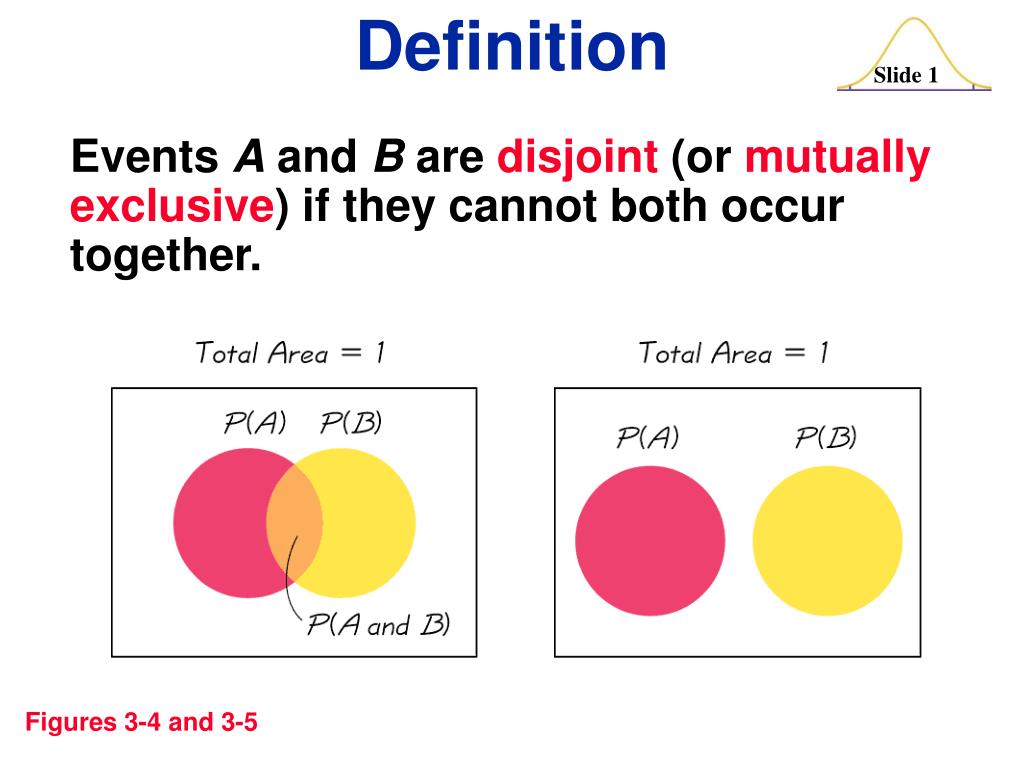
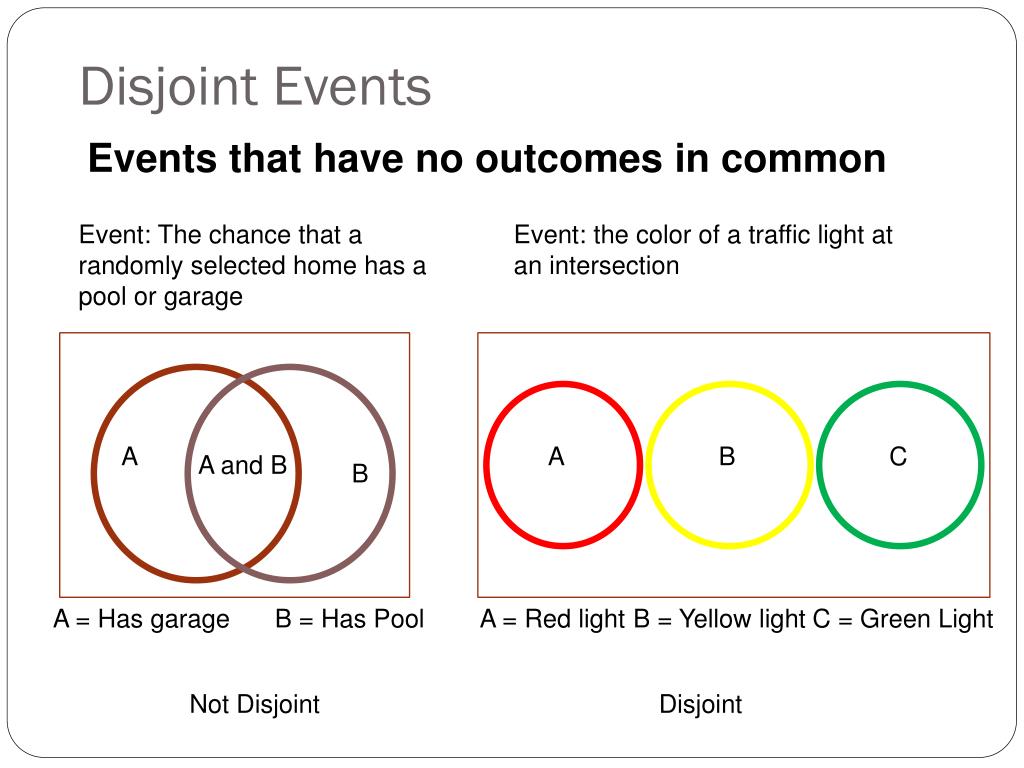
To grasp the importance of disjointness in technology, one must first look at its statistical roots. In probability theory, two events are considered disjoint—or mutually exclusive—if they cannot occur at the same time. Mathematically, if Event A and Event B are disjoint, the probability of both occurring simultaneously is zero. In the context of a Venn diagram, these sets would be represented by two distinct circles that do not touch or overlap.
The Statistical Foundation: Mutual Exclusivity
In the world of tech, this statistical definition is the basis for Boolean logic, the language of modern computing. Every operation within a processor relies on the fact that a bit cannot be both 0 and 1 at the same time. These are disjoint states. When we scale this logic up to software development, we use disjointness to manage program states. For instance, in a cloud application, a user’s subscription status might be “Active,” “Expired,” or “Pending.” These statuses are designed to be disjoint; a user cannot simultaneously have an active and an expired account. Ensuring these categories are disjoint prevents logic errors and “race conditions” where the system might receive conflicting instructions.
Visualizing Disjointness in Data Sets
In data engineering, visualizing disjointness is crucial for maintaining data integrity. When we talk about disjoint data sets, we are referring to collections of information where no single record appears in more than one set. This is particularly important in the context of “Gold Standard” datasets used for testing software. If the training data and the testing data in a machine learning project are not disjoint, the model will suffer from “data leakage.” This occurs when the model “sees” the answers during its training phase, leading to inflated performance metrics that fail when the system is deployed in a real-world tech environment. By strictly enforcing disjoint sets, developers ensure that their testing protocols are rigorous and their results are valid.
Practical Applications in Software Engineering and Boolean Logic
The concept of disjointness is the silent engine behind clean code and efficient algorithm design. When developers write code, they are essentially managing a series of disjoint logic paths. If these paths overlap unintentionally, the software becomes buggy, unpredictable, and difficult to maintain.
Conditional Branching and Execution Paths
In software architecture, conditional statements like if-else and switch-case are the most common implementations of disjoint logic. A well-constructed switch statement ensures that for any given input, only one block of code is executed. This is a practical application of mutual exclusivity. For example, in a fintech app processing a transaction, the system must decide if the transaction is “Approved,” “Declined,” or “Flagged for Fraud.” By treating these outcomes as disjoint events, the developer ensures that the system doesn’t accidentally approve a transaction while simultaneously flagging it for fraud, which would lead to catastrophic financial discrepancies.
Error Handling and Exclusive System States
Digital security and system reliability also rely on disjoint states. Consider the concept of “exclusive locks” in database management. When a process is writing to a specific row in a database, it often places an exclusive lock on that data. This state is disjoint from any “read” or “write” access by other processes. If the system allowed these states to overlap, it would result in data corruption. By defining these states as disjoint, software engineers create a stable environment where data consistency is guaranteed, even in high-traffic distributed systems.
The Power of Disjoint Set Data Structures (Union-Find)
In advanced computer science, the concept of disjointness is formalized into a specific data structure known as the Disjoint Set Union (DSU), or more commonly, the Union-Find algorithm. This structure is essential for solving complex problems involving partitions and connectivity in networks.
Managing Network Connectivity
In the field of digital networking and cybersecurity, the DSU algorithm is used to track how different nodes in a network are connected. Imagine a massive corporate network with thousands of servers and workstations. A DSU helps the system quickly determine if two nodes are part of the same disjoint component (i.e., if there is a path between them). This is vital for managing VLANs (Virtual Local Area Networks) and ensuring that sensitive segments of a network remain disjoint from public-facing segments. If a security breach occurs in one disjoint segment, the DSU-informed architecture helps in isolating the threat, preventing it from jumping to unrelated parts of the infrastructure.
Optimizing Cluster Analysis in Machine Learning
Beyond networking, disjoint set structures are used in unsupervised machine learning, specifically in clustering algorithms like Kruskal’s algorithm for finding Minimum Spanning Trees. When an AI tool is tasked with grouping similar data points, it often starts by treating each point as a disjoint set. As the algorithm identifies similarities, it performs a “union” operation to merge these sets. This process continues until the data is organized into optimized, disjoint clusters. This method is used in everything from image segmentation in computer vision to genomic sequencing in bioinformatics, demonstrating how a simple statistical concept can power cutting-edge AI tools.
Disjointness in Cybersecurity and Digital Infrastructure
As tech ecosystems grow more complex, the need for clear boundaries between data and processes becomes more critical. In cybersecurity, disjointness is a strategy for risk mitigation and organizational control.
Identity and Access Management (IAM) Segregation
Modern digital security frameworks, such as Zero Trust Architecture, rely heavily on the principle of least privilege, which often involves creating disjoint sets of permissions. In a robust IAM system, administrative roles and standard user roles are kept disjoint. A user should not have overlapping permissions that allow them to both initiate a high-value financial transfer and approve it. By ensuring these roles are mutually exclusive, companies prevent internal fraud and limit the “blast radius” of a potential account takeover.
Database Sharding and Horizontal Scaling
For tech companies handling petabytes of data, such as social media platforms or global e-commerce sites, “sharding” is a common practice. Sharding involves breaking a massive database into smaller, disjoint pieces called shards. Each shard contains a unique subset of the total data, and no data point is duplicated across shards. This disjoint partitioning allows for horizontal scaling, where different servers handle different shards. Because the data sets are disjoint, the servers can operate in parallel without needing to constantly synchronize or resolve conflicts, significantly increasing the speed and responsiveness of the application.
Statistical Disjointness in Artificial Intelligence Training
The rise of Artificial Intelligence has brought the concept of disjoint events back to the forefront of data strategy. In AI training, the way we categorize and label data determines how an algorithm “perceives” the world.
Classification Models and Probabilistic Outputs
When an AI model performs a classification task—such as identifying whether an email is “Spam” or “Inboxed”—it is working with disjoint categories. Most classification algorithms use a “Softmax” activation function in their final layer. This function takes a vector of raw scores and transforms them into a probability distribution where the sum of all probabilities equals one. Because the categories are disjoint, the model is forced to distribute its “confidence” among the mutually exclusive options. If the model determines there is an 85% chance an email is spam, it inherently leaves only a 15% chance for it to be something else. This clear statistical separation is what allows AI tools to make definitive decisions in real-time.
Improving Model Accuracy Through Exclusive Feature Sets
Finally, in the realm of feature engineering, data scientists often look for disjoint features to improve model accuracy. If two features are highly correlated (non-disjoint), they provide redundant information, which can lead to “overfitting”—a situation where the model learns the noise in the data rather than the actual patterns. By selecting disjoint features that capture different, independent aspects of a problem, tech professionals can build more robust, generalizable AI models. For example, in a predictive maintenance app for industrial gadgets, using “operating temperature” and “vibration frequency” as disjoint variables provides a more comprehensive view of machine health than using two different measures of heat.
By understanding that “disjoint” in statistics means a complete lack of overlap, tech professionals can better design the logical frameworks that power our modern world. From the binary code at the heart of our hardware to the complex neural networks of tomorrow, the principle of mutual exclusivity remains a vital tool for clarity, security, and efficiency.
aViewFromTheCave is a participant in the Amazon Services LLC Associates Program, an affiliate advertising program designed to provide a means for sites to earn advertising fees by advertising and linking to Amazon.com. Amazon, the Amazon logo, AmazonSupply, and the AmazonSupply logo are trademarks of Amazon.com, Inc. or its affiliates. As an Amazon Associate we earn affiliate commissions from qualifying purchases.