
In the realm of modern home automation, the washing machine stands as one of the most sophisticated pieces of hardware in the average household. While many users view the control panel as a simple set of instructions for cleaning clothes, each button represents a complex configuration of software parameters, mechanical movements, and sensor feedback loops. Among these, the “Delicate” setting is perhaps the most misunderstood. From a technological perspective, “Delicate” is not merely a suggestion for silk or lace; it is a specialized execution profile designed to balance cleaning efficacy with mechanical stress reduction.
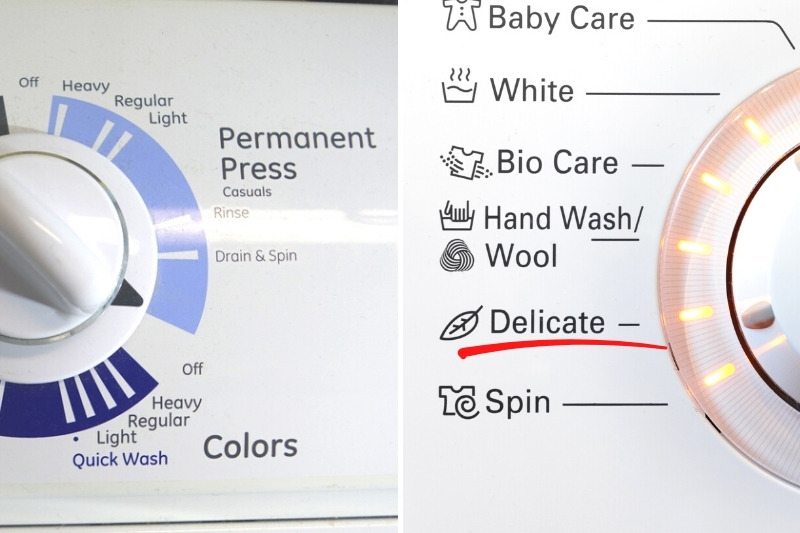
Understanding what “delicate” means requires a deep dive into the engineering of variable-frequency drives, fluid dynamics, and the evolution of appliance software.
The Mechanics of the Delicate Setting: Sensors and Motor Control
At the heart of the delicate cycle lies the precise control of the washing machine’s motor. In older, purely mechanical units, this was achieved through simple gearing. However, modern high-tech washers utilize Brushless DC (BLDC) motors and Inverter technology to achieve a level of precision that was previously impossible.
Low-Agitation Algorithms
When you select the delicate cycle, the machine’s On-Board Computer (OBC) triggers a specific agitation algorithm. In a standard cycle, the agitator or the drum pulses with high torque and frequent directional changes to create maximum friction between fabric fibers. The delicate tech profile, conversely, utilizes “slow-motion” agitation. The software instructs the motor to rotate at a lower frequency, often reducing the stroke angle. Instead of a vigorous 180-degree turn, the drum might move only 30 to 45 degrees before pausing. This minimizes the physical pulling and stretching of fibers, preventing the structural degradation of the garment.
RPM and Spin Speed Optimization
The “spin” phase of a laundry cycle is a feat of centrifugal engineering. A standard “Normal” cycle might reach speeds of 1,200 to 1,400 RPM (Revolutions Per Minute) to extract as much water as possible. However, the G-force exerted at these speeds can cause delicate fibers to become embedded in the drum’s drainage holes, leading to “pilling” or tearing.
The delicate setting utilizes a software cap on RPM, usually limiting the spin to 400–600 RPM. Tech-heavy machines also employ “vibration sensors” (accelerometers) more aggressively during this phase. If the sensor detects even a minor imbalance, the software immediately slows the drum to redistribute the load, ensuring that the low-speed spin remains stable and gentle on the hardware and the clothing.
Temperature Management: Why Software Restricts the Heater
Temperature control is a critical component of the “Delicate” tech stack. While hot water is effective at breaking down organic molecules and oils, it is an enemy to synthetic polymers and fine natural fibers like wool or silk.
Protecting Synthetic Fibers and Elasticity
Many modern “athleisure” fabrics contain elastane or spandex. At a molecular level, high heat causes these polymer chains to lose their “memory,” leading to permanent stretching. The delicate cycle’s firmware typically overrides the user’s ability to select “Hot.” It defaults to a “Cold” or “Cool” setting, usually regulated between 20°C and 30°C.
The machine uses NTC (Negative Temperature Coefficient) thermistors to monitor water temperature in real-time. If the incoming water from the tap is too cold (which can hinder detergent activation), the internal heating element provides micro-bursts of energy to bring the water to an exact, safe threshold, maintaining a steady thermal environment that won’t warp the fabric’s integrity.
Sensor Fusion and Thermal Consistency
Advanced washers now utilize “sensor fusion”—combining data from temperature sensors, flow meters, and load sensors. In a delicate cycle, the goal is thermal consistency. Rapid fluctuations in temperature can cause “thermal shock” to certain fibers. The software manages the mixing valves with high precision, ensuring that the transition from the wash phase to the rinse phase does not involve a sudden drop in temperature, which can “set” wrinkles into delicate fabrics.
The Evolution of Wash Tech: From Mechanical Timers to AI-Driven Cycles
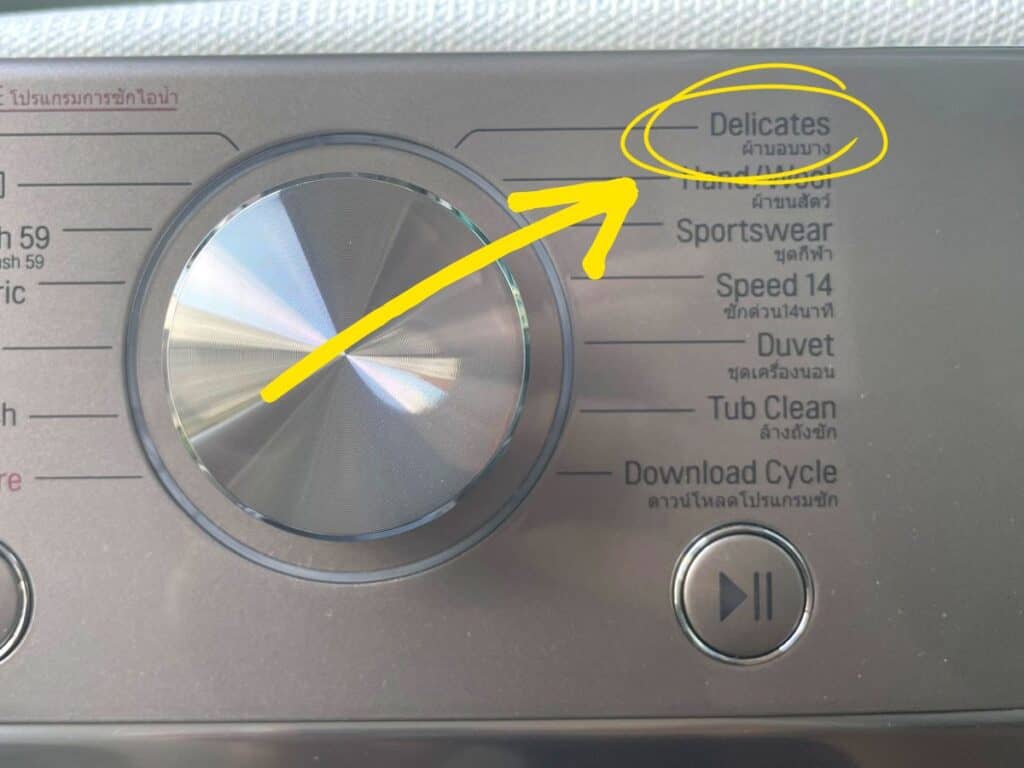
The transition from the “Delicate” button being a physical switch to a digital command has revolutionized how machines handle our wardrobes. This evolution is driven by the integration of Artificial Intelligence and Machine Learning.
Smart Load Sensing and UI/UX
Modern washers are equipped with Load Sensing technology, often utilizing the motor itself as a scale. By measuring the electrical resistance (back-EMF) required to turn the drum, the machine can calculate the exact weight of the clothes. In a delicate cycle, the UI (User Interface) interprets this data to adjust water levels.
Higher water-to-fabric ratios are a hallmark of the delicate setting’s tech profile. By increasing the volume of water, the machine creates a “buoyancy cushion.” This reduces the frequency of “fabric-on-fabric” friction, allowing the clothes to drift rather than rub. This is a deliberate software choice to use more resources (water) to protect the “hardware” (the clothes).
Machine Learning in Modern Washers
The latest generation of “Smart Washers” from tech giants like Samsung and LG takes the delicate cycle a step further using AI. These machines contain a database of thousands of fabric combinations. Using “AI DD” (Artificial Intelligence Direct Drive) technology, the sensors detect the softness of the fabric in addition to the weight.
If the AI perceives that the load is exceptionally soft, it will automatically modify the delicate cycle’s motion patterns in real-time, even if the user just selected a generic “Gentle” setting. This represents the pinnacle of “Context-Aware Computing” in home appliances—where the machine understands the physical properties of the objects it is processing.
Comparing Hardware: Front-Load vs. Top-Load Delicate Tech
The physical architecture of the washing machine significantly impacts how the “Delicate” software is implemented. The tech varies wildly between horizontal-axis (Front-Load) and vertical-axis (Top-Load) machines.
Impeller vs. Agitator Mechanics
In traditional top-load machines, an “agitator” (a central pillar) physically moves the clothes. The delicate cycle on these machines is a mechanical challenge, as the software must minimize the “vane impact” of the agitator. Modern top-loaders have moved toward “impeller” technology—low-profile discs at the bottom. The delicate setting here uses “wash plate” tech, creating a gentle “fountain” of water that moves the clothes without the harsh mechanical contact of an agitator.
Gravity-Assisted Cleaning (Front-Load)
Front-loaders are inherently more “tech-friendly” for delicate cycles. They rely on “tumbling” rather than “rubbing.” In a delicate profile, the drum’s rotation speed is timed so that the clothes don’t drop from the very top of the drum (which would cause a high-velocity impact) but instead “slide” along the side. Engineers call this “saturating wash,” where the drum rotates just enough to lift the clothes out of the water and then gently submerge them again, utilizing gravity as a tool rather than a force of impact.
The Future of Laundry Tech: Ultrasonic and Waterless Innovation
As we look toward the future of the “Delicate” setting, the technology is moving beyond water and motion into the realm of molecular engineering and sound waves.
Ultrasonic Agitation
Experimental washer prototypes are currently testing ultrasonic transducers. Instead of moving the drum, these machines use high-frequency sound waves to create microscopic bubbles (cavitation). When these bubbles collapse, they release energy that dislodges dirt at a microscopic level. For a “Delicate” cycle, this is the ultimate goal: cleaning with zero mechanical friction. This tech would allow for the cleaning of lace, silk, and even electronics without the need for a rotating motor.

IoT and Remote Diagnostics
The delicate cycle is also becoming a part of the broader Internet of Things (IoT) ecosystem. Today, if a delicate garment is damaged, many high-end washers allow users to upload “cycle logs” to the cloud. Technicians can analyze the motor torque, water temperature, and spin speed of that specific wash to determine if a sensor was out of calibration. Furthermore, users can now download “Specialty Cycles” via smartphone apps—such as a “Lingerie” or “Cashmere” cycle—which are essentially DLC (Downloadable Content) for your washer’s firmware, providing even more granular control over the delicate setting.
In conclusion, “Delicate” on a washer is a sophisticated symphony of hardware and software coordination. It is an engineering solution to a physical problem: how to apply enough kinetic and chemical energy to remove a stain without providing enough force to break a fiber. As AI and sensor technology continue to advance, the delicate cycle will only become more precise, further blurring the line between a simple household chore and high-level material science.
aViewFromTheCave is a participant in the Amazon Services LLC Associates Program, an affiliate advertising program designed to provide a means for sites to earn advertising fees by advertising and linking to Amazon.com. Amazon, the Amazon logo, AmazonSupply, and the AmazonSupply logo are trademarks of Amazon.com, Inc. or its affiliates. As an Amazon Associate we earn affiliate commissions from qualifying purchases.