
Chocolate tempering is a process that sounds deceptively simple but is, in fact, a sophisticated dance of heat, cooling, and agitation that transforms raw chocolate into a stable, glossy, and satisfyingly snappy confection. While the average consumer might simply enjoy a well-tempered chocolate bar, understanding this technique is crucial for anyone involved in the business of chocolate, from artisanal chocolatiers to large-scale manufacturers. In the realm of Brand building and Marketing, the quality of tempered chocolate directly impacts the perception of a brand, its product integrity, and ultimately, its market success. A poorly tempered chocolate product can lead to bloom, a chalky texture, and a dull appearance, all of which can erode consumer trust and damage a brand’s reputation. Conversely, perfectly tempered chocolate becomes a hallmark of quality, a testament to meticulous craftsmanship, and a key differentiator in a crowded marketplace.
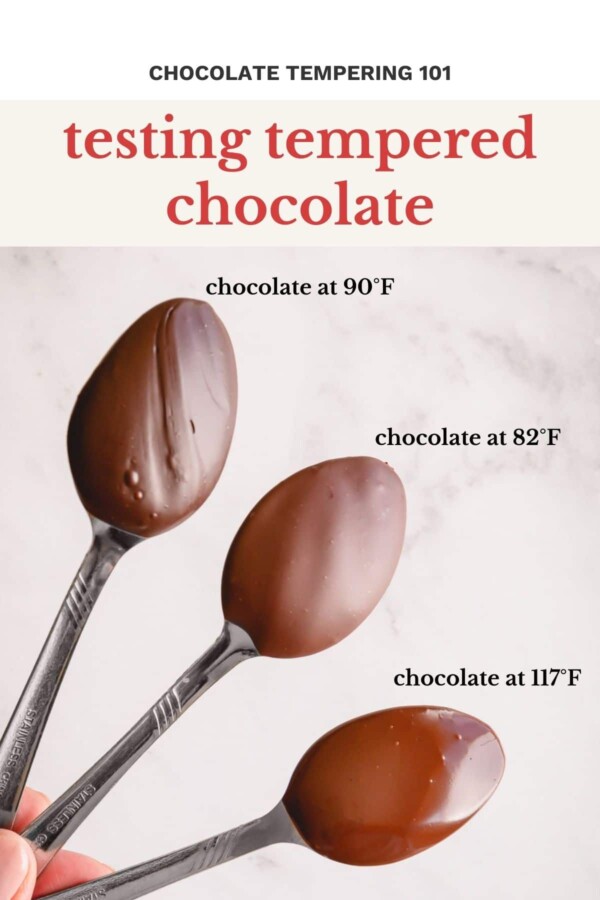
The magic of tempering lies in controlling the crystallization of cocoa butter, the primary fat in chocolate. Cocoa butter can crystallize in several different forms, known as polymorphs. Of these, only one, known as Beta crystals, is desirable for confectionery. Tempering aims to encourage the formation of these stable Beta crystals, ensuring a desirable sensory experience and a long shelf life for the chocolate. This isn’t just about aesthetics; it’s about the fundamental science that underpins a premium product.
The Science Behind the Shine: Cocoa Butter Crystallization
At its core, chocolate tempering is about manipulating the behavior of cocoa butter. Cocoa butter is a complex fat composed of triglycerides, and its melting and solidifying properties are highly dependent on the arrangement of these molecules. When chocolate is melted, these triglyceride molecules are in a disorganized, liquid state. Upon cooling, they will naturally attempt to re-form into solid crystals. However, without proper intervention, they can solidify into a variety of unstable crystal structures.
Polymorphs of Cocoa Butter
Cocoa butter can crystallize into six distinct forms, each with its own melting point and stability. These are typically numbered I through VI.
- Type I (Gamma): Unstable and rarely encountered.
- Type II (Alpha): Also unstable, melting rapidly.
- Type III (Beta Prime): Moderately stable, but still prone to melting and reforming.
- Type IV (Beta Prime): Transitional form, not ideal for tempering.
- Type V (Beta): This is the gold standard for tempered chocolate. It is the most stable form, with a melting point of approximately 34-35°C (93-95°F), just below body temperature, which contributes to the luxurious melt-in-your-mouth sensation. Chocolate exhibiting this crystal structure will have a beautiful sheen, a hard snap, and will release cleanly from molds.
- Type VI (Beta): The most stable form, but with a higher melting point. It’s too stable for practical confectionery use as it requires excessive heat to melt and can result in a chalky texture if not properly managed.
The goal of tempering is to create a chocolate mass that is predominantly composed of Type V Beta crystals. This ensures that the chocolate solidifies into a structure that is smooth, glossy, has a good snap, and melts evenly on the tongue.
The Role of Stable Crystal Formation
When chocolate is melted, the cocoa butter molecules become completely disordered. As it cools, these molecules begin to align and form crystals. If this cooling process is uncontrolled, the cocoa butter will solidify into a mixture of various crystal forms, including less stable ones. These unstable crystals will eventually melt and recrystallize into more stable forms over time, leading to the undesirable effects of “bloom.”
Fat bloom is the most common sign of untempered chocolate. It appears as white or grayish streaks or patches on the surface of the chocolate. This is not mold; it’s actually a migration of cocoa butter to the surface, where it melts and then re-solidifies into larger, less uniform crystals. Fat bloom compromises the appearance and texture of the chocolate, making it less appealing to consumers and signaling a lapse in quality control.
Sugar bloom, while less common, can also occur. This happens when moisture condenses on the surface of the chocolate, dissolving some of the sugar. As the moisture evaporates, the sugar recrystallizes into larger, gritty crystals, giving the chocolate a rough, white appearance. While not directly caused by tempering failure, proper tempering contributes to a chocolate’s ability to resist moisture absorption and thus sugar bloom.
By meticulously controlling the temperature during the tempering process, we essentially “seed” the melted chocolate with pre-formed Beta crystals. These stable crystals act as a template, encouraging the remaining cocoa butter molecules to align and solidify into the desired Beta form as the chocolate cools. This ensures that the chocolate solidifies into a uniform, stable crystalline structure, preventing bloom and guaranteeing optimal sensory characteristics.
The Process of Tempering: A Technical Breakdown
Tempering chocolate is a precise undertaking that requires careful attention to temperature and time. While the exact temperatures can vary slightly depending on the type of chocolate (dark, milk, or white), the underlying principles remain the same. The process generally involves three key stages: melting, cooling, and tempering (or “seeding” and agitating).
Stage 1: Melting and Warming
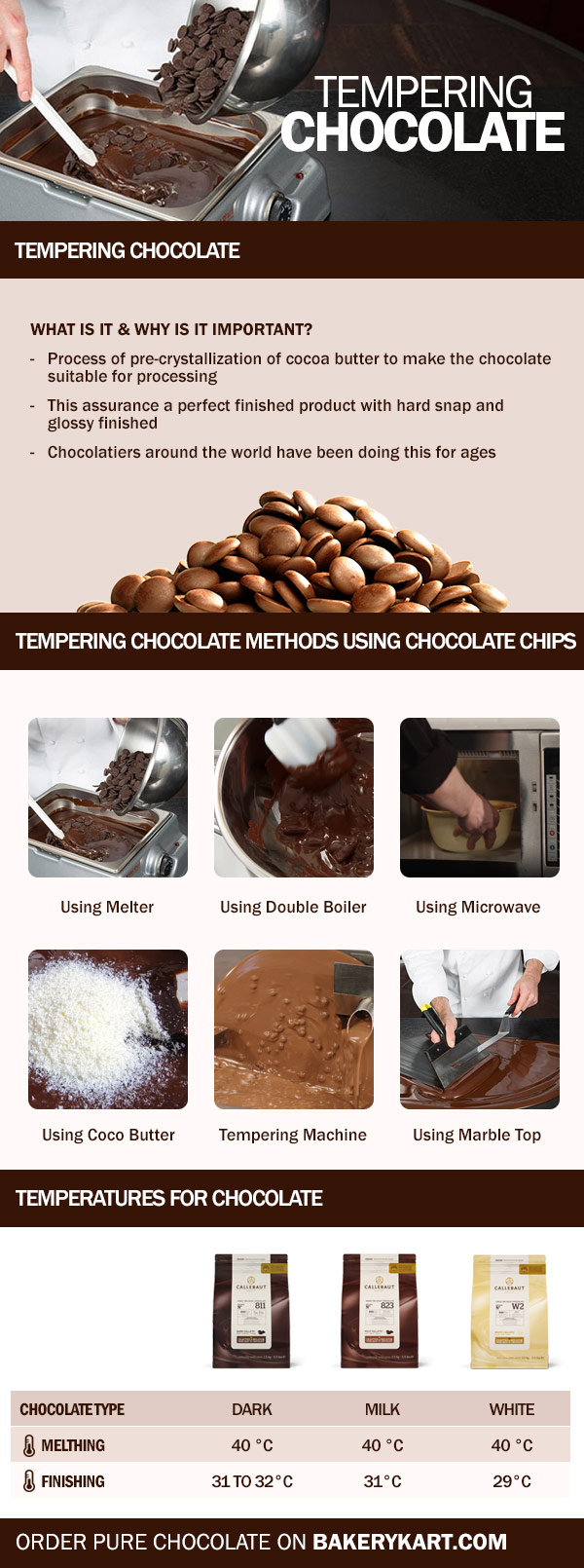
The first step is to melt the chocolate thoroughly. This is typically done in a double boiler or a tempering machine, ensuring the chocolate reaches a temperature high enough to melt all cocoa butter crystals completely. For dark chocolate, this is usually around 45-50°C (113-122°F). Milk and white chocolates require slightly lower temperatures, around 40-45°C (104-113°F), to avoid scalding the milk solids or burning the sugar. It is crucial not to overheat the chocolate, as this can cause it to “scorch” or burn, imparting an unpleasant flavor and making it difficult to temper.
Stage 2: Cooling and Crystal Formation
Once the chocolate is fully melted and homogeneous, it needs to be cooled. This is where the formation of Beta crystals is initiated. The chocolate is cooled down to a working temperature, typically around 27-29°C (81-84°F) for dark chocolate, and 26-28°C (79-82°F) for milk and white chocolate. This cooling can be achieved by various methods:
- Table Tempering: A portion of the melted chocolate is spread thinly onto a cool marble or granite slab and agitated with spatulas until it thickens and begins to set. This mass, now rich in Beta crystals, is then added back to the remaining melted chocolate and stirred until the entire batch reaches the desired working temperature.
- Seeding: Small, pre-tempered chocolate pieces (often called “pollen” or “seeds”) are added to the melted chocolate. These seeds are already crystallized in the Beta form and act as inoculants, encouraging the entire mass to crystallize correctly.
- Using a Tempering Machine: These automated machines precisely control the heating, cooling, and agitation cycles, making the process more consistent and less labor-intensive.
During this cooling phase, constant agitation is vital. This helps to break up any large crystal formations and ensures a smooth, even distribution of heat and crystals throughout the chocolate mass.
Stage 3: Reheating and Stabilization
After reaching the target cooling temperature, the chocolate is gently reheated to its final working temperature. For dark chocolate, this is typically 31-32°C (88-90°F), and for milk and white chocolate, it’s 29-30°C (84-86°F). This slight reheating serves to melt away any less stable crystals that may have formed during the cooling phase, leaving only the stable Beta crystals. This ensures that the chocolate remains fluid enough to work with, such as for molding or enrobing, while maintaining its tempered state.
The precise temperature control at each stage is paramount. Too hot, and the stable crystals will melt. Too cold, and the chocolate will become too thick to work with, or unstable crystals will form. Consistent agitation throughout the process is also critical for preventing cocoa butter separation and ensuring a smooth, homogenous texture.
The Impact of Tempering on Brand Perception and Product Quality
In the competitive landscape of the food industry, the quality of chocolate is a direct reflection of a brand’s commitment to excellence. The nuances of tempered chocolate, though subtle to the untrained eye, are readily perceived by discerning consumers, significantly influencing their purchasing decisions and brand loyalty. For any brand that relies on chocolate as a core component of its products, mastering and consistently executing the tempering process is not just a technical requirement; it’s a fundamental aspect of brand strategy.
Visual Appeal and First Impressions
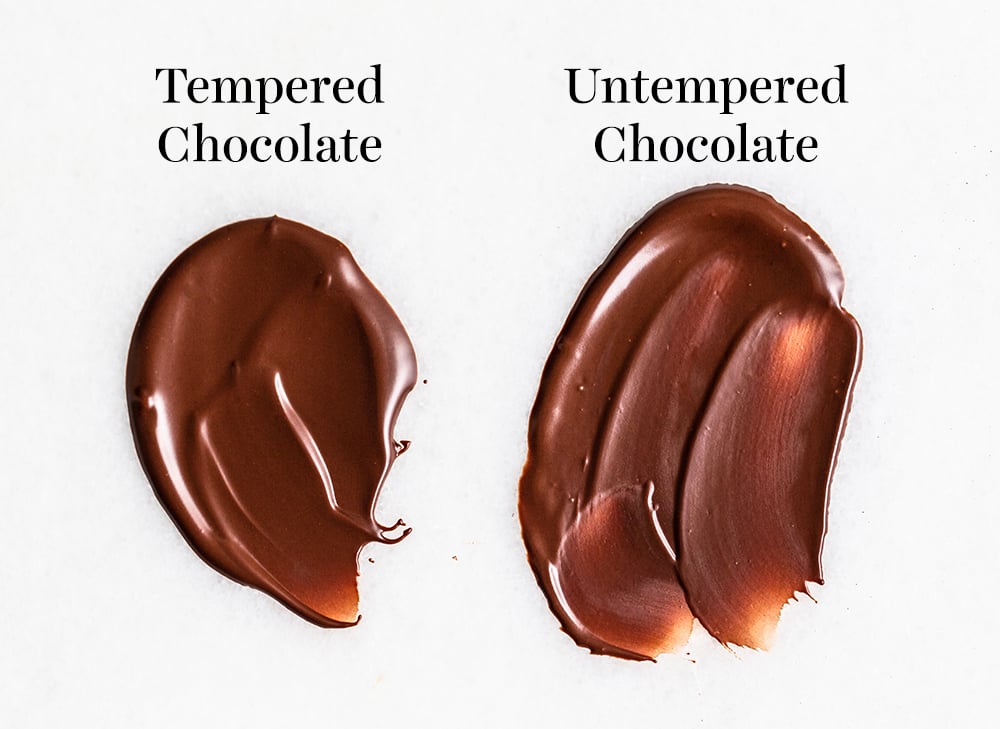
The most immediate indicator of well-tempered chocolate is its visual appeal. Perfectly tempered chocolate exhibits a lustrous, glossy finish. This sheen signifies a smooth, uniform surface at the microscopic level, where light reflects evenly. In contrast, untempered chocolate often appears dull, matte, or even chalky due to the presence of bloom. This visual cue is the first impression a consumer receives, and in the world of premium and artisanal products, a dull appearance can immediately suggest lower quality, thereby undermining the perceived value of the brand. A glossy exterior, on the other hand, communicates care, precision, and premium craftsmanship, setting a positive tone before the product is even tasted.
Textural Integrity and Sensory Experience
Beyond appearance, the textural qualities of tempered chocolate are crucial to the overall sensory experience. Well-tempered chocolate has a firm structure that provides a satisfying “snap” when broken. This crispness is a testament to the stable crystalline network of cocoa butter. When a consumer bites into a piece of well-tempered chocolate, it melts smoothly and evenly in the mouth, delivering its full flavor profile without any grittiness or waxy residue.
Untempered chocolate, by contrast, often has a softer, sometimes crumbly texture and can feel greasy or chalky on the palate. This unpleasant mouthfeel detracts from the enjoyment of the chocolate and can lead to negative associations with the brand. For brands aiming to create a luxurious and indulgent experience, the melt and mouthfeel are paramount, and proper tempering is the key to achieving this.
Shelf Life and Product Stability
The stability of the cocoa butter crystals achieved through tempering directly impacts the shelf life of chocolate products. By ensuring the dominance of stable Beta crystals, tempering significantly reduces the likelihood of fat bloom developing over time. This means that a well-tempered chocolate product will maintain its appealing appearance and desirable texture for a longer period, offering a consistent and reliable experience to the consumer.
For manufacturers and retailers, this extended shelf life translates into reduced product waste and enhanced inventory management. For brands, it means that their products can be distributed more widely and stored for longer without compromising their perceived quality, thereby protecting the brand’s reputation and ensuring customer satisfaction across various markets and over extended periods. In essence, tempered chocolate is more resilient and less prone to degradation, safeguarding the brand’s investment in its product.
Innovations and Modern Approaches to Tempering
While the fundamental science of cocoa butter crystallization remains constant, the methods and technologies employed in chocolate tempering have evolved significantly. These advancements offer improved efficiency, consistency, and precision, benefiting both large-scale manufacturers and smaller artisanal producers. The pursuit of perfect tempering is now augmented by technological solutions that streamline the process and elevate the final product.
Automated Tempering Machines
The advent of automated tempering machines has revolutionized the chocolate industry. These sophisticated devices precisely control the heating, cooling, and agitation cycles required for tempering. They typically consist of a heated reservoir for melting the chocolate, a cooling system (often using circulating water or refrigeration), and a mechanism for continuous agitation.
These machines allow for consistent and repeatable results, eliminating much of the guesswork and manual labor involved in traditional tempering methods. Users can program specific temperature profiles for different types of chocolate, ensuring optimal results every time. Many modern tempering machines also incorporate features like variable speed agitation, precise temperature sensors, and automated alarms to alert operators of any deviations. This level of control minimizes the risk of errors, reduces waste, and ensures a uniformly high-quality product, which is vital for maintaining a strong brand image.
Ultrasonic Tempering and Advanced Crystallization Techniques
Emerging technologies are pushing the boundaries of chocolate tempering even further. Ultrasonic tempering, for instance, utilizes high-frequency sound waves to promote the formation and distribution of Beta crystals. The cavitation generated by ultrasound can create microscopic shockwaves that encourage the alignment and growth of these desirable crystals, leading to a more uniform and stable tempered chocolate.
Other advanced techniques focus on specific aspects of the crystallization process. These might involve controlled seeding with specialized crystal structures, the use of specific additives (though this is more common in industrial applications where regulations permit), or innovative cooling and agitation profiles designed to optimize crystal growth. While some of these techniques are still in their nascent stages or are proprietary to larger corporations, they represent the ongoing drive for greater efficiency, higher quality, and more predictable outcomes in chocolate production. These innovations are not just about making chocolate; they are about ensuring that every bar, every truffle, and every molded chocolate piece unequivocally represents the quality and integrity that a brand promises to its customers.
In conclusion, what does chocolate tempering mean? It means transforming a simple ingredient into a sophisticated product that delights the senses and upholds brand integrity. It is a fusion of art and science, where precise temperature control and meticulous technique ensure that chocolate possesses its characteristic gloss, snap, and exquisite melt. For any brand invested in the world of confectionery, understanding and mastering the nuances of chocolate tempering is not merely a technicality; it is an indispensable pillar of quality, consistency, and ultimately, market success.
aViewFromTheCave is a participant in the Amazon Services LLC Associates Program, an affiliate advertising program designed to provide a means for sites to earn advertising fees by advertising and linking to Amazon.com. Amazon, the Amazon logo, AmazonSupply, and the AmazonSupply logo are trademarks of Amazon.com, Inc. or its affiliates. As an Amazon Associate we earn affiliate commissions from qualifying purchases.