
In the modern global economy, the movement of human capital is as critical as the flow of financial capital. For businesses looking to scale beyond domestic borders or address specialized skill shortages, the term “Certificate of Sponsorship” (CoS) frequently emerges as a pivotal administrative and financial milestone. While it is often discussed in legal or immigration contexts, the Certificate of Sponsorship is, at its core, a strategic financial instrument. It represents a commitment of corporate resources, a forecast of long-term payroll obligations, and a significant investment in the specialized talent required to drive institutional growth.
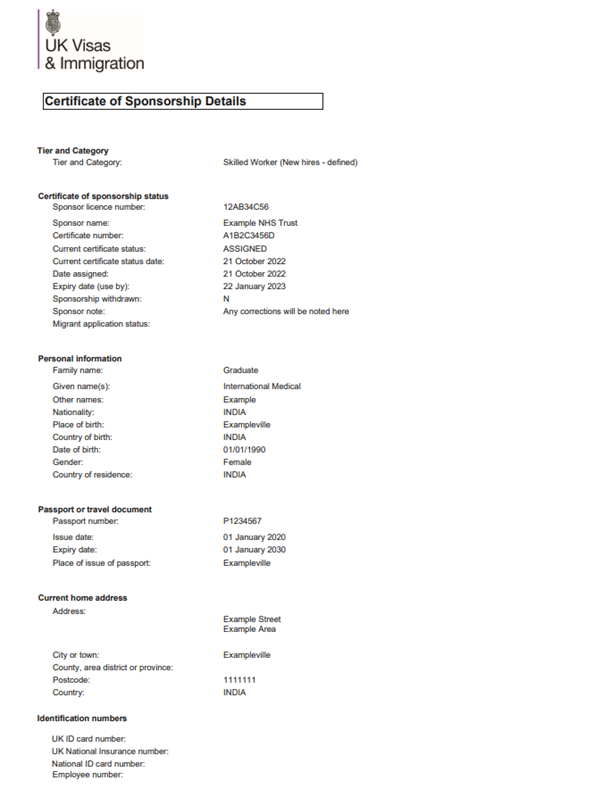
Understanding what a Certificate of Sponsorship means requires looking past the paperwork to the underlying business logic. It is a digital record, rather than a physical document, assigned to a prospective international employee. This record acts as an assurance to regulatory bodies that the sponsoring entity is prepared to take financial and legal responsibility for the individual. For the Chief Financial Officer or the business owner, the CoS is the gateway to a complex ecosystem of global talent acquisition that necessitates careful budgetary planning and risk assessment.
The Economic Logic of the Certificate of Sponsorship
The decision to issue a Certificate of Sponsorship is rarely made in a vacuum. It is usually the result of a rigorous cost-benefit analysis. When a firm determines that a specific role cannot be filled by the local labor market, it looks toward global talent. The CoS is the mechanism that facilitates this transition, but it carries with it a series of front-end and recurring costs that must be integrated into the company’s financial forecasting.
Human Capital as a High-Yield Investment
In the niche of business finance, international recruitment via a CoS is viewed as a high-yield investment. The “asset” in this scenario is the specialized skill set of the employee—perhaps a software architect, a specialized surgeon, or a senior financial analyst. The costs associated with the CoS are essentially the “acquisition costs” of that asset. While these costs can be substantial, including government fees and legal consultations, the projected return on investment (ROI) comes from the competitive advantage these skills provide, leading to increased revenue, innovation, or operational efficiency.
Impact on Operational Overheads
From a budgetary perspective, the CoS signifies a shift in operational overheads. Unlike local hires, sponsored employees often involve higher initial expenditures. Businesses must account for the Certificate fee itself, the Immigration Skills Charge (which scales based on the size of the organization), and potentially the reimbursement of the employee’s visa fees or relocation packages. These are not merely administrative costs; they are capital allocations that impact the net profit margins of the department making the hire.
Breaking Down the Cost of Sponsorship: A Line-Item Analysis
To truly understand what a Certificate of Sponsorship means for a business, one must examine the specific line items involved in the sponsorship process. These costs vary significantly depending on the jurisdiction—most notably in the United Kingdom’s Skilled Worker route—and the size of the sponsoring organization.
The Immigration Skills Charge
One of the most significant financial components of issuing a CoS is the Immigration Skills Charge. For large organizations, this fee can be substantial for each year of the sponsored worker’s visa. This charge is designed to incentivize businesses to invest in local talent, but for many high-growth firms, it is simply a necessary cost of doing business. In financial planning, this is treated as a recurring tax on global talent acquisition, and it must be factored into the total cost of employment (TCE).
Salary Thresholds and Market Rate Benchmarking
A Certificate of Sponsorship is not granted unless the employer guarantees a salary that meets specific regulatory thresholds. This has a direct impact on the company’s payroll strategy. Finance departments must ensure that the offered salary not only meets the “going rate” for the profession but also aligns with internal pay structures to maintain equity and prevent wage compression issues. The CoS, therefore, acts as a floor for compensation planning, ensuring that the business is financially capable of sustaining the hire at a premium rate.
Assigned vs. Unassigned Certificates
There are also different “types” of certificates that carry different administrative burdens. “Defined” certificates are for those applying from outside a specific territory, while “Undefined” certificates are for those already within the territory or for specific categories. Managing these quotas requires a sophisticated approach to HR and financial logistics, as running out of allocated certificates can delay project timelines, leading to lost revenue opportunities.

Compliance and Financial Risk Management
The Certificate of Sponsorship is a privilege granted by a government to a business, and it comes with stringent compliance requirements. For the business-minded individual, the CoS represents a significant area of risk management. Non-compliance doesn’t just lead to a loss of the talent; it can lead to severe financial penalties and the revocation of the company’s sponsor license.
The Financial Cost of Non-Compliance
If a business fails to maintain accurate records or fails to report changes in a sponsored employee’s status, they risk fines that can reach into the tens of thousands of dollars or pounds. More damagingly, if a license is revoked, the business may lose all its sponsored workers simultaneously. The financial fallout of such an event—disrupted projects, breach of contract with clients, and the cost of emergency recruitment—can be catastrophic. Thus, the CoS necessitates an ongoing investment in compliance software and internal auditing.
Reporting and Record-Keeping Obligations
Every issued CoS requires the employer to act as an “arm of the state” in terms of monitoring. This adds a layer of “hidden” administrative cost. HR and payroll departments must be synchronized to ensure that the sponsored individual is actually performing the role described in the CoS and is being paid the amount specified. In financial audits, these records are scrutinized to ensure that the company is meeting its obligations as a sponsor.
Strategic Financial Planning for Global Mobility
When a company integrates the Certificate of Sponsorship into its growth strategy, it moves from reactive hiring to proactive global mobility planning. This involves a more nuanced understanding of how global talent fits into the long-term fiscal health of the firm.
Tax Implications and Deductions
In many jurisdictions, the costs associated with obtaining a Certificate of Sponsorship and the subsequent visa are tax-deductible as legitimate business expenses. This can mitigate some of the initial financial sting of the sponsorship fees. Savvy business owners work closely with tax professionals to ensure that every pound or dollar spent on the sponsorship process is correctly categorized to optimize the company’s tax position at year-end.
Scaling Through International Expansion
For startups and scale-ups, the CoS is a tool for international expansion. By bringing in key personnel from different markets via sponsorship, a company can facilitate a knowledge transfer that is essential for entering new geographic regions. This “soft” ROI is often harder to quantify than immediate payroll costs, but it is a vital component of a forward-looking business finance strategy. The CoS is the bridge that allows a firm to transition from a local player to a global contender.

The Future of Work and the Value of Sponsorship
As the landscape of work continues to evolve, particularly with the rise of remote and hybrid models, the meaning of the Certificate of Sponsorship is also shifting. However, for roles that require physical presence or for companies that value a centralized cultural hub, the CoS remains an indispensable financial and operational tool.
The cost of a CoS should be viewed through the lens of “talent density.” By paying the premium for sponsorship, a company is essentially betting that the specific individual’s contribution will far outweigh the regulatory and financial hurdles required to bring them on board. In a world where the most valuable resource is no longer just capital, but the intellectual property generated by high-tier talent, the Certificate of Sponsorship is the price of admission to the global stage.
In summary, for any business focused on growth, a Certificate of Sponsorship is much more than a box-ticking exercise for the immigration department. It is a strategic financial commitment that involves significant upfront costs, ongoing compliance risks, and long-term payroll considerations. When managed correctly, it is one of the most effective ways to invest in the human capital necessary to drive a business toward its financial goals. Understanding the nuances of the CoS—from the Immigration Skills Charge to the strategic ROI of global hires—is essential for any modern professional navigating the intersection of global mobility and business finance.
aViewFromTheCave is a participant in the Amazon Services LLC Associates Program, an affiliate advertising program designed to provide a means for sites to earn advertising fees by advertising and linking to Amazon.com. Amazon, the Amazon logo, AmazonSupply, and the AmazonSupply logo are trademarks of Amazon.com, Inc. or its affiliates. As an Amazon Associate we earn affiliate commissions from qualifying purchases.