
The traditional image of the army infantryman—a soldier equipped only with a rifle, a rucksack, and sheer physical grit—is rapidly becoming a relic of the past. While the fundamental mission of the infantry remains to close with and destroy the enemy through fire and maneuver, the way they accomplish this has been fundamentally transformed by the digital revolution. Today, asking “what does army infantry do” requires an exploration of cutting-edge technology, edge computing, and high-tech integration.
In the modern era, the infantry functions as the ultimate “edge device” in a global network of sensors and shooters. No longer just a kinetic force, the modern infantry squad is a high-tech team that manages complex software, operates sophisticated robotics, and utilizes augmented reality to navigate the chaos of the battlefield.
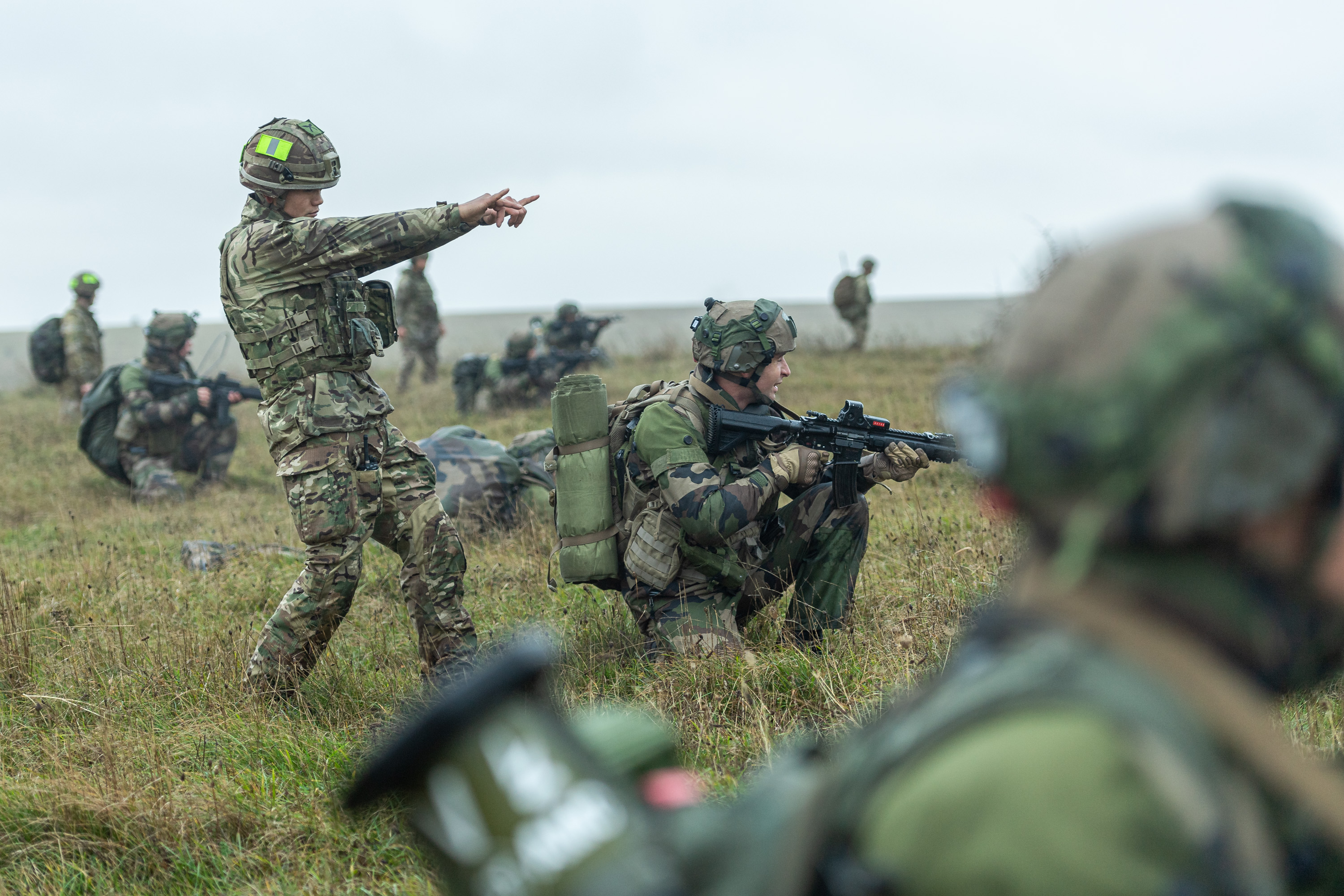
The Evolution of the Tactical Edge: Wearable Tech and Augmented Reality
At the core of what modern infantry does is the processing of information. In previous decades, a soldier relied on paper maps and verbal radio commands. Today, the infantryman’s “office” is increasingly digital, defined by wearable technology that provides unprecedented situational awareness.
Integrated Visual Augmentation System (IVAS)
The most significant leap in infantry technology is the Integrated Visual Augmentation System (IVAS). Based on Microsoft’s HoloLens technology, this head-up display (HUD) changes the very nature of infantry operations. What the infantry does now includes navigating through smoke and darkness using thermal and low-light sensors projected directly onto their field of vision. IVAS allows a soldier to see digital markers for friendly forces, mapped waypoints, and identified enemy positions without ever looking down at a handheld device. This “heads-up, eyes-out” capability is a cornerstone of modern technological overmatch.
Bio-Metric Monitoring and Health Analytics
Modern infantry units are also becoming testbeds for wearable health tech. Sensors embedded in clothing or worn as wrist-mounted devices monitor heart rate, hydration levels, and core body temperature. For a squad leader, “what the infantry does” now involves monitoring a digital dashboard to see which soldiers are nearing heat exhaustion or high stress levels. This data-driven approach to human performance ensures that the “human platform” is functioning at peak efficiency, utilizing AI-driven analytics to predict injuries before they occur.
Network-Centric Warfare: The Infantry as a Data Node
In the contemporary landscape, an infantry squad is not an isolated unit; it is a critical node in a massive, interconnected network. The tech-heavy nature of modern combat means that every soldier is a sensor, contributing to a Common Operational Picture (COP) that spans from the foxhole to the Pentagon.
Tactical Communication Systems and Data Links
What the infantry does daily involves managing sophisticated software-defined radios (SDRs) and tactical data links. Systems like the Nett Warrior—an end-user device usually consisting of a hardened smartphone—allow soldiers to send text messages, share images of high-value targets, and track the real-time movement of every member of their platoon via GPS. This networking capability reduces the “fog of war,” allowing for precision movements that were once impossible. The infantry is now responsible for maintaining this digital link, ensuring that the flow of data remains uninterrupted even in electronically contested environments.
Cybersecurity at the Frontline
As the infantry becomes more reliant on digital tools, their role expands into the realm of digital security. Modern infantrymen must be trained in “electronic signatures” and signal discipline. They must understand how to operate in “DIL” (Disconnected, Intermittent, and Low-bandwidth) environments where the enemy may be attempting to jam their GPS or intercept their data transmissions. The infantry’s job now includes hardening their digital footprint, ensuring that their high-tech gear does not become a liability that gives away their position to electronic warfare sensors.
Unmanned Systems and AI Integration in Ground Operations

Perhaps the most visible change in what the army infantry does is the integration of robotics. The “boots on the ground” are now frequently accompanied by “treads and rotors on the ground.”
Small Unmanned Aircraft Systems (sUAS)
Reconnaissance has been revolutionized by the deployment of micro-drones. A modern infantry squad often carries a “Black Hornet” or similar sUAS—a drone small enough to fit in the palm of a hand. Instead of sending a human soldier around a dangerous street corner, the infantry now deploys a drone to provide a high-definition video feed of what lies ahead. This shift toward “robotics first” for scouting is a fundamental change in infantry tactics, prioritizing tech-driven intelligence gathering over physical risk.
Ground Robotics and Automated Mule Systems
The physical burden on the infantry has historically been immense, with soldiers carrying loads exceeding 100 pounds. To combat this, the Army is integrating Small Multipurpose Equipment Transports (S-MET)—essentially robotic pack mules. These autonomous or semi-autonomous vehicles follow the squad, carrying heavy ammunition, batteries, and supplies. The infantry’s role has evolved to include the management of these autonomous assets, requiring soldiers to act as “robotics technicians” who can troubleshoot AI pathfinding issues or manage the power requirements of a robotic fleet in the field.
Advanced Ballistics and Smart Weaponry
Even the infantry’s primary tool—the rifle—has undergone a technological metamorphosis. The act of “shooting” is no longer just about steady breathing and trigger squeeze; it is about interacting with a sophisticated ballistics computer.
Precision-Guided Small Arms and Fire Control
The introduction of the Next Generation Squad Weapons (NGSW) program has brought the XM157 Fire Control system to the individual soldier. This isn’t just a scope; it’s a ruggedized computer. It features a laser rangefinder, a ballistics calculator, and an atmospheric sensor suite. When an infantryman aims, the system automatically adjusts the reticle for distance, windage, and air pressure. This technology allows a standard infantry soldier to achieve hit probabilities at 600 meters that were previously reserved for highly trained snipers.
The Shift to “Smart” Munitions
Beyond the rifle, the infantry operates “loitering munitions”—often called suicide drones. What the infantry does now involves launching a Switchblade drone, controlling it via a tablet, and loitering over a target area until a high-value threat is identified. At that point, the soldier “pilots” the munition into the target. This blurs the line between traditional infantry work and high-tech aviation, requiring a workforce that is comfortable with complex user interfaces and remote-controlled precision strikes.
Training for the Future: Virtual and Constructive Simulation
Because the technology used by the infantry is so complex and expensive, the way they train has shifted toward the digital realm. The Army’s “Synthetic Training Environment” (STE) is a massive software undertaking that allows infantry units to train in a virtual world before stepping onto a physical range.
Virtual Reality (VR) and Mixed Reality Rehearsals
Before a high-risk mission, modern infantry units use VR to conduct “rehearsals.” By ingesting satellite imagery and 3D scans of a target location, the software generates a 1:1 digital twin of the environment. Soldiers can walk through the mission using VR goggles, identifying “dead space” and potential ambush points. This data-centric preparation means that when the infantry finally arrives at the physical location, they have already “seen” the terrain dozens of times in a digital simulation.
The Gamification of Combat Readiness
Training software now incorporates elements of high-end gaming engines (like Unreal Engine) to create realistic combat scenarios. Infantry soldiers spend significant time in simulators that track every movement, shot, and decision, providing a “data exhaust” that can be analyzed by AI to identify weaknesses in a squad’s performance. What the infantry does today is as much about data analysis and iterative digital improvement as it is about physical endurance.

Conclusion: The Infantryman as a Technologist
The question “what does army infantry do” can no longer be answered by looking at history books. While the core values of courage and physical toughness remain, the modern infantryman is essentially a high-tech systems operator. They are managers of localized networks, pilots of unmanned aerial vehicles, and users of sophisticated augmented reality interfaces.
As we look toward the future, the integration of Artificial Intelligence and edge computing will only deepen. The infantry will continue to evolve into a “multi-domain” force, capable of fighting in the physical, digital, and electromagnetic spectrums simultaneously. In this new era, the most powerful weapon an infantry soldier carries is not their rifle, but the software and connectivity that links them to the modern digital battlefield. The future of the infantry is high-tech, data-driven, and more integrated into the global technology landscape than ever before.
aViewFromTheCave is a participant in the Amazon Services LLC Associates Program, an affiliate advertising program designed to provide a means for sites to earn advertising fees by advertising and linking to Amazon.com. Amazon, the Amazon logo, AmazonSupply, and the AmazonSupply logo are trademarks of Amazon.com, Inc. or its affiliates. As an Amazon Associate we earn affiliate commissions from qualifying purchases.