
For centuries, the popular conception of an angel has been dominated by Renaissance art: ethereal, winged humans draped in white robes, often possessing a serene, porcelain-like beauty. However, as digital artists and technology enthusiasts have begun to dig deeper into the actual textual descriptions found in ancient manuscripts, a new movement has emerged. This movement, often referred to under the banner of “biblically accurate angels,” leverages cutting-edge technology—from generative AI to high-fidelity 3D rendering—to visualize entities that are far more complex, multidimensional, and technically challenging than the winged humans of classical art.
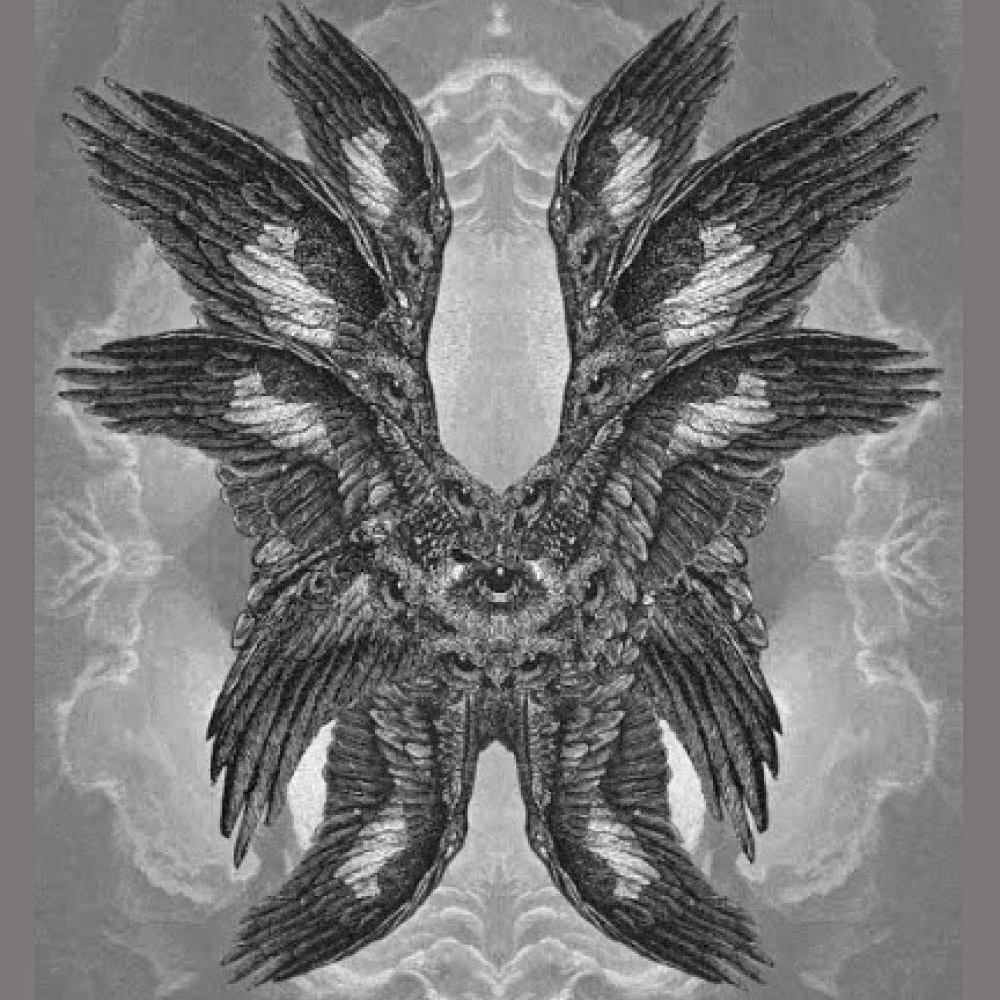
In the intersection of theology and technology, we find a fascinating case study in how modern tools like Midjourney, Stable Diffusion, and Unreal Engine 5 are being used to decode descriptions that were once considered “un-renderable.” By applying software engineering principles to the “wheels within wheels” described by the prophet Ezekiel, or the six-winged Seraphim of Isaiah, the tech community is providing a new visual language for ancient concepts.
The Evolution of Digital Iconography: From Oil Paint to Ray Tracing
The shift from traditional art to digital visualization represents more than just a change in medium; it represents a shift in data fidelity. Traditional artists were limited by the physics of paint and the anatomical understanding of their time. Consequently, they humanized the divine. Modern technology, however, excels at representing the non-Euclidean geometry and abstract forms described in biblical texts.
The Rise of High-Poly Modeling in Sacred Visualization
When a digital artist attempts to recreate a “Cherub” as described in Ezekiel 1:5-11—an entity with four faces (human, lion, ox, and eagle) and four wings—the primary challenge is one of topological integrity. In a standard 3D modeling workflow using software like Blender or Autodesk Maya, creating a cohesive mesh for a multi-headed entity requires sophisticated rigging and skinning.
Unlike the static sculptures of the past, these digital assets must be able to move according to the “spirit” described in the text, where they move “straight forward” without turning. This requires a non-traditional approach to skeletal animation. Technical artists now use procedural animation to ensure that the multiple heads and wings interact without clipping, using ray-tracing technology to simulate how light would bounce off “burnished bronze” limbs and “sparkling” surfaces. The result is a high-fidelity visual experience that emphasizes the “fearful” nature of these entities, a feat that traditional mediums struggled to convey.
Photorealistic Rendering of the Divine
The hardware requirements for rendering these entities are substantial. To capture the “countless eyes” of the Ophanim (the wheels), an artist must manage thousands of individual light-reflecting surfaces. Each eye requires its own texture map and shader to simulate depth and moisture. Utilizing the power of modern GPUs, such as the NVIDIA RTX series, artists can now render these complex scenes in real-time. Global illumination and path tracing allow for the “shining” and “lightning-like” appearance mentioned in the scriptures to be rendered with physical accuracy, simulating how light interacts with divine materials that defy traditional biological classification.
Generative AI and the Challenge of Non-Humanoid Geometry
The most significant technological leap in visualizing biblical angels has come from Generative AI. Tools like DALL-E 3 and Midjourney have democratized the process of interpreting ancient texts, but they have also highlighted the fascinating limitations of neural networks when dealing with non-humanoid forms.
Prompt Engineering the “Wheels Within Wheels”
The Ophanim, or “the wheels,” are perhaps the most difficult angelic rank to visualize. Described as wheels within wheels, covered in eyes, and moving in any direction without turning, they represent a nightmare for standard image-generation algorithms. Most AI models are trained on billions of images of humans, animals, and common objects. When prompted with “a wheel within a wheel covered in eyes,” the AI must synthesize a concept that doesn’t exist in its primary training data.
This has led to the development of specialized “prompt engineering” techniques. To get an accurate result, tech-savvy users must use weighted terms, negative prompts (to avoid the AI defaulting to a human with wings), and specific stylistic descriptors like “fractal geometry,” “biomorphic architecture,” and “hyper-realistic textures.” This iterative process is a form of digital archaeology, where the user uses the AI to peel back layers of traditional artistic bias to reach the raw, terrifying imagery of the original text.
The Role of Latent Space in Interpreting Visionary Literature
Generative models operate within a “latent space”—a multidimensional mathematical space where the AI maps concepts. When we ask an AI to visualize a Seraph with six wings (two covering the face, two the feet, and two for flying), we are forcing the AI to find a coordinate in latent space that bridges “avian anatomy” with “abstract divinity.”

The challenge for the software is maintaining “structural coherence.” Often, early iterations of these AI-generated angels appear as “glitch art,” which, interestingly, many theologians argue is a more accurate representation of a being that exists outside of human three-dimensional perception. The technical “failure” of the AI to create a clean, human-like figure actually serves the objective of representing a being that is described as being “other.”
Virtual Reality and the Immersive Experience of the Seraphim
While 2D images and videos are compelling, the true potential of modern tech in this niche lies in Virtual Reality (VR) and Augmented Reality (AR). By moving these biblical descriptions into a 3D immersive space, developers are creating experiences that allow users to understand the scale and “otherness” of these beings in a way that text never could.
Spatial Computing and the Scale of the Divine
Using headsets like the Meta Quest 3 or the Apple Vision Pro, developers can place a user in a 1:1 scale recreation of Isaiah’s vision. In this environment, the “Seraphim” aren’t just images; they are entities with volume and presence. The technical challenge here involves “spatial audio” and “dynamic scaling.”
To replicate the “voice that shook the doorposts,” developers use ambisonic audio—360-degree sound that changes based on the user’s head position. When combined with a 3D model that towers thirty feet high, the psychological impact is profound. This isn’t just “educational software”; it is a demonstration of how spatial computing can be used to simulate the “awe” described in ancient literature.
Unity and Unreal: Building Divine Environments
The choice of game engine is crucial for these projects. Unreal Engine 5, with its Nanite and Lumen technologies, allows for “limitless” geometric detail. This is essential for rendering an entity like a Cherub, which has intricate, overlapping wings and four distinct faces. Nanite allows the engine to handle billions of polygons, meaning each feather and each eye can be modeled with microscopic detail without crashing the software.
Lumen, the real-time dynamic lighting system, is used to simulate the “glory” or “light” emanating from these beings. Instead of using “baked” lighting, which is static, Lumen allows the light from the angel to interact with the environment in real-time, casting shadows and reflections that ground the supernatural entity in a digital reality.
Technical Limitations and the Future of Neural Interpretation
Despite the massive strides in software and hardware, we are still in the early stages of “digitizing the divine.” There are significant technical hurdles that developers and AI researchers are still working to overcome.
The “Hallucination” Problem in Theological Data
One of the primary issues with using AI for biblical visualization is the tendency of Large Language Models (LLMs) and Image Generators to “hallucinate.” If an AI model has seen more images of “Cupid” than it has read descriptions of “Ophanim,” it will naturally lean toward the more common data point.
To solve this, tech companies are looking into “RAG” (Retrieval-Augmented Generation). By grounding an AI in a specific, high-authority database of biblical texts and historical commentaries, developers can ensure that the generated imagery remains faithful to the source material rather than defaulting to popular culture tropes. This represents a new frontier in “Data Integrity,” where the goal is to maintain the purity of ancient descriptions in an age of algorithmic homogenization.

The Intersection of Bio-Tech and Digital Art
As we look toward the future, some digital artists are even looking into “biomimetic” algorithms—software that simulates natural growth patterns—to create angel wings and eyes that look “organic” rather than “designed.” By using L-systems (a mathematical language used to model the growth processes of plants) to generate the wing structures of a Seraph, artists can create visuals that possess a level of complexity that looks “alive” yet “alien.”
This synthesis of biology, mathematics, and software engineering is perhaps the most appropriate way to approach the question of what an angel looks like. If these beings are, as the text suggests, messengers from a higher dimension or a different state of existence, then our most advanced multidimensional tools—AI, VR, and procedural modeling—are the only logical means we have to visualize them.
The journey to visualize biblical angels through technology is not just about making “cool graphics.” It is a technical pursuit of high-fidelity representation. It is about using the full stack of modern computing—from the raw power of the GPU to the complex logic of neural networks—to bridge the gap between ancient words and modern sight. As our tools become more powerful, our ability to render the “un-renderable” will only grow, moving us closer to a visual understanding of descriptions that have baffled the human imagination for millennia.
aViewFromTheCave is a participant in the Amazon Services LLC Associates Program, an affiliate advertising program designed to provide a means for sites to earn advertising fees by advertising and linking to Amazon.com. Amazon, the Amazon logo, AmazonSupply, and the AmazonSupply logo are trademarks of Amazon.com, Inc. or its affiliates. As an Amazon Associate we earn affiliate commissions from qualifying purchases.