
In the pantheon of communication technologies, few innovations have had as profound an impact on the 20th century as the radio. While we live in an era dominated by high-speed fiber optics, 5G networks, and satellite streaming, the foundation of wireless communication rests upon a few core principles. When you turn a dial on a vintage receiver or navigate the interface of a modern car stereo, you will invariably encounter the term “AM.” But what does AM stand for in radio, and why does this century-old technology remain a cornerstone of our global technical infrastructure?
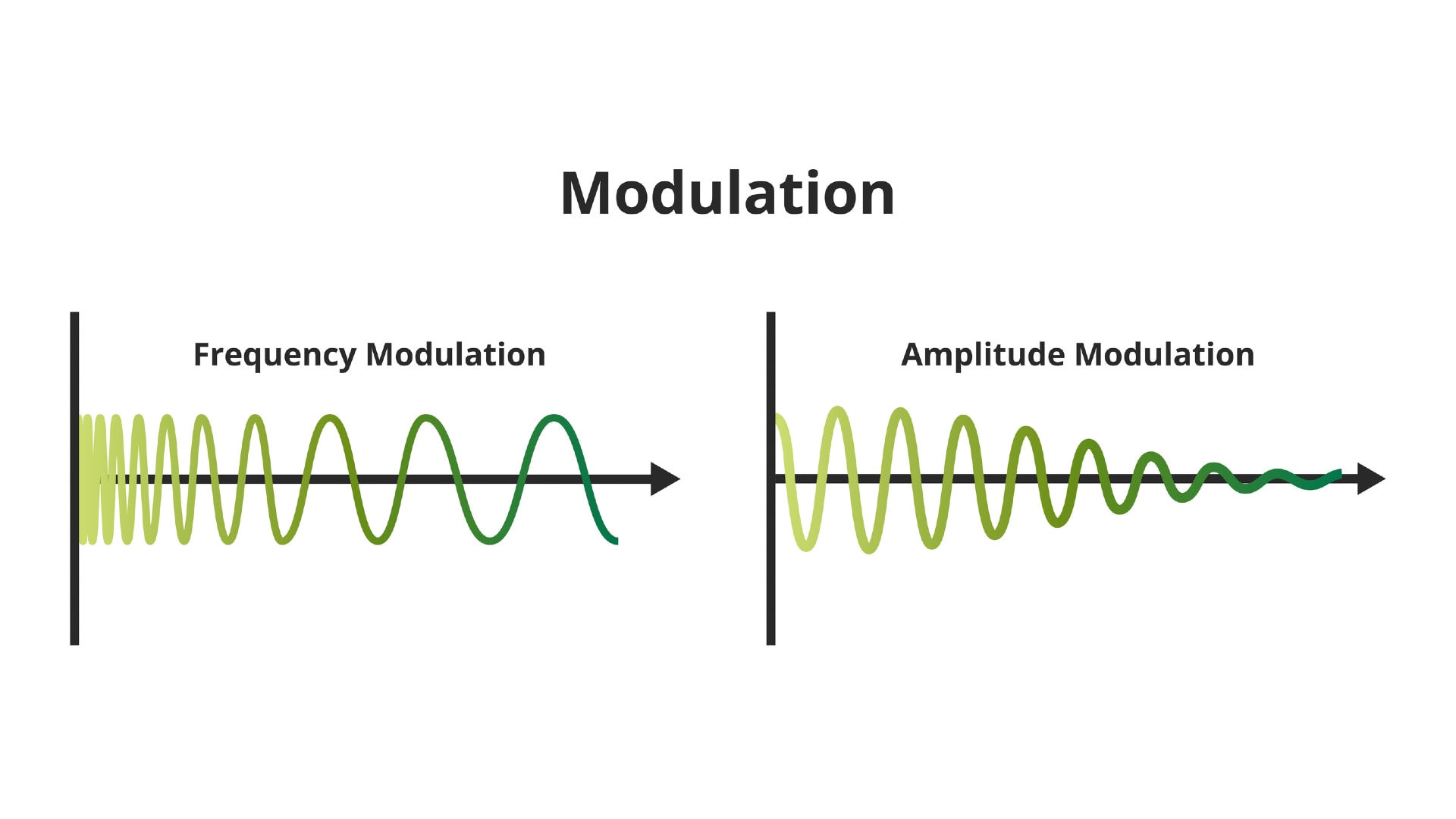
AM stands for Amplitude Modulation. At its most basic level, it is a method used in electronic communication for transmitting information via a radio carrier wave. To understand the significance of AM, one must look past the static and delve into the sophisticated physics of signal processing, wave propagation, and the evolution of hardware that allowed human speech to travel across continents without a single wire.
The Mechanics of Amplitude Modulation: How AM Signals Work
To appreciate what AM represents, we must first understand the concept of a “carrier wave.” In the realm of telecommunications, a carrier wave is a pure electromagnetic wave that operates at a specific, constant frequency. By itself, this wave carries no information—it is a blank canvas. To transmit sound, engineers must “modulate” or change some aspect of that carrier wave to reflect the audio signal.
The Science of Variation
In Amplitude Modulation, the “amplitude” (the height or strength) of the carrier wave is varied in direct proportion to the waveform of the audio signal being transmitted. Imagine a steady ripple on a pond; if you were to push down on certain parts of those ripples to make them taller or shorter based on the rhythm of a song, you would be manually performing a version of amplitude modulation.
When a broadcaster speaks into a microphone, the sound waves are converted into electrical signals. These signals are then superimposed onto a high-frequency carrier wave. The frequency of the carrier remains fixed (for example, 760 kHz), but its power—its amplitude—fluctuates rapidly. The receiver at the other end performs a process called “demodulation,” stripping away the carrier wave and leaving behind the original electrical signal, which is then converted back into sound by a speaker.
Transmitters and Receivers
The hardware required for AM is remarkably elegant in its simplicity. An AM transmitter consists of an oscillator to create the carrier wave and a modulator to combine it with the audio. On the consumer side, an AM receiver requires very few components compared to more modern digital systems. This simplicity is why AM radio became the first mass-market electronic technology in history; it was affordable to produce and easy to maintain, even in the early 1900s.
AM vs. FM: A Technical Comparison of Signal Integrity
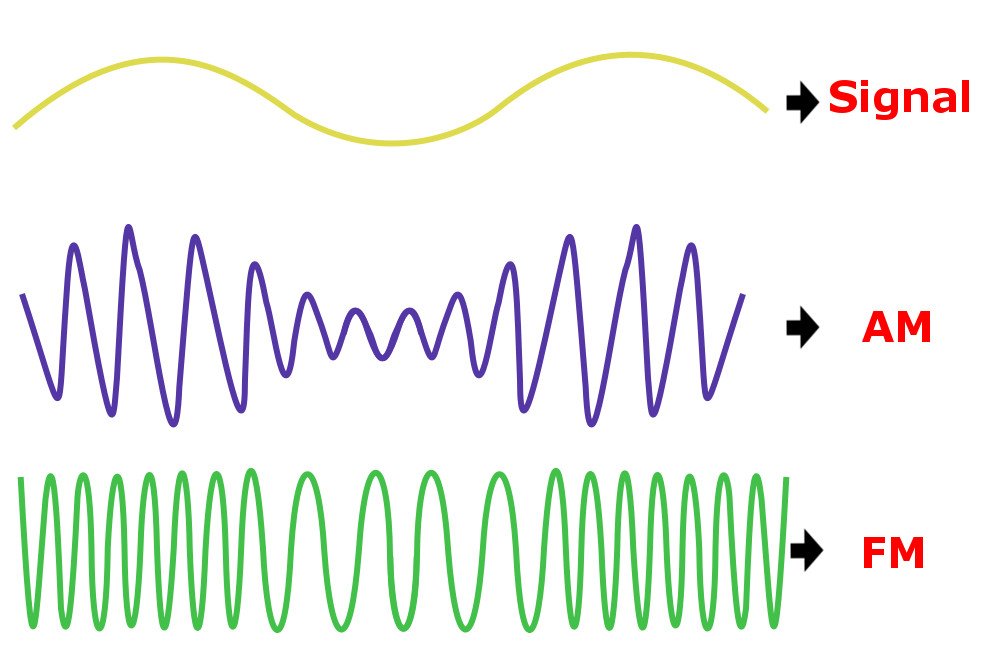
The most common comparison in the world of audio technology is between AM and FM (Frequency Modulation). While both serve the purpose of wireless transmission, they utilize different physical properties of the electromagnetic spectrum, resulting in distinct performance profiles.
Noise Interference and Signal Clarity
The primary technical drawback of AM is its susceptibility to “noise” or “static.” Because information is stored in the amplitude (the strength) of the signal, any external electrical disturbance that affects the signal’s strength will manifest as an audible pop or hiss. Lightning strikes, power lines, and even modern electronic gadgets like computers and LED lights emit electromagnetic interference that fluctuates the amplitude of nearby radio waves.
In contrast, FM stores information in the frequency of the wave. Since most natural and man-made interference affects amplitude rather than frequency, FM signals remain much “cleaner,” making them the preferred choice for high-fidelity music broadcasting.
Bandwidth and Audio Fidelity
From a technical standpoint, AM is a narrow-band technology. Each AM station is typically allocated about 10 kHz of bandwidth. While this is sufficient for human speech, it lacks the range required for high-fidelity music, which usually requires a 15 kHz to 20 kHz range to capture the full spectrum of human hearing. This is why AM radio transitioned over the decades into a medium primarily for talk shows, news, and sports—content where clarity of voice is more important than the richness of an orchestral performance.
The Physics of Propagation: Why AM Travels Further
Despite the superior sound quality of FM, AM has a massive technical advantage in terms of range and “propagation”—the way radio waves travel through the environment. This is the reason why a 50,000-watt AM station in a major city can sometimes be heard hundreds of miles away, even across state lines or international borders.
Ground Wave Propagation
During the day, AM signals travel primarily via “ground waves.” These waves follow the curvature of the Earth. Because AM operates at lower frequencies (535 to 1705 kHz in the US) compared to FM (88 to 108 MHz), the waves can bend (diffract) over hills and around obstacles more effectively. This allows AM to provide coverage to vast rural areas where a line-of-sight FM signal would be blocked by terrain.
Skywave Propagation and the Ionosphere
The most fascinating technical aspect of AM is “Skywave” or “Skip” propagation. At night, the layers of the Earth’s ionosphere change due to the absence of solar radiation. These layers act like a mirror for AM radio frequencies. When an AM signal is transmitted upward, it hits the ionosphere and “skips” back down to Earth hundreds or even thousands of miles away.
This phenomenon allowed for the rise of “Clear Channel” stations—high-power transmitters that were granted exclusive rights to a frequency across a massive geographic area. For decades, this was the “internet” of its time, providing a unified source of information to remote locations that were otherwise isolated from the world.
The Resilience of AM in the Modern Tech Landscape
In an age of digital transformation, one might assume that AM radio is a relic of the past. However, from a technical and strategic perspective, AM remains a vital component of the global communications grid.
Emergency Broadcasting and Resilience
AM’s ability to travel vast distances with simple equipment makes it the backbone of emergency alert systems. In the event of a national catastrophe or a total failure of the cellular grid, AM radio is often the only technology capable of reaching a majority of the population. Because the receivers are so power-efficient, a simple battery-operated or hand-crank radio can provide life-saving information when the internet and television go dark.
The Challenge of Electric Vehicles (EVs)
A modern technical challenge facing AM radio is the rise of Electric Vehicles. EV motors generate significant electromagnetic interference in the same frequency range used by AM broadcasting. As a result, some automakers have considered removing AM radio from their digital dashboards. This has sparked a renewed debate among tech regulators and engineers about the importance of shielding technology and the continued necessity of maintaining AM infrastructure for public safety.
Digital Radio Mondiale (DRM)
The tech industry hasn’t left AM in the analog dark ages. Technologies like Digital Radio Mondiale (DRM) allow for digital signals to be broadcast over the same frequencies traditionally used by AM. This provides the best of both worlds: the massive geographic reach of low-frequency waves combined with the crystal-clear, near-CD quality of digital audio. While adoption varies by country, DRM represents the next technical evolution of the “AM” concept, proving that modulation techniques continue to adapt to the needs of the 21st century.
Conclusion: The Enduring Legacy of Amplitude Modulation
Understanding what AM stands for is the first step in appreciating the complex architecture of our wireless world. Amplitude Modulation was the “killer app” of the early 20th century, a breakthrough that transformed the way humans shared information. Its technical characteristics—long-distance propagation, hardware simplicity, and resilience—have ensured its survival despite the advent of more sophisticated frequency and digital modulation techniques.
While we may now prefer the crispness of a digital stream or the high fidelity of FM for our daily entertainment, the technical foundation provided by AM remains indispensable. It is a testament to the brilliance of early radio engineers that a method of wiggling a wave’s height remains one of the most reliable ways to send a voice across the horizon. Whether it is through an emergency broadcast in a remote forest or a late-night talk show skipping off the ionosphere, AM continues to prove that in the world of technology, some foundations are built to last.
aViewFromTheCave is a participant in the Amazon Services LLC Associates Program, an affiliate advertising program designed to provide a means for sites to earn advertising fees by advertising and linking to Amazon.com. Amazon, the Amazon logo, AmazonSupply, and the AmazonSupply logo are trademarks of Amazon.com, Inc. or its affiliates. As an Amazon Associate we earn affiliate commissions from qualifying purchases.