
The image of a dog with a cool, moist nose is often a heartwarming, familiar sight for pet owners. It’s frequently associated with a happy, healthy canine companion. But beyond the anecdotal, what is the scientific and technological understanding behind this seemingly simple physiological characteristic? In an era where technology is increasingly interwoven with every aspect of our lives, including pet care, understanding the nuances of our animal companions’ health through a technological lens is becoming paramount. This article delves into the technological and scientific underpinnings of a wet dog nose, exploring how advanced instrumentation and data analysis can offer deeper insights into canine well-being.
The Science Behind the Sensation: Understanding Canine Olfactory and Thermoregulatory Systems
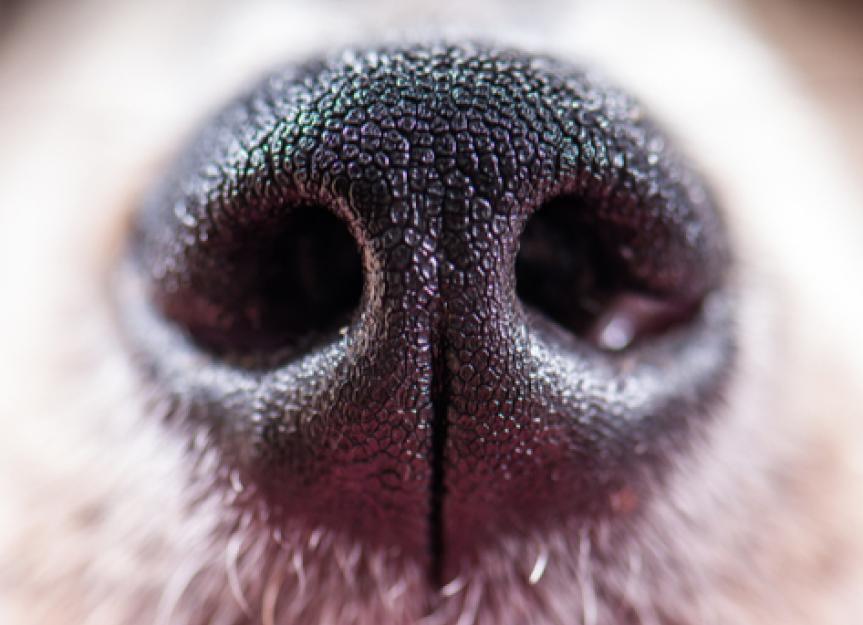
A dog’s nose is a remarkably complex sensory organ, far surpassing human olfactory capabilities. The moisture on its surface isn’t merely a passive coating; it plays a crucial role in enhancing its primary function: smell. This moisture acts as a conduit for airborne scent particles, trapping them and allowing them to dissolve into the mucous membrane. Specialized receptors then detect these dissolved molecules, sending a rich stream of information to the dog’s brain. From a technological perspective, this process can be analyzed and even replicated in advanced sensing technologies.
The Olfactory Advantage: How Moisture Amplifies Scent Detection
The wetness on a dog’s nose is secreted by specialized glands within the nasal passages. This thin layer of mucus serves to capture scent molecules from the environment. When a dog exhales, this moisture is also slightly cooled, creating a subtle thermal gradient that can further aid in capturing scent particles. Imagine this as a microscopic, highly efficient scent trap. Technologically, this principle informs the design of advanced chemical sensors, which often rely on moisture or specific chemical coatings to enhance their detection capabilities. Researchers are constantly exploring biomimicry, using biological systems like a dog’s nose as inspiration for developing more sensitive and accurate diagnostic tools. For instance, artificial noses, or “e-noses,” are being developed using arrays of sensors that can detect and identify a wide range of volatile organic compounds (VOCs), much like a dog’s nose detects and differentiates scents. The effectiveness of these e-noses is often dependent on the controlled presence of moisture or specific surface chemistries, mirroring the biological design of a canine’s olfactory epithelium.
Thermoregulation and Nasal Moisture: A Deeper Dive
Beyond scent, the moisture on a dog’s nose also plays a role in thermoregulation. Dogs, unlike humans, do not sweat efficiently across their entire body. Their primary methods of cooling involve panting and, to some extent, dissipating heat through their paws and nose. The evaporation of moisture from the nasal surface contributes to a cooling effect, helping to regulate body temperature, especially in warmer conditions or after physical exertion. This is a subtle but important aspect of a dog’s physiological balance. From a technological standpoint, understanding these thermoregulatory mechanisms can be applied in the development of advanced animal monitoring devices. Imagine wearable sensors that not only track heart rate and activity levels but also subtle changes in nasal temperature and moisture content, providing early indicators of heat stress or other physiological imbalances.
Technological Innovations in Canine Health Monitoring: Beyond the Basic Wetness Test
The simple act of touching a dog’s nose for coolness and moisture has long been a rudimentary health check. However, the advent of sophisticated biosensors, wearable technology, and artificial intelligence is revolutionizing how we monitor our pets’ health, offering a more nuanced and data-driven understanding of their well-being. These technologies are moving beyond anecdotal indicators to provide objective, quantifiable data.
Wearable Biosensors: Continuous Data Streams for Proactive Care
The pet tech industry has exploded in recent years, with a plethora of wearable devices designed to monitor a dog’s health and activity. While many focus on GPS tracking and activity levels, a growing number are incorporating more advanced biosensors. These devices, often worn as collars or harnesses, can continuously measure a range of physiological parameters, including body temperature, heart rate variability, respiration rate, and even subtle changes in skin conductance.
Consider the potential for integrating sensors that specifically monitor nasal surface temperature and humidity. While currently more in the realm of research and development, such sensors could provide real-time data on a dog’s thermoregulation and hydration status. A persistent dryness, coupled with elevated nasal temperature, might, in conjunction with other data points, indicate dehydration or a developing fever, long before more obvious symptoms manifest. This data, collected over time, creates a baseline for each individual dog, allowing for the detection of anomalies and potential health issues at their earliest stages. This shift from reactive to proactive pet care is powered by the continuous data streams generated by these advanced technological tools.

Smart Pet Feeders and Hydration Monitors: Ensuring Optimal Intake
A dry nose can sometimes be an indicator of dehydration, which can stem from insufficient water intake. Smart pet feeders and hydration monitors are technological solutions designed to address this directly. These devices can track how much a pet is eating and drinking, providing owners with valuable data on their pet’s nutritional and hydration habits.
For example, some smart bowls can measure the weight of food or water consumed. Others integrate with apps that alert owners if their pet’s drinking patterns deviate significantly from the norm. By monitoring water intake alongside other physiological data from wearable sensors, a more comprehensive picture of a dog’s health emerges. A consistent decrease in water consumption, for instance, could be a red flag that, when analyzed with other technological data (like activity levels or even nasal moisture readings), warrants veterinary attention. These technologies are not just about convenience; they are about leveraging data to ensure fundamental physiological needs are being met, indirectly contributing to the maintenance of a healthy, moist nose.
Artificial Intelligence and Machine Learning: Unlocking Deeper Insights from Pet Data
The vast amounts of data collected by wearable sensors and smart pet devices are only valuable if they can be interpreted effectively. This is where artificial intelligence (AI) and machine learning (ML) are playing an increasingly crucial role in pet health technology. AI algorithms can analyze complex datasets, identify patterns, and provide actionable insights that might be missed by human observation alone.
Predictive Diagnostics: Early Warning Systems for Canine Health
AI algorithms are being trained on massive datasets of canine health information, including physiological readings, behavioral patterns, and even genetic predispositions. By analyzing this data, AI can help predict the likelihood of certain health conditions developing. When applied to real-time sensor data, this can translate into early warning systems for a range of ailments.
For a dog’s nose, while a wet nose is generally a good sign, AI could potentially analyze the quality of the moisture, its temperature fluctuations, and its consistency in conjunction with other vital signs. For example, if AI detects a consistent trend of a slightly drier nose that is also warmer than usual, coupled with a slight increase in respiration rate during periods of rest, it might flag this as a potential early indicator of an upper respiratory issue or even a mild fever. This level of sophisticated analysis goes far beyond the simple “touch the nose” check, offering a proactive approach to veterinary care by flagging subtle anomalies that could signify developing problems.
Behavioral Analysis and Environmental Correlation: A Holistic Approach
Beyond direct physiological measurements, AI can also analyze behavioral patterns captured by cameras or motion sensors within a pet’s environment. A sudden change in a dog’s activity level, eating habits, or even social interaction can be indicative of underlying health issues. When correlated with other data, such as nasal moisture levels, these behavioral shifts can provide a more holistic picture of a dog’s well-being.
For instance, if a dog that is typically active and has a moist nose suddenly becomes lethargic, spends more time resting, and its nasal moisture readings show a slight decrease, AI could identify this cluster of symptoms as a potential concern. This comprehensive approach, integrating various technological inputs, allows for a more accurate and timely assessment of a dog’s health status. The “wet dog nose” then becomes one data point within a much larger, technologically driven health profile, offering a richer and more nuanced understanding than any single observation can provide.

The Future of Canine Health: A Technologically Augmented Bond
The relationship between humans and their canine companions has always been characterized by intuitive understanding and care. However, as technology advances, our ability to understand and cater to our dogs’ needs is being augmented in unprecedented ways. The seemingly simple characteristic of a wet dog nose, when viewed through a technological lens, opens up a world of possibilities for proactive health management and a deeper, data-informed bond.
From advanced biosensors and AI-driven diagnostics to smart environmental monitoring systems, technology is empowering pet owners with the tools to understand their dogs’ health with greater precision and foresight. The future of canine well-being lies in this synergistic integration of our innate love for our pets with the ever-evolving capabilities of technology, ensuring that every “wet dog nose” can be a testament to a happy, healthy, and technologically supported life. This ongoing evolution promises a future where we can more effectively safeguard the health and happiness of our four-legged family members, one data point at a time.
aViewFromTheCave is a participant in the Amazon Services LLC Associates Program, an affiliate advertising program designed to provide a means for sites to earn advertising fees by advertising and linking to Amazon.com. Amazon, the Amazon logo, AmazonSupply, and the AmazonSupply logo are trademarks of Amazon.com, Inc. or its affiliates. As an Amazon Associate we earn affiliate commissions from qualifying purchases.