
When picturing a weather balloon, many might envision a whimsical, oversized party balloon drifting peacefully against a blue sky. While there’s an element of truth to that romanticized image, the reality of a weather balloon – a crucial instrument in our technological arsenal for understanding Earth’s atmosphere – is far more sophisticated and purposeful. These silent sentinels of the sky are a fascinating blend of simple design and complex technology, serving as the frontline scouts in our ongoing quest for accurate weather prediction. Beyond their physical appearance, understanding what a weather balloon “looks like” involves delving into the sophisticated tech they carry, the financial implications of their operations, and the brand reputation built upon the data they provide.

The Unassuming Giant: A Visual Introduction
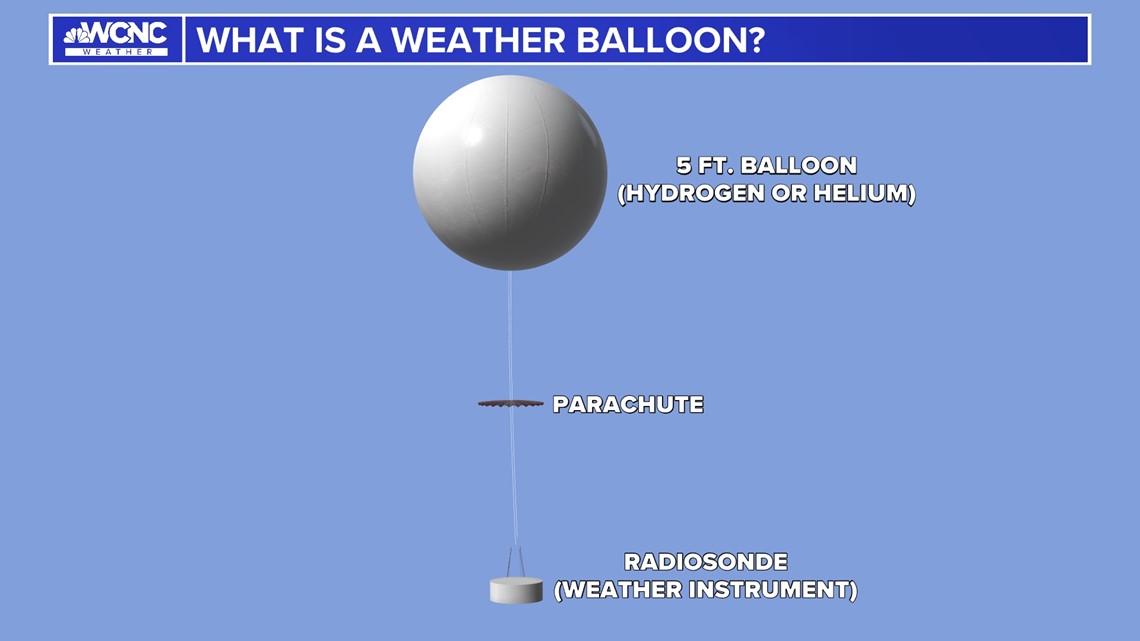
At its core, a weather balloon system is composed of several key components, each designed for a specific stage of its journey into the upper atmosphere and back. Their appearance might seem deceptively simple, but every aspect is engineered for performance in extreme conditions.
The Balloon Envelope: From Ground to Stratosphere
The most prominent feature, the balloon itself, is typically a large, flexible envelope made from natural latex or synthetic neoprene rubber. When inflated on the ground, a weather balloon can range significantly in size depending on its intended ascent altitude and the weight of the payload it needs to carry. Initially, they might appear as a relatively modest sphere, perhaps a few feet in diameter, holding just enough helium or hydrogen to lift off the ground.
However, as the balloon ascends through the atmosphere, the ambient air pressure drops dramatically. According to Boyle’s Law, as pressure decreases, the gas inside the balloon expands. This means that a weather balloon that started as a small sphere on the ground will continuously expand as it climbs. By the time it reaches its typical burst altitude – often between 60,000 and 100,000 feet (18 to 30 kilometers), into the stratosphere – it can swell to an enormous size, sometimes resembling a colossal, translucent bubble dozens of feet in diameter. Picture a small house or even a blimp-like structure, almost spherical, shimmering against the deep blue or black of the upper atmosphere. This expansion continues until the material stretches beyond its elastic limit, and the balloon bursts. This dramatic end marks the climax of its ascent, allowing its payload to begin its descent.
The material itself is chosen for its elasticity, strength, and ability to withstand the extreme temperature drops (down to -80°C or colder) and intense ultraviolet radiation encountered at high altitudes. While often appearing white or light-colored to reflect sunlight and minimize heating, they can sometimes have a slightly translucent quality, especially when illuminated by the sun against the darkness of space.
The Radiosonde: The Brains of the Operation
Suspended typically 50 to 100 feet below the balloon by a long string or tether is the heart of the system: the radiosonde. This small, lightweight, self-contained instrument package is the “brain” that collects and transmits atmospheric data. Visually, a radiosonde usually looks like a compact box, roughly the size of a small shoebox or a paperback book. They are designed to be aerodynamic and durable, often encased in a brightly colored (e.g., orange, white, or yellow) plastic or foam shell to protect the delicate electronics within from the harsh environment and to make them easier to spot if recovered.
Inside this unassuming box is a marvel of miniaturized technology. It houses a suite of precision sensors, including:
- Thermistor: To measure air temperature.
- Capacitive sensor: To measure relative humidity.
- Barometer: To measure atmospheric pressure.
- GPS receiver: To track its position (latitude, longitude, altitude) and, crucially, to calculate wind speed and direction by tracking its drift.
In addition to these sensors, a radiosonde contains a radio transmitter, an antenna, and a battery pack. The antenna might be visible as a small rod or wire extending from the package. The overall design prioritizes lightness to maximize the balloon’s ascent rate and altitude, and ruggedness to survive the journey and potential impact upon landing. The modern radiosonde is a testament to technological progress, packing incredible data-gathering capabilities into a small, cost-effective unit.
The Descent: Parachutes and Recovery
After the balloon bursts, the radiosonde begins its descent. To ensure a controlled and relatively gentle return to Earth, a small parachute is usually deployed. This parachute, typically made of lightweight nylon or similar fabric, is attached above the radiosonde. Visually, it’s a simple, classic parachute design, often white or brightly colored for visibility.
The parachute slows the radiosonde’s fall, reducing its terminal velocity to a safe level, typically around 10-15 miles per hour. This minimizes damage to the instrument upon landing and improves the chances of recovery, although many radiosondes are not retrieved due to landing in remote or inaccessible areas. Some meteorological organizations encourage the public to return found radiosondes, often offering instructions and prepaid shipping labels, contributing to a form of citizen science and resource optimization. The entire system – balloon (before burst), radiosonde, parachute, and string – forms a vertically stretched assembly, a lone scientific expedition ascending silently into the heavens.
Beyond the Canvas: The Technology Powering Prediction
The physical appearance of a weather balloon is merely the container for its true value: the technology that enables it to collect and transmit vital atmospheric data. This aspect firmly aligns with the “Tech” focus of our website, showcasing how sophisticated engineering, software, and AI tools transform raw data into actionable insights.
Precision Sensors and Data Collection
The core technological marvel of the radiosonde lies in its array of precision sensors. These aren’t just simple thermometers or barometers; they are finely calibrated instruments capable of detecting minute changes in atmospheric conditions across vast vertical distances. Modern sensors are highly accurate, durable, and increasingly miniaturized, a key trend in technology. They continuously sample the air as the balloon ascends, capturing data points for temperature, humidity, and pressure at frequent intervals, sometimes every second. The integrated GPS receiver is another critical piece of tech, not only pinpointing the radiosonde’s location but also, by calculating its change in position over time, precisely determining wind speed and direction at various altitudes. This wealth of vertical profile data is invaluable, far surpassing what ground-based sensors or even satellites can typically provide for the lower and middle atmosphere.
Real-time Transmission and Data Ecosystems
What makes weather balloons truly powerful is their ability to transmit this collected data in real-time. The radiosonde’s radio transmitter continuously broadcasts its sensor readings and GPS coordinates back to a ground station. This transmission typically occurs on specific radio frequencies allocated for meteorological use. The ground station, equipped with a sensitive receiver and antenna, tracks the balloon’s ascent and captures every data packet.
Once received, this raw data enters a sophisticated digital ecosystem. Specialized software at the ground station processes and decodes the signals, translating them into usable meteorological parameters. This data is then immediately transmitted to national and international meteorological centers, becoming part of a vast global network. Here, powerful computing systems and advanced algorithms integrate the radiosonde data with information from satellites, radar, buoys, and other observation platforms. The speed and reliability of this data transmission are paramount, as timely information is crucial for accurate forecasting. This real-time data flow is a prime example of digital security and productivity in action, ensuring vital information is disseminated quickly and accurately to forecasters and models worldwide.
AI, Software, and the Future of Forecasting
The raw data from weather balloons, while foundational, reaches its full potential when processed through advanced software and, increasingly, AI tools. Numerical Weather Prediction (NWP) models, complex software programs running on supercomputers, ingest this data along with billions of other observations. AI and machine learning algorithms are now being integrated to enhance these models, improving their ability to identify patterns, correct biases, and predict atmospheric behavior with greater accuracy. For instance, AI can help in quality control of the incoming data, detect anomalies, and even fill in gaps where observations might be sparse.
Furthermore, software applications are essential for visualizing this complex data, presenting it to meteorologists in intuitive formats that aid decision-making. From detailed wind profiles to temperature inversions, the software makes the invisible atmospheric dynamics visible. The evolution of weather balloon technology, therefore, isn’t just about better sensors, but also about the increasingly sophisticated software and AI tools that analyze, interpret, and leverage the data for everything from daily forecasts to long-term climate studies.
The Business of Sky-High Data: Brand and Money in Meteorology
The seemingly simple act of launching a weather balloon has profound implications for our “Money” and “Brand” landscapes. The data they provide underpins industries worth trillions, shapes government policies, and builds the bedrock of trust in meteorological organizations.
The Economic Imperative: Why Accurate Forecasts Matter
The financial impact of accurate weather forecasts, heavily reliant on weather balloon data, is immense. Industries like agriculture depend on precise rainfall and temperature predictions for planting, harvesting, and crop protection. Aviation and shipping rely on wind and storm forecasts for safe and fuel-efficient routes, saving potentially billions in fuel costs and preventing catastrophic accidents. The energy sector uses forecasts to anticipate demand for heating and cooling, optimize renewable energy generation, and manage grid stability. Disaster preparedness and response – for hurricanes, tornadoes, floods, and blizzards – directly translate into saving lives and mitigating billions in potential economic damage.
Consider the cost of a single major hurricane: estimates can easily run into the tens or hundreds of billions of dollars. Even marginal improvements in forecast accuracy, enabled by better data like that from radiosondes, can lead to proactive measures that save immense sums. While the cost of launching weather balloons (each radiosonde can cost several hundred dollars, plus gas and operational expenses) might seem substantial, it pales in comparison to the economic value derived from the data they collect. This highlights the crucial investment in foundational infrastructure for societal and financial resilience.
Building Trust: The Brand of Reliable Weather Services
For national meteorological services (like the NOAA in the US, the Met Office in the UK, or the JMA in Japan) and even private weather forecasting companies, their “brand” is inextricably linked to the reliability and accuracy of their predictions. Weather balloons play a vital, if unseen, role in building and maintaining this brand reputation. When a forecast is accurate, it strengthens public trust in the institution providing it. Conversely, a missed forecast can erode that trust.
The consistent, high-quality data from weather balloons contributes directly to the accuracy of forecasts, thereby bolstering the brand image of these organizations as authoritative and dependable sources of meteorological information. This reliability isn’t just about public perception; it’s about critical decision-making in government, business, and personal safety. The “brand strategy” for a meteorological service is thus inherently tied to its scientific prowess and the effectiveness of its data collection methods, with weather balloons being a foundational component. Their consistent, standardized global launches underpin a unified, trustworthy international meteorological network.
Commercial Horizons: Monetizing Meteorological Insights
Beyond public services, there’s a growing commercial market for specialized meteorological insights. Private companies are emerging that leverage public and proprietary weather data to offer tailored services for specific industries – precision agriculture platforms, real-time energy demand forecasting, drone flight planning, or even risk assessment for insurance companies. These businesses often acquire raw data or refined models from national weather services or develop their own proprietary forecasting techniques.
The data gathered by weather balloons, therefore, becomes a valuable asset that can be repackaged and monetized. This opens up opportunities for “online income” and “business finance” within the weather tech sector. Companies offering “AI Tools” for weather analytics or “Apps” for specific weather-dependent decisions are capitalizing on the fundamental data streams, including those from weather balloons. This represents a significant side hustle or even primary business for entrepreneurs and organizations specializing in advanced data analysis and predictive modeling, showcasing how core scientific observation can drive innovative market solutions.
Innovations on the Horizon: Shaping Tomorrow’s Weather Tools
The field of atmospheric observation is dynamic, with continuous advancements driven by the desire for even more precise and comprehensive data. The future of weather balloons, while still integral, will also see complementary technologies emerge, impacting both their design and the overall data landscape.
Miniaturization, Sustainability, and Advanced Materials
The trend of miniaturization in electronics, a core “Tech” theme, continues to influence radiosonde design. Smaller, lighter sensors consume less power, allowing for longer battery life or enabling even more compact designs. This also reduces the amount of helium or hydrogen needed for launch, making operations more cost-effective and environmentally friendly. Research into biodegradable materials for balloon envelopes and radiosonde casings is also underway, addressing environmental concerns about instruments that are not recovered. The goal is to develop components that naturally break down, minimizing ecological impact. Furthermore, advancements in battery technology, enhancing capacity while reducing weight, will further extend mission durations and capabilities.

The Rise of Alternative and Complementary Technologies
While weather balloons remain a gold standard for vertical atmospheric profiling, future innovations will likely see them integrated more seamlessly with other observational platforms. High-altitude drones, equipped with similar sensor packages, offer the potential for controlled, repeatable atmospheric soundings over specific areas, especially in regions inaccessible to traditional balloon launches. Ground-based remote sensing instruments, like LIDAR and SODAR, provide continuous vertical profiles of wind, temperature, and aerosols, offering a constant stream of data that complements the intermittent balloon launches. Satellite technology is also rapidly advancing, providing broader spatial coverage, though typically with less vertical resolution than a radiosonde. The future data ecosystem will be a rich tapestry woven from these diverse technologies, each filling specific observational niches.
In conclusion, “what a weather balloon looks like” is far more than its visual form. It embodies a symphony of engineering, a critical node in a global technological network, and a silent contributor to economic stability and brand trust. From its humble appearance as an expanding sphere to the sophisticated sensors and software within, the weather balloon is a testament to humanity’s ongoing pursuit of understanding and predicting the complex forces that shape our planet. As technology continues to evolve, these aerial scouts will undoubtedly continue to play a crucial role, perhaps in new and even more innovative forms, in our quest for a more weather-wise future.
aViewFromTheCave is a participant in the Amazon Services LLC Associates Program, an affiliate advertising program designed to provide a means for sites to earn advertising fees by advertising and linking to Amazon.com. Amazon, the Amazon logo, AmazonSupply, and the AmazonSupply logo are trademarks of Amazon.com, Inc. or its affiliates. As an Amazon Associate we earn affiliate commissions from qualifying purchases.