
In the world of personal finance, a vehicle is often one of the most significant line items in a household budget. Beyond the initial purchase price, the total cost of ownership (TCO) is dictated by insurance, fuel, and, most critically, maintenance. Within the complex architecture of a modern engine lies a component that serves as a literal heartbeat for your financial stability: the timing belt.
While it may appear to be a simple reinforced rubber band, the timing belt is the gatekeeper of your engine’s internal harmony. From a financial perspective, understanding what a timing belt does—and more importantly, the cost of its failure—is essential for any vehicle owner looking to protect their assets and avoid catastrophic, unbudgeted expenses. This article examines the timing belt not just as a mechanical part, but as a critical variable in your personal financial planning.
Understanding the Mechanical Liability: What is a Timing Belt?
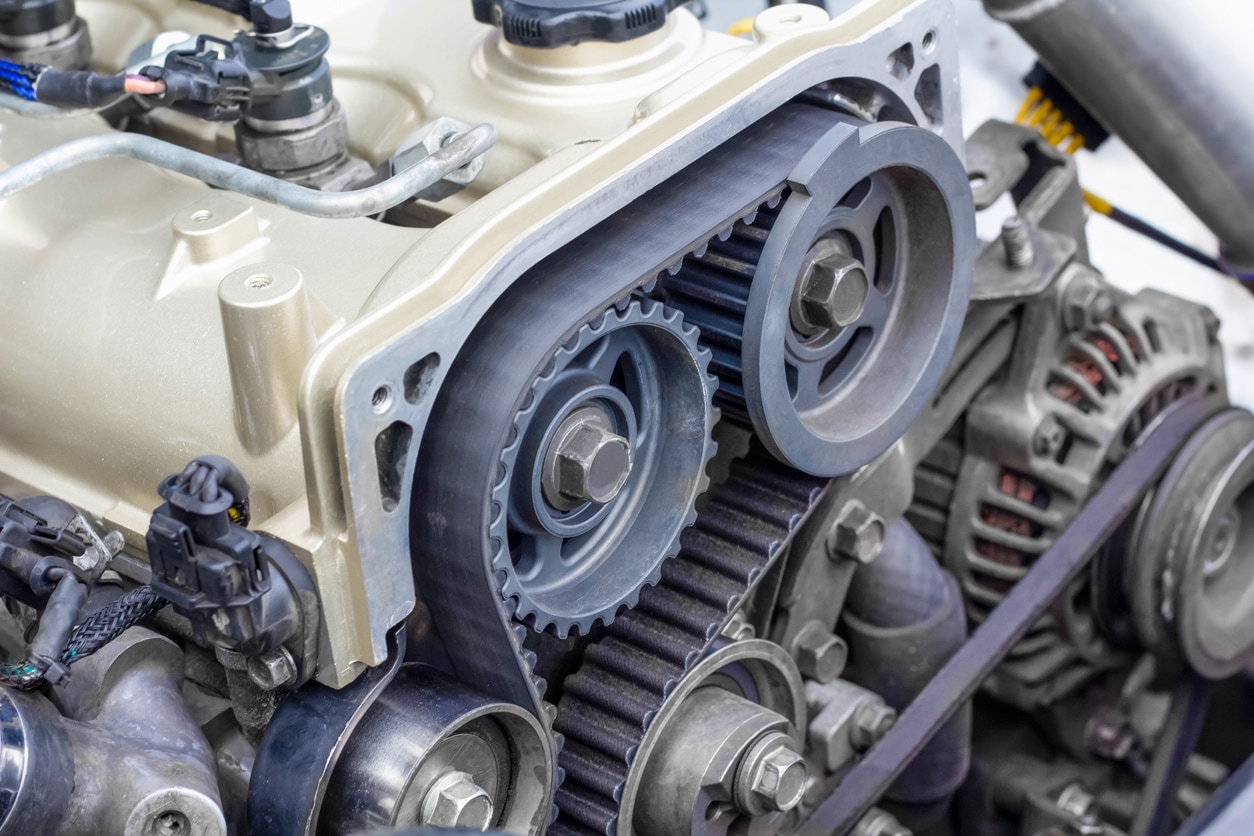
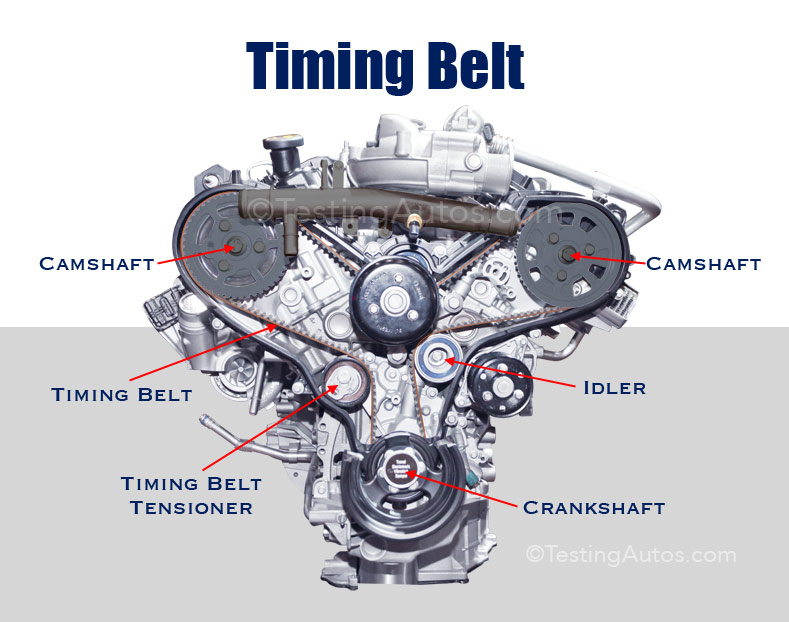
To manage the financial risks associated with vehicle ownership, one must first understand the “asset” being protected. The timing belt is a high-strength, notched rubber belt that connects the engine’s crankshaft to the camshaft. Its primary function is to synchronize the rotation of these two components so that the engine’s valves open and close at the proper times during each cylinder’s intake and exhaust strokes.
The Precision of Internal Combustion
In a high-performance internal combustion engine, precision is everything. The crankshaft converts the linear motion of the pistons into rotational energy, while the camshaft controls the opening and closing of the valves that let air in and exhaust out. If these two components are out of sync by even a fraction of a second, the engine cannot function. From a wealth-management perspective, the timing belt represents the “operational efficiency” of the machine. When it functions correctly, the engine operates at peak fuel efficiency, saving the owner money at the pump and preventing premature wear on other expensive components.
Synchronicity and Asset Protection
The real financial stakes involve “interference engines,” which are common in many modern vehicles. In these engines, the space where the valves open and the space the piston occupies overlap—but they are timed never to be in the same place at the same time. The timing belt is the only thing preventing a collision between these parts. If the belt snaps, the synchronization vanishes instantly. The pistons strike the open valves, leading to bent valves, damaged cylinder heads, and potentially a destroyed engine block. Understanding this mechanical relationship is the first step in recognizing why timing belt maintenance is a non-negotiable insurance policy for your bank account.
The Cost of Neglect vs. The Price of Prevention
In personal finance, we often discuss the concept of “preventative spending” to avoid “emergency spending.” The timing belt is perhaps the clearest example of this dichotomy in the automotive world. When you choose to replace a timing belt according to the manufacturer’s schedule, you are making a calculated investment. When you ignore it, you are gambling with a liability that can escalate by 500% to 1,000% in a matter of seconds.
Proactive Maintenance: A Budgeting Essential
A standard timing belt replacement typically costs between $500 and $1,200, depending on the make and model of the vehicle and local labor rates. While this may seem like a steep “side hustle” or “bonus” spend, it is a predictable expense. Most manufacturers recommend replacement every 60,000 to 100,000 miles. By amortizing this cost over the years of ownership, a proactive owner can set aside roughly $10 to $15 a month into a dedicated vehicle maintenance fund. This transforms a major repair into a manageable, pre-planned financial event.
The “Catastrophic Failure” Scenario: A Financial Disaster
The alternative to proactive replacement is waiting for the belt to fail. If a timing belt snaps while the engine is running, the resulting damage is rarely minor. For an interference engine, the cost of repair often exceeds the actual cash value (ACV) of older vehicles. You are no longer looking at a $1,000 belt job; you are looking at a $4,000 to $7,000 engine rebuild or replacement.
From a financial planning standpoint, this is a “black swan” event that can derail a household budget. If a family relies on that vehicle for work or income, the loss of the asset—coupled with a massive repair bill—can lead to high-interest debt or the forced purchase of a new vehicle under unfavorable financing terms. In this light, the timing belt is a primary pivot point for your net worth.
Market Factors and Replacement Economics
When dealing with business finance or personal assets, the “value-add” of maintenance should always be considered. A well-maintained vehicle is not just a tool; it is a liquid asset that holds its value better in the secondary market.
Labor vs. Parts: Understanding the Invoice
One of the most confusing aspects for consumers is why a rubber belt costs so much to replace. The answer lies in labor economics. The timing belt is buried deep within the engine, requiring a technician to remove several layers of components to reach it. When you pay for a timing belt service, approximately 70% to 80% of the cost is labor.
Because the labor is so intensive, financial wisdom dictates that you should replace “while-you’re-in-there” parts. This includes the water pump, tensioners, and idler pulleys. Combining these repairs into one service is a classic “economies of scale” move. Replacing a $60 water pump while the engine is already apart for the timing belt saves you from paying another $800 in labor if the pump fails six months later.
Resale Value and Documentation
For those who view their car as a temporary asset to be traded or sold, documentation is currency. When listing a car for sale, “timing belt replaced at 90k miles” is one of the most powerful phrases you can include. For a savvy buyer, this represents a $1,000 discount on future liabilities, allowing you to justify a higher asking price. Conversely, if a car is nearing the 100,000-mile mark and the belt hasn’t been changed, many buyers will subtract the cost of the service from your asking price or walk away entirely, viewing the vehicle as a ticking financial time bomb.
Strategic Financial Planning for Vehicle Longevity
To truly master your personal finances, you must treat your vehicle as a piece of capital equipment. Just as a business plans for the depreciation and maintenance of its machinery, an individual must plan for the mechanical milestones of their car.
Creating a Sinking Fund for Repairs
A “sinking fund” is a strategic way to save for a specific, known future expense. Since the timing belt replacement is a predictable event based on mileage, it should be a key part of your financial toolkit. If you drive 15,000 miles a year and your car needs a belt every 90,000 miles, you have a six-year window. Dividing a $1,200 estimate by 72 months yields a savings goal of just $16.67 per month. By automating this transfer to a high-yield savings account, you ensure that the money is available when the mechanic gives you the inevitable news, preventing a “budget shock.”
The ROI of Genuine OEM Parts
In the pursuit of saving money, many are tempted by “white-label” or cheap aftermarket timing belts. However, this is a case where “cheap is expensive.” The Return on Investment (ROI) of a Genuine Original Equipment Manufacturer (OEM) part is significantly higher when you factor in the risk of premature failure. If a $40 aftermarket belt fails after 20,000 miles, the “savings” of $60 compared to an OEM belt results in thousands of dollars in engine damage. True financial intelligence involves recognizing when to pay a premium for quality to mitigate long-term risk.

Conclusion: The Bottom Line on Timing Belts
What does a timing belt do in a car? Mechanically, it keeps the engine in sync. Financially, it serves as the thin line between a predictable, low-cost maintenance schedule and a catastrophic loss of capital.
In the broader context of money management, the timing belt is a metaphor for the importance of foresight. By understanding the function and the replacement cycle of this vital component, you can transition from reactive spending to proactive asset management. You protect your “transportation budget,” preserve the resale value of your vehicle, and avoid the high-interest debt that often accompanies emergency repairs. In the end, the timing belt isn’t just a part of your engine; it’s a part of your financial foundation. Don’t let a $100 piece of rubber be the reason for a $5,000 setback. Stay informed, stay scheduled, and keep your financial engine running smoothly.
aViewFromTheCave is a participant in the Amazon Services LLC Associates Program, an affiliate advertising program designed to provide a means for sites to earn advertising fees by advertising and linking to Amazon.com. Amazon, the Amazon logo, AmazonSupply, and the AmazonSupply logo are trademarks of Amazon.com, Inc. or its affiliates. As an Amazon Associate we earn affiliate commissions from qualifying purchases.