
In the realm of mechanical engineering and automotive technology, few components evoke as much excitement as the supercharger. For decades, the term has been synonymous with raw power, high-performance gadgets, and the relentless pursuit of speed. However, as our technological landscape shifts toward electrification and digital integration, the definition of what a “supercharger” does has expanded. Whether we are discussing the forced induction systems of a high-end combustion engine or the sophisticated DC fast-charging infrastructure of the electric vehicle (EV) era, the core objective remains the same: maximizing the efficiency and output of a system through advanced engineering.

This article explores the technical mechanics of supercharging technology, the physical laws that govern its operation, and how it has evolved from a heavy mechanical pump into a cornerstone of modern digital and electric infrastructure.
1. The Mechanics of Forced Induction: How Superchargers Redefine Performance
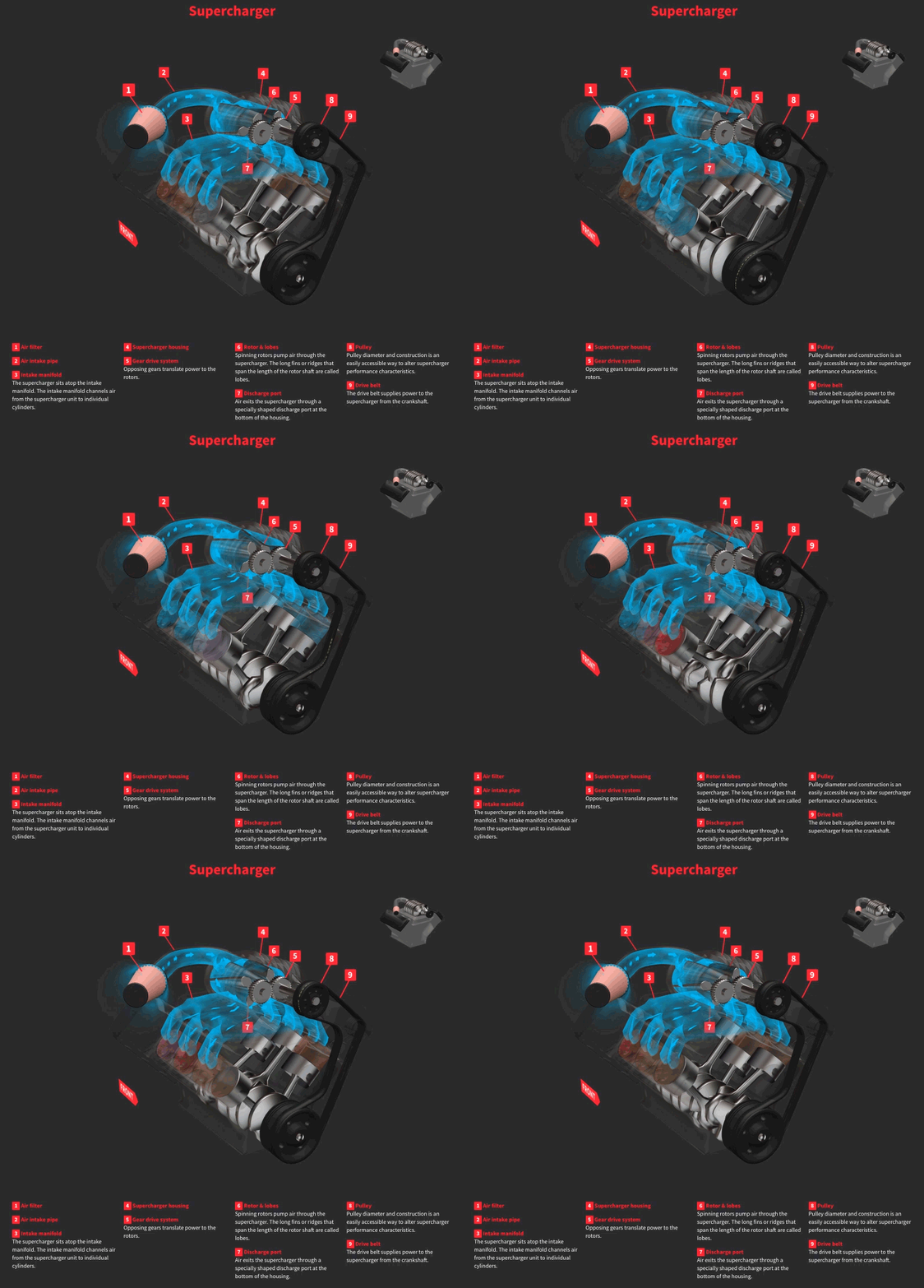
At its most fundamental level, a supercharger is an air compressor. In an internal combustion engine, power is generated by the explosion of a fuel-air mixture within the cylinders. Under normal atmospheric conditions, an engine is “naturally aspirated,” meaning it relies on the vacuum created by the descending piston to pull air into the chamber. The limitation here is the density of the ambient air; you can only burn as much fuel as the available oxygen allows.
A supercharger breaks this atmospheric ceiling through a process known as forced induction. By mechanically forcing more air into the engine than it would normally consume, the system allows for a proportional increase in fuel injection. The result is a more powerful combustion cycle without the need for a larger, heavier engine block.
The Physics of Oxygen Density and Combustion
The primary function of a supercharger is to increase “boost”—the measure of air pressure in the intake manifold that exceeds atmospheric pressure. By compressing the air, the supercharger increases the number of oxygen molecules per cubic inch. When this dense air is mixed with additional fuel and ignited, the resulting pressure on the piston is significantly higher, leading to increased torque and horsepower. This is not merely about volume; it is about the density and thermal management of the air-fuel charge.
Types of Mechanical Superchargers: Roots, Twin-Screw, and Centrifugal
Technological variation in superchargers usually falls into three categories. The Roots supercharger is the oldest design, utilizing two counter-rotating lobes to “puddle” air into the intake manifold. While iconic, it is less efficient due to heat buildup. The Twin-Screw supercharger improves upon this by using intermeshing rotors that compress the air internally before discharging it, leading to cooler, denser air. Finally, the Centrifugal supercharger functions like a high-speed fan or a turbocharger driven by a belt. It is highly efficient at high RPMs and is often favored in modern performance tuning for its compact size and technological integration.
2. Superchargers vs. Turbochargers: The Battle for Efficiency and Response
In the tech world of automotive performance, the debate between supercharging and turbocharging is legendary. While both are forms of forced induction, they differ fundamentally in how they are powered and how they deliver energy to the system. Understanding these differences is crucial for understanding why certain high-performance manufacturers choose one technology over the other.
Instantaneous Response and the Elimination of “Lag”
The defining technical advantage of a supercharger is its “linear” power delivery. Because the supercharger is driven directly by the engine’s crankshaft via a belt or chain, it begins compressing air the moment the engine turns. In contrast, a turbocharger relies on the velocity of exhaust gases to spin a turbine. This creates a delay known as “turbo lag.” For drivers and engineers prioritizing immediate throttle response and predictable power curves, the mechanical supercharger remains the superior piece of hardware.
The Trade-off of Parasitic Loss
From a digital security or systems efficiency perspective, every action has a cost. In engineering, this is known as “parasitic loss.” Because the engine must use some of its own power to turn the supercharger’s rotors, it is inherently less efficient than a turbocharger, which recovers “waste” energy from the exhaust. However, modern supercharger tech has mitigated this through bypass valves and electromagnetic clutches. These components allow the supercharger to “disengage” during cruising or low-load situations, effectively turning off the hardware when it isn’t needed to save fuel and reduce wear.
3. The Digital Transition: Electric Superchargers and 48V Architecture
As we move deeper into the 21st century, the “supercharger” has shed its purely mechanical roots. We are now seeing the rise of the Electric Supercharger (or E-charger), a bridge between traditional mechanical engineering and modern electronics. This technology represents a significant leap in how we manage power within a vehicle’s ecosystem.
Overcoming Mechanical Constraints with High-Speed Motors
Traditional superchargers are limited by the speed of the engine’s crankshaft. An electric supercharger replaces the belt drive with a high-speed electric motor capable of reaching 70,000+ RPM in milliseconds. Controlled by the vehicle’s Engine Control Unit (ECU), these units can provide instant boost at very low engine speeds where traditional turbos or mechanical superchargers might struggle. This is a “software-defined” approach to hardware, where sensors and algorithms determine exactly how much air is needed at any given millisecond.
The Role of 48-Volt Mild Hybrid Systems
To power these high-draw electric motors, manufacturers have moved away from standard 12V batteries toward 48V electrical architectures. This tech allows for the deployment of powerful e-chargers that can provide significant torque fill, making a small four-cylinder engine feel and perform like a large V8. This is the pinnacle of “downsizing” technology—using sophisticated electronic hardware to maintain performance while meeting modern emissions and efficiency standards.
4. Redefining the Term: The Tesla Supercharger and EV Infrastructure
In the modern tech lexicon, the word “supercharger” is perhaps most frequently associated with Tesla’s proprietary fast-charging network. While this is a departure from the mechanical air pumps of the past, the underlying philosophy remains: “supercharging” a system to provide more energy in less time.
DC Fast Charging and Power Conversion
A Tesla Supercharger is a high-tech power delivery system that bypasses a vehicle’s onboard charger to send Direct Current (DC) directly to the battery. In a standard home charging setup, the car must convert AC (Alternating Current) from the grid into DC, which is a slow process. A Supercharger performs this conversion at the station, utilizing massive power electronics to deliver up to 250kW or more. This allows an EV to gain hundreds of miles of range in under 20 minutes, a feat of electrical engineering that has fundamentally changed the viability of electric transport.
Thermal Management and Intelligent Grid Integration
One of the most complex aspects of an EV supercharger is thermal management. Charging a battery at such high speeds generates immense heat, which can degrade the battery’s chemical structure. Modern Superchargers communicate with the vehicle’s software to “pre-condition” the battery before arrival, heating or cooling it to the optimal temperature for energy absorption. Furthermore, these stations are increasingly integrated into “Smart Grids,” using AI to balance load and ensure that the high-power draw does not destabilize local electrical networks.
5. The Future of Supercharging: Synergy Between Hardware and Software
Looking forward, the role of the supercharger—both as a performance enhancer and an energy deliverer—is becoming increasingly intertwined with AI and predictive analytics. The future of this technology lies in how hardware reacts to real-time data to optimize output.
AI-Driven Performance Optimization
In high-performance applications, we are seeing the emergence of “predictive supercharging.” By using GPS data and driving history, a vehicle’s software can predict when a driver will need a burst of power (such as an upcoming highway merge) and begin spooling an electric supercharger or adjusting the bypass valve in advance. This level of synchronization between mechanical hardware and digital foresight represents the next frontier in automotive tech.

Universal High-Speed Infrastructure
The tech industry is also moving toward a “Universal Supercharging” standard. As brands like Tesla open their networks to other manufacturers (via the NACS standard), the focus is shifting toward software interoperability. The “supercharger” of tomorrow is not just a physical plug or a mechanical pump; it is a complex digital handshake between a power source and a consumer, ensuring that energy is transferred at the highest possible speed with the lowest possible risk.
In conclusion, when we ask “what does a supercharger do,” the answer is a testament to the evolution of technology itself. It is a device that overcomes limitations—be they the limitations of atmospheric pressure in a combustion chamber or the limitations of charging speeds in a lithium-ion battery. By pushing the boundaries of what a system can handle, superchargers remain the ultimate tool for those who refuse to settle for the standard “naturally aspirated” pace of the world. Whether through the scream of a mechanical rotor or the silent flow of high-voltage DC, the supercharger is, and will remain, the heartbeat of high-performance tech.
aViewFromTheCave is a participant in the Amazon Services LLC Associates Program, an affiliate advertising program designed to provide a means for sites to earn advertising fees by advertising and linking to Amazon.com. Amazon, the Amazon logo, AmazonSupply, and the AmazonSupply logo are trademarks of Amazon.com, Inc. or its affiliates. As an Amazon Associate we earn affiliate commissions from qualifying purchases.