
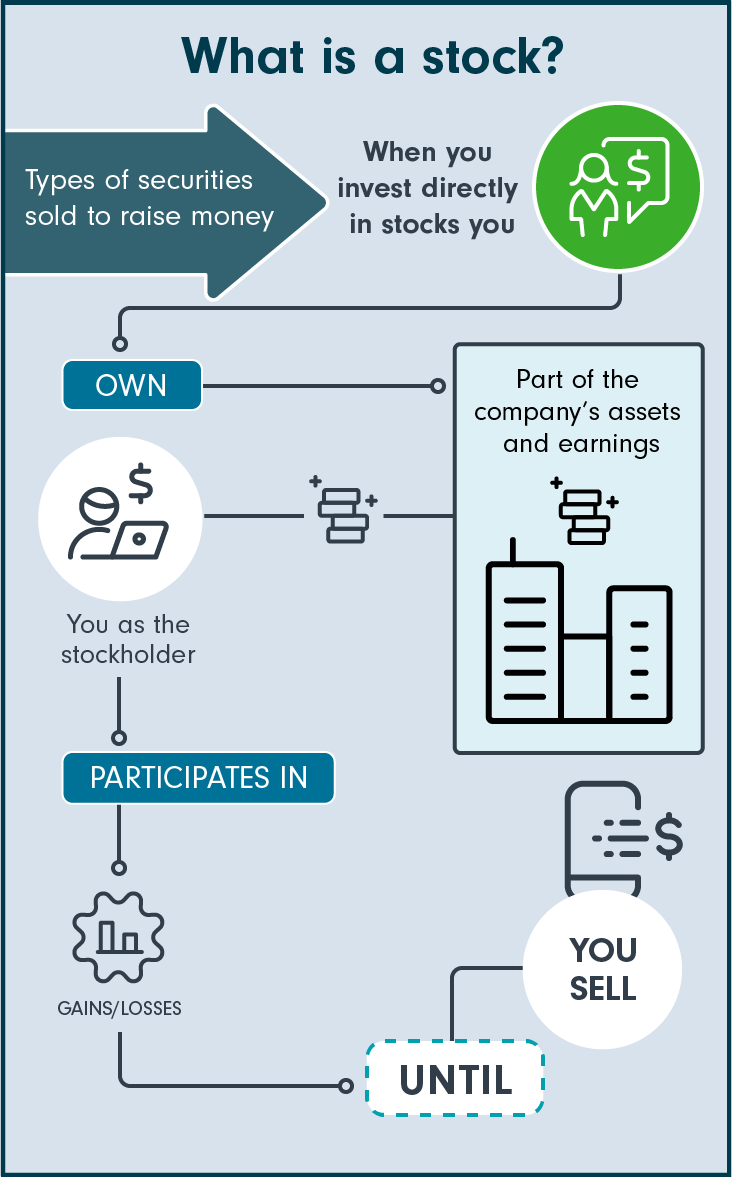
At its most fundamental level, a stock represents a fractional ownership claim in a company. When you own a stock, you become a shareholder, meaning you possess a tiny piece of that corporation’s assets and earnings. This concept is central to modern finance and provides a crucial avenue for both companies to raise capital and individuals to build wealth. Understanding what a stock truly means involves delving into its purpose, the mechanics of its trading, and the inherent opportunities and risks it presents.
The Core Concept: Ownership in a Company
To grasp the essence of a stock, one must first appreciate its role as a tangible representation of ownership. It’s more than just a piece of paper or a digital entry; it’s a legal claim on a portion of a company’s future.
A Slice of the Pie: Equity Ownership
Imagine a successful business, like a tech giant or a major retail chain. Instead of being owned by a single individual or a small group, these large entities are typically owned by millions of shareholders. Each share of stock you own is precisely that – one of many units into which the company’s total ownership is divided. This “equity ownership” bestows upon you certain rights and responsibilities, albeit often proportional to the number of shares you hold. For instance, if a company has 1 million shares outstanding and you own 1,000 shares, you own 0.1% of that company.
Why Companies Issue Stock
Companies primarily issue stock as a powerful mechanism to raise capital. When a private company decides to “go public” through an Initial Public Offering (IPO), it sells shares to the public for the first time. This infusion of cash allows the company to fund expansion, invest in research and development, pay down debt, or acquire other businesses. For many companies, issuing stock is a more flexible and less burdensome way to secure funding compared to taking out loans, as there are typically no interest payments or fixed repayment schedules associated with equity.
Common vs. Preferred Stock
While the term “stock” often refers to common stock, it’s important to differentiate. Common stock typically grants shareholders voting rights, allowing them to influence corporate policy and elect the board of directors. However, common stock dividends (a portion of the company’s profits paid out to shareholders) are not guaranteed and are paid after all other expenses and preferred stock dividends. Preferred stock, on the other hand, usually does not carry voting rights but offers a fixed dividend payment that takes precedence over common stock dividends. In the event of liquidation, preferred shareholders also have a higher claim on the company’s assets than common shareholders.
The Mechanics of Stock Trading
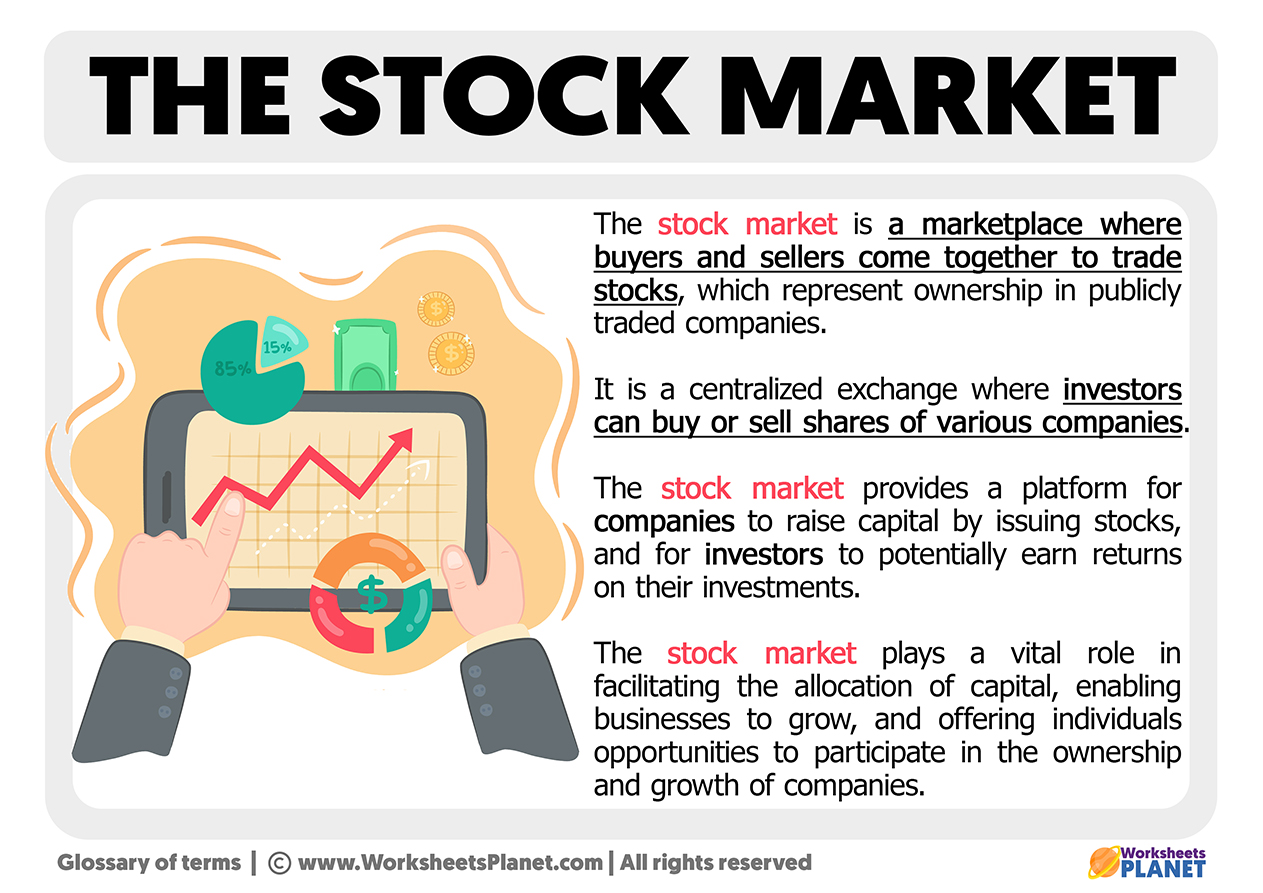
Stocks don’t just sit in a vault; they are actively bought and sold, driving their price fluctuations and creating opportunities for investors. This dynamic environment is facilitated by specific financial infrastructures.
Public vs. Private Companies
It’s crucial to distinguish between public and private companies. Only shares of public companies, which have undergone an IPO and meet regulatory requirements, are traded on stock exchanges. Private companies, owned by a small group of investors, founders, or employees, do not have their shares available for purchase by the general public on an exchange. The transition from private to public status opens a company up to a much larger pool of capital and scrutiny.
Stock Exchanges and Brokerages
The primary venues for buying and selling stocks are stock exchanges, such as the New York Stock Exchange (NYSE) or Nasdaq. These marketplaces provide a regulated and efficient environment where buyers and sellers can connect. Individual investors typically access these exchanges through brokerage firms. A brokerage account acts as your gateway, allowing you to place orders to buy or sell shares. Modern online brokerages have made stock investing more accessible than ever, often with low or no commissions.
Supply, Demand, and Stock Prices
The price of a stock at any given moment is a direct reflection of supply and demand. If more investors want to buy a particular stock than sell it (high demand, low supply), its price will generally rise. Conversely, if more investors want to sell than buy (low demand, high supply), the price will typically fall. This interplay is influenced by a myriad of factors, including company performance, industry trends, economic outlook, investor sentiment, and geopolitical events.
Market Capitalization
Market capitalization, often simply called “market cap,” is a key metric that represents the total value of a company’s outstanding shares. It’s calculated by multiplying the current share price by the total number of shares outstanding. For example, if a company has 100 million shares outstanding and its stock trades at $50 per share, its market cap is $5 billion. Market cap helps investors categorize companies (e.g., small-cap, mid-cap, large-cap) and provides an indication of the company’s size and perceived value in the market.
Why Invest in Stocks? Potential Rewards and Risks
Investing in stocks carries the potential for significant financial growth, but it’s essential to approach it with a clear understanding of the accompanying risks.
Capital Appreciation
One of the primary reasons investors buy stocks is the potential for capital appreciation. This means the value of the stock increases over time, allowing you to sell your shares for a higher price than you paid for them. This growth is typically driven by a company’s improved performance, increased profitability, innovation, market expansion, or positive investor sentiment. For example, if you buy a share for $100 and sell it later for $150, you’ve realized a $50 capital gain.
Dividends
Beyond capital appreciation, many companies distribute a portion of their profits directly to shareholders in the form of dividends. These payments, often made quarterly, provide a regular income stream to investors. While not all companies pay dividends, those that do are often mature, stable businesses with consistent cash flow. Dividend payments can be a crucial component of an investor’s total return, especially for those seeking income from their investments.
Voting Rights and Shareholder Influence
For common stock holders, one of the unique aspects of ownership is the right to vote on important company matters. This includes electing board members, approving mergers and acquisitions, and voting on executive compensation. While a single individual with a few shares may have limited direct influence, collectively, shareholders can exert pressure on management and influence strategic decisions, upholding corporate governance.

Inherent Risks: Volatility and Loss
It is crucial to acknowledge that stock investing is not without risk. Stock prices are inherently volatile and can fluctuate dramatically in response to market news, economic data, company-specific announcements, or broader market downturns. There is always the possibility that the value of your investment could decrease, leading to a loss if you sell your shares for less than you paid. Company-specific risks, such as poor management, declining sales, or increased competition, can also significantly impact a stock’s performance.
Diversification as a Risk Management Strategy
To mitigate these risks, diversification is a cornerstone strategy. By spreading your investments across various stocks, industries, and asset classes (like bonds or real estate), you reduce your exposure to the poor performance of any single investment. If one stock in your portfolio performs poorly, the impact on your overall portfolio can be offset by better performance from others, smoothing out returns and lowering overall risk.
Beyond the Basics: Understanding Key Stock Metrics
To make informed investment decisions, understanding specific financial metrics associated with stocks is invaluable. These metrics provide insights into a company’s financial health, valuation, and growth prospects.
Earnings Per Share (EPS)
Earnings Per Share (EPS) is a widely watched profitability metric that indicates how much profit a company makes for each outstanding share of common stock. It’s calculated by dividing the company’s net income by the total number of outstanding shares. A higher EPS generally suggests a more profitable company, and consistent growth in EPS is often a positive signal for investors.
Price-to-Earnings (P/E) Ratio
The Price-to-Earnings (P/E) ratio is a valuation metric that compares a company’s current share price to its EPS. It’s calculated by dividing the current stock price by the annual EPS. The P/E ratio essentially tells you how much investors are willing to pay for each dollar of a company’s earnings. A high P/E ratio might indicate that investors expect high future growth, while a low P/E ratio could suggest that the stock is undervalued or that investors expect slower growth. Comparing a company’s P/E to its industry average or historical P/E is crucial.
Dividend Yield
For income-focused investors, the dividend yield is a critical metric. It expresses the annual dividend payout as a percentage of the stock’s current price. For example, if a stock pays an annual dividend of $2.00 per share and its current price is $50.00, its dividend yield is 4% ($2.00 / $50.00). A higher dividend yield means a greater income return relative to the share price, though it’s important to consider the sustainability of the dividend.
Beta
Beta is a measure of a stock’s volatility in relation to the overall market. A beta of 1.0 indicates that the stock’s price tends to move with the market. A beta greater than 1.0 suggests the stock is more volatile than the market (e.g., a beta of 1.5 means it moves 1.5 times as much as the market). A beta less than 1.0 indicates lower volatility. Understanding a stock’s beta can help investors assess its risk profile within a diversified portfolio.
Market Sentiment and News
Beyond quantitative metrics, qualitative factors like market sentiment and news play a significant role. Major news events, regulatory changes, analyst ratings, and even social media trends can heavily influence investor perception and, consequently, stock prices. Staying informed about current events and understanding broader economic narratives is essential for any investor.
Starting Your Stock Investing Journey
Embarking on the journey of stock investing can be rewarding, but it requires a thoughtful approach. Beginning with a solid foundation and a clear strategy is paramount.
Setting Financial Goals
Before buying your first share, define your financial goals. Are you saving for retirement, a down payment on a house, or simply aiming to grow your wealth over time? Your goals will influence your investment horizon (how long you plan to hold your investments) and your risk tolerance. A long-term goal typically allows for greater risk, as short-term market fluctuations have less impact.
Research and Due Diligence
Effective stock investing hinges on thorough research. This involves understanding the company’s business model, its competitive landscape, management team, and financial statements (income statement, balance sheet, cash flow statement). Don’t rely solely on headlines or tips; delve into annual reports (10-K filings) and earnings calls. Due diligence helps you make informed decisions rather than speculative bets.
Choosing a Brokerage Account
To buy and sell stocks, you’ll need to open an investment account with a brokerage firm. Consider factors like commission fees, available investment products, research tools, customer service, and ease of use. Online discount brokerages are popular for their low costs, while full-service brokers offer personalized advice, often at a higher fee.
Long-Term vs. Short-Term Strategies
Investors typically fall into two broad categories: long-term investors and short-term traders. Long-term investors focus on buying quality companies and holding them for years, benefiting from capital appreciation and dividends over time. Short-term traders attempt to profit from rapid price movements, often engaging in more frequent buying and selling. For most individuals, especially beginners, a long-term, buy-and-hold strategy is generally recommended due to its lower stress and proven effectiveness over time.
The Importance of Continuous Learning
The stock market is a dynamic and evolving environment. New companies emerge, industries transform, and economic conditions shift. Continuous learning, staying updated on market trends, refining your understanding of financial concepts, and adapting your strategies as needed are vital for long-term success. Education empowers you to navigate the complexities of the market with greater confidence and make more resilient financial decisions.
aViewFromTheCave is a participant in the Amazon Services LLC Associates Program, an affiliate advertising program designed to provide a means for sites to earn advertising fees by advertising and linking to Amazon.com. Amazon, the Amazon logo, AmazonSupply, and the AmazonSupply logo are trademarks of Amazon.com, Inc. or its affiliates. As an Amazon Associate we earn affiliate commissions from qualifying purchases.