
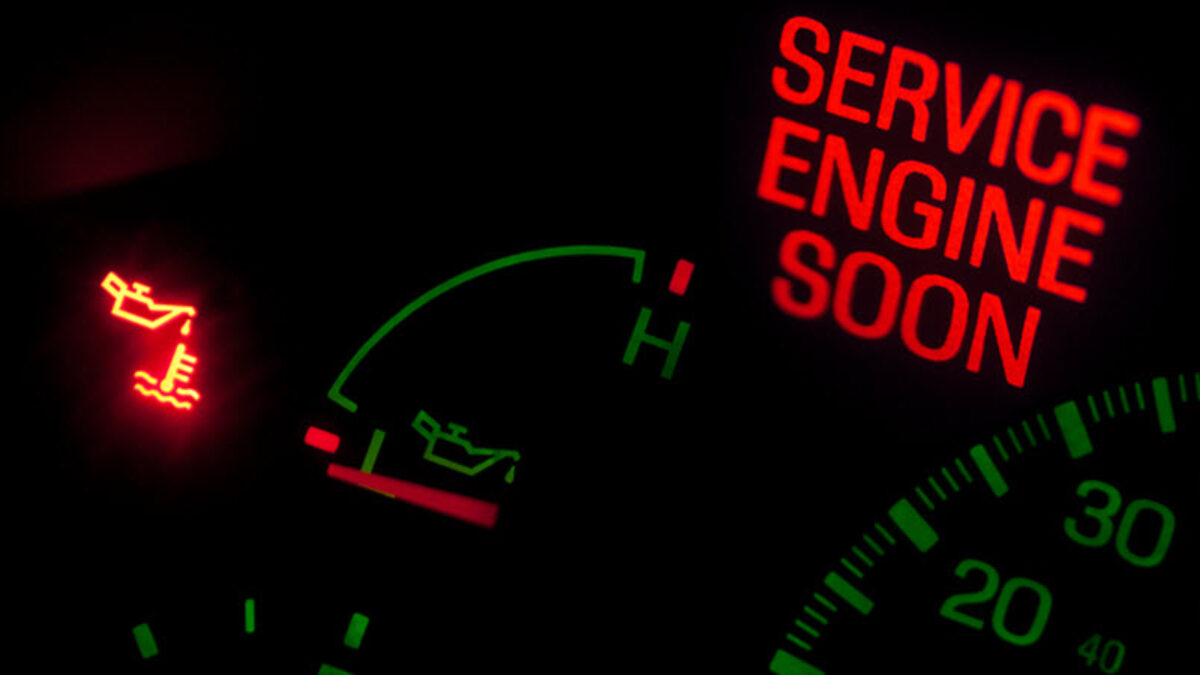
In the modern era, the automobile has transitioned from a purely mechanical beast into a sophisticated, mobile computing platform. When a glowing amber or red notification appears on your dashboard labeled “Service Engine Soon” (SES), it is not merely a suggestion to visit a mechanic; it is a data-driven communication from your vehicle’s internal operating system. Understanding what this light means requires a deep dive into the intersection of automotive engineering and digital diagnostic technology.
For tech-savvy owners, the SES light represents the physical manifestation of the On-Board Diagnostics (OBD) system—a complex network of sensors, microcontrollers, and software protocols that monitor the health of the vehicle in real-time. This article explores the technological architecture behind that light, the software used to interpret it, and how the future of connected cars is changing the way we respond to engine alerts.
Understanding the Digital Brain: The Role of the Engine Control Unit (ECU)
To understand why a light illuminates on your dashboard, one must first understand the “brain” of the vehicle: the Engine Control Unit (ECU). Modern vehicles house dozens, sometimes hundreds, of these mini-computers, often referred to as Electronic Control Units.
From Mechanical to Electronic: The Shift in Automotive Architecture
Decades ago, engine timing and fuel delivery were managed by mechanical linkages, carburetors, and vacuum lines. Today, these functions are managed by code. The ECU acts as the central server for your vehicle’s powertrain, receiving thousands of data points per second. When the “Service Engine Soon” light triggers, it means the ECU has detected a “fault condition” or a deviation from the programmed parameters stored in its Read-Only Memory (ROM).
How the ECU Processes Real-Time Data
The ECU utilizes a feedback loop system. For instance, it monitors the oxygen levels in the exhaust via O2 sensors to adjust the fuel-to-air ratio. If the sensor sends a signal that falls outside the “expected range” defined by the software’s algorithms, the ECU logs a Diagnostic Trouble Code (DTC). If the error persists over a set number of “drive cycles,” the software is programmed to ground a circuit that illuminates the SES light. This is a classic example of an automated monitoring system reacting to hardware anomalies through software logic.
Deciphering the Light: Diagnostics, Sensors, and the OBD-II Protocol
When the “Service Engine Soon” light appears, it serves as a user interface (UI) alert. However, the actual “message” is hidden within the vehicle’s diagnostic port. This communication is governed by a standardized protocol known as OBD-II (On-Board Diagnostics, Second Generation).
The Standardized Language of OBD-II Codes
Since 1996, all vehicles sold in the United States have been required to use the OBD-II standard. This was a massive milestone in tech history, as it created a universal language for vehicle diagnostics. When the SES light is on, the computer has stored a five-character code.
- P-Codes (Powertrain): These cover the engine, transmission, and fuel system.
- B-Codes (Body): These refer to airbags, climate control, and electronic steering.
- C-Codes (Chassis): These relate to anti-lock braking systems (ABS) and suspension.
- U-Codes (Network): These indicate a communication failure between different onboard computers.
Common Tech-Driven Triggers for the SES Light
The “Service Engine Soon” light is often distinct from the “Check Engine” light, though their roles frequently overlap. In many software configurations, the SES light is specifically programmed to trigger based on:
- Sensor Degradation: Mass Air Flow (MAF) sensors or Manifold Absolute Pressure (MAP) sensors sending “noisy” data.
- Emission Software Limits: Modern cars run sophisticated emissions-scrubbing software. If the catalytic converter’s efficiency drops below a programmed threshold (e.g., 95%), the software triggers the light.
- Scheduled Maintenance Intervals: Some manufacturers use the SES light as a software-based timer. Based on mileage data stored in the odometer’s digital memory, the ECU triggers the light to remind the user of oil changes or filter replacements.
Critical vs. Non-Critical Alerts: Flash Codes and Logic
The behavior of the light itself is an informative bit of UI design. A solid SES light generally indicates a non-critical fault or a maintenance reminder—the system has detected an issue, but the vehicle is still operating within “limp mode” or safe parameters. However, a flashing SES light indicates a “Type A” misfire. In this state, the software has detected a condition that could lead to immediate hardware failure (like melting the catalytic converter). From a tech perspective, this is the equivalent of a “Kernel Panic” in an operating system, demanding an immediate shutdown.

Tools of the Trade: Consumer Tech for Vehicle Diagnostics
In the past, interpreting an SES light required expensive, proprietary hardware found only at dealerships. Today, the democratization of diagnostic technology allows any consumer with a smartphone to interface with their car’s ECU.
The Rise of Bluetooth OBD-II Scanners and Smartphone Apps
The most significant shift in automotive tech for consumers is the emergence of ELM327-based Bluetooth adapters. These small dongles plug into the OBD-II port (usually located under the steering column) and broadcast vehicle data to a smartphone.
Apps like Torque Pro, BlueDriver, and DashCommand have turned mobile devices into powerful diagnostic workstations. These apps don’t just read codes; they provide real-time graphing of sensor data, fuel trim analysis, and even “freeze frame” data, which shows exactly what the engine was doing the millisecond the light turned on.
Professional-Grade Diagnostic Software vs. Consumer Tools
While smartphone apps are excellent for identifying the “what,” professional-grade software like Snap-on, Autel, or manufacturer-specific tech (like Ross-Tech’s VCDS for Volkswagen Group) offers bi-directional control. This allows a technician to not just read data, but to send commands back to the vehicle—such as forcing a DPF regeneration or recalibrating an electronic throttle body. This represents the high-end of automotive software engineering, where the line between “mechanic” and “IT professional” becomes increasingly blurred.
Predictive Maintenance and the Future of Connected Car Technology
We are currently moving away from reactive diagnostics (the light turns on after a failure) toward predictive diagnostics and the “Software-Defined Vehicle” (SDV).
Telematics and Remote Diagnostics
Modern “Connected Cars” equipped with 4G/5G LTE modules (such as GM’s OnStar or BMW’s ConnectedDrive) don’t wait for you to notice the SES light. When a fault code is generated, the vehicle automatically uploads the diagnostic data to the cloud. The manufacturer’s servers analyze the data and can send a push notification to the owner’s smartphone or even email a local service center to pre-order the necessary parts. This is an application of the Internet of Things (IoT) that transforms the SES light from a mystery into a managed logistics event.
AI and Machine Learning in Engine Health Monitoring
The next frontier is the integration of Artificial Intelligence (AI) within the ECU. By utilizing machine learning algorithms, future vehicles will be able to detect “pre-failure” patterns. For example, if a fuel pump begins drawing 0.5 amps more than it did the previous month, AI can predict an impending failure before a hard fault code is ever triggered. In this ecosystem, the “Service Engine Soon” light might become obsolete, replaced by a “Preventative Update” notification that keeps the vehicle from ever experiencing a breakdown.

Conclusion: Embracing the Tech-Forward Approach to Vehicle Care
The “Service Engine Soon” light is a vital bridge between the mechanical world and the digital world. It is the primary way a car’s operating system alerts the user to software inconsistencies, hardware wear, or required maintenance.
For the modern driver, seeing this light is no longer a cause for blind panic. It is an invitation to engage with the technology that powers our daily lives. Whether you are using a $20 Bluetooth scanner to pull a P0420 code or driving a Tesla that receives over-the-air (OTA) updates to fix engine logic bugs, you are participating in a highly advanced technological ecosystem.
By understanding the ECU, the OBD-II protocol, and the diagnostic tools available today, we can demystify the amber glow on the dashboard. The SES light isn’t just a warning; it’s a testament to the incredible complexity and intelligence of the modern machine, reminding us that under the hood of every car lies a computer that is constantly working to optimize performance, safety, and efficiency.
aViewFromTheCave is a participant in the Amazon Services LLC Associates Program, an affiliate advertising program designed to provide a means for sites to earn advertising fees by advertising and linking to Amazon.com. Amazon, the Amazon logo, AmazonSupply, and the AmazonSupply logo are trademarks of Amazon.com, Inc. or its affiliates. As an Amazon Associate we earn affiliate commissions from qualifying purchases.