
The rapidly growing sport of pickleball, known for its accessibility and engaging gameplay, has a distinct court that is crucial for understanding its unique dynamics. While seemingly simple, the dimensions, markings, and equipment of a pickleball court are precisely designed to facilitate the sport’s blend of tennis, badminton, and ping pong. Understanding these elements is not just about knowing the rules; it’s about appreciating the strategic nuances that unfold within this defined playing space. Whether you’re a seasoned player, a curious beginner, or even someone involved in the business of sports facilities, a clear grasp of the pickleball court’s appearance and its functional significance is fundamental.

The Foundation: Dimensions and Layout
At its core, a pickleball court is remarkably similar in size to a badminton court, making it smaller and more manageable than a tennis court. This smaller footprint is a key factor in the sport’s popularity, as it requires less court space and less strenuous movement, thus making it more accessible to a wider range of ages and athletic abilities. The standardized dimensions ensure a consistent playing experience across different locations, from dedicated pickleball facilities to converted tennis courts or even makeshift backyard setups.
Court Size and Shape
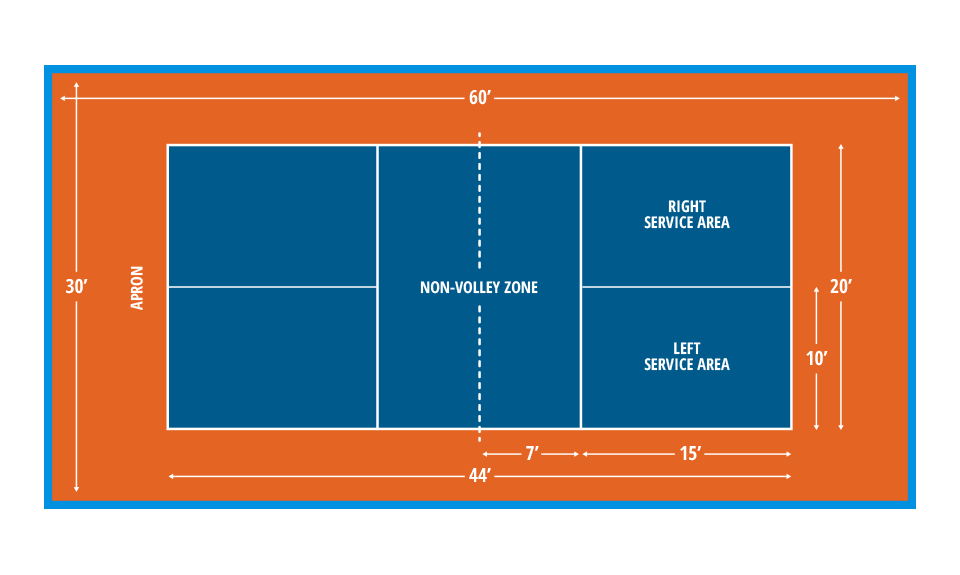
A regulation pickleball court measures 20 feet wide by 44 feet long. This rectangular playing area is further divided by a net. The overall dimensions are consistent for both singles and doubles play, although the tactical considerations of positioning will differ based on the number of players. The relatively compact size means that players are always engaged in the action, fostering a sense of constant participation and quick rallies. This is a significant departure from the expansive courts of tennis, where covering the ground can be a primary challenge.
The Net
The net in pickleball is set at a height of 36 inches at the sidelines and 34 inches in the center. This lower net height compared to tennis allows for softer shots and encourages different types of volleys and dinks. The height difference is subtle but impactful. The slight dip in the center ensures that the ball naturally tends to fall closer to the opponent’s feet when hit with a moderate trajectory, promoting the strategic use of the “kitchen” area. The net itself is typically made of mesh or nylon, similar to tennis nets, and is supported by posts on either side of the court.
Defining the Playable Zones: Lines and Markings
Beyond the overall dimensions, the lines and markings on a pickleball court are critical for dictating gameplay and strategy. These lines delineate specific areas that have unique rules associated with them, most notably the non-volley zone, often referred to as the “kitchen.” Understanding these zones is paramount to mastering the game.
The Sidelines and Baselines
The sidelines define the outer boundaries of the court’s width, running the entire 44-foot length. Stepping outside these lines during a rally, or if the ball lands outside them, results in the ball being out of play. The baselines mark the ends of the court, spanning the 20-foot width. These lines are important for serving and for understanding the general areas of play. Unlike in tennis, where the baseline is a primary defensive position, in pickleball, players often find themselves moving closer to the net due to the court’s size and the nature of the game.
The Non-Volley Zone (The Kitchen)
Perhaps the most distinctive feature of a pickleball court is the non-volley zone, universally known as the “kitchen.” This area extends 7 feet in front of the net on both sides. The lines marking the kitchen are crucial: it is bounded by the net, the sidelines, and the kitchen lines, which are parallel to the net and 7 feet away from it. The rule associated with the kitchen is fundamental: a player cannot volley a ball while standing in the non-volley zone. A volley is defined as hitting the ball before it bounces. This means if you are in the kitchen, you must let the ball bounce before hitting it. This rule is the heart of pickleball strategy, forcing players to engage in softer, controlled shots, or to move out of the kitchen to hit a volley. The kitchen encourages dink shots, which are soft, arcing shots designed to land just over the net into the opponent’s kitchen, forcing them into defensive or awkward positions.
The Centerline
Running parallel to the sidelines and dividing each side of the court in half is the centerline. This line is particularly important for serving. In pickleball, the serve must always be hit from the right-hand service court (the area between the centerline and the right sideline) to the diagonally opposite service court. The serve must also land beyond the non-volley zone line. The centerline helps players orient themselves during the serve and understand the boundaries of the designated service areas.
Surface, Color, and Environment
While the dimensions and markings are standardized, the actual appearance of a pickleball court can vary significantly based on its location and construction materials. The surface, color, and surrounding environment all play a role in the overall playing experience and the aesthetic of the court.
Court Surfaces
Pickleball can be played on a variety of surfaces, though hard surfaces are most common and preferred. Asphalt and concrete are the most prevalent for outdoor courts, offering durability and a consistent bounce. Acrylic coatings are often applied to these surfaces to provide cushioning, improve traction, and add color. Indoor courts may utilize wood flooring or specialized sports vinyl, offering even more shock absorption and a premium feel. The choice of surface impacts ball speed, player comfort, and the potential for injury. A well-maintained surface is crucial for the longevity of the court and the enjoyment of the players.
Color Schemes
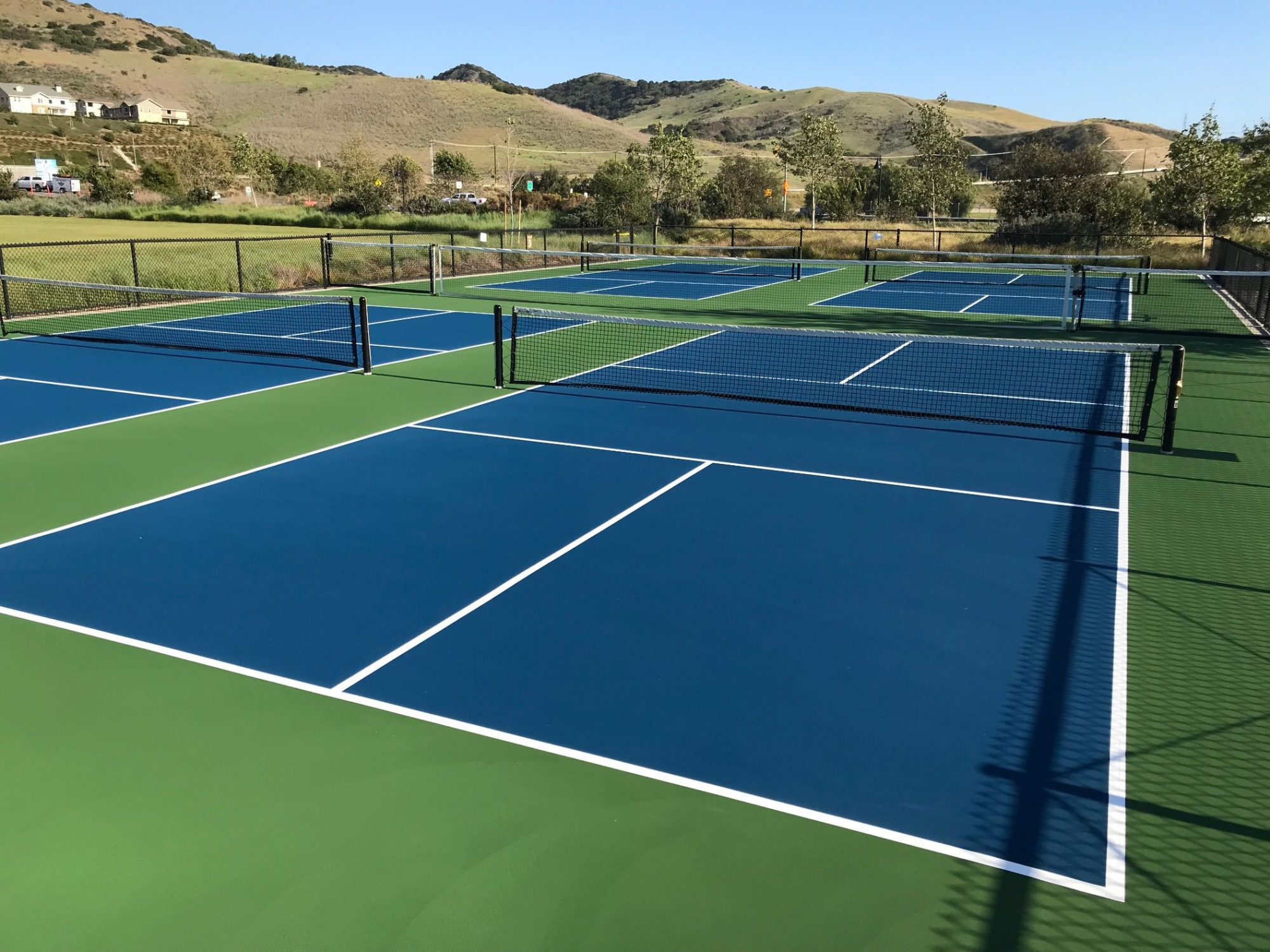
The visual appeal of a pickleball court is often enhanced by strategic color choices. While the lines are typically a contrasting color to the court surface (often white or yellow against a colored background), the playing area itself can be painted in a range of colors. Common color schemes include:
- Traditional Tennis Court Colors: Many courts adopt the familiar greens, blues, and reds seen on tennis courts, providing a sense of familiarity.
- Vibrant and Bold Colors: To stand out and create a modern aesthetic, some facilities opt for brighter, more energetic color combinations.
- Branding and Theming: Dedicated pickleball clubs or communities might use specific colors to represent their brand or theme.
The color contrast between the court surface and the lines is essential for players to clearly see the boundaries and zones during fast-paced rallies.
Lighting and Enclosures
For courts intended for play during evening hours or in regions with limited daylight, adequate lighting is a critical component. This typically involves overhead light fixtures strategically placed to illuminate the entire playing area without casting harsh shadows. For dedicated pickleball facilities, enclosures such as windscreens or even permanent structures can enhance the playing experience by reducing the impact of wind, a significant factor in pickleball, and by containing errant balls. These enclosures also contribute to the overall aesthetic and functionality of the court, making it a more controlled and enjoyable environment.
In conclusion, a pickleball court, with its specific dimensions, strategic markings like the non-volley zone, and adaptable surfaces, is a meticulously designed space that directly influences the game’s flow and strategy. From the precise 20×44 foot rectangle to the crucial 7-foot kitchen, each element is in place to foster the unique blend of quick volleys, delicate dinks, and strategic positioning that defines pickleball. Understanding what a pickleball court looks like is the first step to understanding the game itself.
aViewFromTheCave is a participant in the Amazon Services LLC Associates Program, an affiliate advertising program designed to provide a means for sites to earn advertising fees by advertising and linking to Amazon.com. Amazon, the Amazon logo, AmazonSupply, and the AmazonSupply logo are trademarks of Amazon.com, Inc. or its affiliates. As an Amazon Associate we earn affiliate commissions from qualifying purchases.