
The advent of the REAL ID Act has reshaped how Americans prove their identity for federal purposes, and for residents of Georgia, understanding the visual cues and security features of their state-issued REAL ID is paramount. Beyond a simple driver’s license or identification card, the Georgia REAL ID is a federally compliant document designed to enhance security and streamline access to restricted areas, boarding commercial aircraft, and entering federal buildings. This article delves into the visual characteristics and underlying security technologies that define a Georgia REAL ID, offering a comprehensive guide for residents and anyone seeking to understand this important identification document.

The Georgia REAL ID is more than just a plastic card; it represents a significant upgrade in identification security and compliance. Passed by Congress in 2005 in response to the September 11th terrorist attacks, the REAL ID Act established minimum security standards for state-issued driver’s licenses and identification cards. These standards are designed to ensure that all issued IDs are more difficult to counterfeit, tamper with, or fraudulently obtain. For Georgians, this means their state-issued identification now carries a higher level of trust and functionality, especially when traveling by air or accessing federal facilities.
The visual appearance of a Georgia REAL ID is designed to be both informative and secure, incorporating a range of features that distinguish it from older, non-compliant licenses. The primary objective is to make it immediately recognizable as a federally accepted form of identification and to embed security elements that are difficult for counterfeiters to replicate. This involves a combination of overt, easily visible features and covert, embedded technologies that are accessible through specialized readers.
The Visual Design and Overt Security Features
The physical presentation of a Georgia REAL ID is the first line of defense and the most readily accessible set of security indicators. These are the elements that law enforcement, airline personnel, and other officials can quickly assess to verify the authenticity of the document. The design itself incorporates a sophisticated blend of graphical elements, text, and specific markings that, when viewed together, create a robust and verifiable identification.
The Distinctive Star and Card Layout
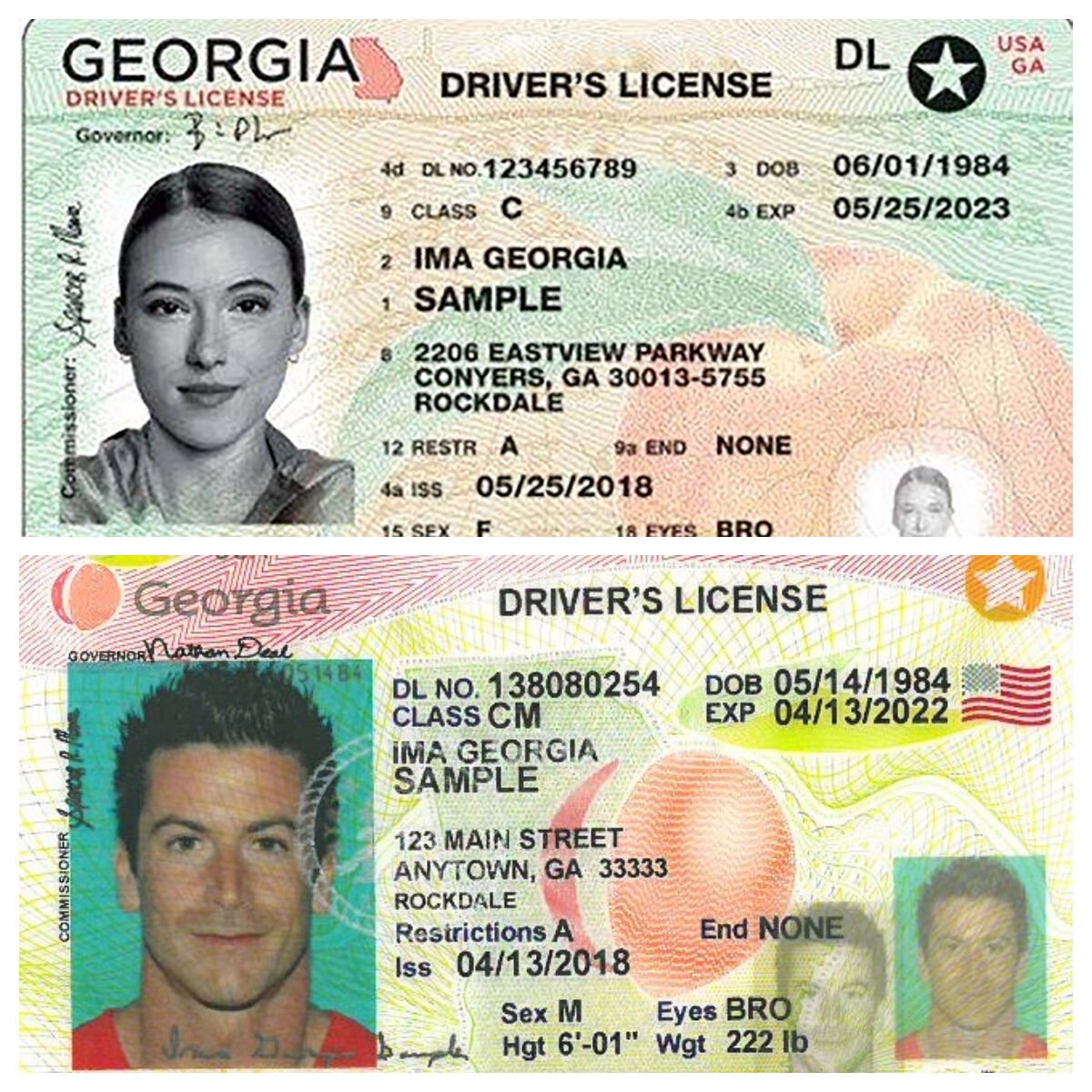
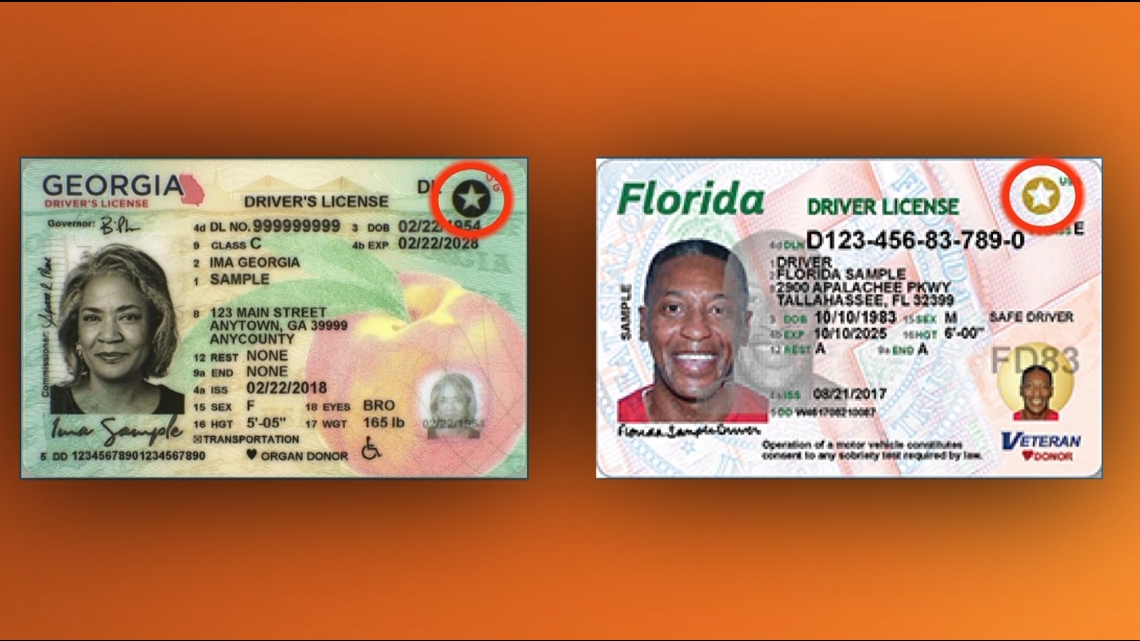
The most prominent visual indicator of a Georgia REAL ID is the presence of a gold star, typically placed in the upper right-hand corner of the card. This star is not merely decorative; it signifies that the card meets all the federal requirements of the REAL ID Act. The presence or absence of this star is the quickest way for an observer to determine if the Georgia ID is federally compliant.
Beyond the star, the overall layout of the Georgia REAL ID is designed for clarity and security. Key personal information, such as the cardholder’s photograph, name, date of birth, address, and unique identification number, is clearly presented. The font choices, spacing, and arrangement of this information are standardized, making any deviation from the official design more apparent. The background of the card often features intricate patterns and micro-printing, which are difficult to reproduce accurately with standard copying equipment. These patterns can include overlapping lines, geometric shapes, and even the state outline of Georgia, all designed to deter counterfeiting.
Tactile Features and Unique Markings
Another layer of overt security comes in the form of tactile features and unique markings. While the overall card is smooth, certain elements might have a slightly raised texture, detectable by touch. This can include the cardholder’s name, birth date, or even the gold star itself. These tactile elements are challenging to replicate on standard printing equipment and provide an additional verification point.
Furthermore, the Georgia REAL ID incorporates specific markings or holograms that change appearance when viewed from different angles. These are often layered within the card’s design, creating depth and complexity. For instance, a hologram might display the state seal or the cardholder’s image in a way that shifts and changes color, making it difficult to forge convincingly. The inks used in printing also play a role, with some inks being fluorescent and only visible under ultraviolet (UV) light. This feature is crucial for official verification, as it is a readily available tool for law enforcement and security personnel.
Embedded Security Technologies and Covert Features
While overt features provide immediate visual cues, the true strength of a Georgia REAL ID lies in its embedded security technologies. These are the less visible, more sophisticated elements that require specialized equipment to detect and verify, offering a high level of protection against sophisticated forgery attempts. These technologies are integrated directly into the card’s materials and printing process, making them an intrinsic part of the document’s integrity.
Micro-printing and UV Features
Micro-printing involves printing extremely small text or patterns that are barely visible to the naked eye and can only be read with magnification. On a Georgia REAL ID, these tiny lines of text might spell out “Georgia” or “REAL ID,” or contain other identifying information. The precision required to print such small details makes them a formidable barrier for counterfeiters. When magnified, these micro-printed elements should appear crisp and clear, not blurry or distorted.
As mentioned earlier, ultraviolet (UV) features are a critical component of modern identification security. A Georgia REAL ID will often have images, text, or patterns that are invisible under normal light but glow brightly when exposed to UV light. This could include a secondary image of the cardholder, the Georgia state seal, or specific security threads embedded within the card material. The accurate replication of these UV elements is exceptionally difficult without access to the proprietary inks and printing processes used by the state.
Holographic Overlays and Embedded Data
Holographic overlays are a sophisticated form of security that involves printing a multi-dimensional image onto a special film that is then applied to the card. These holograms are not flat images; they have depth and appear to move or change when the card is tilted. A Georgia REAL ID might feature a holographic overlay that displays the state seal, a depiction of the Capitol building, or other symbolic imagery. The complexity and depth of these holograms make them very hard to counterfeit.
Beyond the surface-level features, some Georgia REAL IDs may also incorporate embedded data technologies. While not always immediately visible, these can include features like optically variable devices (OVDs) or even embedded chips, though the widespread use of chips in state IDs is still evolving. OVDs are security features that change appearance based on the viewing angle or illumination, adding another layer of tamper-evidence. For example, certain markings might appear or disappear as the card is tilted, providing a dynamic security element that is difficult to replicate.
Verification and the Importance of the REAL ID Program
Understanding what a Georgia REAL ID looks like is only part of the equation. The true value lies in its acceptance and the verification processes that ensure its authenticity. The REAL ID program is designed to create a national standard, ensuring that if an ID is valid in one state, it is recognized and accepted across all states for federal purposes.
The Department of Driver Services (DDS) and Issuance
The issuance of Georgia REAL IDs is managed by the Georgia Department of Driver Services (DDS). When applying for a REAL ID, residents must present specific documentation proving their identity, date of birth, social security number, and two proofs of Georgia residency. This rigorous verification process at the point of issuance is the first critical step in ensuring the integrity of the REAL ID program. The DDS employs advanced security measures in their printing facilities and has strict protocols for data handling to prevent fraud.
When you receive your new Georgia REAL ID, it’s essential to examine it carefully. Compare the features to official examples from the Georgia DDS website. Look for the gold star, the quality of the printing, the holographic elements, and any tactile features. If anything appears unusual or if the card lacks the expected security features, it’s crucial to contact the DDS immediately.
Federal Acceptance and Future Implications
The primary purpose of the REAL ID is federal acceptance. Starting on May 7, 2025, a driver’s license or identification card that does not meet REAL ID standards will no longer be accepted as a primary form of identification for boarding commercial aircraft, entering federal buildings, or visiting U.S. military bases. This means that for many Georgians, their REAL ID will become essential for everyday activities that were once routine.
The evolution of identification technology is ongoing, and the REAL ID program is designed to adapt. As new security features and verification methods emerge, they are likely to be incorporated into future iterations of state-issued IDs. This ensures that identification documents remain a robust and reliable means of proving identity in an increasingly complex world. For Georgians, a clear understanding of their REAL ID’s features is not just about knowing what it looks like, but also about understanding its significance and ensuring they possess a compliant document for future federal requirements.
aViewFromTheCave is a participant in the Amazon Services LLC Associates Program, an affiliate advertising program designed to provide a means for sites to earn advertising fees by advertising and linking to Amazon.com. Amazon, the Amazon logo, AmazonSupply, and the AmazonSupply logo are trademarks of Amazon.com, Inc. or its affiliates. As an Amazon Associate we earn affiliate commissions from qualifying purchases.