
The ephemeral beauty of cherry blossoms, or sakura, has captivated hearts and minds for centuries, inspiring art, poetry, and festivals across the globe. While often depicted in idealized forms, understanding the true visual characteristics of these delicate blooms offers a deeper appreciation for their natural wonder. This exploration delves into the visual nuances of cherry blossoms, moving beyond generic representations to reveal the intricate details that define their appearance. We will examine their physical attributes, the diversity within their forms, and the subtle yet significant ways in which their appearance contributes to their widespread appeal, particularly as a motif in design and branding.

The Fundamental Anatomy of a Cherry Blossom
At its core, a cherry blossom is a flower that emerges from cherry trees, primarily from the Prunus genus. While the term “cherry blossom” often evokes a single, uniform image, the reality is a spectrum of forms, all sharing certain fundamental characteristics.
Petal Structure and Arrangement
The most striking feature of a cherry blossom is its petals. Typically, these flowers possess five petals, although some varieties can have more, featuring double or even multi-layered blooms. The individual petals are usually ovate or heart-shaped, tapering to a point or a slightly rounded tip. Their texture is delicate and thin, often described as papery or silken, allowing them to catch the light beautifully.
The arrangement of these petals is crucial to the overall visual appeal. They are generally arranged in a radial symmetry, emanating from the center of the flower. In single-petaled varieties, this creates an open, star-like appearance. The spacing between petals can vary, with some blossoms appearing tightly clustered and others more loosely formed, offering glimpses of the stamen and pistil at their center. The edges of the petals can be smooth, gently serrated, or even delicately notched, adding subtle texture and complexity.
Color Palette and Variations
The iconic color associated with cherry blossoms is a soft, ethereal pink. However, this is a generalization that belies the diverse color palette found within the Prunus genus. The spectrum ranges from the palest, almost white hues to deep, vibrant fuchsias.
- White Blossoms: Many varieties, such as the Somei Yoshino, are renowned for their pure white petals, often with a hint of blush at the base or when the flower is just opening or starting to fade. These blossoms exude a sense of purity and elegance.
- Pale Pink: This is perhaps the most commonly recognized shade, a delicate, candy-floss pink that is both sweet and sophisticated. It is this shade that often dominates imagery associated with Japan’s famed cherry blossom season.
- Deep Pink and Red: Some varieties, like the Kanzan or Sekiyama, boast more intense pinks, ranging from a rich rose to a striking magenta or even a deep crimson. These offer a more dramatic and visually arresting presence.
- Bi-colored and Striped Petals: A fascinating subgroup of cherry blossoms exhibits bi-colored petals, often with darker pink or red veins radiating from the center, or with a distinct color gradient from the base to the tip.
The subtle variations in color saturation and hue are influenced by factors such as the specific cultivar, the tree’s age, and environmental conditions like sunlight and temperature. The way light interacts with the pigment in the petals can also create an illusion of depth and luminescence.
Size and Form
Cherry blossoms are generally small to medium-sized flowers, typically measuring between 2 to 4 centimeters in diameter. Their size contributes to the overall impression of delicacy and abundance when a tree is in full bloom. The shape of the blossom as a whole is often a soft, rounded form, especially in single-petaled varieties. However, double-flowered cultivars can present a more intricate, layered appearance, resembling small, ruffled pom-poms.
The calyx, the small leaf-like structures at the base of the flower, also plays a role in its visual character. They are often green or reddish-brown and can be slightly visible, adding a touch of grounding detail to the delicate petals. The stamens and pistil, located at the heart of the flower, are usually a contrasting yellow or pink, adding a subtle focal point.
Beyond the Single Bloom: Collective Visual Impact
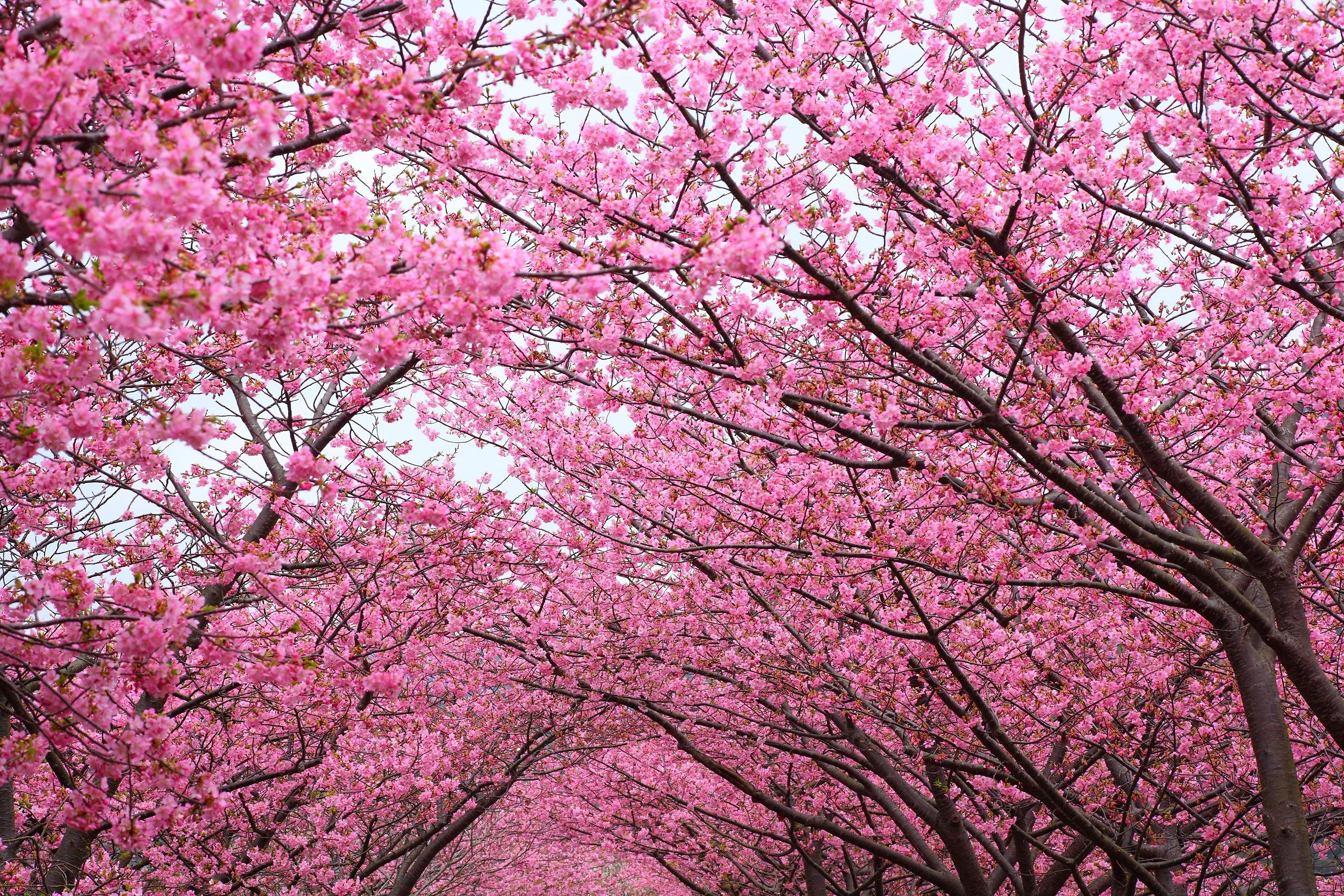
While an individual cherry blossom is a marvel of natural design, their true visual power is unleashed when they appear en masse. The collective impact of thousands, or even millions, of these delicate flowers transforming a landscape is what truly defines the iconic “cherry blossom” experience.
The “Sakura Fog” Phenomenon
When a cherry tree is in full bloom, the sheer density of flowers can create an effect often described as “sakura fog” or a “sea of blossoms.” The individual blooms, while small, are so numerous and clustered that they merge into a cloud-like, ethereal display. The visual effect is one of overwhelming softness and color, where the individual branches and leaves are almost entirely obscured by the floral display. This phenomenon is particularly noticeable in popular viewing spots where numerous trees are planted in close proximity.
The interplay of light through this dense canopy of blossoms is also crucial to the visual experience. Sunlight filtering through the pink and white petals casts a soft, diffused glow, creating a dreamy and almost otherworldly atmosphere. This creates a landscape that feels both vibrant and serene, a powerful contrast that draws people to witness it year after year.
The Ephemeral Nature and Its Visual Significance
A defining characteristic of cherry blossoms is their fleeting lifespan. Typically, a bloom lasts for only a week or two before its petals begin to fall. This ephemeral nature is not just a biological fact; it is a fundamental aspect of their visual narrative and cultural significance.
The visual impact of falling cherry blossoms, known as hanafubuki (flower blizzard), is as profound as their blooming phase. Millions of petals detach from the branches and drift down like snow, carpeting the ground beneath the trees. This creates a transient, dreamlike landscape that emphasizes the preciousness of the moment and the beauty of impermanence. Brands often seek to capture this essence of fleeting beauty and renewal in their visual marketing.
Cherry Blossoms as a Design and Branding Motif
The visual distinctiveness of cherry blossoms—their delicate form, soft colors, and symbolic association with spring, renewal, and transient beauty—makes them a highly sought-after motif in design and branding. Their appeal transcends cultural boundaries, offering a universally understood aesthetic that evokes feelings of grace, optimism, and natural beauty.
Translating Visual Qualities into Brand Identity
When a brand chooses to incorporate cherry blossoms into its identity, it taps into a rich vein of positive associations. The visual elements of the blossom are strategically translated into a brand’s aesthetic:
- Color Palette: Brands often adopt soft pinks, whites, and sometimes even subtle greens in their logos, packaging, and marketing materials. This immediately imbues the brand with a sense of gentleness, purity, and naturalness. For example, a beauty brand might use a soft pink to convey femininity and gentle care, while a tea company might use white and pale pink to evoke freshness and tranquility.
- Form and Silhouette: The delicate curves and petal shapes of cherry blossoms can inspire the design of logos, product shapes, or even architectural elements. A subtle curve suggestive of a petal, or a clustered arrangement of circular elements, can subtly reference the blossom without being overly literal. This is particularly effective for brands aiming for an elegant and sophisticated image.
- Symbolism and Narrative: Beyond the direct visual representation, the symbolism of the cherry blossom—renewal, the transient nature of beauty, new beginnings—is a powerful narrative tool. Brands can leverage this by launching products in spring, using imagery of blossoming trees, or incorporating themes of growth and rejuvenation into their campaigns. This adds a layer of emotional resonance to the brand, connecting with consumers on a deeper level.

Applications Across Industries
The versatility of the cherry blossom as a visual motif allows it to be effectively applied across a wide array of industries:
- Beauty and Cosmetics: The association with delicate skin, natural radiance, and femininity makes cherry blossoms a perennial favorite in the beauty sector. Products often feature floral scents, pink packaging, and imagery of blossoms to convey luxury, freshness, and pampering.
- Food and Beverage: Particularly in confectionery, teas, and seasonal drinks, cherry blossom flavors and aesthetics are highly popular. The visual appeal of pink-hued products and packaging evokes a sense of spring indulgence and delicate sweetness.
- Fashion and Apparel: From haute couture to everyday wear, cherry blossom prints and embellishments are a recurring trend. They add a touch of grace and seasonal relevance to garments, often appearing on dresses, scarves, and accessories.
- Home Decor: Cherry blossom motifs can be found in wallpapers, textiles, and decorative items, bringing a sense of nature’s beauty and a touch of Eastern aesthetic into living spaces.
- Stationery and Gifts: The gentle and elegant nature of cherry blossoms makes them ideal for greeting cards, invitations, and gift wrapping, conveying warmth and thoughtful appreciation.
In essence, the visual language of the cherry blossom—its form, color, and inherent symbolism—provides a powerful and enduring blueprint for brands seeking to communicate elegance, natural beauty, and a sense of optimistic renewal. Understanding what a cherry blossom truly looks like, in all its subtle variations, allows designers and brand strategists to harness its captivating visual appeal with greater precision and impact.
aViewFromTheCave is a participant in the Amazon Services LLC Associates Program, an affiliate advertising program designed to provide a means for sites to earn advertising fees by advertising and linking to Amazon.com. Amazon, the Amazon logo, AmazonSupply, and the AmazonSupply logo are trademarks of Amazon.com, Inc. or its affiliates. As an Amazon Associate we earn affiliate commissions from qualifying purchases.