
In the landscape of personal and business finance, a budget is often misunderstood as a restrictive tool—a financial straightjacket designed to limit spending and stifle enjoyment. However, when viewed through a professional lens, a budget is far from a cage. Instead, it is the most powerful diagnostic and visionary tool at an individual’s or organization’s disposal. It is a comprehensive financial map that translates abstract numbers into a concrete narrative of where you have been, where you are currently standing, and exactly where you are headed.
To understand what a budget truly shows you, one must look beyond the columns of figures. A budget reveals the structural health of your finances, the alignment of your daily habits with your long-term values, and the feasibility of your future aspirations. It is a mirror reflecting the reality of your economic life, stripped of the optimism or denial that often clouds financial decision-making.
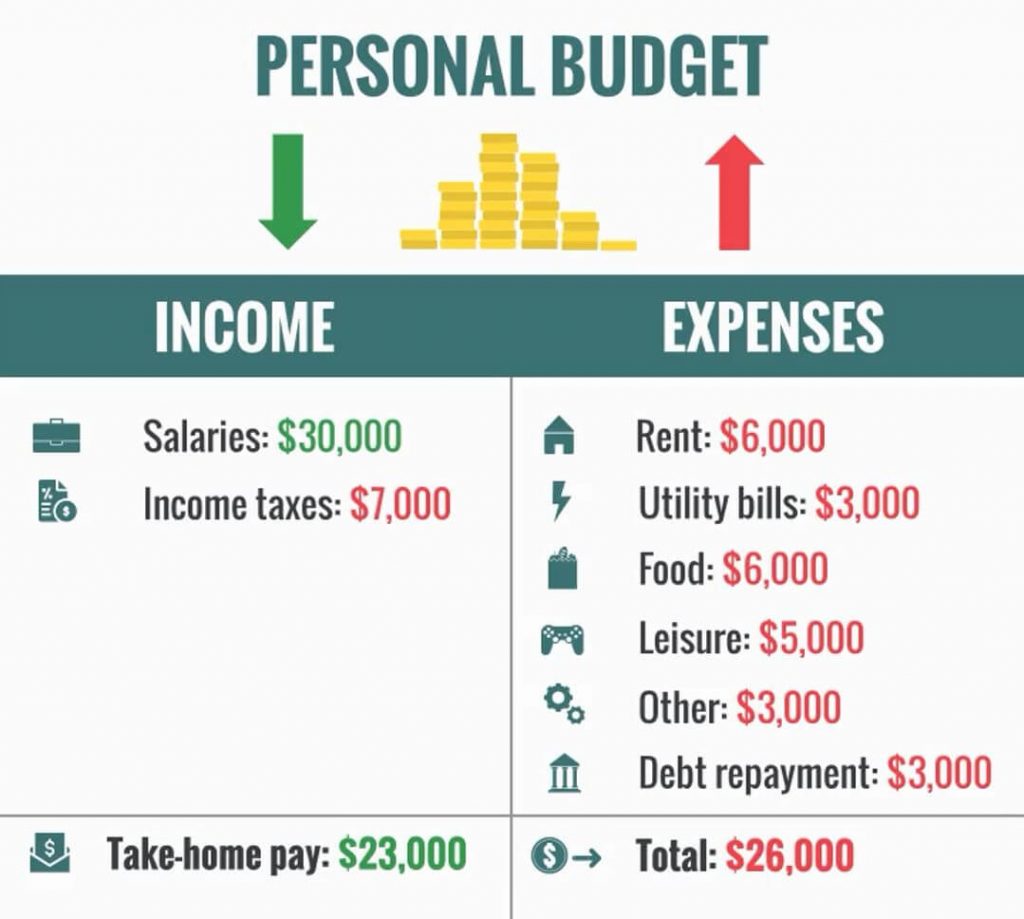
The Diagnostic Power of Cash Flow Analysis
The most immediate insight a budget provides is a clear, unfiltered view of cash flow. While many people believe they have a general sense of their income and expenses, the act of formal budgeting often reveals a significant gap between perception and reality.
Income Realities vs. Expectations
A budget shows you the actual velocity of your income. It distinguishes between gross income and the “disposable” or “discretionary” income that remains after taxes, mandatory deductions, and essential overhead. For many, a budget provides the first real look at how much capital is actually available for wealth-building. It highlights the difference between “making good money” and “having money available,” which are two distinct financial states. By seeing the timing of income—whether it arrives in steady bi-weekly increments or erratic freelance payments—the budget shows you the liquidity risks you may face throughout the month.
Categorizing Fixed vs. Variable Expenditures
A well-structured budget categorizes spending into fixed and variable costs. Fixed costs (mortgage, insurance, subscriptions) are the “burn rate” of your life or business. They represent the minimum amount required to keep the lights on. Variable costs (groceries, entertainment, fuel) represent the flexible portion of your financial life.
What the budget shows you here is your “financial agility.” If your fixed costs consume 80% of your income, the budget is sounding an alarm: you have very little room to maneuver in the event of an economic downturn or a job loss. Conversely, if fixed costs are kept low, the budget reveals a high degree of freedom and a greater capacity for investment.
Tracking the Rate of Savings and Investment
Perhaps most importantly, a budget shows you your “savings rate”—the percentage of your income that is diverted toward the future rather than the present. This single metric is the greatest predictor of long-term wealth. Without a budget, savings often become an afterthought—whatever is left over at the end of the month. A budget turns this on its head, showing you whether you are prioritizing your future self or merely consuming your current earnings.
A Reflection of Behavioral Patterns and Lifestyle Choices
Financial success is often 20% head knowledge and 80% behavior. A budget acts as a behavioral mirror, revealing the psychological undercurrents that drive your spending. It shows you the “why” behind the “what.”
Revealing Lifestyle Creep
“Lifestyle creep” occurs when an increase in income is immediately met by an equal or greater increase in spending. Because these changes happen incrementally, they are often invisible to the naked eye. A budget, especially when compared year-over-year, shows you this trend with brutal honesty. It reveals how the “luxuries” of last year have become the “necessities” of today. By highlighting this trend, the budget gives you the opportunity to consciously decide if these lifestyle upgrades are actually improving your quality of life or if they are simply anchored to your ego.
Uncovering “Leaking” Capital
One of the most profound things a budget shows you is where your money is “leaking.” These are the small, recurring expenses that seem insignificant in isolation but are substantial in the aggregate. It might be the $15 monthly subscription for a service you no longer use, the premium paid for convenience at the grocery store, or the cumulative cost of daily dining out. When these items are totaled over a month or a year, the budget shows you the “opportunity cost.” It illustrates that the $200 a month spent on unused services is actually $2,400 a year that could have been invested in a diversified portfolio or used for a significant life experience.
Aligning Values with Expenditures
Every dollar spent is a vote for the kind of life you want to lead. A budget shows you if your spending is aligned with your stated values. If you claim that travel and education are your top priorities, but your budget shows that the majority of your discretionary income goes toward high-end electronics and designer clothing, there is a fundamental misalignment. The budget provides the data necessary to correct this, allowing you to reallocate resources toward the things that actually bring you fulfillment.
Long-Term Strategic Planning and Risk Assessment

Beyond the day-to-day, a budget is a strategic forecasting tool. It allows you to peer into the future and assess the feasibility of your goals, acting as a stress-test for your financial stability.
The Emergency Fund and Risk Mitigation
A budget shows you exactly how long you can survive without a paycheck. By calculating your “survival number”—the bare minimum required to cover essential expenses—the budget informs the size of your necessary emergency fund. It reveals your vulnerability to “black swan” events. If your budget shows that you are living paycheck-to-paycheck with no margin for error, it is signaling that you are in a state of high financial risk, regardless of how high your income might be.
Projecting Long-term Financial Milestones
Whether you are planning to buy a home, start a business, or retire by age 55, a budget shows you the mathematical path to that goal. It allows for “reverse engineering.” If a down payment on a house requires $60,000 in three years, the budget shows you that you need to find $1,666 per month in your current cash flow. If that margin doesn’t exist, the budget forces a strategic decision: you must either increase your income, decrease your expenses, or extend your timeline. This eliminates the “hope-based” planning that leads to financial failure.
Debt Management and Interest Reduction
For those carrying debt, a budget shows the true cost of borrowing. It highlights how much of your monthly income is being “cannibalized” by interest payments. By visualizing the debt-to-income ratio, the budget shows you the weight of your liabilities. More importantly, it allows you to model different repayment strategies, such as the “debt snowball” or “debt avalanche,” showing you exactly how many months or years you can shave off your repayment timeline by allocating extra funds to the principal.
The Psychology of Financial Clarity and Control
While the data in a budget is objective, the impact on the user is deeply subjective and psychological. The clarity provided by a budget transforms the emotional relationship one has with money.
Reducing Financial Anxiety
A significant portion of financial stress stems from the unknown. People worry about whether they can afford a purchase, whether they will have enough for the mortgage, or if they are “doing okay” compared to their peers. A budget replaces this ambiguity with certainty. Even if the numbers are not ideal, knowing exactly where you stand reduces the ambient anxiety of financial fog. A budget shows you that you have a plan, and having a plan is the primary antidote to panic.
Empowering Decision Making
A budget does not say “no”; it says “not this, but that.” It shows you the trade-offs. When you are presented with a large purchase opportunity, the budget provides the framework to say, “I can afford this, but it will delay my house savings by four months.” This shifts the decision-making process from an emotional impulse to a strategic choice. It grants you the permission to spend guilt-free on the things you have planned for, because you know the essentials and the future are already accounted for.
Fostering Communication and Accountability
In a household or business setting, a budget shows the shared priorities of the group. It serves as a neutral, objective document that facilitates difficult conversations. It moves the discussion from “You spend too much” to “Our budget shows we are exceeding our allocation for dining; how should we adjust?” It creates a culture of accountability where every stakeholder can see the impact of their decisions on the collective financial health.
Tools and Techniques for Continuous Insight
To maintain the insights that a budget provides, one must employ specific methodologies that keep the data fresh and actionable.
Zero-Based Budgeting
This technique involves assigning every single dollar of income a specific job before the month begins. What this shows you is the maximum utility of your money. It ensures that no capital is “lazy” or unaccounted for. By the end of the month, your income minus your expenses (including savings and investments) should equal zero. This provides the most granular level of insight into your financial efficiency.
The 50/30/20 Rule
For those who prefer a more high-level view, the 50/30/20 rule (50% needs, 30% wants, 20% savings/debt) shows you the balance of your lifestyle. If your “needs” category is consistently at 70%, the budget is showing you that you are “house-poor” or “car-poor”—meaning your fixed obligations are too high relative to your income. This insight is crucial for making long-term structural changes, such as downsizing or aggressively seeking a salary increase.

Utilizing Financial Management Software
In the modern era, digital tools have enhanced what a budget can show us. Real-time syncing with bank accounts and credit cards allows for dynamic budgeting. These tools show you trends over time through visual graphs and charts, making it easier to spot seasonal fluctuations (like increased utility bills in summer or higher spending during the holidays). They provide a historical record that acts as a financial diary, showing you how your net worth has evolved over months and years.
Ultimately, what a budget shows you is the truth. It strips away the narratives we tell ourselves about our financial status and presents the mathematical reality of our choices. By providing a clear view of cash flow, behavioral patterns, strategic risks, and psychological stressors, the budget becomes an indispensable partner in the pursuit of financial independence. It is not a record of what you cannot do; it is a roadmap to everything you want to achieve.
aViewFromTheCave is a participant in the Amazon Services LLC Associates Program, an affiliate advertising program designed to provide a means for sites to earn advertising fees by advertising and linking to Amazon.com. Amazon, the Amazon logo, AmazonSupply, and the AmazonSupply logo are trademarks of Amazon.com, Inc. or its affiliates. As an Amazon Associate we earn affiliate commissions from qualifying purchases.