
In the era of the modern smart home, we often focus on the invisible: Wi-Fi mesh networks, cloud-based security protocols, and the seamless integration of AI voice assistants. However, the physical hardware that facilitates our daily lives—specifically the heavy-duty mechanics of the garage door—remains the most critical “legacy tech” in our domestic infrastructure. Among these mechanical components, the garage door spring is the powerhouse.
When a spring fails, it isn’t just a manual inconvenience; it is a system-wide failure that can disrupt your smart home ecosystem, trigger security alarms, and potentially damage the motorized drive units that interface with your digital controllers. Understanding what a broken garage door spring looks like is the first step in predictive maintenance and technical troubleshooting for any tech-savvy homeowner.

The Hardware Architecture: Understanding Torsion vs. Extension Systems
To identify a failure, one must first understand the engineering specifications of the hardware. Garage door springs operate on the principles of potential energy and torque. They are designed to counterbalance the weight of the door (which can range from 150 to 400 pounds), allowing a relatively low-horsepower motor to lift the structure with ease.
The Engineering of Torsion Springs
Torsion springs are the contemporary standard in high-end residential tech. These are heavy-duty metal coils mounted on a metal shaft directly above the garage door opening. When the door closes, cables attached to the bottom corners pull on drums, which in turn wind the springs, storing immense energy.
Visually, a functional torsion spring is a tightly wound, continuous cylinder of steel. In a tech-integrated home, these springs are often rated by “cycles”—usually 10,000 to 20,000. From a technical standpoint, every time your smart hub triggers the “Open Garage” command, you are consuming one cycle of the spring’s mechanical lifespan.
The Mechanics of Extension Springs
Older or more budget-conscious installations utilize extension springs. These are located on the sides of the horizontal tracks, extending along the ceiling. They function by stretching (extending) rather than twisting. While simpler in design, they are considered less efficient and more prone to “catastrophic failure modes” compared to torsion systems. Identifying a break in these requires looking at the tension state of the coils along the tracks.
Visual Diagnostic Signs: Identifying Hardware Failure in the Digital Age
If your smart garage door opener (such as a MyQ or Chamberlain system) reports an “Obstruction Detected” or “Motor Overload” error, the culprit is frequently a mechanical break rather than a software glitch. Before diving into the app settings, a visual inspection of the hardware is necessary.
The Gap: A Clear Indicator of Tensile Failure
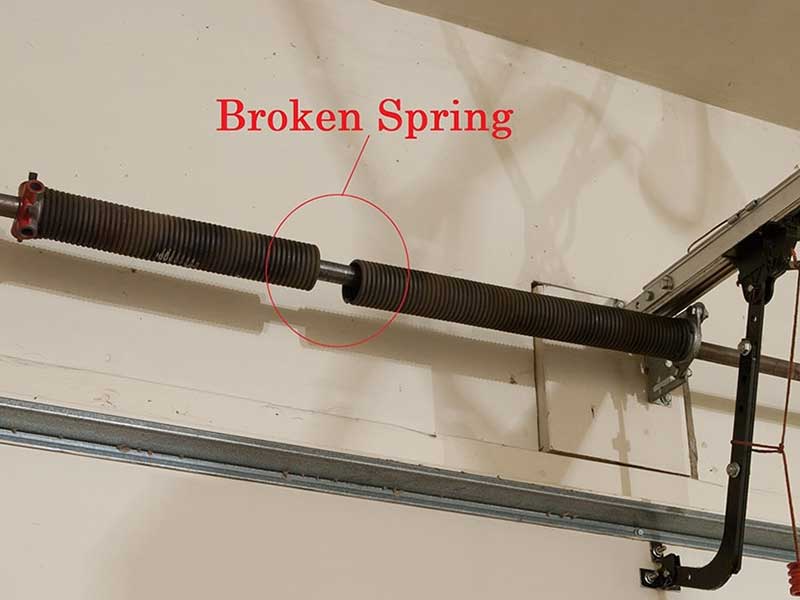
The most recognizable sign of a broken torsion spring is a physical “gap.” Because these springs are under extreme tension, when the steel reaches its elastic limit and snaps, the two halves will recoil away from the break point.
When looking at the metal shaft above your door, you should see a continuous coil. If you see a separation of two to four inches—essentially a “split” in the middle of the spring—the component has failed. This is a binary state: the spring is either functional or broken; there is no middle ground where a snapped spring can be “repaired.” From a hardware replacement perspective, this requires a total swap-out of the coil unit.
Fraying and Deformity: Early Warning Signs for IoT Sensors
For those utilizing high-definition smart cameras (like Nest or Ring) in their garage, you can often spot “pre-failure” indicators. Look for “stretching” in extension springs where the coils no longer sit flush against one another. In torsion springs, look for “rust bleeding” or “pitting” on the surface of the metal.
Rust acts as a corrosive agent that increases friction between the coils, leading to “cycle fatigue.” If your garage door makes a rhythmic “clinking” sound during operation, your smart acoustic sensors are likely picking up the sound of a deformed spring rubbing against the shaft. Visually, this looks like a slight warping or a “snake-like” appearance in the spring’s alignment rather than a straight, crisp cylinder.
Smart Home Integration: Using Technology to Monitor Garage Door Health
The modern approach to home maintenance involves moving from reactive repairs to predictive analytics. We no longer need to wait until we hear a loud “bang” (the literal sound of a spring snapping) to know there is an issue.
AI-Driven Visual Recognition and Camera Monitoring
Newer iterations of home security software are beginning to incorporate AI that can recognize mechanical anomalies. By positioning a smart camera to view the header bracket and the springs, homeowners can use “Time-Lapse” features to observe if the door is beginning to sag or if the springs are showing signs of elongation over months of use.
Furthermore, if you notice your garage door “jerking” in the video feed, it is a sign that the spring is no longer providing a smooth counterbalance. A door that is out of balance puts a massive strain on the opener’s logic board and motor, often leading to a secondary electronic failure if the mechanical issue isn’t addressed.
Acoustic Sensors and Predictive Maintenance Algorithms
One of the most exciting developments in smart home tech is the use of vibration and acoustic sensors. Companies are developing “health monitors” for appliances that “listen” to the frequency of the motor. A broken or failing spring changes the load on the motor, which in turn changes the “pitch” of the garage door’s operation.
A smart system can alert your smartphone if the motor is drawing more amperage than usual. In the world of tech, a “high amp draw” is a leading indicator that the mechanical counterbalance (the spring) is failing to do its job, forcing the electrical system to compensate.
Digital Security and Safety Protocols for Repair
When a spring breaks, it is not just a mechanical issue; it becomes a security vulnerability. A garage door with a broken spring can often be forced open more easily by intruders, or conversely, it may become “deadlocked,” preventing the homeowner from accessing their primary entry point during a power outage or system failure.
Why Software Can’t Fix a Mechanical Break
It is a common pitfall for modern users to attempt to “recalibrate” their smart openers when the door won’t open. They may try to increase the “Force Limits” in the app settings. This is a dangerous practice. If the spring is broken, increasing the motor force is essentially trying to use electricity to bypass a fundamental physics failure. This can lead to the motor burning out or, worse, the door crashing down because the safety cables are the only thing holding it up.
From a tech safety standpoint, if you identify a broken spring, you should immediately put your smart opener into “Manual Mode” or “Locked Mode” via the app and disconnect the power to ensure no one attempts to operate the door remotely.
Integrating Safety Sensors with Smart Hubs
A broken spring often causes the door to sit “crooked” in the tracks. This misalignment can interfere with the infrared safety “eyes” at the bottom of the door. If your smart home dashboard shows that the garage door is “Partially Open” or “Blocked,” but you see no physical obstruction on the floor, look up.
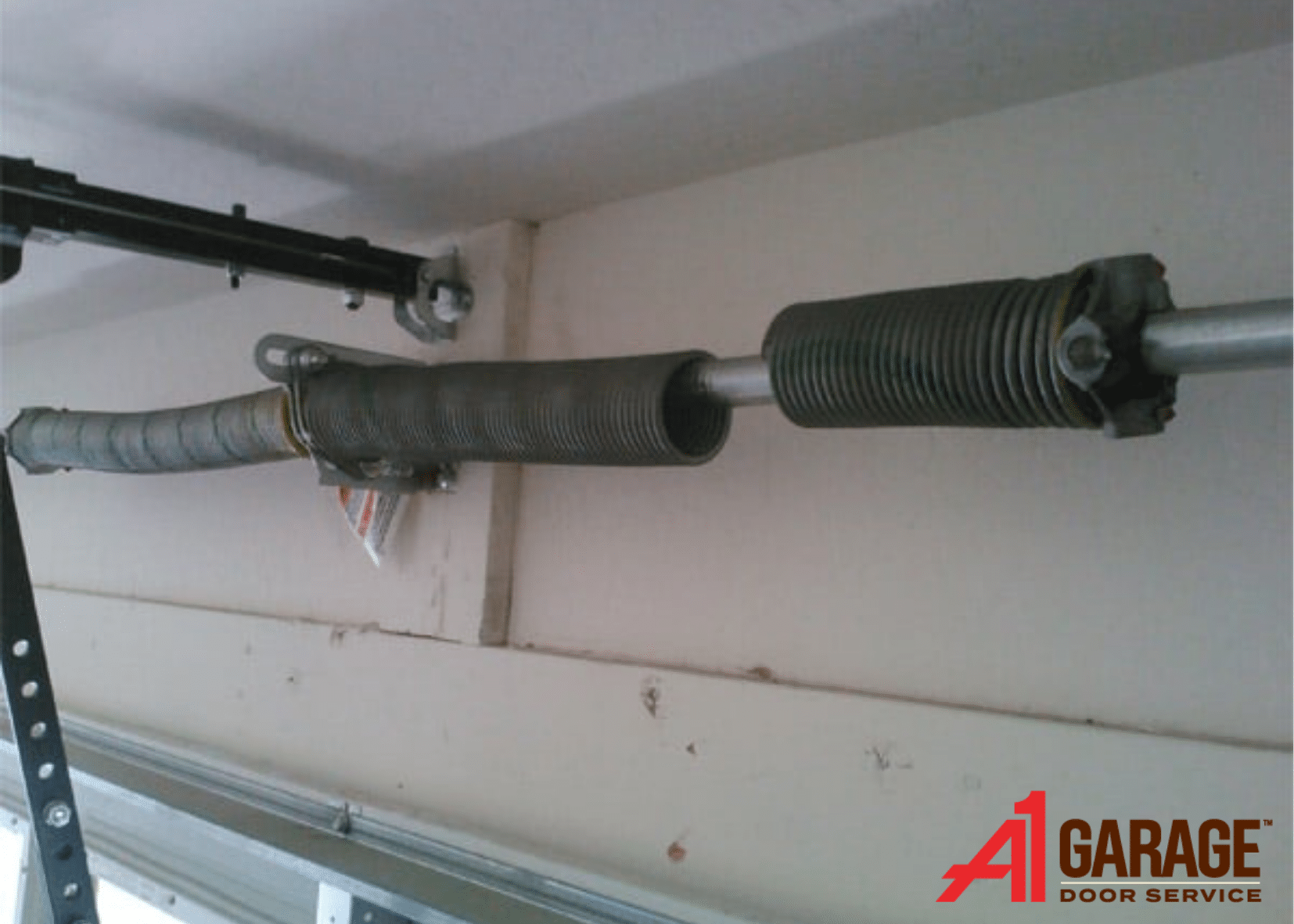
A snapped spring often causes the cables to lose tension and jump off their drums, which tilts the door just enough to misalign the sensors. This is a classic example of how a mechanical hardware failure cascades into a digital system error.
Conclusion: The Synergy of Mechanics and Technology
Identifying a broken garage door spring—looking for that tell-tale gap, the frayed coils, or the lopsided door—is an essential skill for the modern homeowner. While we live in an increasingly digital world, the “Tech” of our homes still relies on the “Tools” of mechanical engineering.
By leveraging smart cameras, monitoring motor load through apps, and performing regular visual inspections of the torsion and extension systems, you can ensure that your home’s largest moving part remains functional. Treat your garage door hardware with the same diagnostic rigor you would apply to a server rack or a high-end PC build. In the end, a smart home is only as reliable as its strongest spring.
aViewFromTheCave is a participant in the Amazon Services LLC Associates Program, an affiliate advertising program designed to provide a means for sites to earn advertising fees by advertising and linking to Amazon.com. Amazon, the Amazon logo, AmazonSupply, and the AmazonSupply logo are trademarks of Amazon.com, Inc. or its affiliates. As an Amazon Associate we earn affiliate commissions from qualifying purchases.