
When exploring the mechanics of modern recreational shooting simulations, the question of “what does an airsoft gun shoot” serves as the gateway into a sophisticated world of material science, fluid dynamics, and electronic engineering. While a cursory glance might suggest a simple plastic pellet, the reality is a precision-engineered sphere designed to interact with complex internal propulsion systems. To understand what an airsoft gun shoots, one must look beyond the projectile and analyze the technological ecosystem that allows these devices to achieve remarkable accuracy and consistency.
The Material Science of the Airsoft Projectile
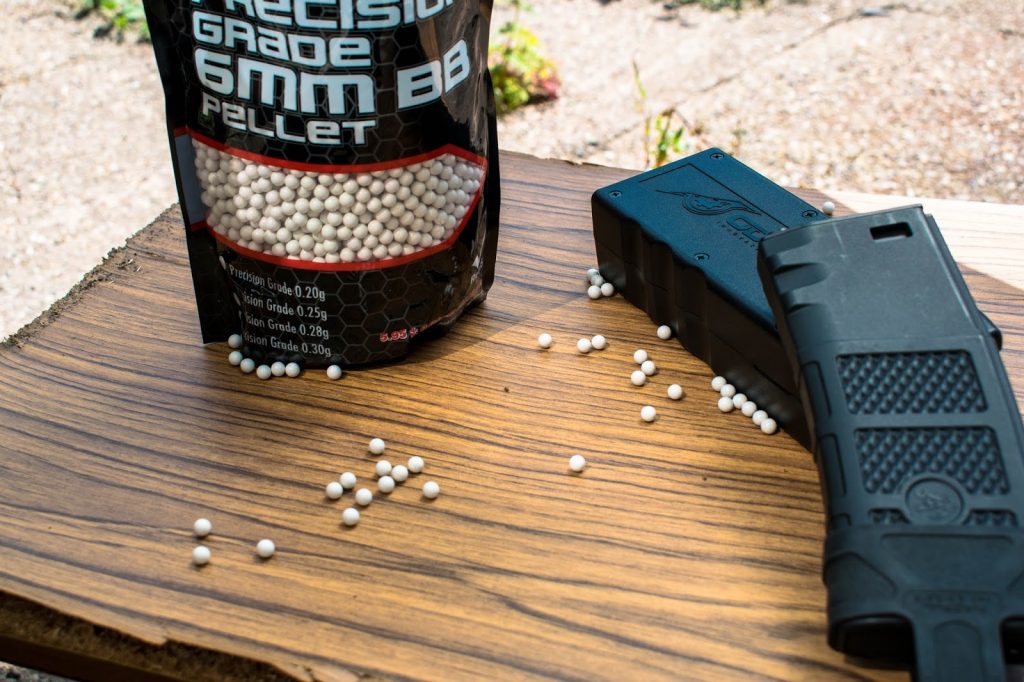
At the heart of the airsoft experience is the 6mm BB (Ball Bearing). However, the term “plastic pellet” fails to capture the high-tolerance manufacturing required for modern tech-driven gameplay. The projectile is a marvel of industrial molding, designed to meet specific aerodynamic and environmental standards.
Composition and Weight Distributions
Standard airsoft projectiles are typically composed of thermoplastic polymers or resin. The density of the material is adjusted during the manufacturing process to create various weight classes, ranging from 0.12 grams to 0.48 grams or higher. In the tech niche, weight is a critical variable: a heavier BB retains kinetic energy more efficiently and resists wind deflection, but requires more sophisticated pneumatic force to launch. High-end “heavyweight” BBs often use a blend of plastic and metallic powders to achieve density without increasing the 6mm diameter, ensuring they remain compatible with precision inner barrels.
Biodegradable vs. Non-Biodegradable Polymers
As environmental regulations evolve, the technology behind the “bio-BB” has become the industry standard. These projectiles are often made from Polylactic Acid (PLA), a biodegradable thermoplastic derived from renewable resources like corn starch. The engineering challenge here is ensuring the BB remains shelf-stable and perfectly spherical while in storage, yet breaks down efficiently when exposed to soil microbes and moisture. Achieving a polished, seamless finish on a biodegradable substrate is a testament to modern chemical engineering.
Tracers and Specialized Pellets
The integration of optoelectronics has led to the development of “Tracer BBs.” These are infused with phosphor, which absorbs UV light. When fired through a “Tracer Unit” (a specialized muzzle device containing high-speed LED sensors and strobes), the projectile becomes phosphorescent, allowing the shooter to track the flight path in low-light environments. This synergy between chemistry and electronics highlights the high-tech nature of modern airsoft ammunition.
Propulsion Systems: The Tech That Drives the Shot
An airsoft gun does not just “shoot”; it manages air displacement through various mechanical and electronic means. The projectile is merely the output of a highly tuned system of energy conversion.
AEGs (Automatic Electric Guns) and Gearbox Precision
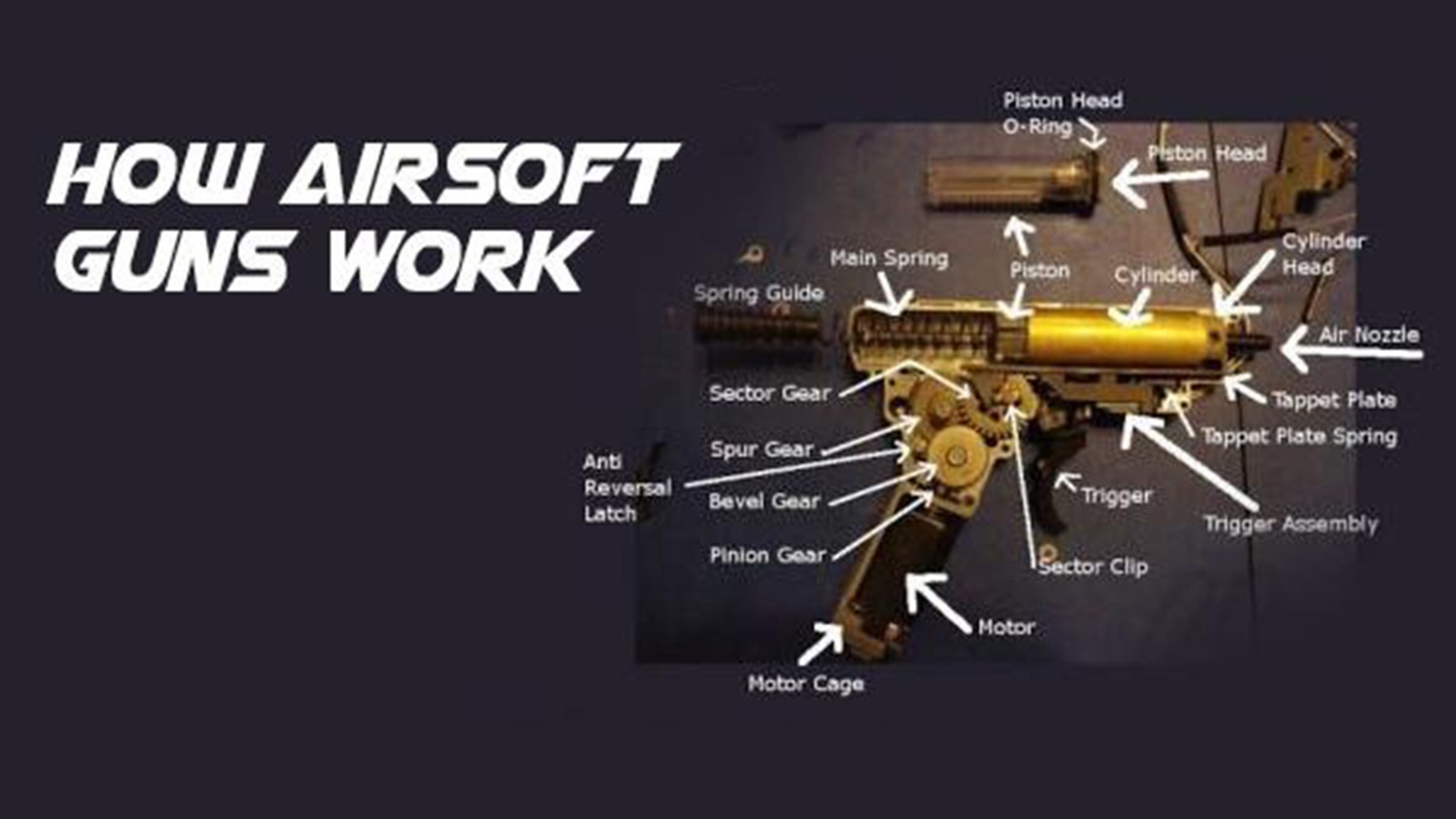
The most common technology in the field is the Automatic Electric Gun (AEG). This system relies on a battery-powered DC motor that drives a series of reinforced steel gears. These gears retract a piston against a heavy spring; when the gear cycle completes, the spring snaps the piston forward into a cylinder, compressing air and forcing it through a nozzle to launch the BB.
The tech behind these gearboxes has seen a massive shift toward “Sector Gear” optimization and high-torque motors. Modern AEGs often utilize CNC-machined components with tolerances measured in microns, ensuring that every shot receives the exact same volume of compressed air, which is the key to shot-to-shot consistency.
Gas Blowback (GBB) and Pneumatic Principles
For those seeking mechanical realism, Gas Blowback technology utilizes pressurized refrigerants (often referred to as Green Gas) or CO2. The tech here is centered on the “Expansion Valve” and “Blowback Housing.” When the hammer strikes the output valve, a burst of gas is released. A portion of this gas propels the BB, while a secondary valve redirects gas to cycle the slide or bolt. This requires intricate knowledge of fluid dynamics to ensure that the gas expansion remains consistent across varying ambient temperatures, a common hurdle in pneumatic engineering.
High-Pressure Air (HPA) and Programmable Solenoids
The pinnacle of airsoft propulsion technology is High-Pressure Air (HPA). These systems replace internal gears or gas tanks with an external regulated air bottle. The “engine” inside the gun consists of an electronically controlled solenoid. This is where airsoft meets computer science; players can use Fire Control Units (FCUs) to program the dwell (how long the valve stays open) and the rate of fire via an LCD interface or even a smartphone app connected via Bluetooth. This level of customization allows for near-perfect air volume matching to the barrel length, maximizing the efficiency of the projectile’s flight.
The Physics of the Flight Path: Hop-Up Technology
What an airsoft gun shoots is fundamentally limited by physics, specifically the Magnus Effect. Without spin, a round 6mm projectile would have a limited effective range. To counter this, airsoft technology employs the “Hop-Up” system.
The Magnus Effect in Airsoft
The Hop-Up is a chamber containing a small rubber “bucking.” As the BB is pushed into the barrel, it passes under this rubber protrusion, which applies backspin. As the BB flies, the backspin creates a pressure differential—lower pressure above the ball and higher pressure below it—generating lift. This allows the projectile to maintain a flat trajectory for much longer than a non-spinning object would.
Advancements in Bucking and Nub Design
The “tech” of the Hop-Up has moved toward R-Hop and Flat-Hop configurations. Instead of a single point of contact, these systems use a larger surface area of specialized silicone or rubber to grip the BB more consistently. By increasing the friction surface, the system can apply a more stable spin with less downward pressure, reducing the velocity loss and increasing the “effective” range of the 6mm projectile to distances exceeding 70 meters.
Precision Inner Barrels
The BB travels through a “tight-bore” or “wide-bore” inner barrel, usually made of stainless steel or brass. Technology in barrel manufacturing focuses on the “straightness” and the internal finish (lapping). A 6.01mm tight-bore barrel maximizes the air seal around the 6mm BB, increasing velocity, whereas a 6.20mm wide-bore barrel focuses on creating an “air cushion” around the BB to prevent it from bouncing against the barrel walls, which enhances long-range accuracy.
Safety and Testing Hardware: Chronographs and Smart Tech
Because airsoft involves launching projectiles at high velocities, the technology used to measure and regulate these shots is just as important as the guns themselves.
Measuring Joules and Velocity
The industry-standard tool for this is the Chronograph. This device uses infrared sensors to measure the time it takes for a projectile to pass two points, calculating the velocity (FPS – Feet Per Second). However, the tech has moved toward “Joule-based” measuring. Since Kinetic Energy = 1/2mv², modern chronographs allow users to input the BB weight to ensure that the energy output remains within safe limits, regardless of whether a player is using light or heavy ammunition.
Integrated MOSFETs and Smart Trigger Systems
The “intelligence” of the airsoft gun is often found in the MOSFET (Metal-Oxide-Semiconductor Field-Effect Transistor). This electronic component acts as a high-speed switch, diverting the high current of the battery away from the mechanical trigger contacts and directly to the motor. Advanced Optical MOSFETs use infrared sensors to detect the exact position of the gears and the trigger pull. This prevents “half-cycles” and allows for programmable features like burst fire, pre-cocking (holding the piston back for instantaneous trigger response), and battery protection circuits.

Conclusion
To answer “what does an airsoft gun shoot” is to describe a convergence of high-level engineering disciplines. It is not merely a plastic ball; it is a precisely weighted aerodynamic projectile launched by a system of programmable solenoids, high-torque motors, and sophisticated pneumatic chambers. From the chemical composition of biodegradable polymers to the Bluetooth-enabled fire control units that dictate the air volume of every shot, airsoft has evolved into a high-tech pursuit. The projectile is simply the final expression of a complex mechanical and electronic process designed to push the boundaries of accuracy, safety, and simulation.
aViewFromTheCave is a participant in the Amazon Services LLC Associates Program, an affiliate advertising program designed to provide a means for sites to earn advertising fees by advertising and linking to Amazon.com. Amazon, the Amazon logo, AmazonSupply, and the AmazonSupply logo are trademarks of Amazon.com, Inc. or its affiliates. As an Amazon Associate we earn affiliate commissions from qualifying purchases.