
In the landscape of modern higher education, the Advanced Placement (AP) program is often marketed as a badge of academic rigor. However, for the financially savvy student and their family, an AP exam is more than a test—it is a financial instrument. When a student receives their scores in July, the most common number they encounter is a “3.” To the uninitiated, this might look like a mediocre grade, perhaps a “C” in a traditional classroom setting. But in the world of personal finance and strategic education planning, a 3 carries a specific, multifaceted value.

Understanding what a 3 means from a financial perspective requires looking past the score report and into the ledgers of bursar offices across the country. This article explores the economic implications of earning a 3 on an AP exam, analyzing how it translates to tuition savings, its impact on the return on investment (ROI) of a high school education, and its role in long-term wealth building.
The Financial Value of a “3”: Understanding the Passing Threshold
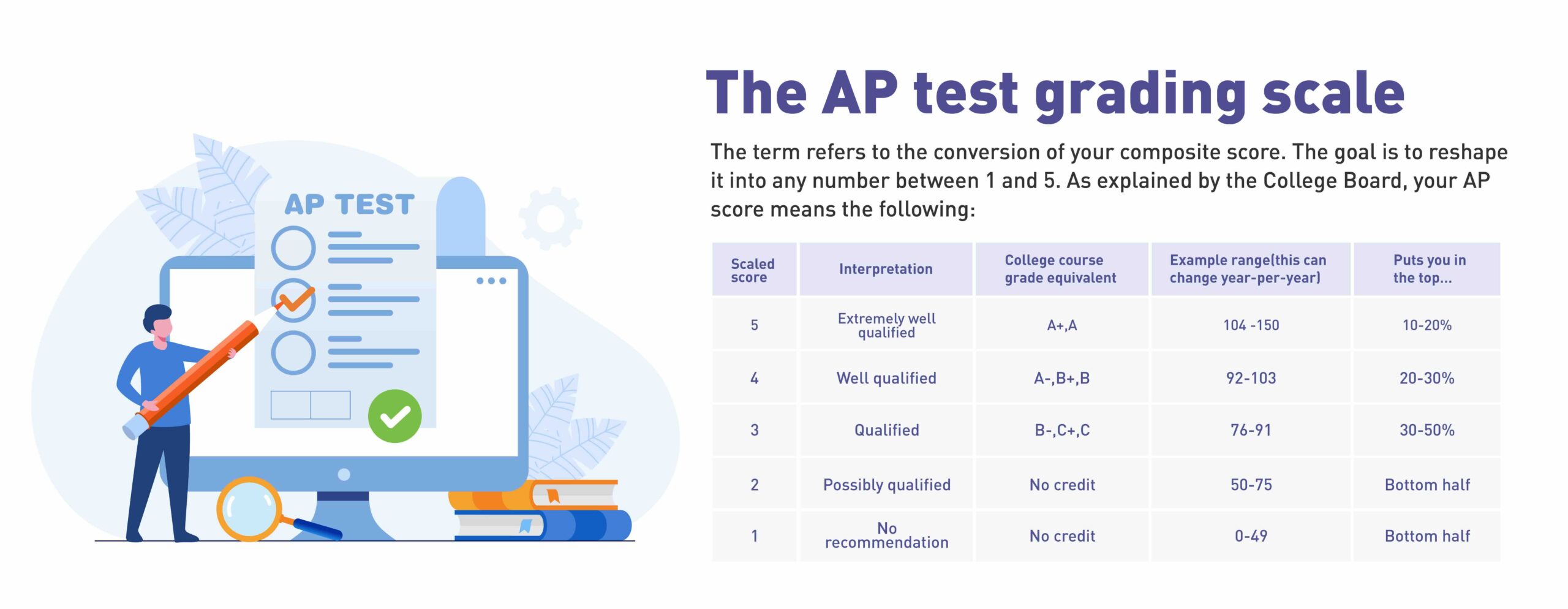
The College Board defines a score of 3 as “qualified.” This is the critical threshold where the exam transitions from a mere educational exercise into a financial asset. While scores of 4 (well-qualified) and 5 (extremely qualified) are often the targets of high-achieving students, the 3 is the most significant number for the average student’s balance sheet because it represents the minimum “passing” score for the majority of state-funded institutions.
Decoding the College Board’s Scaling System
To understand the value of a 3, one must understand how it is priced. The College Board scales scores from 1 to 5. A 3 indicates that a student has demonstrated a level of proficiency comparable to a student who has completed the equivalent college-level course with a passing grade. From a business perspective, the College Board is effectively certifying that the student has “purchased” the knowledge equivalent to 3 or 4 credit hours at a university, provided the institution recognizes that certification.
The Threshold for College Credit: When a 3 Pays Off
The real-world financial value of a 3 depends entirely on the credit policy of the target university. In many state university systems—such as those in Florida, Texas, and California—legislation often mandates that public institutions grant credit for a score of 3. In these scenarios, a 3 is financially identical to a 5.
For example, if a student at a state university earns a 3 on the AP Psychology exam and receives three credit hours, they have effectively “saved” the cost of one course. With the average cost per credit hour at public four-year institutions hovering around $300 to $500, a single score of 3 can represent a direct savings of $900 to $1,500. At private institutions, where credit hours can cost upwards of $1,500 each, the stakes are even higher, although these schools often set the bar for credit at a 4 or 5.
Cost-Benefit Analysis: The Investment vs. The Return
When evaluating the “worth” of a 3, we must apply a rigorous cost-benefit analysis. Like any investment, the AP exam requires an upfront capital outlay—the registration fee. For the 2023-2024 academic year, the standard fee is $98 per exam.
Registration Fees vs. Potential Tuition Savings
The ROI of an AP exam is staggering when compared to other financial investments. If a $98 investment (the exam fee) yields $1,500 in tuition savings (the cost of a 3-credit course), the return is approximately 1,430%. Even if the student spends an additional $100 on prep books or tutoring, the ROI remains significantly higher than almost any traditional market investment.
For students from low-income households, the financial proposition is even more favorable. The College Board offers fee reductions, and many states cover the remaining costs, bringing the out-of-pocket investment down to nearly zero. In this context, a score of 3 is not just a passing grade; it is a wealth-transfer mechanism that allows students to bypass thousands of dollars in future debt.
Opportunity Cost and Early Graduation
The financial utility of a 3 extends beyond direct tuition savings; it also addresses opportunity cost. Earning credit for several exams with scores of 3 can shave a full semester, or even a year, off a four-year degree.
Graduating a semester early provides a dual financial benefit:
- Reduced Expenses: Saving on a semester’s worth of room, board, and auxiliary fees, which can total $10,000 to $15,000.
- Accelerated Earnings: Entering the workforce six months earlier. If a graduate starts a job with a $60,000 annual salary, graduating a semester early adds $30,000 in gross income to their lifetime earnings that they otherwise would not have had.

In this light, a series of 3s on AP exams can be the catalyst for a $45,000 swing in a student’s net worth by age 22.
Impact on Financial Aid and Scholarship Portfolios
A score of 3 also plays a tactical role in a student’s broader financial aid strategy. While elite merit scholarships often look for 4s and 5s, the 3 serves as a foundational element of a “rigorous” transcript, which is a key metric in the algorithms used by many university financial aid offices to determine institutional aid.
Institutional Aid and Academic Standing
Many colleges use a “Matrix” approach to awarding merit aid, combining GPA and standardized test scores. While AP scores are not always a direct component of these matrices, they bolster the “weighted GPA.” A student who takes five AP exams and scores 3s across the board demonstrates the ability to handle college-level work. This lowers the perceived “risk” for the university, making the student a more attractive candidate for institutional grants. From a financial planning perspective, these grants are “free money” that reduces the need for high-interest student loans.
External Scholarships and Competitiveness
For external scholarship committees—especially those focused on community foundations or specific vocational tracks—a 3 is often viewed as a mark of success. It indicates that the student met the national standard for college proficiency. When applying for “niche” scholarships that may only award $1,000 or $2,000, having a portfolio of passing AP scores (including 3s) can be the deciding factor that pushes a student into the winner’s circle. In the aggregate, these small wins significantly reduce the “Net Price” of attendance.
Maximizing the Financial Utility of Your AP Score
To extract the maximum financial value from a 3, a student must act like a savvy portfolio manager. Not all 3s are created equal, and their value fluctuates based on the “market” (the specific college’s credit policy).
Navigating Transfer Credit Policies
The first step in a financial post-game analysis of a score of 3 is to use tools like the College Board’s “AP Credit Policy Search.” A student might find that University A grants “General Elective” credit for a 3 in AP World History, while University B grants “Subject Specific” credit that fulfills a core graduation requirement.
Subject-specific credit is financially superior. If a 3 allows a student to skip “Intro to History,” they have cleared a hurdle toward graduation. If it only counts as an elective, they may still have to pay for the required history course later. Therefore, the “mean” of a 3 is context-dependent; its value is maximized when it displaces a mandatory expense.
Strategic Retakes and Course Placement
In some cases, a student might consider the financial implications of not taking the credit associated with a 3. This is common in “laddered” subjects like Calculus or Chemistry. If a student earns a 3, they are technically qualified to move to the next level. However, if their foundational knowledge is shaky, they risk failing the subsequent, more expensive college course.
From a financial risk management perspective, it is sometimes wiser to “refuse” the credit for a 3 and retake the class in college to ensure a high GPA, which is often a requirement for maintaining certain scholarships. Losing a $20,000 annual scholarship because of a GPA dip caused by over-accelerating is a poor financial move. Thus, the 3 provides an option—and in finance, options have intrinsic value even if they are not exercised.
Conclusion: The “Qualified” Score as a Financial Lever
Ultimately, what does a 3 on an AP exam mean? It means a student has successfully navigated a college-level curriculum and earned a credential that has tangible cash value. While it may not carry the prestige of a 5 in academic circles, in the realm of personal finance, a 3 is a workhorse. It is a tool for debt reduction, a catalyst for early workforce entry, and a stabilizer for scholarship eligibility.
For the student holding a score of 3, the message is clear: you have passed the threshold of “qualified.” You have turned a $98 fee into a potential four-figure saving. By strategically applying that score to the right institution and the right degree plan, a 3 becomes more than just a grade—it becomes a strategic advantage in the high-stakes economy of higher education. Whether it’s used to skip a redundant course or to bolster a scholarship application, the 3 is a fundamental building block of a cost-effective college strategy.
aViewFromTheCave is a participant in the Amazon Services LLC Associates Program, an affiliate advertising program designed to provide a means for sites to earn advertising fees by advertising and linking to Amazon.com. Amazon, the Amazon logo, AmazonSupply, and the AmazonSupply logo are trademarks of Amazon.com, Inc. or its affiliates. As an Amazon Associate we earn affiliate commissions from qualifying purchases.