
In the world of real estate and personal finance, measurements are more than just physical dimensions; they are indicators of value, potential revenue, and tax liability. When we ask, “What does 100 square feet look like?” we are often envisioning a standard 10×10 room. However, through the lens of a financial professional or an investor, 100 square feet represents a “unit of opportunity.” Whether it is a micro-apartment in Manhattan, a storage unit in the suburbs, or a dedicated home office for tax purposes, this specific footprint is a critical benchmark in modern economic strategies.
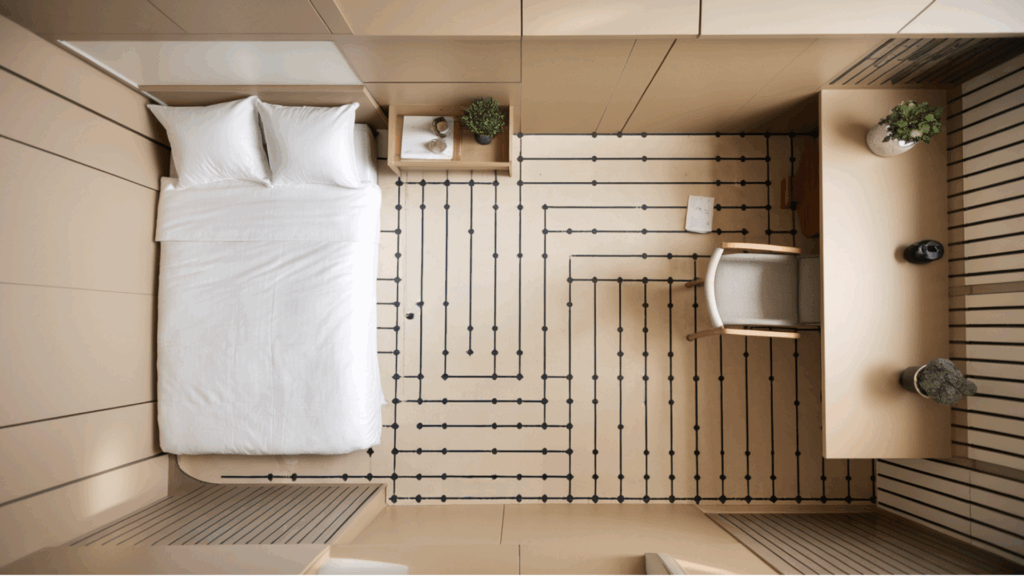
Understanding the visual and financial scale of 100 square feet is essential for anyone looking to optimize their personal balance sheet or launch a lean business venture. This article explores the fiscal implications of this footprint, from investment yields to tax strategies and cost-management.
The Economics of Micro-Living and Urban Real Estate Investment
For most individuals, 100 square feet is roughly the size of a standard master bathroom or a very small bedroom. In high-density urban markets like New York, London, or Hong Kong, however, this space constitutes a significant portion of a “micro-apartment.” From an investment perspective, the cost-per-square-foot in these areas makes 100 square feet a high-stakes financial asset.
Understanding Cost-Per-Square-Foot in High-Density Markets
The financial viability of a property is often dictated by its price per square foot (PPSF). In premium markets, where PPSF can range from $1,000 to $5,000, 100 square feet represents a capital allocation of $100,000 to $500,000. For an investor, the goal is to maximize the “yield per inch.”
When you visualize a 10×10 space, you are looking at the frontier of urban densification. Investors are increasingly moving toward “co-living” models where 100-square-foot private modules are rented out, while kitchens and living areas are shared. This model significantly increases the Gross Rental Yield compared to traditional multi-bedroom apartments, as the “rent per square foot” is much higher for smaller, private units.
The Rise of the Micro-Apartment as an Investment Asset
Micro-apartments—units often totaling between 200 and 350 square feet—rely on the 100-square-foot living zone as their core. For the personal finance-conscious individual, living in such a space is a strategic move to reduce fixed overhead. By minimizing the physical footprint, one can significantly lower monthly rent or mortgage payments, allowing for a higher savings rate and more aggressive investment in liquid assets like stocks or bonds.
From the developer’s side, 100-square-foot increments are the building blocks of profitability. The efficiency of a floor plan—how much of the 100 square feet is “usable” versus “dead” space (like hallways)—directly impacts the internal rate of return (IRR) for the project.
Monetizing the Minimal: Business Models for Small Spaces
Beyond residential living, 100 square feet serves as a foundational unit for several high-margin business models. In business finance, the goal is to keep “fixed costs” low while maximizing “revenue per square foot.”
Storage Unit Arbitrage and Passive Income
The self-storage industry has become a darling of Wall Street because of its low overhead and consistent cash flow. A standard 10×10 storage unit—exactly 100 square feet—is the most popular size in the industry. For a small investor, owning or managing these units offers a unique form of real estate exposure without the complexities of residential tenancies.
The financial beauty of the 100-square-foot storage unit lies in the “replacement cost” versus “rental income.” These units require no plumbing, minimal electricity, and very little maintenance. In many suburban markets, a 10×10 unit can rent for $150 to $250 per month. When scaled across a facility, the profit margins often exceed those of traditional commercial office spaces.
Kiosk and Pop-Up Retail: High Traffic, Low Overhead
In the world of retail marketing and business finance, 100 square feet is the “sweet spot” for kiosks and pop-up shops. A 10×10 booth in a high-traffic shopping mall or transit hub allows a brand to test a market with minimal capital expenditure (CapEx).
By operating within a 100-square-foot footprint, a business can avoid the massive “triple net” (NNN) leases associated with large retail storefronts. This lean approach allows for higher agility; if a location isn’t profitable, the 100-square-foot setup can be struck and moved with minimal loss. For the entrepreneur, this is a lesson in financial risk mitigation: start small, prove the concept in 100 square feet, and scale only when the ROI is proven.

Tax Implications and Home Office Deductions
For the freelancer, remote worker, or small business owner, 100 square feet is a significant number when it comes to the Internal Revenue Service (IRS) and tax planning. The way you categorize this space can lead to substantial annual savings.
The IRS Simplified Option for 100-Square-Foot Spaces
The IRS offers a “simplified option” for the home office deduction. Currently, this allows taxpayers to deduct $5 per square foot of their home used for business, up to a maximum of 300 square feet. A 100-square-foot dedicated office space results in a straight $500 deduction with minimal record-keeping.
However, for those in high-cost-of-living areas, the “regular method” may be more financially advantageous. If your 100-square-foot office represents 10% of your 1,000-square-foot home, you can deduct 10% of your total mortgage interest, utilities, insurance, and home maintenance. In a scenario where annual home expenses total $30,000, that 100-square-foot space translates into a $3,000 tax deduction. Visualizing 100 square feet in this context isn’t just about furniture; it’s about identifying a “tax-advantaged zone” within your own home.
Calculating ROI on Home Improvements for Small Spaces
When a homeowner decides to renovate a small space—say, a 100-square-foot attic conversion or a shed-to-office project—the financial focus should be on the “Value-Add.” Real estate data suggests that adding functional square footage provides one of the highest returns on investment.
If the average home value in your neighborhood is $300 per square foot, adding a high-quality 100-square-foot finished space could theoretically add $30,000 to your home’s appraisal value. If the renovation cost is $15,000, you have achieved a 100% ROI on that specific footprint. This is a crucial calculation for anyone using real estate as a vehicle for wealth accumulation.
The Opportunity Cost of Physical Space in a Digital Economy
In modern business finance, we must also consider the “opportunity cost” of physical space. Every 100 square feet of a warehouse or office that is filled with clutter or unused inventory represents “trapped capital.”
Physical Inventory vs. Dropshipping: A Financial Comparison
For e-commerce entrepreneurs, the 100 square feet of their garage or spare room used for inventory is a physical manifestation of their “carrying costs.” In the traditional retail model, you pay for the space to hold goods. In the dropshipping or “just-in-time” (JIT) manufacturing model, you eliminate the need for those 100 square feet of storage.
From a financial perspective, the money saved on the rent, climate control, and insurance for that 100 square feet can be redirected into digital marketing or R&D. When visualizing 100 square feet, a savvy business owner sees it either as a tool for generating revenue or a liability that needs to be eliminated through leaner operational processes.
Strategic Minimalism: Reducing Fixed Costs for Scalability
The “Financial Independence, Retire Early” (FIRE) movement often advocates for strategic minimalism. The core philosophy is that by reducing the physical footprint of your life—downsizing from a 2,500-square-foot home to a more efficient space—you are essentially “buying back” your time.
If you can live or work comfortably by optimizing 100-square-foot zones rather than sprawling out, the reduction in property taxes, heating/cooling costs, and maintenance creates a “surplus” in your monthly cash flow. This surplus, when compounded in an index fund over 20 years, can be the difference between a traditional retirement age and retiring a decade early.
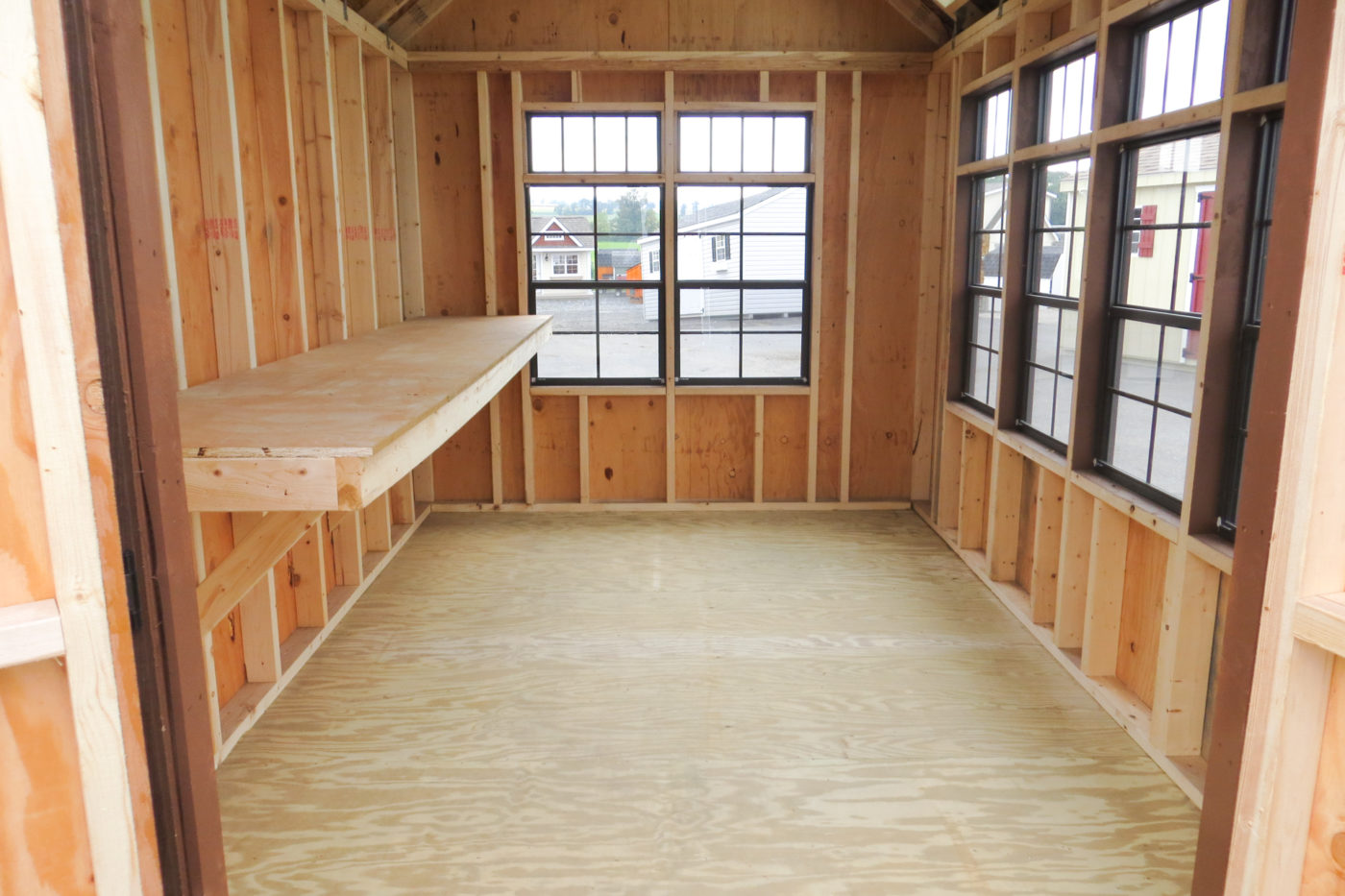
Conclusion: Mastering the 100-Square-Foot Metric
What does 100 square feet look like? Physically, it is a modest square. Financially, it is a multifaceted asset. It is a $500 tax deduction, a $200-a-month passive income stream from a storage unit, or a $30,000 increase in home equity.
By understanding the economic weight of this specific footprint, investors and individuals can make more informed decisions about where they live, how they work, and how they allocate their capital. In the economy of the future, where space is increasingly at a premium, the ability to maximize the utility and profitability of every 100 square feet is a vital financial skill. Whether you are measuring a new office, an investment property, or a retail kiosk, remember that you aren’t just looking at floor space—you are looking at your bottom line.
aViewFromTheCave is a participant in the Amazon Services LLC Associates Program, an affiliate advertising program designed to provide a means for sites to earn advertising fees by advertising and linking to Amazon.com. Amazon, the Amazon logo, AmazonSupply, and the AmazonSupply logo are trademarks of Amazon.com, Inc. or its affiliates. As an Amazon Associate we earn affiliate commissions from qualifying purchases.