
In the landscape of modern technology, sound is often an undervalued metric. We focus on screen resolution, processing speed, and battery longevity, yet the auditory experience defines a significant portion of our interaction with the digital world. When we ask, “What does 95dB sound like?” we are not just asking for a sensory description; we are diving into the complex intersection of physics, hardware engineering, and digital signal processing.
The decibel (dB) is a logarithmic unit used to measure the intensity of a sound. Because it is logarithmic, a small increase in the number represents a massive increase in actual sound pressure. To understand 95dB, one must first recognize that it sits at a critical threshold—it is the point where sound transitions from “loud” to “potentially hazardous,” and where consumer technology must balance performance with safety.

The Technical Measurement of Sound Intensity
To comprehend 95dB from a technological perspective, we must look at how sound pressure level (SPL) is calculated and captured. Unlike linear measurements like height or weight, the decibel scale reflects how our ears perceive pressure changes in the air.
The Logarithmic Nature of Audio Data
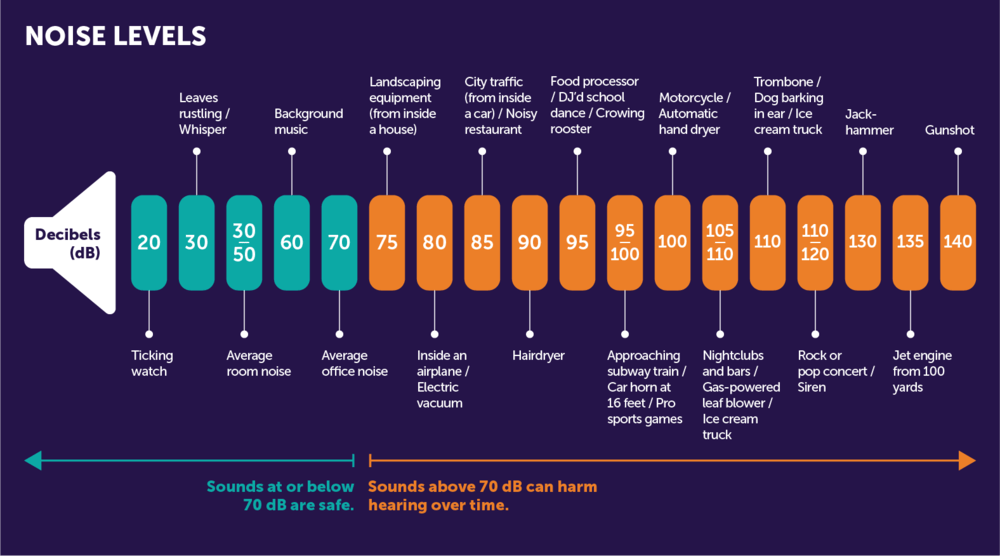
In the world of software engineering and audio production, the logarithmic scale is essential. An increase of 10dB represents a tenfold increase in sound intensity and a perceived doubling of loudness. Therefore, 95dB is significantly more powerful than the 85dB limit often recommended for long-term exposure. To a tech professional calibrating a sound system or an engineer designing a smartphone speaker, 95dB represents a high-energy state that requires robust hardware to maintain without distortion.
Digital Signal Processing (DSP) and Sensors
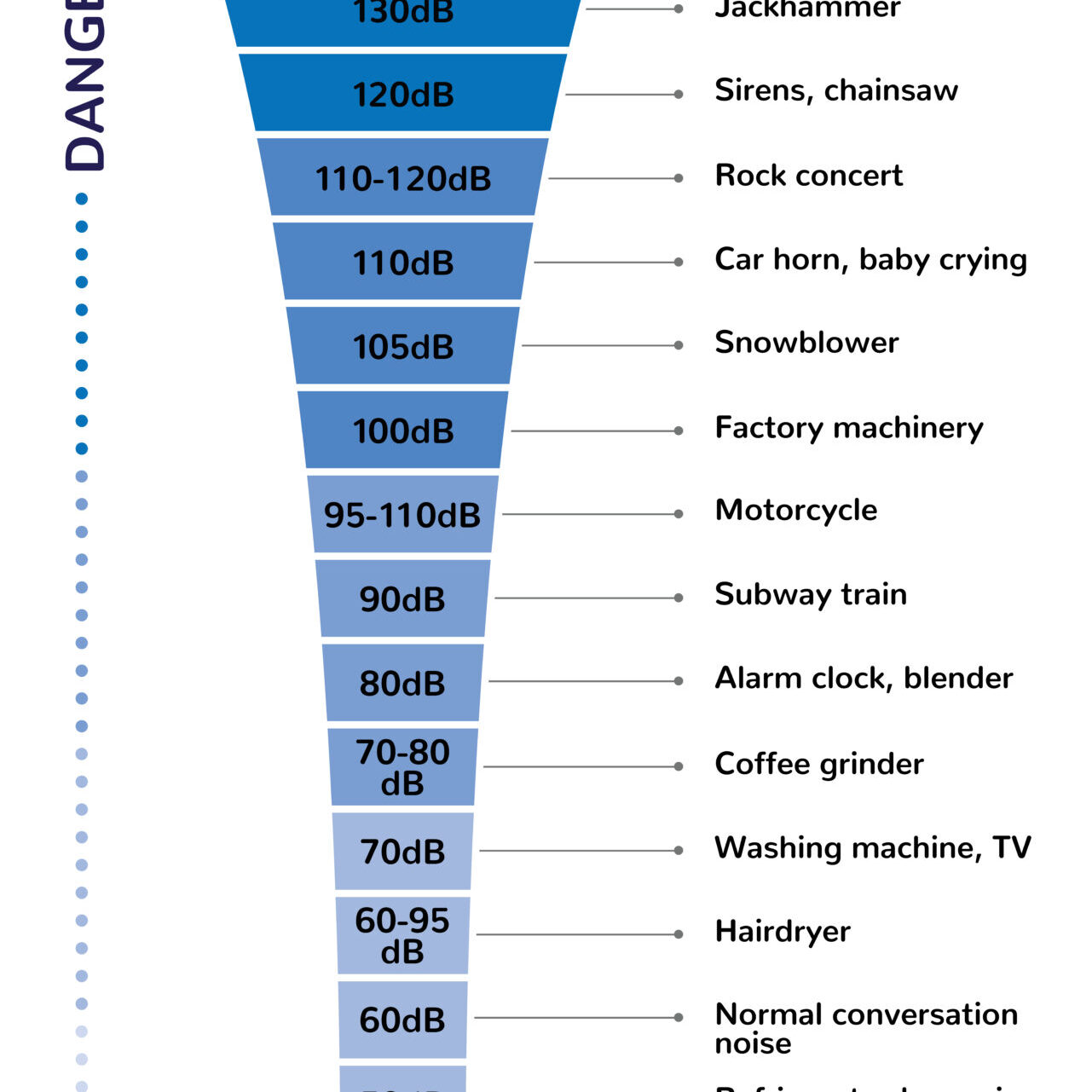
Modern gadgets use MEMS (Micro-Electro-Mechanical Systems) microphones to “hear” the environment. These tiny silicon-based sensors convert pressure waves into electrical signals. When a device measures 95dB—comparable to the roar of a motorcycle engine or a power lawnmower—the digital signal processor must handle a high volume of data without clipping. Clipping occurs when the hardware cannot represent the amplitude of the sound wave, resulting in the “crunchy” or “broken” audio we associate with poor-quality recordings.
Calibration and Reference Points
In professional audio tech, 0dB does not mean “silence”; it is a reference point. In the context of environmental noise (dBSPL), 95dB is approximately 32 times the pressure of a normal conversation (65dB). For hardware developers, ensuring that a device can accurately report 95dB requires rigorous calibration against laboratory-grade transducers, ensuring that the software’s “95” matches the physical reality of the environment.
Hardware Limitations and the 95dB Threshold
When you push a pair of consumer headphones or a portable Bluetooth speaker to 95dB, you are testing the limits of electrical engineering. Reaching this volume level while maintaining high fidelity is a primary challenge for hardware manufacturers.
Driver Excursion and Distortion
In a speaker, the “driver” is the component that moves back and forth to create sound waves. To produce a sound at 95dB, the driver must move with significant force and speed. This physical movement is called “excursion.” If the driver is too small—as is the case with many budget earbuds—pushing it to 95dB causes the material to deform, leading to Total Harmonic Distortion (THD). Premium audio tech uses materials like beryllium or carbon nanotubes to ensure the driver stays rigid even at high volumes.
The Power Constraints of Mobile Tech
Generating 95dB of sound requires a specific amount of wattage. In the realm of “True Wireless” (TWS) earbuds, battery life is the ultimate currency. Engineers must design amplifiers that are efficient enough to reach 95dB peaks for music dynamics without draining the tiny lithium-ion batteries in minutes. This necessitates the use of Class D amplifiers, which are highly efficient but require sophisticated filtering to prevent electronic noise from entering the audio stream.
Thermal Management in Audio Gadgets
High volume equals high energy, and high energy equals heat. When an amplifier works to push a speaker to 95dB, it generates thermal energy. In high-end home theater tech, this is managed with heat sinks. In wearable tech, however, there is no room for cooling fans. Engineers use thermal throttling—software algorithms that subtly lower the volume if the internal components reach a certain temperature—to prevent the device from melting its own circuitry.
Audio Software and Hearing Health Monitoring
The most significant technological shift regarding high-decibel sound is not how we make it, but how we monitor it. As 95dB is the point where the Occupational Safety and Health Administration (OSHA) begins to restrict exposure time (limited to roughly 4 hours), software has become our primary defense against hearing loss.
The Integration of Health Informatics
Companies like Apple and Google have integrated “Hearing” modules into their operating systems. Using the aforementioned MEMS microphones, devices like the Apple Watch constantly sample ambient noise. If the environment stays at 95dB for a prolonged period, the software triggers a haptic alert. This is a triumph of “Invisible Tech”—complex algorithms running in the background to correlate decibel levels with time-weighted averages (TWA) to protect the user.
Active Noise Cancellation (ANC) Algorithms
95dB is often the level of ambient noise in a subway station or near heavy machinery. To combat this, tech companies have perfected Active Noise Cancellation. ANC works by using microphones to pick up the 95dB external noise and then generating an “anti-noise” wave—a sound wave with the exact same amplitude but inverted phase. When the two waves meet, they cancel each other out. The processing power required to do this in real-time (with millisecond latency) is immense, requiring dedicated AI chips within the headphones.
Automatic Volume Limiting (AVL)
In many jurisdictions, tech manufacturers are required to implement software-level volume caps. If you have ever seen a warning on your smartphone stating that “High volume may damage hearing,” you are interacting with an AVL system. These systems analyze the sensitivity of the connected headphones and calculate the voltage output to ensure the user doesn’t accidentally subject themselves to 95dB+ levels for extended periods.
Industrial Tech and the Engineering of Quiet
Beyond consumer gadgets, the technology used to manage 95dB environments is vital for infrastructure and workplace safety. From urban planning to automotive engineering, “silencing” the world is a multi-billion dollar tech industry.
Acoustic Architecture and Simulation Software
Architects use advanced CAD (Computer-Aided Design) software integrated with acoustic simulation plugins to predict how sound will behave in a space. If a data center’s cooling fans produce 95dB of noise, engineers use these simulations to design baffles and choose materials that absorb specific frequencies. This is “Passive Tech”—the science of materials engineered at the molecular level to dampen sound pressure.
IoT Sound Sensors in Smart Cities
Smart city initiatives often involve the deployment of Internet of Things (IoT) sensors to monitor noise pollution. In cities like Barcelona or Singapore, sensors are placed in high-traffic areas to detect noise spikes. If a construction site or a vehicle exceeds 95dB, the sensor sends real-time data to a central hub via 5G or LoRaWAN. This allows for data-driven urban planning, where technology identifies “noise hotspots” and suggests interventions like sound-dampening asphalt or green barriers.
The Future: AI-Driven Selective Transparency
The next frontier in audio tech is selective transparency. Imagine being in a 95dB factory environment where you need to hear a coworker speak but want to block the machinery. Future “Hearables” will use AI to distinguish between “noise” (the 95dB hum) and “signal” (the human voice). By using neural networks trained on millions of audio samples, these devices will be able to subtract the dangerous decibels while enhancing the frequencies of human speech in real-time.
Conclusion: Balancing Power and Protection
What does 95dB sound like? In the tech world, it sounds like a challenge. It is the sound of a motorcycle, a power tool, or a crowded club, but it is also the sound of a system pushing its physical limits. For the hardware engineer, 95dB is a threshold of distortion and heat. For the software developer, it is a data point to be monitored and mitigated for user safety.
As we move toward an increasingly “always-on” auditory world, the technology surrounding the decibel will only become more sophisticated. We are transitioning from a world where we simply “turn it up” to a world where our devices intelligently manage our relationship with sound—allowing us to experience the power of 95dB when we want it, while shielding us from the damage it can cause when we don’t. The future of audio tech lies in this delicate balance: the engineering of volume, and the genius of silence.
aViewFromTheCave is a participant in the Amazon Services LLC Associates Program, an affiliate advertising program designed to provide a means for sites to earn advertising fees by advertising and linking to Amazon.com. Amazon, the Amazon logo, AmazonSupply, and the AmazonSupply logo are trademarks of Amazon.com, Inc. or its affiliates. As an Amazon Associate we earn affiliate commissions from qualifying purchases.