
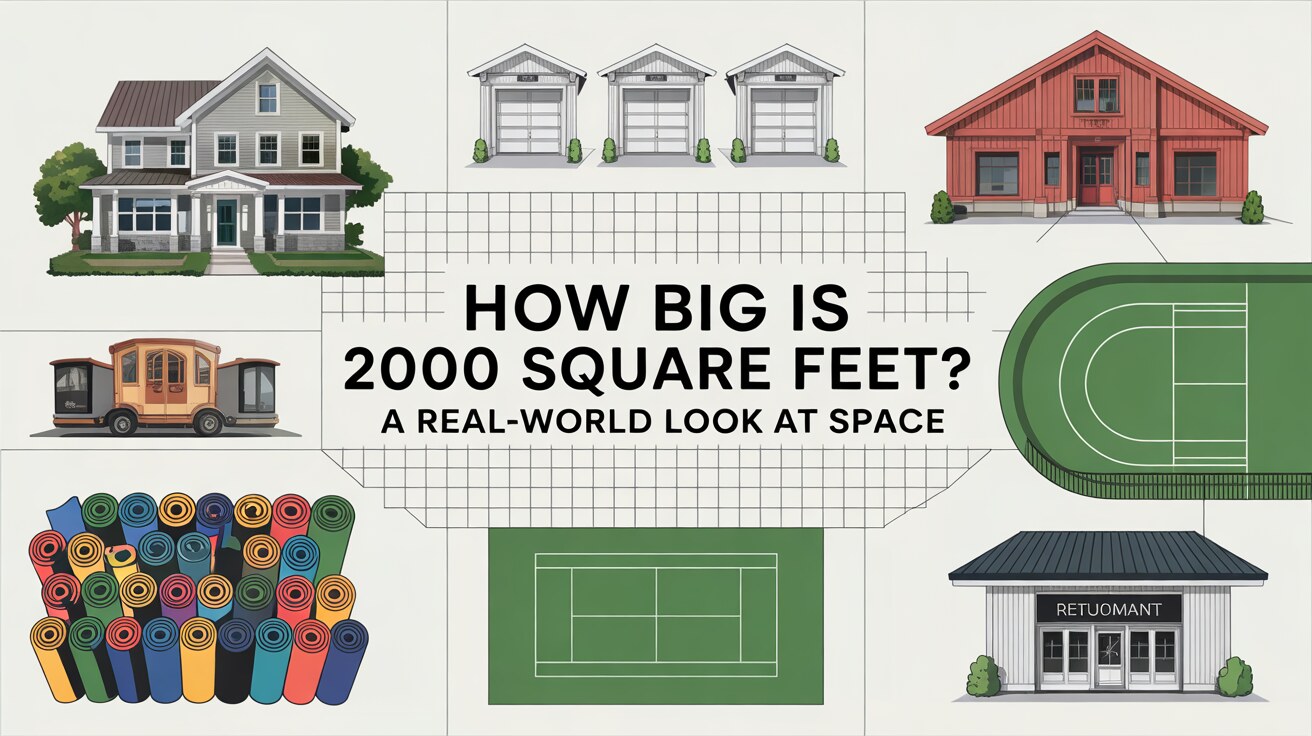
When navigating the complexities of the real estate market, numbers often become abstract. We hear terms like “price per square foot,” “mortgage interest rates,” and “equity growth,” but rarely do we pause to visualize the physical reality behind the math. A 2,000-square-foot home sits at a fascinating intersection of modern affordability and functionality. It is large enough to feel like a permanent family home, yet small enough to avoid the prohibitive costs associated with sprawling luxury estates. Understanding the financial implications of this specific footprint is essential for anyone looking to invest in property or optimize their long-term housing budget.

The Financial Geography of Square Footage
Understanding what 2,000 square feet represents requires looking beyond the blueprints and into the balance sheet. In the world of personal finance, square footage is one of the most significant variables in the equation of wealth. When you purchase or rent a 2,000-square-foot property, you are essentially committing to a specific volume of maintenance, taxation, and utility consumption that directly impacts your monthly cash flow.
Assessing the Cost-to-Value Ratio
For most middle-class earners, 2,000 square feet is considered the “Goldilocks zone.” It is a size that typically offers three bedrooms and two-to-three bathrooms, providing enough versatility to appeal to a wide resale market. From an investment perspective, this is a strategic advantage. Smaller homes—under 1,200 square feet—may see appreciation, but they often lack the “room to grow” that attracts long-term families. Conversely, homes exceeding 3,500 square feet often suffer from diminishing returns; the initial purchase price is high, and the carrying costs—such as heating, cooling, and property taxes—can become a significant drain on your disposable income. By aiming for that 2,000-square-foot benchmark, you are positioning your capital in a bracket that balances liquidity with utility.
The Hidden Carrying Costs
It is a common error for prospective homeowners to focus solely on the principal and interest of their mortgage. However, 2,000 square feet carries an invisible overhead. Insurance premiums are calculated based on replacement cost, which is intrinsically tied to square footage. Similarly, property taxes are almost always levied based on the assessed value, which correlates strongly with the size of the structure. When you scale up to 2,000 square feet, you are also committing to the upkeep of that physical space—roof replacement, flooring, painting, and interior maintenance. Over a decade, these costs add up to tens of thousands of dollars. Before signing a purchase agreement, smart investors calculate the “total cost of ownership,” factoring in the 2,000 square feet’s influence on these recurring monthly outflows.
Optimizing Financial Efficiency per Square Foot
Once you understand the financial weight of 2,000 square feet, the next step is maximizing the utility of that space. From a financial planning standpoint, dead space is wasted money. If you are paying for 2,000 square feet of mortgage debt, property tax, and utilities, you should be ensuring that every single square inch contributes to the overall value of your lifestyle or your investment portfolio.

The Multi-Functional Floor Plan
Modern architecture has shifted away from the “formal” rooms that defined homes in the 20th century. In a 2,000-square-foot layout, every room must pull its weight. A dedicated, seldom-used formal dining room is a liability; it is an area of the house that consumes energy and taxes without providing daily value. High-performing financial planners suggest looking for open-concept designs where the “living space” serves multiple functions—home office, dining area, and leisure zone. By utilizing furniture that transforms or provides storage, you essentially increase the utility of your 2,000 square feet, effectively getting more “living” out of the same tax assessment.
Energy Efficiency as an Investment
Heating and cooling 2,000 square feet represents one of the largest ongoing expenses for a homeowner. Unlike a mortgage payment, which stays fixed, utility costs are subject to inflation and seasonal volatility. Investing in high-efficiency windows, professional-grade insulation, and smart thermostat systems is not just an environmental choice—it is a financial strategy. If you can reduce the energy demand of your 2,000-square-foot home by 20%, you are effectively increasing your monthly cash flow, providing you with more capital to allocate toward higher-yield investments like index funds, retirement accounts, or paying down the principal of the mortgage itself.
The Long-Term Wealth Strategy of Mid-Sized Homes
Perhaps the most compelling argument for the 2,000-square-foot home lies in its long-term viability as a wealth-building tool. When evaluating property, we must consider the “exit strategy.” Is the property liquid? Will it appreciate? Does it cater to a broad demographic?
Liquidity and Marketability
A 2,000-square-foot property is remarkably liquid. Because it fits the needs of a typical family—the largest demographic in the real estate market—these homes tend to sell faster than both tiny homes and McMansions. When you need to relocate for professional opportunities or downsize in retirement, the ease of selling your asset is paramount. A house that takes six months to sell is a house that accrues six months of unnecessary mortgage interest, maintenance, and utility fees. By choosing the 2,000-square-foot tier, you are choosing a market segment with high buyer demand, which is a critical pillar of real estate security.
Leveraging the Home for Income
In the current digital economy, 2,000 square feet provides enough room to potentially host a home-based business or even a rental suite. Whether it is a basement unit, an accessory dwelling unit (ADU), or even a high-quality spare room for short-term rental, the size of a 2,000-square-foot home often allows for creative revenue streams. If your house can generate even a fraction of its own mortgage payment through rental income, you are drastically changing your net-worth trajectory. This “house hacking” strategy turns a traditional expense—housing—into an income-producing asset, demonstrating the power of smart spatial utilization.
Preparing for the Future
The financial landscape is ever-changing. What seems like an affordable payment today may become burdensome if circumstances change, such as a career pivot or an economic downturn. Because 2,000 square feet is considered “moderate” in many markets, it acts as a hedge against volatility. It is rarely the first property to lose significant value during a market correction compared to luxury properties, which often see steep declines in equity during tough times.
In conclusion, visualizing 2,000 square feet isn’t just about imagining where the sofa goes or how many bookshelves will fit in the den. It is about understanding the financial footprint of the space you inhabit. It is a commitment to a lifestyle of balance, where the cost of ownership remains subservient to your long-term goals of financial independence. By focusing on the efficiency, utility, and marketability of this size, you ensure that your home remains a cornerstone of your financial foundation rather than a weight on your progress. Whether you are buying your first property or optimizing your current asset, remember that the most successful financial strategies are built on a clear-eyed understanding of the spaces we choose to call home.
aViewFromTheCave is a participant in the Amazon Services LLC Associates Program, an affiliate advertising program designed to provide a means for sites to earn advertising fees by advertising and linking to Amazon.com. Amazon, the Amazon logo, AmazonSupply, and the AmazonSupply logo are trademarks of Amazon.com, Inc. or its affiliates. As an Amazon Associate we earn affiliate commissions from qualifying purchases.