
In the world of computer science, programming, and digital electronics, you will frequently encounter strings of characters that look like a mix of numbers and letters, often preceded by the two characters “0x.” Whether you are looking at a memory address in a debugger, a color code in a CSS file, or a smart contract address on a blockchain, this prefix is a ubiquitous signal. To the uninitiated, it looks like a typo or a cryptic code; to a developer or system architect, it is a vital indicator that the data following it is written in hexadecimal notation.
Understanding what “0x” means requires a deep dive into how computers interpret numerical data, the history of programming languages, and the practical necessity of representing binary information in a human-readable format.
The Fundamentals of Hexadecimal and the 0x Prefix
To understand the “0x” prefix, we must first understand the system it represents: hexadecimal, or “hex” for short. While humans primarily use the decimal system (Base-10), computers operate fundamentally on binary (Base-2). Hexadecimal serves as the perfect intermediary (Base-16).
Understanding the Base-16 System
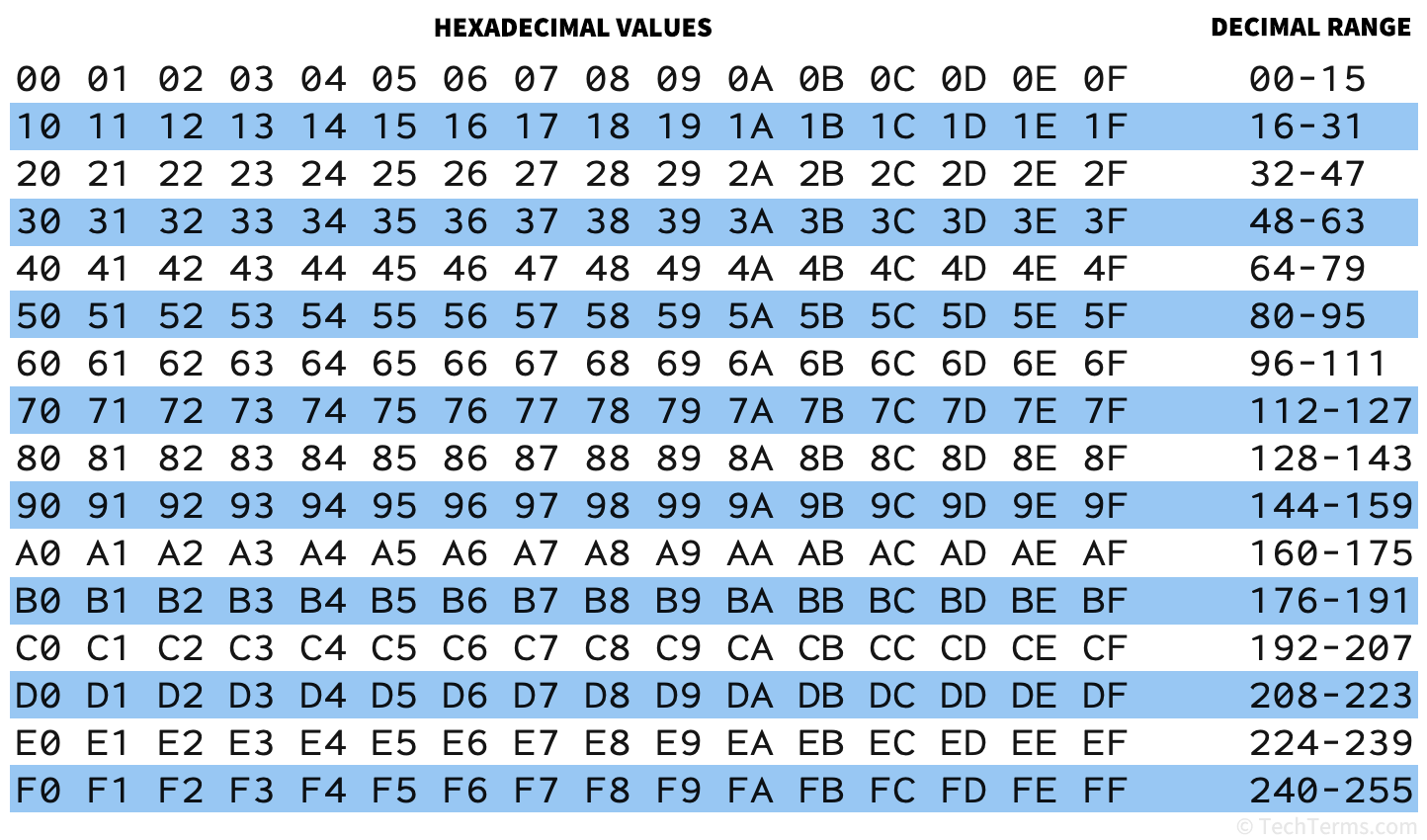
The decimal system uses ten digits (0-9). Hexadecimal expands this by using sixteen distinct symbols. To achieve this, it uses the standard numbers 0 through 9 and then enlists the first six letters of the alphabet: A, B, C, D, E, and F. In this system, ‘A’ represents 10, ‘B’ represents 11, and ‘F’ represents 15.
The beauty of Base-16 lies in its relationship with binary. A single hexadecimal digit can represent exactly four bits (a nibble). For example, the binary 1111 is 15 in decimal and F in hex. This alignment makes it significantly easier for engineers to read and write large binary values without getting lost in a sea of ones and zeros.
Why the Prefix 0x is Necessary for Compilers
Computers are literal. If a compiler encounters the sequence 10, it assumes the value is “ten” in the decimal system. However, in hexadecimal, 10 represents the value sixteen. To prevent ambiguity and logic errors, programming languages needed a way to signal the “base” of a number.
The “0x” prefix was popularized by the C programming language. The ‘0’ tells the parser that a numeric literal is starting, and the ‘x’ stands for “hexadecimal.” When a compiler sees 0x10, it immediately knows to process the value as Base-16, resulting in the decimal value of 16. Without this prefix, the machine would have no way of knowing whether you intended to refer to a decimal ten or a hexadecimal sixteen.
The Anatomy of a Hexadecimal Number
A hex value like 0x2F3 is a positional representation. Just as in decimal where the positions represent powers of ten (units, tens, hundreds), in hex, the positions represent powers of sixteen.
- The rightmost digit (3) is $3 times 16^0 = 3$.
- The second digit (F) is $15 times 16^1 = 240$.
- The third digit (2) is $2 times 16^2 = 512$.
Adding these together ($512 + 240 + 3$) gives us the decimal equivalent: 755. The0xat the start is purely instructional; it does not contribute to the mathematical value but defines the rules for the calculation.
Why Computing Relies on Hexadecimal Instead of Decimal
One might wonder why we don’t simply use decimal for everything if it is what humans understand best. The answer lies in the architectural efficiency of modern hardware.
The Bridge Between Binary and Human Readability
Binary is the “native tongue” of transistors, but it is incredibly verbose. The decimal value 255 is 11111111 in binary. In hexadecimal, it is simply 0xFF. Because hex is a power of two ($2^4 = 16$), it allows for a direct mapping that decimal cannot provide.
Two hexadecimal digits represent exactly eight bits, or one byte. This makes hexadecimal the natural language for discussing data at the byte level. When a developer sees 0x00 through 0xFF, they are seeing the full range of a single 8-bit byte. This 1:1 mapping between two hex digits and one byte is the primary reason why hex is favored over decimal in technical documentation.
Efficiency in Memory Mapping and Data Storage
In low-level systems, memory is organized into addresses. A 32-bit system can address $2^{32}$ locations. Writing these addresses in decimal results in long, unwieldy numbers like 4,294,967,295. In binary, it’s 32 characters long. In hexadecimal, however, it is a manageable eight characters: 0xFFFFFFFF.
Using hexadecimal allows engineers to visualize memory boundaries more clearly. For example, memory “pages” often start at predictable hex boundaries like 0x1000 or 0x2000. Seeing these patterns in hex is intuitive because they align with the binary hardware logic, whereas the decimal equivalents would look like arbitrary, non-repeating numbers.

Practical Applications of 0x in Modern Software Development
The 0x prefix isn’t just a relic of the 1970s; it is actively used today across various tech sectors, from embedded systems to decentralized finance.
Low-Level Programming and Memory Addresses
In languages like C, C++, and Rust, pointers—variables that store memory addresses—are almost always displayed in hexadecimal. When a program crashes and generates a “Segmentation Fault,” the error message usually points to a hex address like 0x00007FFD23. This tells the developer exactly where in the RAM the illegal operation occurred. Without the 0x prefix, these addresses could be confused with standard integers, leading to catastrophic errors in memory management.
Debugging and Error Codes
Windows and other operating systems often use hexadecimal for error codes. If you have ever seen the “Blue Screen of Death” (BSOD), you might notice a “Stop Code” like 0x0000007B. These codes are shorthand for specific hardware or driver conflicts. Developers use these hex codes to look up technical documentation quickly. Using hex for error codes allows for thousands of unique identifiers using just a few characters.
Blockchain and Smart Contract Identification
Perhaps the most modern application of the 0x prefix is in the world of Web3 and blockchain. On the Ethereum network, every wallet address and smart contract starts with 0x. An Ethereum address is a 160-bit hash, which is represented as 40 hexadecimal characters. The presence of 0x at the start of an Ethereum address is a standard that distinguishes it from other types of cryptographic strings and ensures that the underlying software interprets the address as a large hexadecimal number rather than a string of text.
The Evolution of Syntax: From Assembly to Modern High-Level Languages
The convention of using 0x has a specific lineage in the history of computing, originating from the need for standardized syntax across different hardware architectures.
Consistency Across C-Style Languages
The 0x notation was cemented by the C programming language, designed by Dennis Ritchie at Bell Labs. Because C became the foundation for Unix and later Linux and Windows, its syntax was inherited by a vast array of “C-family” languages, including C++, Java, JavaScript, Python, and C#.
This consistency is a boon for developers. A programmer can move from writing a Python script to a Java application and maintain the same understanding that 0x signifies a hexadecimal literal. This cross-language standard reduces the cognitive load on developers and ensures that numerical data is handled consistently regardless of the platform.
Alternative Prefixes in Different Programming Paradigms
While 0x is the most common, it isn’t the only way to denote hex. In Assembly language, you might see H at the end of a number (e.g., FFA5H). In CSS (web design), hexadecimal colors use the hash symbol (#FFFFFF). In older versions of BASIC, &H was used.
However, in the context of “Tech” and general-purpose programming, 0x remains the undisputed king. Its placement at the beginning of the number is preferred by compiler designers because it allows the lexical analyzer to identify the base of the number from the very first two characters, making the compilation process slightly more efficient.
Best Practices for Working with Hexadecimal Data
As you encounter 0x in your technical journey, there are several best practices to keep in mind to ensure data integrity and clarity.
Avoiding Common Conversion Errors
One of the most frequent mistakes is treating a hex string as a decimal number. For example, 0x10 + 0x10 is not 20; it is 0x20, which equals 32 in decimal. When working with hex in code, always ensure your variables are properly typed. Most modern IDEs (Integrated Development Environments) will provide a “hover” feature that shows you the decimal value of a 0x literal, which is a helpful way to double-check your logic.
Tools for Visualization and Analysis
For professionals dealing with large amounts of hex data—such as security researchers or reverse engineers—a “Hex Editor” is an essential tool. These applications display the raw bytes of a file in hexadecimal columns, typically with the 0x notation implied.
Furthermore, when logging data in high-level languages like Python, using f-strings such as f"{value:#x}" will automatically prepend the 0x for you, ensuring that your logs are readable and adhere to standard technical conventions.

Conclusion
The “0x” prefix is more than just a quirky bit of syntax; it is a fundamental pillar of technical communication. It serves as a bridge between the binary reality of hardware and the symbolic needs of software development. By signaling that a value is hexadecimal, it allows for concise, byte-aligned, and error-free representation of complex data. Whether you are debugging a kernel, styling a website, or sending cryptocurrency, the “0x” is your guide to the underlying logic of the digital age.
aViewFromTheCave is a participant in the Amazon Services LLC Associates Program, an affiliate advertising program designed to provide a means for sites to earn advertising fees by advertising and linking to Amazon.com. Amazon, the Amazon logo, AmazonSupply, and the AmazonSupply logo are trademarks of Amazon.com, Inc. or its affiliates. As an Amazon Associate we earn affiliate commissions from qualifying purchases.