
The annual ritual of filing taxes can often feel daunting, a complex maze of forms, figures, and deadlines. Yet, understanding “what do you need to file your taxes” is not just about compliance; it’s about financial empowerment. Proper preparation can unlock significant savings, ensure accuracy, and prevent unnecessary stress or penalties. Far from being a mere administrative burden, tax filing is a critical component of personal financial management, reflecting your income, expenses, investments, and ultimately, your financial health.
This comprehensive guide aims to demystify the process, breaking down the essential documents and information required to navigate tax season with confidence. Whether you’re a first-time filer, have experienced significant life changes, or are simply looking to streamline your approach, understanding these core requirements is the first step towards a successful and less stressful tax experience.
Essential Personal Information and Basic Documents
Before delving into the specifics of income and deductions, every tax filing begins with a foundation of personal identification and basic financial data. These documents are crucial for establishing your identity, confirming your residency, and ensuring the accurate processing of your return.
Your Identity and Dependent Details
The absolute starting point for any tax return is accurate identification. You’ll need:
- Social Security Numbers (SSNs) or Individual Taxpayer Identification Numbers (ITINs): For yourself, your spouse (if filing jointly), and all dependents you plan to claim. Incorrect or missing SSNs are a common reason for processing delays.
- Date of Birth: For all individuals listed on the return.
- Current Address: This is vital for receiving official correspondence from tax authorities and for determining state and local tax obligations. If you moved during the tax year, ensure you have both your old and new addresses.
- Occupation: Often requested on tax forms, providing context for your income sources.
For those claiming dependents, additional information might be required to confirm their eligibility, such as their relationship to you, their residency, and their support. Understanding who qualifies as a dependent can significantly impact your tax liability through credits and exemptions.
Prior Year’s Tax Information
Having access to your previous year’s tax return (Form 1040) is incredibly useful. It provides a baseline, reminding you of recurring deductions, credits, and the structure of your financial life. More specifically, it helps with:
- Adjusted Gross Income (AGI): Your prior year’s AGI is often required for identity verification when e-filing.
- Carryovers: Certain deductions or credits (like capital loss carryovers or net operating losses) can be carried forward from one year to the next. Your previous return will have this crucial data.
- Estimated Tax Payments: If you made estimated tax payments throughout the year, your previous return can serve as a reminder and help you track these payments.
While not strictly mandatory in all cases, having your prior year’s return can significantly streamline data entry and prevent errors.
Bank Account for Refunds or Payments
For modern tax filing, direct deposit is the preferred and fastest method for receiving your tax refund. Conversely, if you owe taxes, direct debit from your bank account is a convenient payment option. You will need:
- Bank Account Number: The unique identifier for your checking or savings account.
- Bank Routing Number: A nine-digit code that identifies your financial institution.
Having these details ready ensures a smooth transaction, whether money is flowing to or from you. It also enhances security by reducing the risk associated with paper checks.
Income Documentation: Tracking Your Earnings
The cornerstone of any tax return is a complete and accurate reporting of all income earned throughout the year. This includes wages from employment, income from investments, earnings from self-employment, and various other sources. Each type of income typically comes with its own specific reporting document.
W-2 Forms: For Employees
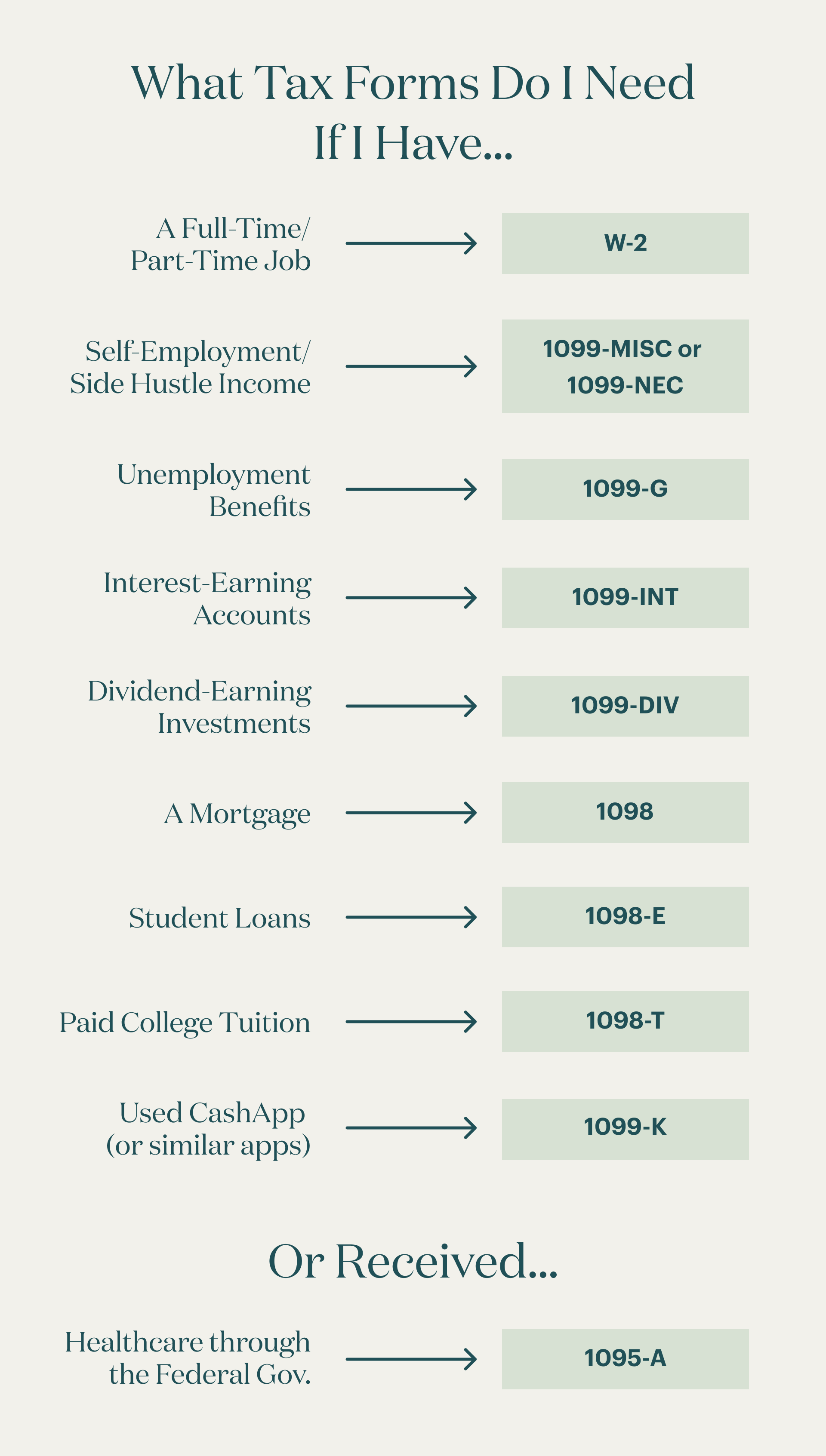
If you are an employee, your primary income document will be Form W-2, Wage and Tax Statement. Your employer is legally required to send this form to you by January 31st each year. The W-2 reports:
- Your total wages, tips, and other compensation.
- The amount of federal income tax withheld.
- Social Security and Medicare wages and taxes withheld.
- State and local wages and taxes withheld (if applicable).
- Contributions to retirement plans (e.g., 401(k)) or health savings accounts (HSAs).
It’s crucial to gather a W-2 from every employer you had during the tax year, even if you only worked there for a short period. Missing a W-2 can lead to an inaccurate return and potential issues with the IRS.
1099 Forms: For Non-Employee Income
The 1099 series of forms covers a wide range of non-employee income. If you earned income that wasn’t from a traditional employer-employee relationship, you likely received one or more 1099s. Common types include:
- Form 1099-NEC (Nonemployee Compensation): Used for independent contractors, freelancers, or self-employed individuals who received payments of $600 or more from a single payer. This replaced the Box 7 of Form 1099-MISC for non-employee compensation.
- Form 1099-MISC (Miscellaneous Information): Reports various other types of income, such as rents, royalties, fishing boat proceeds, or prize winnings.
- Form 1099-DIV (Dividends and Distributions): Reports dividends and capital gain distributions from stocks, mutual funds, and other investments.
- Form 1099-INT (Interest Income): Reports interest income from bank accounts, bonds, and other financial instruments.
- Form 1099-B (Proceeds From Broker and Barter Exchange Transactions): Reports sales of stocks, bonds, mutual funds, and other securities, including capital gains and losses.
- Form 1099-R (Distributions From Pensions, Annuities, Retirement or Profit-Sharing Plans, IRAs, Insurance Contracts, etc.): Reports distributions from retirement accounts.
- Form 1099-G (Certain Government Payments): Reports unemployment compensation, state tax refunds, and other government payments.
- Form 1099-K (Payment Card and Third Party Network Transactions): Reports payments received through credit/debit cards or third-party payment networks (like PayPal, Venmo) for goods and services, typically if transactions exceed a certain threshold.
It’s essential to collect all relevant 1099 forms as they provide the official record of your taxable income from various sources.
Other Income Statements
Beyond W-2s and 1099s, other specific situations may generate additional income documents:
- Schedule K-1 (Partner’s Share of Income, Deductions, Credits, etc.): If you are a partner in a partnership, a shareholder in an S corporation, or a beneficiary of an estate or trust, you’ll receive a Schedule K-1 detailing your share of the entity’s income or loss. These can sometimes arrive later than other forms, so plan accordingly.
- Alimony Received: While specific forms aren’t always issued, you must report alimony received from divorce agreements finalized before 2019. (Alimony for agreements after 2018 is generally not taxable to the recipient or deductible by the payer).
- Gambling Winnings (Form W-2G): If you had significant gambling winnings, you’d receive a W-2G.
Deductions and Credits: Maximizing Your Savings
Once you’ve accounted for all your income, the next critical step is to identify any deductions or credits you’re eligible for. These are the tools that can significantly reduce your taxable income or directly lower your tax bill, ultimately putting more money back into your pocket.
Common Itemized Deductions

For those who choose to itemize rather than take the standard deduction, a variety of expenses can reduce taxable income. Keep meticulous records for these:
- Medical and Dental Expenses: If your unreimbursed medical expenses exceed 7.5% of your Adjusted Gross Income (AGI), you can deduct the amount over that threshold. This includes insurance premiums, doctor visits, prescription drugs, and certain medical devices.
- State and Local Taxes (SALT): You can deduct up to $10,000 ($5,000 for married filing separately) for state and local income, sales, and property taxes.
- Home Mortgage Interest (Form 1098): Interest paid on your home mortgage is often deductible. Your lender will send you Form 1098, Mortgage Interest Statement, reporting this amount.
- Charitable Contributions: Donations to qualified charitable organizations can be deducted. This includes cash contributions (up to certain AGI limits) and the fair market value of donated goods. Keep records of all contributions, including receipts for cash donations and appraisals for significant non-cash donations.
Standard Deduction vs. Itemizing: Making the Choice
The IRS provides a standard deduction that varies based on your filing status (single, married filing jointly, head of household, etc.) and age/blindness. You must choose between taking the standard deduction or itemizing your deductions. You should itemize if your total itemized deductions exceed your standard deduction amount, as this will result in a lower taxable income. Tax software and professionals can help you determine which option is most beneficial.
Key Tax Credits
Unlike deductions, which reduce your taxable income, tax credits directly reduce your tax bill dollar-for-dollar. They are often more valuable than deductions. Key credits include:
- Child Tax Credit (CTC): A credit for qualifying children. You’ll need their SSN and other identifying information.
- Credit for Other Dependents: A non-refundable credit for dependents who don’t qualify for the Child Tax Credit.
- Earned Income Tax Credit (EITC): A refundable credit for low-to-moderate-income working individuals and families. Eligibility depends on income, family size, and other factors.
- Education Credits (Form 1098-T): These include the American Opportunity Tax Credit and the Lifetime Learning Credit, which help offset the costs of higher education. You’ll typically receive Form 1098-T, Tuition Statement, from educational institutions.
- Child and Dependent Care Credit: For expenses paid for the care of a qualifying individual to allow you to work or look for work.
Specialized Situations: Navigating Unique Financial Scenarios
Not everyone’s financial life fits neatly into the standard employee-with-a-W-2 mold. Many individuals encounter unique circumstances that require specific documentation and understanding.
Self-Employment Income and Expenses
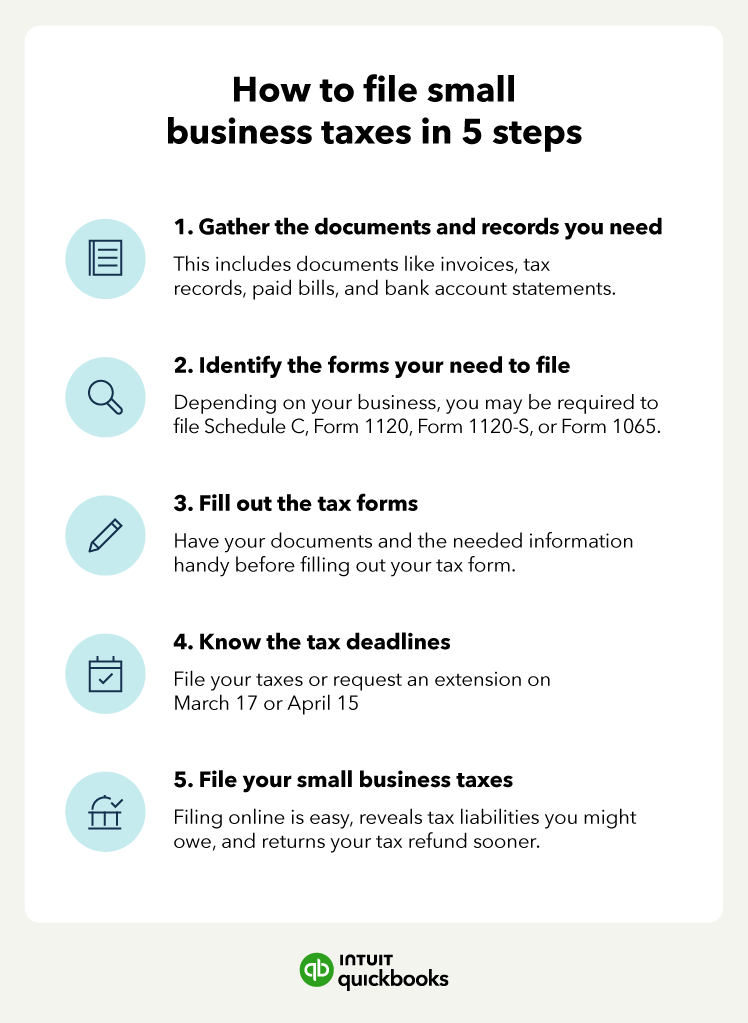
If you are self-employed, a freelancer, or an independent contractor, you’ll need to report your business income and expenses on Schedule C, Profit or Loss from Business. This requires meticulous record-keeping throughout the year. Essential documents include:
- Records of all income received: Including invoices, payment records, and 1099-NEC forms received from clients.
- Records of all business expenses: This is crucial for reducing your taxable income. Keep receipts, bank statements, and credit card statements for everything from office supplies, travel, professional development, home office expenses, and health insurance premiums (if self-paid).
- Mileage logs: If you use your personal vehicle for business purposes, detailed logs are essential for deducting mileage.
- Estimates of self-employment tax: You’ll likely need to pay estimated taxes quarterly. Keep records of these payments.
Investment Income and Capital Gains/Losses
For those with investments, reporting accurate gains and losses is vital. You’ll typically receive:
- Consolidated 1099 Statement: Your brokerage firm will usually send a consolidated statement that includes 1099-B (sales of stock), 1099-DIV (dividends), and 1099-INT (interest).
- Records of original purchase price (cost basis): Especially important for investments sold if not reported on your 1099-B. Accurate cost basis helps determine your capital gains or losses.
Healthcare Coverage Information
The Affordable Care Act (ACA) requires most individuals to have minimum essential health coverage. You may receive forms that verify your health insurance status:
- Form 1095-A (Health Insurance Marketplace Statement): If you purchased health insurance through a state or federal marketplace. This form is necessary to reconcile any advance premium tax credit you received.
- Form 1095-B (Health Coverage): From your health insurance provider, employer, or government agency.
- Form 1095-C (Employer-Provided Health Insurance Offer and Coverage): From large employers.
While the penalty for not having health insurance has been zeroed out at the federal level, these forms are still important for reporting coverage and, if applicable, claiming premium tax credits.
Preparing for a Smooth Filing Process
Gathering all the necessary documents is just one part of the preparation. Organizing them and choosing the right filing method are equally important for a smooth and efficient tax season.
Organize and Store Your Documents
Proactive organization is key. As documents arrive throughout the year, create a designated folder or digital system (e.g., cloud storage, specific software) to store them. Categorize them logically:
- Income documents: W-2s, 1099s.
- Deduction/Credit documents: Receipts, 1098s, medical bills.
- Prior year’s returns.
- Personal information.
A well-organized system not only saves time but also minimizes the risk of overlooking crucial information. After filing, keep all tax-related documents for at least three years from the date you filed your original return or two years from the date you paid the tax, whichever is later. Some documents, like those related to property basis, should be kept indefinitely.
Choose Your Filing Method (Software vs. Professional)
Once your documents are in order, you’ll need to decide how to file:
- Tax Software: Options like TurboTax, H&R Block, and TaxAct offer user-friendly interfaces that guide you through the process, often importing data directly from financial institutions. This is a cost-effective choice for many, especially those with straightforward returns.
- Tax Professional: For complex returns, significant life changes (marriage, divorce, new business), or simply peace of mind, hiring a Certified Public Accountant (CPA) or Enrolled Agent (EA) can be invaluable. They can offer advice, ensure compliance, and identify opportunities for savings you might miss. While it involves a fee, the expertise can often outweigh the cost.
Double-Check Everything
Before submitting your return, take the time for a thorough review. Common errors include:
- Incorrect SSNs.
- Missing income or deductions.
- Mathematical mistakes.
- Incorrect bank account information for direct deposit/debit.
Most tax software includes built-in error checks, but a final manual review can catch oversights. If using a professional, they will guide you through the review process.
Conclusion
Filing taxes is an annual obligation, but it doesn’t have to be an annual headache. By understanding “what do you need to file your taxes” and diligently collecting the necessary documents and information throughout the year, you can transform a potentially stressful task into a manageable process. From essential personal details and income statements to meticulous records for deductions and credits, each piece of the puzzle contributes to an accurate and optimized tax return.
Embrace proactive preparation, leverage available tools—whether it’s sophisticated tax software or the expertise of a financial professional—and double-check your work. Doing so not only ensures compliance with tax laws but also empowers you to manage your personal finances more effectively, potentially saving you money and providing valuable insights into your financial landscape for the year ahead. A well-prepared tax filing isn’t just about meeting a deadline; it’s about securing your financial well-being.
aViewFromTheCave is a participant in the Amazon Services LLC Associates Program, an affiliate advertising program designed to provide a means for sites to earn advertising fees by advertising and linking to Amazon.com. Amazon, the Amazon logo, AmazonSupply, and the AmazonSupply logo are trademarks of Amazon.com, Inc. or its affiliates. As an Amazon Associate we earn affiliate commissions from qualifying purchases.