
The role of a flight attendant—historically referred to as a stewardess—has evolved from a simple service position into a complex, multi-faceted career that serves as a cornerstone of the global travel economy. For many, the appeal lies in the lifestyle, but from a professional and financial perspective, becoming a flight attendant is a strategic career move that requires a specific set of investments and offers a unique compensation structure. Understanding what you have to do to enter this field requires a deep dive into the financial commitments, the earning potential, and the long-term wealth-building opportunities inherent in the aviation industry.

Understanding the Initial Investment: The Cost of Entry into the Cabin Crew Profession
Before a single paycheck is earned, an aspiring flight attendant must navigate a series of financial hurdles. While many major carriers provide “paid training,” the path to getting that training offer involves several out-of-pocket expenses that function as the initial capital investment in one’s career.
Certification and Preliminary Expenses
The first phase of the journey involves meeting the rigorous regulatory standards set by aviation authorities (such as the FAA in the United States or EASA in Europe). Candidates must often fund their own background checks, drug screenings, and comprehensive medical examinations. These medical checks are not standard physicals; they often include hearing, vision, and cardiovascular assessments to ensure the candidate can handle the physical stressors of high-altitude work. Depending on the region and the airline’s requirements, these preliminary costs can range from $200 to $700.
The Hidden Costs of Training and Relocation
Once a candidate is recruited, they typically undergo an intensive training program lasting between four and eight weeks. While some legacy carriers provide a daily stipend or housing during this period, many budget or regional airlines do not. For the trainee, this means having enough liquid savings to cover living expenses, food, and professional attire for two months without a full salary. Furthermore, flight attendants are frequently “based” in high-cost-of-living hubs like New York, London, or Dubai. The financial burden of relocating—security deposits, first month’s rent, and moving costs—must be factored into the “start-up” cost of this career.
Salary Structures and Compensation Models in Commercial Aviation
One of the most complex aspects of becoming a flight attendant is understanding how you actually get paid. Unlike a standard 9-to-5 office job with a fixed monthly salary, aviation compensation is a modular system built on several different pillars.
Base Pay versus Flight Hours: Decoding the Paycheck
The primary component of a flight attendant’s income is the “flight hour” rate. It is a common misconception that flight attendants are paid from the moment they arrive at the airport. In reality, most contracts dictate that the clock starts when the aircraft door closes (“block out”) and stops when it opens at the destination (“block in”). This means that the hours spent during boarding, deplaning, and ground delays are often unpaid or paid at a significantly lower “ground rate.”
A new recruit might start at a rate of $25 to $30 per flight hour, with a guaranteed minimum of 75 to 90 hours per month. To maximize income, many attendants bid for “high-hour” months, effectively increasing their gross earnings by strategically managing their schedule.
Per Diems and Layover Allowances: The Hidden Income
A significant portion of a flight attendant’s take-home pay comes from “per diems.” This is a non-taxable hourly allowance paid to the crew member for every hour they are away from their home base. This money is intended to cover the cost of meals and incidental expenses while on the road. For savvy financial planners, per diems represent a major opportunity. Because the airline pays for the hotel stay, an attendant who manages their food expenses efficiently can save a substantial portion of their per diem, effectively adding $500 to $1,500 of tax-free income to their monthly total.
Scaling Your Income: Career Progression and Secondary Revenue Streams

The entry-level salary of a flight attendant may seem modest, but the career is designed for significant financial scaling. As an individual gains seniority and experience, their earning potential shifts through both internal promotions and external side-hustle opportunities.
From Economy to First Class: The Seniority Pay Scale
In the aviation industry, “seniority is everything.” As a flight attendant moves up the ranks, their hourly rate increases annually, often capping out after 12 to 15 years at nearly double or triple their starting rate. Beyond the hourly increase, seniority allows crew members to bid for more lucrative routes. Long-haul international flights often come with higher premiums, better per diems, and longer rest periods.
Furthermore, one can progress to the role of a “Purser” or “In-Flight Lead.” This management position carries the responsibility of overseeing the entire cabin crew and the service delivery on a flight, coming with a significant “lead pay” premium. This transition shifts the role from a service execution position to a middle-management role with a corresponding boost in the financial bracket.
The Rise of the “Aviation Side Hustle”
The unique schedule of a flight attendant—often working 15 days a month followed by blocks of time off—creates a perfect environment for generating secondary income. Many modern flight attendants have leveraged their lifestyle into profitable online businesses. Common side hustles in this niche include:
- Travel Consulting: Utilizing industry knowledge to book complex itineraries for high-net-worth clients.
- Content Creation: Building a personal brand around the “life in the sky,” which can lead to sponsorships and ad revenue.
- Real Estate/Short-term Rentals: Using the ability to travel for free to manage properties in different geographic locations.
Maximizing Financial Benefits Beyond the Monthly Salary
To truly understand the value of becoming a flight attendant, one must look past the gross income and evaluate the “hidden” financial benefits that significantly reduce the cost of living and increase long-term net worth.
Travel Perks as a Tax-Free Wealth Tool
The most famous benefit of the job is the “non-revenue” travel perk. Flight attendants and their immediate families typically have access to “standby” travel, where they pay only the taxes on a flight, regardless of the destination. From a financial planning perspective, this is an incredible asset. The average person spends 5% to 10% of their annual income on vacations and travel. For a flight attendant, this expense is virtually eliminated. This “shadow income”—the money not spent on flights and hotels—can be redirected into high-yield investments, retirement accounts, or real estate.
Retirement Plans and Global Insurance Schemes
Major airlines, particularly legacy carriers, offer robust retirement matching programs (such as 401ks in the U.S. or high-contribution pension schemes in Europe and the Middle East). Because the aviation industry is heavily unionized in many regions, the employer match is often significantly higher than in the general corporate sector.
Additionally, international airlines (such as Emirates, Qatar Airways, or Etihad) often provide tax-free salaries, free housing, and comprehensive global medical insurance. For an individual looking to build a “nest egg” quickly, spending three to five years with a Middle Eastern carrier can result in a level of savings that would take a decade to accumulate in a traditional domestic role.
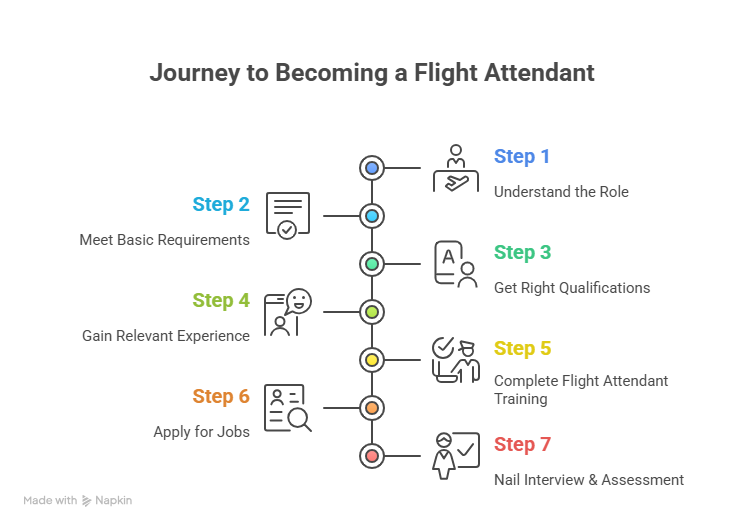
Conclusion: Is the Aviation Career Path a Sound Financial Decision?
Becoming a flight attendant requires more than just a passion for service and a desire to see the world; it requires a calculated approach to personal finance and career management. The initial costs of training and relocation are barriers that must be managed with disciplined saving. However, once established, the combination of hourly pay, tax-free per diems, and massive lifestyle subsidies (like travel perks) creates a unique financial profile.
For those who treat the role not just as a job, but as a business opportunity, the flight attendant profession offers a pathway to a high-quality lifestyle with significant potential for wealth accumulation. By understanding the pay structures, leveraging seniority, and maximizing the inherent travel benefits, an aspiring “stewardess” can transform a love for flight into a robust and sustainable financial future.
aViewFromTheCave is a participant in the Amazon Services LLC Associates Program, an affiliate advertising program designed to provide a means for sites to earn advertising fees by advertising and linking to Amazon.com. Amazon, the Amazon logo, AmazonSupply, and the AmazonSupply logo are trademarks of Amazon.com, Inc. or its affiliates. As an Amazon Associate we earn affiliate commissions from qualifying purchases.