
In the rapidly evolving landscape of health technology, the bracket-and-wire system of traditional orthodontics often seems like a relic of a bygone era. However, beneath the surface of these seemingly simple metal appliances lies a sophisticated world of material science, biomechanical engineering, and digital planning. At the heart of this system is one of the most critical yet misunderstood components: the orthodontic elastic, commonly known as the rubber band.
While the brackets and archwires are responsible for the alignment of individual teeth, the rubber bands are the “engines” that drive the corrective movement of the entire jaw structure. In this tech-focused deep dive, we explore the engineering principles behind these elastics, the material science that makes them possible, and the digital software that calculates their placement.
1. Material Science: The Polymers Powering the Force
To understand what rubber bands on braces do, one must first look at the material science. These are not standard office supply elastics; they are highly engineered medical devices designed to deliver a specific, consistent force over a prolonged period.
The Physics of Latext and Synthetic Polymers
Most orthodontic elastics are manufactured from medical-grade latex, though synthetic versions (often made from specialized polymers) exist for patients with allergies. The primary tech challenge in creating these bands is “force decay.” In physics, every elastic material loses its restorative force after being stretched.
Engineering teams in dental tech firms work to minimize this decay. A high-quality orthodontic band is designed to provide a “near-constant” force. When a patient stretches a band between their upper and lower jaws, the polymer chains are pulled taut. The kinetic energy stored in these chains is what moves the teeth. Tech advancements in polymer cross-linking have allowed for bands that maintain 80-90% of their intended force for up to 12 hours, a significant improvement over the materials used just a decade ago.
Force Vectors and Biomechanical Loads
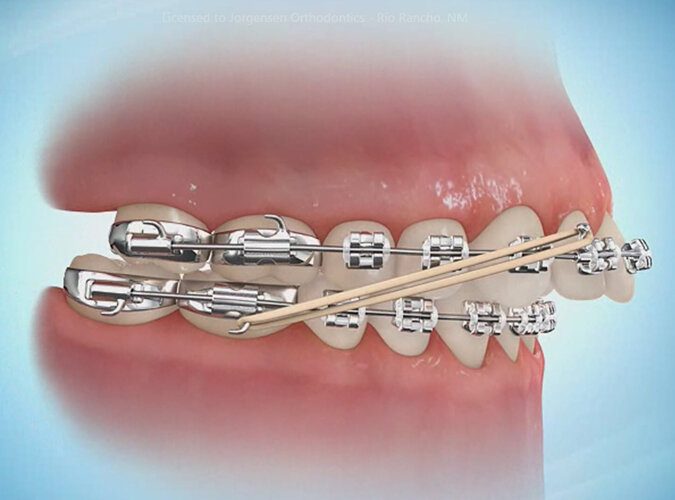
From a mechanical engineering perspective, rubber bands act as force vectors. Orthodontists use digital modeling to determine exactly which “hook” positions will create the necessary vector to move a jaw forward (Class II correction) or backward (Class III correction). The “tech” here is the calculation of Newtons or grams of force. If the force is too low, the bone will not remodel; if it is too high, it can cause root resorption or tissue damage. The precision required is akin to calibrating a delicate piece of machinery.
2. Digital Treatment Planning and Predictive Modeling
The decision of where and how to place rubber bands is no longer a matter of clinical intuition alone. The integration of AI and 3D imaging has transformed how these elastics are deployed.
3.D Mapping and Virtual Simulations
Before a patient even puts on their first set of elastics, software like ClinCheck or specialized CAD (Computer-Aided Design) programs for orthodontics create a “digital twin” of the patient’s mouth. By using Intraoral Scanners (IOS), practitioners create a high-fidelity 3D model.
The software then runs simulations to predict how the teeth and jaw will react to specific elastic configurations. These simulations take into account the bone density, root position, and the mechanical resistance of the periodontal ligament. This predictive tech allows for “backward planning”—starting with the ideal bite and using algorithms to determine the exact sequence of rubber band tension required to get there.
Algorithmic Precision in Vector Selection
In complex cases, such as an “open bite” or significant midline discrepancy, the software calculates the precise angle of the elastic. These are often referred to as “intermaxillary elastics.” The technology allows the orthodontist to visualize the “moment” (the rotational force) applied to the teeth. By adjusting the anchor points in a virtual environment, the tech reduces the trial-and-error phase of traditional orthodontics, leading to faster treatment times and more predictable outcomes.
3. The Hardware: Anchors, TADs, and Smart Attachments
The rubber band is only as effective as the “hardware” it connects to. In the modern tech stack of orthodontics, this involves more than just metal brackets.
Temporary Anchorage Devices (TADs)
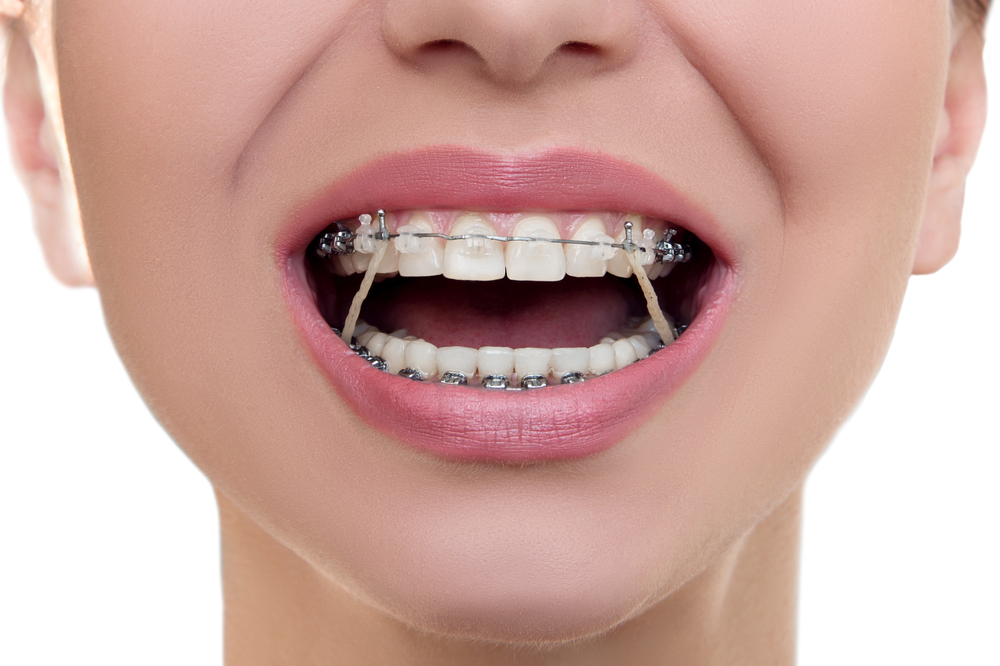
One of the most significant technological leaps in the field is the development of Temporary Anchorage Devices (TADs). These are essentially micro-screws made of biocompatible titanium. In many high-tech treatment plans, rubber bands are not stretched between teeth, but rather between a tooth and a TAD.
This creates a “fixed point” in the jaw, allowing for more aggressive and targeted movement without the “side effect” of moving other teeth unintentionally. The engineering of these TADs involves specialized thread designs and surface treatments to ensure they remain stable in the bone while under the constant tension of the rubber bands.
Smart Brackets and 3D-Printed Attachments
For patients using clear aligners (like Invisalign) instead of traditional braces, the “tech” of the rubber band remains central. Aligners utilize 3D-printed “attachments” or “buttons” that act as the hooks for the elastics. These are precision-engineered to be bonded at specific angles that maximize the efficiency of the elastic. The digital workflow ensures that these attachments are placed with sub-millimeter accuracy, ensuring the force vector of the rubber band aligns perfectly with the digital treatment plan.
4. The Future: IoT and Shape-Memory Materials
As we look toward the future of dental technology, the humble rubber band is being reimagined through the lens of the Internet of Things (IoT) and smart materials.
Compliance Tracking and Wearable Tech
The biggest failure point in orthodontic rubber band therapy is patient compliance. If the bands aren’t worn, the tech doesn’t work. New startups are exploring “smart” sensors that can be embedded into orthodontic appliances to track the amount of time an elastic is under tension. This data can be synced to a smartphone app, providing real-time feedback to both the patient and the doctor. This “gamification” of orthodontic tech aims to bridge the gap between mechanical engineering and human behavior.
Smart Polymers and Shape-Memory Elastics
The next frontier in material science is the development of “smart polymers.” Imagine a rubber band that adjusts its tension based on the temperature of the mouth or one that can be “programmed” to release a specific amount of force over a week rather than a few hours.
Researchers are experimenting with shape-memory polymers that can be activated by specific light wavelengths or thermal changes. While traditional rubber bands require frequent changing due to force decay, these next-generation materials could potentially stay in the mouth longer while providing a perfectly calibrated, constant force. This would represent a shift from passive mechanical tension to active, “programmable” tooth movement.
5. Why the “Engine” Matters: The Tech ROI of Elastics
In any technological system, the goal is efficiency and the achievement of a specific output. In orthodontics, the rubber band is the component that ensures the “Return on Investment” (ROI) for the patient’s time and the doctor’s expertise.
Efficiency and Treatment Velocity
By utilizing the correct elastic protocols, treatment time can be reduced by months. This is a direct result of “optimized force systems.” When the technology of the band, the bracket, and the digital plan work in harmony, the bone remodeling process (osteoblast and osteoclast activity) occurs at its biological peak. This is the definition of “High-Tech” healthcare: using precision tools to work in sync with natural biological processes.
Avoiding Mechanical Failure
When we ask “what do the rubber bands on braces do,” we are essentially asking how we manage the mechanical integrity of a human bite. Without the inter-arch force provided by elastics, a patient might end up with straight teeth but a non-functional bite. In technical terms, the elastics handle the “occlusal integration.” They ensure that the upper and lower “gears” of the mouth mesh together perfectly. This prevents future mechanical failures such as tooth wear, TMJ (temporomandibular joint) disorders, and structural fractures.
Conclusion
The rubber bands on braces are far more than simple loops of latex. They represent a fascinating intersection of material science, biomechanical engineering, and digital predictive modeling. From the polymer chains that provide the restorative force to the AI-driven software that determines their placement, every aspect of orthodontic elastics is a testament to how technology is refining even the most traditional medical practices.
As we move toward a future of smart materials and IoT-integrated dental wear, the role of the rubber band will only become more precise. For now, they remain the essential “engines” of orthodontic movement, providing the necessary vectors to transform a digital 3D plan into a functional, physical reality. Understanding the tech behind these elastics reveals the complexity of the modern smile—a feat of engineering that is as much about data and physics as it is about aesthetics.
aViewFromTheCave is a participant in the Amazon Services LLC Associates Program, an affiliate advertising program designed to provide a means for sites to earn advertising fees by advertising and linking to Amazon.com. Amazon, the Amazon logo, AmazonSupply, and the AmazonSupply logo are trademarks of Amazon.com, Inc. or its affiliates. As an Amazon Associate we earn affiliate commissions from qualifying purchases.