
Stocks are perhaps one of the most fundamental yet often misunderstood instruments in the world of finance. For many, they are merely ticker symbols flashing across a screen, arbitrary numbers that rise and fall, dictating the fortunes of investors. Yet, beneath this surface volatility lies a profound and powerful concept: ownership. Understanding what stocks truly represent is not just an academic exercise; it is crucial for anyone looking to navigate the complexities of personal finance, build wealth, or comprehend the engine of the global economy. At their core, stocks embody fractional ownership in a company, granting shareholders a tangible stake in its future, its successes, and its potential for growth. They are the building blocks of capital markets, enabling businesses to raise essential funds while offering individuals a pathway to participate in corporate prosperity.
The Fundamental Nature of Stock Ownership
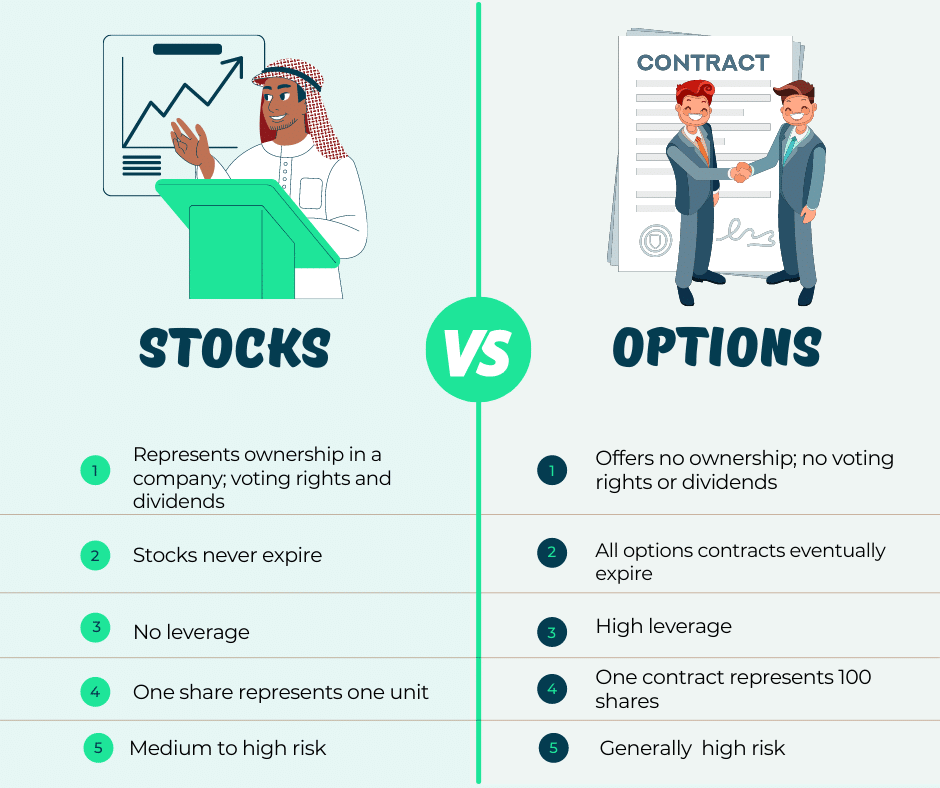
To grasp the essence of stocks, one must first recognize them as more than just trading instruments; they are certificates of ownership. When you buy a share of stock, you are not merely making a bet on a company’s performance; you are becoming a part-owner of that company. This fundamental concept underpins all subsequent discussions about stock market dynamics and investment strategies.
Shares of Ownership and Equity
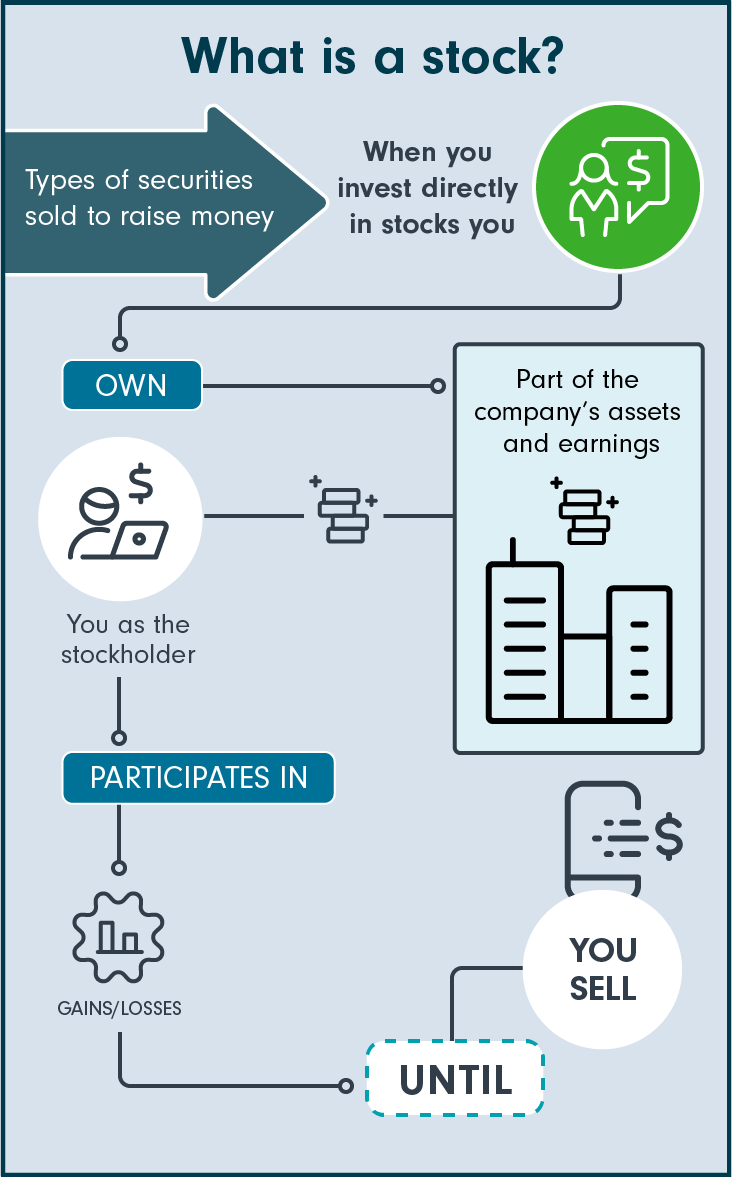
Each share of stock represents a tiny fraction of a company’s total equity. Equity, in accounting terms, is the value of an asset less the value of all liabilities on that asset. For a company, it represents the residual value belonging to shareholders after all debts have been paid. When a company decides to go public, it divides its ownership into millions or even billions of these individual shares. Owning a stock means you have a claim on a portion of the company’s assets and earnings, proportional to the number of shares you hold relative to the total number of shares outstanding. This fractional ownership means that as the company grows, profits, or acquires valuable assets, your proportional share in that growth and value increases. Conversely, if the company struggles, your share of its diminished value will also decrease.
A Claim on Company Assets and Earnings
Beyond just a theoretical slice of ownership, holding a stock grants you an actual claim. This claim manifests in two primary ways: assets and earnings. In the event of a company’s liquidation, after all creditors (bondholders, suppliers, employees, etc.) have been paid, the remaining assets would be distributed among the shareholders according to their proportionate ownership. While liquidation is a rare and often undesirable outcome, this right underscores the ultimate security interest shareholders possess. More importantly for ongoing operations, shareholders have a claim on the company’s earnings. Companies generate profits, and these profits can either be reinvested back into the business for growth (retained earnings) or distributed to shareholders in the form of dividends. This direct link to earnings is a key driver of stock value and investor returns.
The Concept of Limited Liability
One of the most attractive features of stock ownership for investors is the principle of limited liability. This means that an individual shareholder’s potential loss is limited to the amount of money they invested in the stock. If a company goes bankrupt, its creditors cannot pursue the personal assets of its shareholders to recoup their losses. This protection is a cornerstone of modern corporate law, encouraging investment by mitigating the most severe personal financial risks that would otherwise deter individuals from backing new ventures. For example, if you invest $1,000 in a stock, your maximum loss is that $1,000, regardless of how much debt the company might accumulate. This clear boundary between personal and corporate finances is vital for robust capital markets.
Why Companies Issue Stocks
While stocks offer a means for individuals to invest, their existence is primarily driven by the needs of businesses. Companies issue stocks as a fundamental strategy for growth, expansion, and financial stability. It’s a symbiotic relationship where businesses gain access to crucial capital, and investors gain a pathway to wealth creation.
Capital Raising for Growth and Operations
The most significant reason companies issue stock is to raise capital. Whether it’s a fledgling startup seeking funds to develop a revolutionary product, a mature corporation planning a major acquisition, or an established firm needing money for research and development, issuing shares to the public (or private investors) is a powerful mechanism for securing the necessary financing. Unlike debt, which requires regular interest payments and eventually repayment of the principal, equity financing does not create an immediate obligation to repay. The capital raised from stock issuance allows companies to invest in new projects, expand operations, hire more staff, or pay down existing debts, all of which are critical for long-term growth and competitiveness. This infusion of capital fuels innovation and economic expansion.
Diversifying Funding Sources
Relying solely on debt financing can be risky for a company, especially during economic downturns when loan terms become stricter or interest rates rise. Issuing stock provides an alternative and complementary source of funding, allowing companies to diversify their capital structure. A healthy balance between debt and equity can make a company more resilient to financial shocks and provide greater flexibility in strategic planning. By spreading funding sources, a company reduces its dependence on any single type of financing, thereby enhancing its financial stability and lowering its overall cost of capital. This strategic mix often makes a company more attractive to both debt lenders and equity investors.
Enhancing Company Visibility and Credibility
Going public through an Initial Public Offering (IPO) and having its stock traded on an exchange can significantly boost a company’s profile and credibility. Public companies are subject to stringent reporting requirements and regulatory oversight, which often instills greater trust among customers, suppliers, and business partners. The increased visibility associated with a public listing can lead to better brand recognition, attract top talent, and open doors to new business opportunities. For example, being listed on a major exchange like the NYSE or Nasdaq signals a level of maturity, transparency, and financial robustness that privately held companies might struggle to achieve, further cementing its reputation in the marketplace.
The Dual Role of Stocks for Investors
For individuals and institutions, stocks serve a dual purpose: they offer the potential for capital appreciation and provide a source of income. Understanding these two facets is crucial for formulating a comprehensive investment strategy aligned with personal financial goals.
Potential for Capital Appreciation
The primary appeal of stock investing for many is the potential for capital appreciation. This refers to the increase in the value of the stock over time. If a company performs well – growing its revenues, increasing its profits, expanding its market share, or innovating successfully – its stock price is likely to rise. Investors who bought shares at a lower price can then sell them at a higher price, realizing a profit. This appreciation is a direct reflection of the market’s positive perception of the company’s future prospects and its ability to generate greater value. Capital appreciation can be a powerful engine for wealth creation, especially over long investment horizons, allowing investors’ money to grow significantly through the compounding effect.
Income Generation through Dividends
Beyond capital appreciation, many stocks offer a source of income through dividends. Dividends are portions of a company’s profits that are distributed to shareholders. Not all companies pay dividends; growth-oriented companies often reinvest all their profits back into the business to fuel further expansion. However, many established, mature companies with stable cash flows regularly pay dividends, providing a steady stream of income to their shareholders. These dividends can be a crucial component of an investor’s total return, particularly for those seeking regular income from their portfolio, such as retirees. Dividend payments demonstrate a company’s financial health and its commitment to returning value directly to its owners.
Voting Rights and Shareholder Influence
While often overlooked by individual investors, owning stock typically comes with voting rights. Shareholders have the right to vote on important company matters, such as electing members to the board of directors, approving mergers and acquisitions, and ratifying executive compensation packages. Each share usually represents one vote, meaning larger shareholders have greater influence. While a small individual investor’s single vote might seem insignificant, collectively, shareholder votes can influence corporate governance and strategic direction. This democratic aspect of stock ownership ensures that management remains accountable to the true owners of the company – its shareholders. Activist investors, for instance, often acquire significant stakes specifically to exert this influence and drive change within companies they believe are underperforming.
Understanding Stock Valuation and Market Dynamics
The price of a stock is not arbitrary; it is the result of complex interactions between a company’s intrinsic value, market sentiment, and broader economic forces. Grasping these dynamics is essential for making informed investment decisions.
Factors Influencing Stock Prices (Supply & Demand, Earnings, Economic Conditions)
Stock prices are primarily determined by the forces of supply and demand in the open market. When more investors want to buy a particular stock than sell it, its price tends to rise. Conversely, if more investors want to sell than buy, the price falls. However, these supply and demand dynamics are driven by a multitude of underlying factors. Company earnings reports are paramount; strong earnings often lead to higher prices, while disappointing results can cause declines. Future earnings potential, management quality, competitive landscape, and industry trends also play a significant role. Beyond company-specific news, broader economic conditions—such as interest rates, inflation, GDP growth, and employment figures—can influence overall market sentiment and, consequently, individual stock prices. Geopolitical events and technological disruptions can also create ripples across the market.
Key Financial Metrics (P/E Ratio, EPS, Market Cap)
Investors and analysts use a variety of financial metrics to evaluate stocks and determine their relative value.
- Earnings Per Share (EPS): This measures a company’s profit allocated to each outstanding share of common stock. It’s a key indicator of profitability.
- Price-to-Earnings (P/E) Ratio: Calculated by dividing the current share price by the EPS, the P/E ratio indicates how much investors are willing to pay for each dollar of a company’s earnings. A high P/E might suggest investors expect high future growth, while a low P/E could indicate an undervalued stock or a company facing challenges.
- Market Capitalization (Market Cap): This is the total value of a company’s outstanding shares, calculated by multiplying the current share price by the total number of shares outstanding. It gives an idea of the company’s size and overall market worth.
These and other metrics, such as dividend yield, debt-to-equity ratio, and return on equity, provide a comprehensive picture of a company’s financial health and its attractiveness as an investment.
The Role of Stock Exchanges and Market Efficiency
Stock exchanges, like the New York Stock Exchange (NYSE) or NASDAQ, provide organized, regulated marketplaces where stocks are bought and sold. They facilitate price discovery, ensure liquidity, and enforce rules that protect investors and maintain market integrity. The concept of “market efficiency” suggests that all available information is rapidly reflected in stock prices, making it difficult to consistently find undervalued or overvalued stocks. While perfect efficiency is debated, exchanges play a critical role in disseminating information and enabling transparent trading, making it easier for investors to participate in capital markets. Technology has further enhanced this efficiency, allowing for near real-time trading and global access to markets.
Risks and Rewards of Stock Investing
Investing in stocks is inherently a balance of risk and reward. While the potential for substantial returns is attractive, it comes with the possibility of loss. A pragmatic approach involves understanding these dynamics and implementing strategies to mitigate risks while pursuing long-term growth.
Market Volatility and Risk Mitigation Strategies
Stocks are known for their volatility; their prices can fluctuate significantly over short periods due to market sentiment, company news, economic data, or even geopolitical events. This volatility represents a risk, as the value of an investment can decrease. However, it also presents opportunities for astute investors. Risk mitigation strategies are crucial. Diversification, arguably the most important, involves spreading investments across various stocks, industries, and asset classes to reduce the impact of a single poor-performing asset. Other strategies include dollar-cost averaging (investing a fixed amount regularly, regardless of price) and conducting thorough due diligence before investing. Understanding one’s risk tolerance is also paramount; an aggressive investor might tolerate higher volatility for greater potential returns, while a conservative investor might prioritize stability.
The Power of Diversification
Diversification is the bedrock of prudent investment. By investing in a variety of different stocks, sectors, and geographical regions, an investor can reduce the specific risk associated with any single company or industry. For example, if you only own stock in one technology company and that company experiences a significant setback, your entire investment could be jeopardized. However, if you own shares in multiple companies across tech, healthcare, consumer goods, and energy, a downturn in one sector might be offset by gains in another. Diversification doesn’t eliminate risk entirely, but it significantly reduces idiosyncratic risk – the risk specific to an individual asset – smoothing out portfolio returns over time. It’s about not putting all your eggs in one basket.

Long-Term Growth Potential vs. Short-Term Speculation
Stocks have historically been one of the most effective tools for long-term wealth creation. Over decades, the stock market has consistently outperformed other asset classes, thanks to the power of compounding and economic growth. Long-term investors focus on fundamental company strength, hold positions for many years, and ride out short-term market fluctuations. In contrast, short-term speculation involves trying to profit from rapid price movements, often entailing higher risk and requiring intense market analysis and timing. While day trading and short-term speculation can yield quick gains, they are extremely challenging and risky, often leading to losses for inexperienced participants. For most individuals, aligning stock investments with long-term financial goals – such as retirement, home ownership, or education – is a more sustainable and less stressful approach, allowing the inherent growth potential of equity ownership to truly materialize.
In conclusion, stocks represent far more than just numbers on a screen. They are fractional ownership interests in businesses, offering investors a direct stake in corporate success and the broader economy. They enable companies to raise vital capital for growth and innovation, while providing individuals with opportunities for capital appreciation, dividend income, and even a voice in corporate governance. Understanding these multifaceted representations of stocks is the first, essential step toward becoming a more informed and successful participant in the financial markets, ultimately paving the way for sound personal finance and strategic wealth building.
aViewFromTheCave is a participant in the Amazon Services LLC Associates Program, an affiliate advertising program designed to provide a means for sites to earn advertising fees by advertising and linking to Amazon.com. Amazon, the Amazon logo, AmazonSupply, and the AmazonSupply logo are trademarks of Amazon.com, Inc. or its affiliates. As an Amazon Associate we earn affiliate commissions from qualifying purchases.