
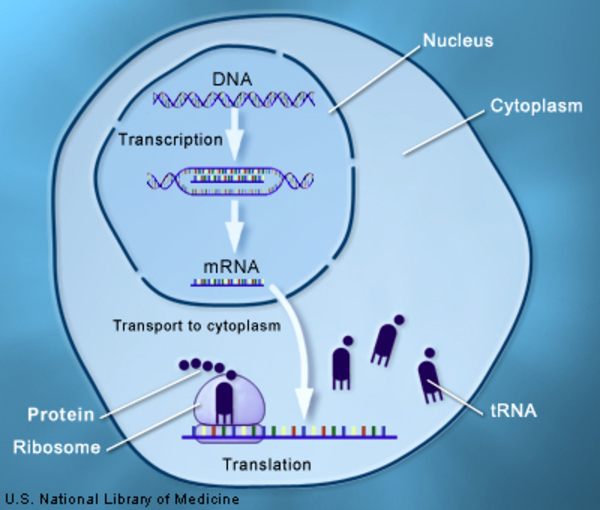
In the realm of modern technology, we often look to silicon chips, neural networks, and cloud infrastructure as the pinnacle of complex systems. However, the most sophisticated “operating system” ever devised does not run on electricity alone; it runs on carbon, nitrogen, and oxygen within the microscopic confines of a cell. When we ask, “What do proteins do in the cell?” from a technological perspective, we are really asking how nature’s most advanced nanomachines execute the source code of life.
Proteins are the “executables” of the biological world. While DNA serves as the hard drive—storing the long-term, read-only instructions—proteins are the functional software and hardware that interact to perform every logic gate, data transfer, and structural build-out required for an organism to function. Understanding these molecular machines is no longer just the domain of biologists; it is the new frontier for software engineers, AI researchers, and data scientists.
The Code of Life: Proteins as Nature’s Microservices
In software engineering, a microservice architecture decomposes a large system into smaller, independent units that perform specific tasks. This is an exact mirror of how proteins operate within the cellular environment. Each protein is a specialized tool, “compiled” from an amino acid sequence to perform a dedicated function with high fidelity.
Functional Modularity in Biological Systems
Just as a tech stack relies on different layers (frontend, backend, database), the cell uses proteins to manage distinct operational layers. Structural proteins like collagen act as the “chassis” or hardware housing, providing mechanical stability. In contrast, enzymes act as the “processing units,” accelerating chemical reactions that would otherwise take millions of years to occur. This modularity allows the cell to scale its operations, responding to environmental inputs by “spinning up” more protein instances when demand increases—a biological version of auto-scaling in cloud computing.
Signal Transduction: The Networking Layer of the Cell
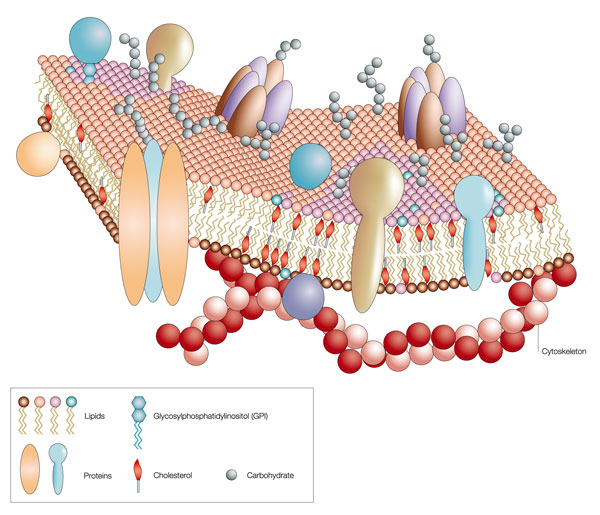
One of the most critical roles of proteins is facilitating communication. In a distributed digital system, services communicate via APIs and protocols. In a cell, “receptor proteins” on the cell membrane act as the I/O ports. When a signaling molecule (the data packet) binds to a receptor, the protein undergoes a conformational change—a physical “state change”—that triggers a cascade of internal events. This process, known as signal transduction, is the biological equivalent of an asynchronous event bus, ensuring that the nucleus receives the necessary data to trigger the appropriate response.
Decoding the Folding Problem: How AI and Deep Learning Solved a 50-Year Tech Mystery
For decades, the “Protein Folding Problem” was considered one of the greatest computational challenges in science. The challenge was simple to state but nearly impossible to solve: given a string of amino acids (the code), can we predict the 3D shape (the hardware) of the resulting protein? Because a protein’s function is entirely determined by its shape, solving this was the key to “unlocking” the cell’s software.
The Rise of AlphaFold and Neural Networks
In 2020, Google DeepMind’s AlphaFold 2 transformed the landscape of biotechnology. By applying transformer-based neural networks—the same architecture behind Large Language Models (LLMs)—AlphaFold was able to predict protein structures with atomic accuracy. This was a monumental shift from traditional “brute force” computational methods, which required massive amounts of High-Performance Computing (HPC) power to simulate every possible molecular interaction. AlphaFold instead learned the “grammar” of protein folding, treating amino acid sequences like sentences and 3D structures like the meaning behind them.
From Static Models to Dynamic Simulations
The tech community is now moving beyond static structure prediction. New AI tools are focusing on protein dynamics—how these machines move and interact over time. This is equivalent to moving from a static code review to a live-environment debugger. By using generative AI, tech firms are now “hallucinating” entirely new proteins that have never existed in nature. These “de novo” proteins are designed with specific technical specifications, such as the ability to bind to a specific virus or break down plastic waste, effectively allowing us to write “custom patches” for biological systems.
Synthetic Biology: Programming the Future of Cellular Tech
The convergence of software engineering and biology has birthed a new field: Synthetic Biology. In this niche, the cell is viewed as a programmable substrate, and proteins are the programmable logic. If we can understand what proteins do in the cell, we can begin to design our own cellular “apps.”
Designer Proteins: Engineering Custom Hardware for the Body
We are currently seeing the rise of “Bio-CAD” (Computer-Aided Design) software. These platforms allow engineers to drag and drop genetic components to design a protein that performs a specific task. For example, in the field of digital security and forensics, researchers are developing proteins that can act as “biological sensors,” changing color or emitting light when they detect specific pathogens or chemicals. This is effectively a hardware-based sensor integrated directly into a living system.
CRISPR and Logic Gates: The Operating System of the Genome
While CRISPR is often discussed in terms of gene editing, its true power lies in its role as a protein-based logic system. The Cas9 protein acts as a programmable “search and replace” function for the genome. By engineering “dead” Cas9 (dCas9) variants, tech-focused biologists are creating “genetic logic gates” (AND, OR, NOT). These proteins can be programmed to trigger a specific therapeutic response only if two different conditions are met within the cell, providing a level of precision that mirrors conditional logic in Python or C++.
The Economic and Digital Impact of Protein-Tech
The ability to simulate and engineer what proteins do in the cell is creating a massive shift in the tech economy. We are moving from a world where drug discovery was a “trial and error” process to one where it is a “search and optimization” problem.
Accelerating Drug Discovery with High-Performance Computing (HPC)
Traditionally, bringing a drug to market took over a decade and cost billions of dollars. Much of this time was spent identifying which proteins to target and which molecules would bind to them. Today, NVIDIA and other hardware giants are providing the GPU power necessary to run these simulations in silico (on a computer) rather than in vitro (in a lab). By virtualizing the cell’s protein interactions, tech companies are reducing the time-to-market for life-saving therapeutics by orders of magnitude. This “Digital Twin” approach to biology is perhaps the most lucrative application of AI in the current market.
Ethical Implications and Digital Security in Bio-Data
As we treat protein structures as digital data, new challenges in cybersecurity emerge. The blueprint for a protein is essentially a proprietary code. If a biotech company designs a high-value synthetic protein, that sequence becomes an intellectual property asset that must be protected with the same rigor as a fintech algorithm or a secret source code. Furthermore, as we gain the power to “program” what proteins do, the tech industry must lead the conversation on “bio-firewalls” and ethical safeguards to prevent the misuse of synthetic biological tools.

Conclusion: The Convergence of Silicon and Carbon
When we investigate what proteins do in the cell, we find a system that is more “tech” than most of the gadgets in our pockets. Proteins are the sensors, the actuators, the processors, and the structural frames of the living world. The historical wall between “computer science” and “life science” is rapidly crumbling.
In the coming decade, the most important software updates won’t just arrive on our phones; they will be designed in protein-folding simulators and delivered via mRNA or synthetic cellular systems. As we master the ability to code with amino acids as fluently as we code with binary, the cell becomes the ultimate platform for innovation. The future of technology is not just about faster chips; it is about understanding and optimizing the elegant, protein-driven machinery that has been running for billions of years.
aViewFromTheCave is a participant in the Amazon Services LLC Associates Program, an affiliate advertising program designed to provide a means for sites to earn advertising fees by advertising and linking to Amazon.com. Amazon, the Amazon logo, AmazonSupply, and the AmazonSupply logo are trademarks of Amazon.com, Inc. or its affiliates. As an Amazon Associate we earn affiliate commissions from qualifying purchases.